Beware the 'Free $100 for GPT-6' Scam: How to Spot AI Hype Fraud
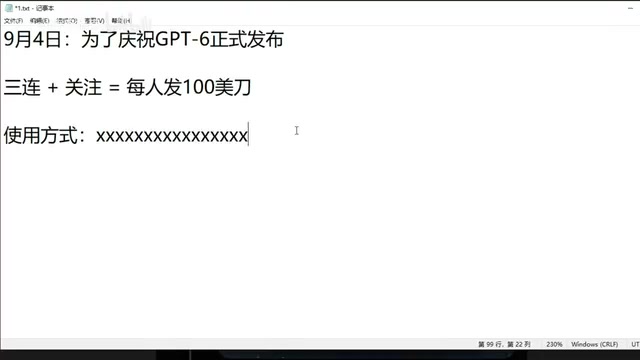
Breaking down the fake 'GPT-6 Astra free $100' video circulating on Bilibili and how to avoid it.
A video circulating on Bilibili claims GPT-6 Astra has launched and offers $100 in free credits — it's a scam. OpenAI has never released any product by that name. The video uses manufactured urgency, engagement farming disguised as a giveaway, and prompts users to download unknown 'Codex Assistant' installers that likely carry malware. The core tactics are AI hype hijacking, exploiting greed, and using elaborate tutorials to fake legitimacy. Always use official channels to access AI tools, and report any content like this immediately.
A Suspicious "Freebie" Video
A video titled GPT-6 Astra Officially Released — $100 Free for Everyone to Celebrate has been circulating on Bilibili and other platforms. It claims OpenAI has "officially released GPT-6" and promises to send every viewer $100 in credits. To claim the reward, viewers are told to like, coin, favorite, and follow — then wait for a private message containing a "conversation code."
The rational first reaction to content like this should be suspicion, not excitement. As of now, OpenAI has not officially released any product called "GPT-6" or "Astra." Content that invokes unreleased product names alongside phrases like "limited-time freebie" and "free dollar credits" carries all the hallmarks of online fraud and engagement farming. This article breaks down the tactics used in that video to help readers recognize these traps.
Breaking Down the Scam: Engagement Farming + Malicious Downloads
The video's workflow contains multiple red flags.
Red Flag #1: A Nonexistent Product and Manufactured Urgency
The video opens by emphasizing "It is now 8:00 AM Beijing time, Friday, September 4th," creating a sense of presence and urgency — as if a major launch just happened. Manufacturing time pressure to push users into acting immediately is a classic social engineering tactic. The so-called "GPT-6 Astra" simply doesn't exist; using a cutting-edge-sounding name lowers the audience's critical judgment.
Red Flag #2: Trading "Likes and Follows" for a Private Message
The creator asks viewers to "like, coin, favorite, and follow," then claims to send a "$100 conversation code" via private message. This is the most direct engagement-farming motive — exchanging nonexistent rewards for platform metrics (likes, coins, favorites, follows). The private message that follows may then be used for further scamming, recruiting into group chats, or pushing paid services.
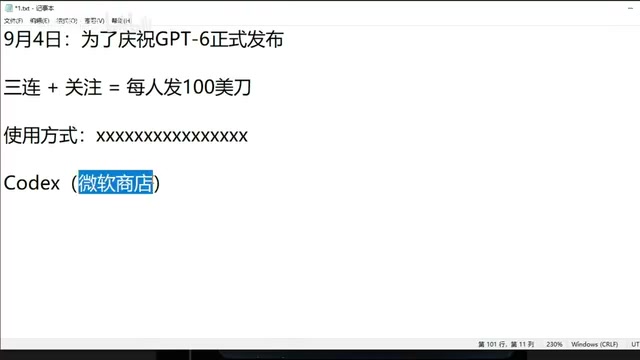
Red Flag #3: Pushing Users to Download "Codex Assistant" and Unknown Installers
The video instructs users to download something called "Codex" from the Microsoft Store, then install a "Codex Assistant," along with a "Chinese localization helper" and an installer that "automatically redirects." This is the highest-risk step in the entire scheme. Executable programs from unknown sources — installers, "assistant" tools — are very likely to bundle trojans, credential stealers, or cryptomining scripts. Once run, your account passwords, payment information, and potentially your entire computer could be compromised.
It's worth noting that OpenAI does have a legitimate product called Codex — it's an official AI coding assistant (Codex CLI) released publicly by OpenAI in 2025, installable via official package managers like npm. The scammers deliberately borrowed this real product name to appear credible. This is a textbook example of the "name-hijacking" technique: wrapping fake content in real technical terminology to make victims think they're accessing an official channel. The real Codex CLI requires no "localization helper" or "auto-redirect installer" — its installation is clearly documented on the official site. Any tool that requires bypassing legitimate app stores or package managers in favor of a "tutorial bundle" download should be treated as high-risk.
Why This Type of Content Is Worth Taking Seriously
These videos succeed because they exploit several well-known psychological triggers.
Riding the AI hype wave is central to the scheme. The GPT series is one of the most talked-about tech topics right now, and "next-gen model" bait is naturally compelling. "Free money" appeals to the desire for a good deal — $100 in API credits is a genuine incentive for everyday users. Meanwhile, the elaborate "installation tutorial" actually increases perceived legitimacy; people think, "something this complicated must be real." In practice, every download step expands the pool of potential victims.
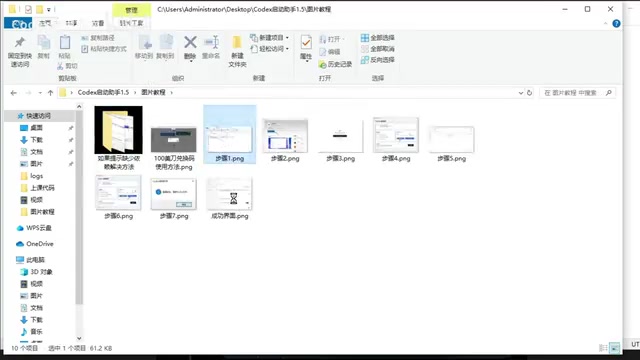
You may not have noticed: the video repeatedly emphasizes that "the full tutorial is packaged and linked below the video," redirecting users from the platform to external download links. Once you leave the platform's content moderation and security protections, all risk falls entirely on you.
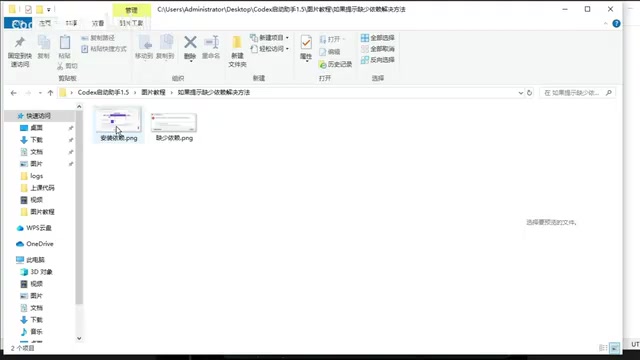
Social engineering is the underlying logic of scams like this — gaining trust or information through psychological manipulation rather than technical means. Common tactics include: manufacturing scarcity ("limited time," "just released"), authority borrowing (invoking brands like OpenAI and Microsoft), reciprocity ("I'm giving you something free" to build trust and earn follows), and using complex processes to manufacture credibility. There's a classic security principle: "If something sounds too good to be true, it probably is." Because AI tools carry a high technical barrier and most users can't quickly verify authenticity, they're becoming an increasingly common target for social engineering attacks.
The Right Way to Actually Access AI Models
If you genuinely want to use models from OpenAI or other providers, there is only one safe path: go through official channels.
- Visit the official website (e.g., platform.openai.com) and register an account. Any trial credits officially offered will appear directly in your account dashboard — they will never be distributed via third-party "conversation codes" or private messages.
- Official developer tools (such as the real OpenAI Codex CLI) should be obtained from channels specified in official documentation, not through shady "assistants" or "localization packs."
- Apply zero trust to any claim involving "like-to-claim freebies," "DM me for a code," or "download this assistant to get it for free."
What to Do If You Encounter Similar Content
If you identify content like this, the right move is: don't like it, don't follow, don't reply, and don't download anything. Use the platform's report feature to flag it as "fraud/engagement farming." If you've already downloaded any related programs, immediately disconnect from the internet, run a full scan with security software, and change the passwords on all important accounts.
As the AI wave continues to surge, scams riding the hype will only become more frequent and more convincing. Maintaining a healthy skepticism toward anything that seems like a windfall is always your first line of defense for protecting your digital assets.
Related articles

Frontend to AI Agent Development: A Frontline Architect Explains Career Paths and Opportunities
A frontline AI architect explains the industry changes and practical paths for frontend developers transitioning to AI Agent development: why pure frontend jobs are disappearing, why Agent + full-stack has become mainstream in hiring, and three transformation routes—Agent development engineer, FDE, and remote contracting—along with corresponding learning strategies.

How to Choose an AI Agent Development Course: Five Pitfall-Avoidance Guidelines
A mechanical-engineering career changer's two-year pitfall-tested checklist for screening AI Agent development courses: complete delivery pipeline, resume-worthy projects, real development perspective, update frequency, and coaching feedback—with concrete judgment methods and pitfall-avoidance tips.

Coze AI Agent Building for Beginners: A Zero-Code AI Agent Development Guide
Coze, ByteDance's one-stop AI application development platform, supports zero-code drag-and-drop AI agent building. This article outlines Coze's core concepts, three advantages, differences between the domestic and international versions, and the distinction between agents and apps, helping beginners quickly get started with AI Agent development.