Beware the 'Free GPT-6' Scam: Breaking Down the So-Called Step-by-Step Tutorial

The 'Free GPT-6 Astra tutorial' is a traffic-farming scam designed to spread malware and harvest followers.
Videos claiming to offer free GPT-6 Astra access in three steps — complete with a $100 AI credit — are circulating online. This article exposes the scheme: OpenAI has never released a product called "GPT-6 Astra"; the tutorial's core step involves downloading an unverified "Codex Assistant" that likely embeds malware; and the "like and follow to get credits" mechanic is pure traffic farming. The real cost of "free" AI is either your device's security or your role as a viral distribution vector.
Why This 'Free GPT-6' Tutorial Deserves Serious Skepticism
Recently, videos titled "Free GPT-6 Astra Step-by-Step Tutorial — 100% Working" have been circulating on video platforms, claiming you can access the so-called "GPT-6 Astra" in just three steps and two minutes — no VPN, no account required — and even receive a "$100 dialogue code." These videos look enticing, but a close look at the technical facts and product reality reveals glaring red flags. This article breaks down the scheme objectively to help readers recognize the risks involved.
Let's establish one basic fact first: as of now, OpenAI has not released any product called "GPT-6" or "GPT-6 Astra." Offering a "free access" channel for a product that doesn't yet exist is, by itself, a major warning sign.
Breaking Down the Core Tactics
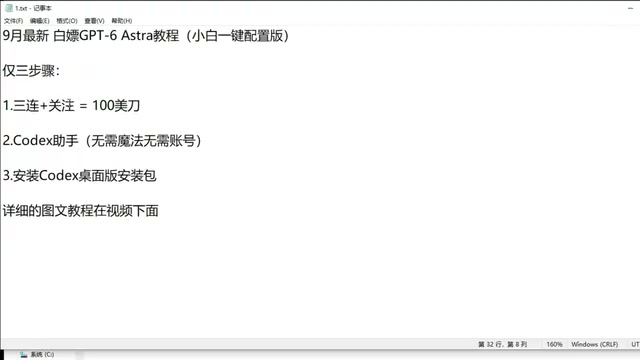
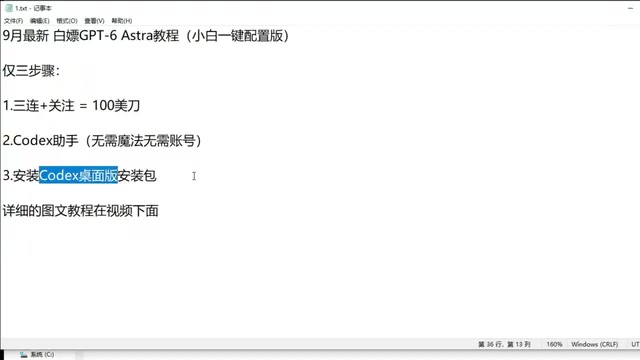
The tutorial's workflow can be summarized in three steps: First, "like, follow, and share" the creator's page to receive the so-called "$100 dialogue code." Second, download the creator's packaged "Codex Assistant," which supposedly lets you connect to the model directly — "no VPN, no account needed." Third, install a "Codex Desktop" application to run these configurations.
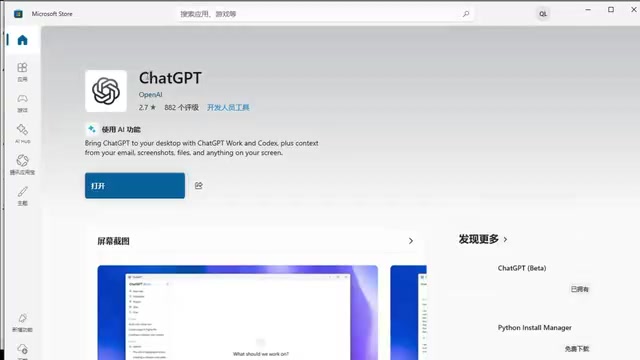
The video specifically explains that this app was "originally called Codex, but has since been renamed to GPT" — urging viewers "not to be surprised." This explanation deliberately conflates two different things: Codex is the name of an early OpenAI code model, and it has no connection to the Microsoft Store app being referenced here. Using this kind of vague framing to vouch for a sketchy installer is a textbook tactic for inducing users to download malicious software.
Three Clear Red Flags
First: Using an unreleased product as clickbait. "GPT-6 Astra" is not an officially announced product name of any kind. Inventing or misusing a non-existent name to generate curiosity and a sense of scarcity is a classic opener for this type of traffic-farming content.
Second: Requiring installation of a third-party "assistant" and bypassing login. The video repeatedly emphasizes using an "assistant" to "skip the login screen" and chat directly "without an account." Any operation that asks you to run an executable from an unknown source while bypassing normal account authentication could be delivering malware or harvesting your local data. So-called "localization assistants" or "Codex assistants" fall squarely into this high-risk category.
Third: Using "likes and follows" as the redemption condition. Packaging "like, follow, and share" as a prerequisite for receiving benefits is pure traffic-farming logic. Legitimate official services do not gate access to "dialogue codes" behind social media engagement.
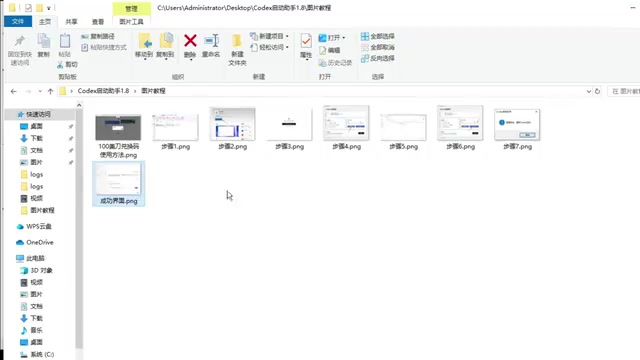
Technically speaking, these so-called "localization assistants" or "Codex assistants" are typically distributed as pre-packaged executables (.exe files) that may embed keyloggers, clipboard monitors, or remote access trojans (RATs). Once executed, such malware can silently harvest browser-saved passwords, cryptocurrency wallet seed phrases, locally stored API keys, and even camera access. More sophisticated variants register themselves as system services to auto-start on boot and maintain persistent access. Even if the file passes an antivirus scan on first run — through obfuscation or signature spoofing — that is no guarantee of safety: mainstream antivirus software often lags days or even weeks behind in detecting new variants. The promise of "chat without an account" may very well come at the cost of your device's security.
Why "Free High-Value Credits" Are Not Credible
The video promises a "$100 dialogue code" and claims it grants direct access to advanced models. From a business logic standpoint, inference costs for large language models are substantial — no platform would distribute high-value API keys without any verification through an anonymous tutorial. If any working keys do exist, they are almost certainly stolen account credentials, and using them puts you at risk of violating terms of service or even legal liability.
More commonly, these "dialogue codes" simply don't work at all — they exist solely as bait to drive likes, downloads, and video shares.
The inference cost of a large language model scales directly with its size. For a GPT-4-class model, processing one million tokens costs anywhere from a few dollars to tens of dollars. A $100 credit burns through quickly under intensive use — no platform would hand that out freely to anonymous strangers at scale. If the codes circulating in these videos are real, their likely origins fall into one of a few categories: credentials stolen via phishing or credential-stuffing attacks, accounts mass-registered to exploit platform promotions, or leaked keys purchased on the dark web. Using credentials from any of these sources not only violates terms of service (and risks immediate account termination), but could also carry legal liability in certain jurisdictions under theories of knowingly using illegally obtained access. For the people distributing these codes, the real payoff is advertising revenue and follower growth from viral spread — the code itself is just the hook.
Practical Advice for Everyday Users
When you encounter content promising "free access to top-tier AI," a few simple principles can protect you:
- Verify that the product actually exists. Check official channels to confirm model names. Don't take "it got renamed" or "it's in beta" at face value.
- Never download unknown executables or "assistants." Especially anything marketed as a tool to "skip login," "crack," or "bypass account requirements."
- Be skeptical of trading social engagement for benefits. Liking and following should never be a condition for receiving any paid resource.
- Use AI services through official channels. When you want to use a large language model, go through the official app, website, or a legitimate partner platform — register and pay through normal means.
Conclusion
These "step-by-step free tutorials" exploit users' curiosity about cutting-edge AI and their resistance to paying for it, using phrases like "100% effective" and "done in two minutes" to manufacture trust. But the real cost never disappears — you either pay with your privacy and device security, or you become fuel for someone else's traffic machine. Staying enthusiastic about AI tools is great; maintaining basic technical judgment is what keeps you from falling into a carefully engineered trap.
Related articles

Huberman's Rational Supplement Guide: A Five-Layer Health Framework and Scientific Decision-Making
Stanford neurobiology professor Huberman proposes a rational supplement framework: behavior and nutrition are the foundation, basic combination supplements serve as insurance, and sleep/hormonal/cognitive directions should stick to single-ingredient experiments. Omega-3 is the top single-ingredient choice, and melatonin is not recommended.

The Unsung Painter Behind Gilded Age Manhattan Interior Design
HN discussion highlights the painter behind Gilded Age Manhattan interiors: he created murals and decorative paintings but was long overlooked as his work was seen as architectural appendage.

Can AI Agents Be Socially Engineered? Understanding Prompt Injection and Tool Permission Risks
Through Invariant Lab's GitHub Issue injection and Brave's AI browser attack, this article analyzes how Prompt Injection induces AI Agents to perform unauthorized actions, and offers protection advice across three layers: least privilege, tool validation, and operation auditing.