Bilibili Live Streaming Ecosystem: Interaction, Tipping, and the Traffic Game in a Co-Streaming Session

Bilibili's livestream ecosystem centers on quantified interaction, co-streaming PK, and the tipping economy, seeking balance between authenticity and performance.
Using a Bilibili livestream as an example, the article analyzes the interaction chain in live rooms: streamers quantify interactions into visible targets through song requests, chatting, and soliciting likes to cater to the platform algorithm's preference for activity. Co-streaming PK uses gift scores to determine speaking rights, creating dramatic conflict to attract viewers. Content boundaries are blurred, with private topics like Halloween costumes and medical aesthetics becoming tools for building intimacy. The tipping economy relies on emotional connection, with streamers directly soliciting gifts, but over-commercialization may erode viewer trust. Ultimately, it points out that the livestream ecosystem blends talent, social interaction, competition, and companionship, and streamers must find a balance between authenticity and performance—every interaction is a tiny transaction.
Daily Life in the Livestream: The Interaction Chain from Song Requests to Co-Streaming
Bilibili streamers' live rooms are often miniature social hubs. From song requests and chatting to co-streaming PK battles, the interaction between viewers and streamers forms the main thread of content. In a typical livestream, the streamer constantly responds to bullet comments, thanks viewers for gifts, and tries to guide the audience toward interaction goals like liking and following. For example, a streamer might explicitly ask, "Let's push the likes up to 3,000," turning interaction into a visible, quantifiable target.
Behind this interaction model is the platform algorithm's preference for activity—likes, comments, and gifts all influence a live room's recommendation weight. Streamers weave song requests into the chat, from pop hits to oldies, trying to reach viewers across different age groups. When a viewer requests "Love to Win" (爱拼才会赢), the streamer playfully responds, "You want me to struggle, huh?"—this kind of improvised reaction becomes part of the livestream content itself.
Platform recommendation weight refers to the exposure priority calculated by the livestream platform's algorithm based on multiple metrics of a live room (such as concurrent viewers, interaction rate, gift revenue, and watch time). The better the interaction data, the more likely a live room is to be pushed to the homepage or recommendation slots, thereby gaining more organic traffic. Therefore, streamers proactively guide viewers to like, comment, and send gifts—essentially "feeding" the algorithm in exchange for higher visibility. This also explains why livestreams often feature quantified interaction goals as slogans.
Co-Streaming PK: The Battle Over Scores, Gifts, and Speaking Rights
Co-streaming PK is a common traffic tactic in livestreaming. Two streamers compete over gift revenue to determine the winner, and the loser must accept a punishment or apologize. In one PK, one streamer showed off with "a one-handed flip to score you 1,040 points," while the other was mocked as having "zero points" and "not even a rabbit." This confrontational interaction creates dramatic conflict that keeps viewers watching.
In PK battles, speaking rights are directly tied to scores. The higher-scoring side can taunt the opponent with "you have no right to speak," while the lower-scoring side is told to "lift your mouth up." This seemingly crude rule is actually a form of performance within the livestream ecosystem—viewers enjoy the entertainment value of the conflict while participating by sending gifts. One streamer mentioned that "Brother Kai sends sunglasses in batches of five," with gifts serving as ammunition in PK battles.

Co-streaming PK is a two-person interactive feature launched by livestream platforms, where two streamers appear on the same screen via co-streaming and compete within a set time over the total value of gifts sent by viewers, with the platform typically converting gifts into points displayed in real time. After the PK ends, the lower-scoring side must accept a pre-agreed punishment (such as doing push-ups, drawing on their face, or apologizing). This mechanism visualizes and gamifies the competitive relationship between streamers, leveraging viewers' desire to win and sense of community belonging to stimulate spending—an important product design for livestream platforms to boost user activity and revenue.
Halloween and Everyday Topics: The Blurring of Content Boundaries
Livestream content doesn't always revolve around gaming or talent. In one livestream, the topic jumped from Halloween costumes to medical aesthetics experiences, with the streamer and co-streaming partner discussing post-injection swelling, the recovery process, and even comparing their "thunderous double eyelids." This kind of public discussion of private topics brings streamers and viewers closer, but also blurs content boundaries.
One streamer mentioned "every month I put money into my face," hinting at the ongoing nature of medical aesthetics spending. Such topics are not uncommon among female streamers—it's both a sharing of personal experience and a way to build intimacy. Meanwhile, topics like mahjong, horoscopes, and dialects are interspersed, giving livestream content a fragmented, slice-of-life character.

The Other Side of the Tipping Economy: Streamers' Survival Status
Livestream tipping is an important source of income for streamers. In conversations, streamers directly ask viewers to "claim a spot on the leaderboard" or "send a sports car," or even appeal to viewers' sympathy with calls like "Where are the kind-hearted people?" One streamer confessed, "I'm literally living paycheck to paycheck every month," linking tips directly to daily living expenses.
This direct solicitation of gifts is not uncommon in the livestreaming world, but it can also spark controversy. When a viewer questioned, "Are you a bot asking people to send sports cars?" the streamer responded, "I want you to feel a bit of home." The core of the tipping economy lies in emotional connection—viewers pay for streamers they like, and streamers reciprocate through interaction and companionship. However, when this connection becomes overly commercialized, viewer trust may be eroded.

The tipping economy is one of the core business models of the livestreaming industry. Viewers purchase virtual gifts on the platform and send them to streamers, with the platform and streamer splitting the revenue proportionally (commonly 50/50 or 30/70). Streamer income is highly dependent on a small number of "big-ticket tippers" (commonly known as "big brothers"), resulting in a pronounced long-tail income distribution. This model incentivizes streamers to maintain emotional bonds with core fans, but it can also lead to content that overly caters to tippers, and even controversial behaviors such as inducing spending and competitive tipping.
Reflections on the Livestream Ecosystem: Between Authenticity and Performance
From this livestream, we can see that Bilibili's livestream ecosystem blends talent showcases, social interaction, PK competition, and emotional companionship. Streamers need to find a balance between authenticity and performance—showing personal charm while responding to platform rules and viewer expectations.
Every interaction in a live room is a tiny transaction: likes for follows, gifts for thanks, co-streaming for traffic. This transactional relationship forms the foundation of the livestream economy. For viewers, livestreaming offers low-barrier entertainment and companionship; for streamers, it's a job that requires continuous investment. The tension between the two is precisely what drives the constant evolution of livestream content.
Related articles
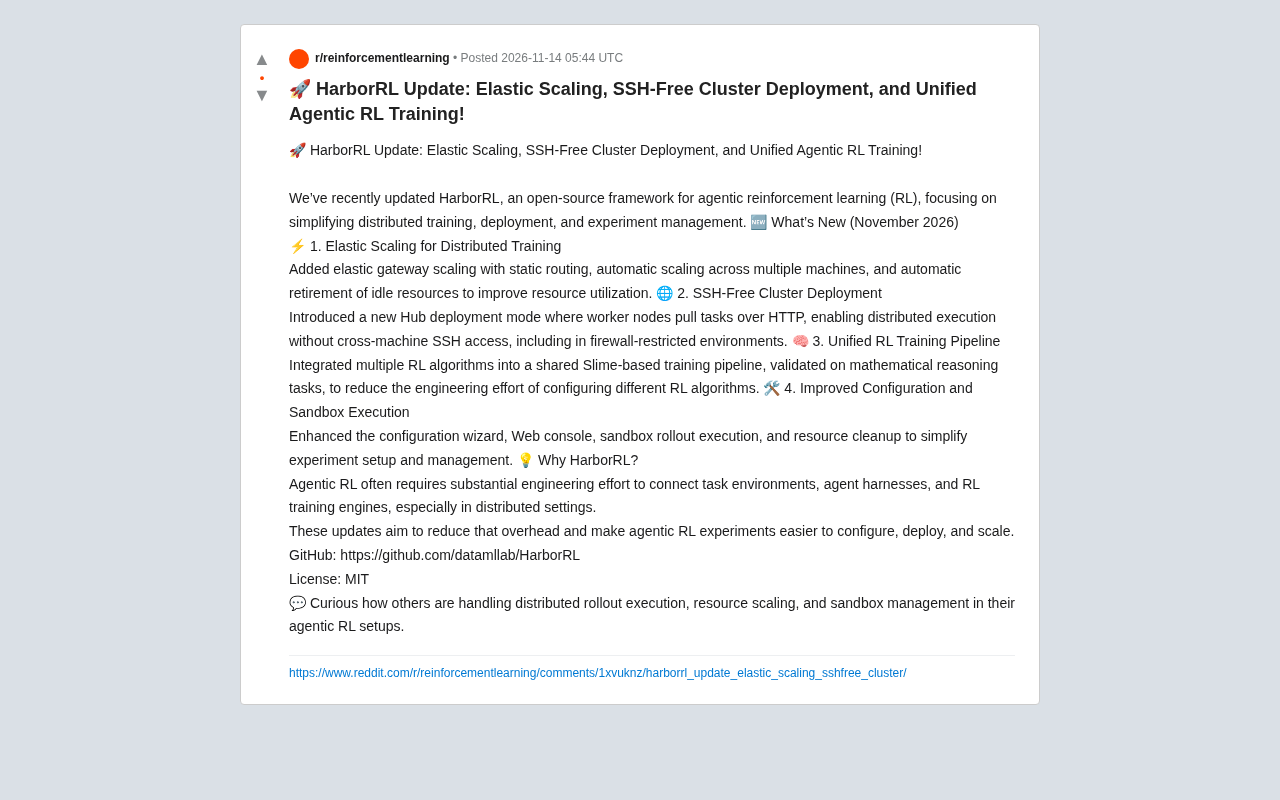
HarborRL Update: Elastic Scaling and SSH-Free Cluster Deployment
HarborRL, an open-source Agentic RL framework, releases an update: elastic gateway scaling with automatic idle resource reclamation, SSH-free cluster deployment via HTTP task pulling, a unified RL training pipeline based on Slime, and improvements to the configuration wizard and sandbox execution—lowering the engineering barrier for distributed agent reinforcement learning.

Tutu Livestream Transcript: A Real Snapshot of the Streamer-Fan Ecosystem
From Bilibili streamer Tutu's livestream transcript, observe a solo streamer's real survival state amid technical glitches, badge payment systems, and PK traffic competition, and analyze long-tail streamers' professional cognition and emotional labor.

Bill Gates' Old Interview Resurfaces: Why Is Public Scrutiny Fixed on Jensen Huang?
A resurfaced Bill Gates interview on Bilibili fuels comparisons with claims Jensen Huang was forced to resign. The article examines Gates' remarks on marriage and Epstein, analyzes short-video comparison tactics, and notes the Huang claims lack reliable sources.