Tutu Livestream Transcript: A Real Snapshot of the Streamer-Fan Ecosystem

A Bilibili livestream transcript reveals long-tail streamers' real survival state amid technical issues, payment mechanisms, and traffic anxiety.
Based on Bilibili streamer Tutu's livestream transcript, this article analyzes solo streamers' daily challenges and the platform ecosystem. The streamer deals with technical issues, guides viewers to add badges and renew fan clubs, and joins PK co-hosting to compete for traffic. Payment mechanisms are deeply tied to platform traffic push, and emotional performance in PK reflects traffic anxiety. Physical tolls reveal livestreaming as high-intensity physical and emotional labor.
This is a transcript of a livestream by Bilibili streamer Tutu. It's not about AI technology itself, but it unexpectedly becomes a vivid sample for observing the livestreaming industry ecosystem and fan economy. The entire stream ran from morning into the afternoon, with the streamer repeatedly dealing with network lag, music playback issues, and sparse viewer interaction, interspersed with real-time discussion of the platform's recommendation mechanism, fan badge system, and PK rules.
The Daily Tug-of-War Between Technical Glitches and Content Creation
Shortly after the stream began, the streamer repeatedly asked viewers "Does my stream look laggy to you?" and "Why can't I even play music?", trying different playlists and adjusting equipment. Such technical issues are extremely common in solo streaming, but here's a detail about how the streamer handled it: troubleshooting while keeping interaction going, filling content gaps with "let's switch playlists" and "tap that like button again." As the screenshots show, the streamer recalibrated lighting and camera angles repeatedly while adjusting the frame, indicating that even lightweight streaming requires continuous investment in visual presentation.
This "fix-as-you-stream" state exposes the reality that solo streamers lack a professional production team. Compared with the stable output of institutionalized streaming rooms, solo streamers have less margin for error—a single network fluctuation can cause viewers to drop off. The streamer mentioned "I feel awful if I can't stream enough," bluntly pointing to the tension between income pressure and technical investment.
Badges, Fan Clubs, and Platform Payment Mechanisms
Terms like "add a badge," "renew a badge," and "sign-in vote ranking" that appeared frequently during the stream constitute a complete platform payment system. The streamer repeatedly guided viewers to light up fan badges and explained that badge level upgrades unlock fan perks, red envelopes, milk tea, and other rewards. The screenshots capture the moment the streamer thanked viewers for renewing badges, reflecting how directly this mechanism affects the streamer's income structure.

According to the streamer, raising a badge from a low level to level 16 "originally only took 1,000+ votes," and activating the "Rookie Pants" (new guardian) accelerates leveling and comes with entrance effects and exclusive gifts. These rules are designed by the platform, and streamers must craft their talking points within that framework, packaging "add a badge" as a symbol of fan identity. The audience's teasing that they "won't spend a penny" and the streamer's response "Impressive, you've watched me for so many days and still won't spend a penny?" are exactly the tacit bargaining between both sides under this payment logic.
Fan badges are an identity marker and payment system designed by livestreaming platforms. Viewers light up badges by sending specific gifts or completing paid tasks, and badge levels rise with cumulative spending, with different levels corresponding to different fan perks and privileges. This mechanism converts viewers' emotional investment into a quantifiable level system, enhancing fan loyalty while providing streamers with a stable income source. The streamer's talking points guiding viewers to "add badges" and "renew badges" are essentially packaging payment behavior as identity recognition and community belonging within platform rules, thereby incentivizing continued spending.
Traffic Anxiety and Interactive Performance Under the PK Mechanism
Midway through the stream, the streamer initiated several PK co-hosting sessions and repeatedly called on viewers to "break a hundred," "pass the bonus," and "get on the sign-in vote ranking." The screenshots show the streamer using lightweight interactive tactics like hot air balloons and likes to retain viewers. PK outcomes are directly tied to exposure resources, and the streamer admitted "my repeat-tax data is pretty average, so the traffic push is pretty average," indicating that platform traffic allocation is strongly correlated with livestream interaction data.

Here's a detail about the streamer's emotional management during PK: facing the opposing audience's challenge of "you're not even squatting" when they sent votes, and after being "beaten," saying "I'm so mad I can't even smile after being beaten"—there's both genuine emotional expression and a performative element. This interaction between the real and the performed constitutes the core appeal of livestream content. The streamer's response to "adding a Nianhua lets you add WeChat" drew the boundary between payment and personal relationships.
PK co-hosting is a common interactive format on livestreaming platforms, where two streamers face off in real time via co-host, and viewers "send votes" for their favored streamer by gifting, with the higher total gift value within the set time winning. PK results are often tied to platform exposure resources, and the winner has a chance to gain more recommended traffic. Therefore, streamers must constantly call on viewers to "break a hundred," "pass the bonus," and "get on the sign-in vote ranking" to boost PK data. This mechanism turns the streamer's traffic anxiety into immediate mobilization of viewers and also pushes streamers to invest emotional performance in PK to stimulate viewers' willingness to tip.
Self-Iteration of the Streamer's Professional Self-Awareness
Later in the stream, the streamer talked with viewers about how she entered the industry: at 18, during her first livestream, she met a gift-sending "Jason bro" who suddenly stopped appearing, and at the time she "didn't understand." Now she says she understands: "Big spenders are just like that—they tip when they want to and stop when they don't," while emphasizing "I still don't get it" and "I've only touched the threshold." This self-account shows the streamer's cognition of the fan economy moving from confusion to partial acceptance.
The streamer also mentioned changes in her physical condition: recurring rhinitis, nosebleeds, back pain, dry throat, and "my stream times have been a bit too long lately." These details pull livestreaming back from the appearance of "casual chatting" to high-intensity physical and emotional labor. The streamer's empathy for a viewer who "got rhinitis from keeping cats" also indirectly confirms the occupational trait of long hours indoors facing a screen.
"Big spender" is a common term in the livestreaming industry for viewers who tip heavily, usually referring to fans who continuously send large gifts and hold considerable say in the livestream room. The relationship between streamer and "big spender" combines economic dependence and emotional connection, but big spenders are highly mobile and uncertain, and may suddenly stop tipping or leave for personal reasons. The streamer's understanding and acceptance of big spenders' behavior reflects her cognitive adjustment regarding unstable income sources in the fan economy, and also reveals the vulnerability of long-tail streamers in their income structure.
The Livestream Ecosystem from Multiple Perspectives
This material is a single-source livestream transcript, lacking platform data or third-party analysis for corroboration. But the content itself allows cross-verification of several points: first, platform payment mechanisms (badges, guardians, PK bonuses) are deeply bound to traffic allocation, and streamers must actively operate them; second, solo streamers bear pressure simultaneously on technical, content, and emotional fronts, with "lag," "traffic throttling," and "no one talking" being frequent troubles; third, the viewer-streamer relationship is built on continuous interaction and moderate payment, and the streamer's retention tactics for "freeloading" viewers have become a standardized skill.
One note: the specific gift amounts, level rules, and viewer counts in the material are all spoken during the livestream and have not been officially verified by the platform—readers should treat them as individual experience rather than industry standards. Income distribution in the livestreaming industry is highly uneven, and the survival states of top streamers and long-tail streamers differ significantly; this livestream shows the more authentic daily picture of the latter.
One-line Summary
A Bilibili livestream transcript reveals the real survival state of long-tail streamers amid technical issues, payment mechanisms, and traffic anxiety.
Paragraph Summary
Based on a transcript of Bilibili streamer Tutu's livestream, this article analyzes the daily challenges of solo streamers and the platform ecosystem. During the stream, the streamer frequently dealt with technical issues like network lag and music failures while guiding viewers to add badges, renew fan clubs, and join PK co-hosting to compete for traffic. Payment mechanisms such as badge levels and guardian privileges are deeply tied to platform traffic push, and streamers must design talking points within the rules to package payment behavior as a status symbol. The cycle of emotional performance and traffic anxiety in PK reflects the direct impact of interaction data on exposure resources. The streamer recounted entering the industry at 18, with her understanding of "big spender" tipping shifting from confusion to partial acceptance, though she considers herself to have "only touched the threshold." Details of physical tolls such as rhinitis and back pain reveal the essence of livestreaming as high-intensity physical and emotional labor. The article emphasizes that although a single source lacks platform data corroboration, it cross-verifies the real picture of long-tail streamers under the triple pressure of technology, content, and emotion.
Related articles
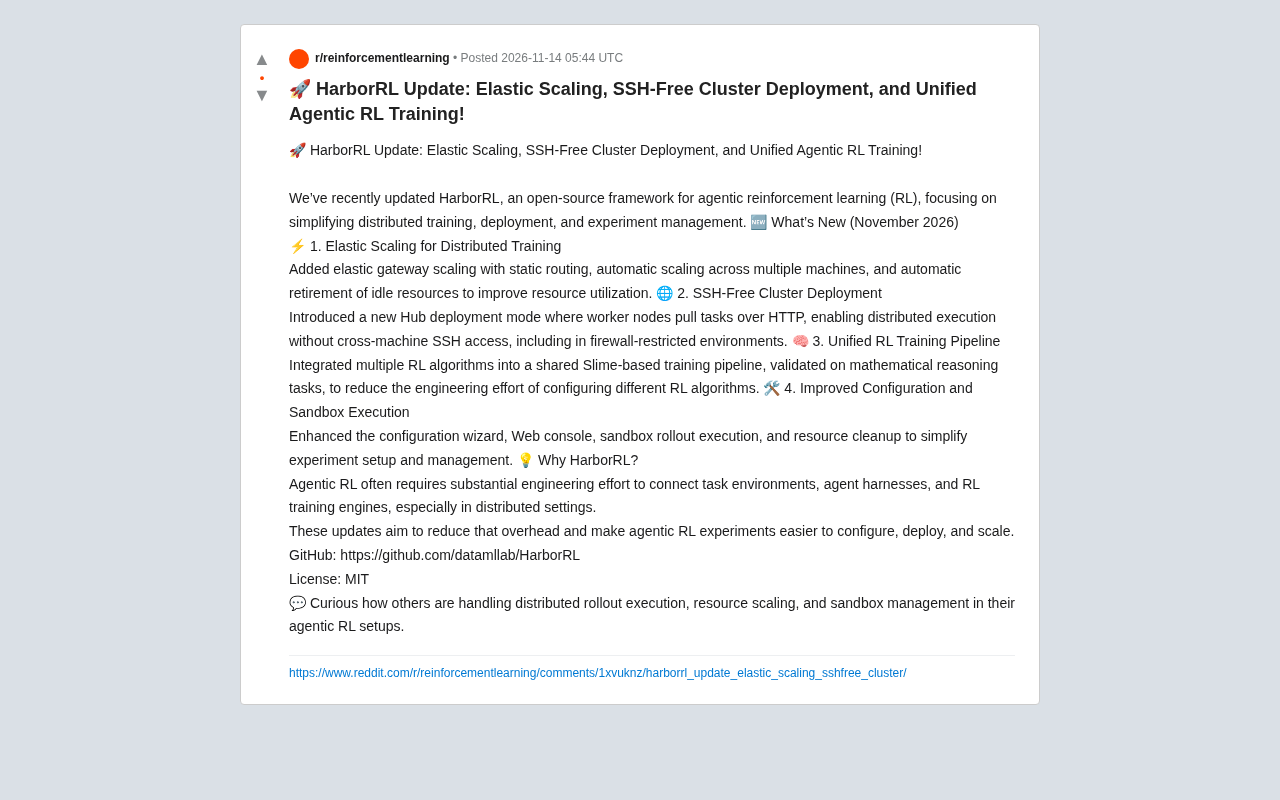
HarborRL Update: Elastic Scaling and SSH-Free Cluster Deployment
HarborRL, an open-source Agentic RL framework, releases an update: elastic gateway scaling with automatic idle resource reclamation, SSH-free cluster deployment via HTTP task pulling, a unified RL training pipeline based on Slime, and improvements to the configuration wizard and sandbox execution—lowering the engineering barrier for distributed agent reinforcement learning.

Bilibili Live Streaming Ecosystem: Interaction, Tipping, and the Traffic Game in a Co-Streaming Session
From a Bilibili co-streaming session, we observe streamer interactions, the tipping economy, and PK gameplay, analyzing the complex relationship between authenticity and performance, traffic and emotion in the livestream ecosystem.

Bill Gates' Old Interview Resurfaces: Why Is Public Scrutiny Fixed on Jensen Huang?
A resurfaced Bill Gates interview on Bilibili fuels comparisons with claims Jensen Huang was forced to resign. The article examines Gates' remarks on marriage and Epstein, analyzes short-video comparison tactics, and notes the Huang claims lack reliable sources.