Bluedot Launches Phone Call AI Note-Taker: Automatic Call Transcription and Summaries

Bluedot launches Phone Calls, extending AI meeting-notes to phone calls with automatic transcription, summaries, and action items.
Bluedot released Phone Calls on Product Hunt, extending its AI recording capabilities from online meetings to traditional phone calls. Users can dial via web or mobile app while keeping their own caller ID, so recipients don't see a platform virtual number. After each call, the system automatically generates transcriptions, summaries, and action items. The feature targets sales, customer service, and recruiting scenarios that still rely heavily on phone communication. It received 130 votes and 15 comments on Product Hunt, ranking #2. However, transcription accuracy, supported languages, call duration limits, pricing, and compliance details remain undisclosed, so its actual value still needs verification.
Bluedot has released a new feature called Phone Calls on Product Hunt, extending its AI meeting-notes capabilities from online meetings to phone calls. Users can make calls through the web or mobile app, keep their own caller ID, and automatically receive call transcriptions, summaries, and action items. The product received 130 votes and 15 comments on Product Hunt, ranking #2 and categorized under Android, iOS, and productivity tools.

From Meetings to Calls: Bluedot's Expansion of Boundaries
Bluedot was originally an AI meeting-notes tool that could join online meetings and generate notes. The newly launched Phone Calls feature extends the recording scenario to traditional phone calls. Users no longer need to rely on meeting links or third-party bots; instead, they dial directly through Bluedot's web or mobile app while maintaining their own caller ID. This means the recipient still sees the user's own number rather than a virtual number assigned by the platform, reducing the trust cost in communication.
This feature targets sales, customer service, and recruiting scenarios that still rely heavily on phone communication. In these scenarios, call content also contains key information but often lacks recording methods like those available for video meetings. Bluedot's solution embeds recording capabilities into the dialing process, making call records as automated as meeting records.
Automatic Transcription, Summaries, and Action Items
According to the official description, Phone Calls automatically generates transcription text, summaries, and action items after a call ends. This matches Bluedot's output in meeting scenarios: users don't need to manually organize notes and only need to review the system-generated summaries and to-dos. For roles that require frequent phone communication, this can significantly reduce post-call organization time.
Currently, official sources have not disclosed specific parameters such as transcription accuracy, the number of supported languages, or call duration limits. From its product positioning, it leans more toward being a recording layer for call workflows rather than a management tool for the calls themselves. Users still need to complete calls through their own phone systems or carriers; Bluedot provides recording and organization capabilities.
The Significance of Preserving Caller ID
Preserving caller ID is a key design element of Phone Calls. In sales and customer service scenarios, recipients are more wary of unknown numbers; if a platform number is displayed, the connection rate may decline. Bluedot allows users to dial from their own numbers, avoiding this issue. At the same time, this means call records are linked to the user's own number, making it easier to match them later in CRM or other systems.
However, the specific implementation of this feature (such as whether it goes through carrier networks or relies on VoIP) has not yet been detailed officially. For enterprise users, call compliance and data storage location are issues that need further confirmation.
Caller ID is a mechanism in telephone networks used to pass the calling number to the recipient. Its technical implementation involves two common paths: one is passing the calling number through the signaling system (such as SS7) of the PSTN (public switched telephone network); the other is in VoIP scenarios, where the number information is carried in the From header field of the SIP protocol. If enterprise-grade call platforms use their own trunk lines to dial out, the recipient often sees the platform number rather than the employee's own number, which affects connection rates and number ownership identification.
Bluedot's claim to preserve the user's own number usually means it either initiates calls through the phone capabilities local to the user's device (with the app only handling recording and post-processing), or performs number pass-through on the VoIP link (a compliant variant of spoofing that requires carrier authorization). The two approaches differ greatly in recording legality, call quality, and cross-network compatibility, and these are technical details enterprises need to ask about during procurement.
Multi-Platform Coverage and Productivity Positioning
Phone Calls supports Android and iOS mobile apps as well as the web, covering the main dialing scenarios. In Product Hunt's categorization, it is classified as a productivity tool rather than a communication tool, which aligns with its positioning in recording and organization. Bluedot's makers team includes Russ Halilov and others, and the product website provides more information.
Judging from Product Hunt feedback, 130 votes and 15 comments indicate some level of attention, but the comment content was not presented in the source material, so it is impossible to determine users' specific evaluations. Ranking #2 shows solid performance among products launched that day, but the sample size is limited and insufficient to infer market response.
Competition and Challenges for Call Recording Tools
Recording phone calls is not a new need; traditionally it has been achieved through recording devices or carrier services. Bluedot's differentiation lies in integrating transcription, summaries, and action items into the dialing workflow, lowering the barrier to use. However, this field also faces challenges: call recording laws vary across regions, and users need to ensure compliance; at the same time, audio quality in phone calls is usually lower than in online meetings, which may affect transcription accuracy.
Bluedot has not yet announced pricing and availability details for Phone Calls. For users who already have a Bluedot meeting-notes subscription, whether the new feature is included in the original plan or requires an additional fee is a key factor affecting adoption willingness. The official Product Hunt page provides a redirect link, but the source material does not include specific pricing information.
Overall, Bluedot Phone Calls is an attempt to extend AI recording capabilities from meetings to phone calls. Its core selling points are automated transcription, summaries, and action items, as well as a dialing method that preserves caller ID. Its actual value depends on transcription quality, compliance support, and pricing strategy, all of which still await verification through more information.
The compliance of call recording varies significantly across jurisdictions. At the U.S. federal level, the "one-party consent" principle applies, but more than a dozen states, including California, require "two-party consent"; the EU's GDPR treats voice recordings as personal data, requiring a legal basis and notification to the other party; China's Personal Information Protection Law also requires obtaining individual consent. For cross-border sales or customer service teams, this means the same recording tool may face completely different usage restrictions in different regions.
In addition, ASR (automatic speech recognition) generally performs worse on phone audio than on online meetings: the telephone frequency band is compressed to 300–3400 Hz, losing a large amount of high-frequency information, and there are issues such as background noise, dialect accents, and crosstalk. A decline in transcription accuracy directly affects the quality of downstream summary and action-item extraction, which is a technical constraint that cannot be ignored when evaluating such products.
One-line Summary
Bluedot launches Phone Calls, extending AI meeting-notes capabilities to phone calls with automatic transcription, summaries, and action items.
Paragraph Summary
Bluedot released the Phone Calls feature on Product Hunt, extending its AI recording capabilities originally used for online meetings to traditional phone calls. Users can dial through the web or mobile app and preserve their own caller ID, so recipients do not see a platform virtual number, thereby reducing the trust cost associated with unknown numbers. After a call ends, the system automatically generates transcription text, summaries, and action items, continuing its output format in meeting scenarios. The feature targets sales, customer service, and recruiting scenarios that still rely heavily on phone communication. It received 130 votes and 15 comments on Product Hunt, ranking #2. However, transcription accuracy, supported languages, call duration limits, pricing, and compliance implementation have not been disclosed, and its actual value remains to be verified.
Related articles
GPT-6.2 Sol/Astra Released: ChatGPT Plus Subscription Guide and Plan Comparison
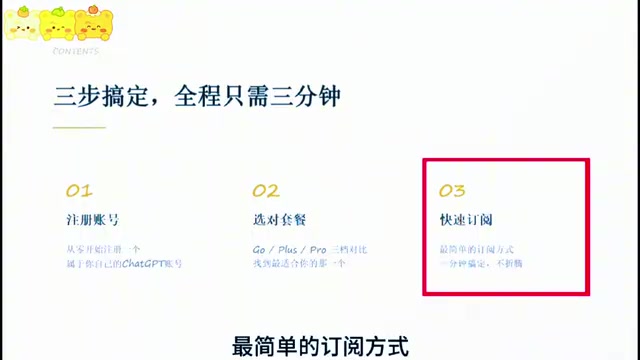
After GPT-6.2 Sol/Astra's release, how should you choose a ChatGPT membership? This article distills a Bilibili tutorial's key points, explaining the differences between Go, Plus, and Pro tiers and who each suits, plus practical steps for account registration and quick subscription—helping you pick the right plan without wasting money.
GPT 6.2 Astra/Sol Community Use Cases and In-Depth Review
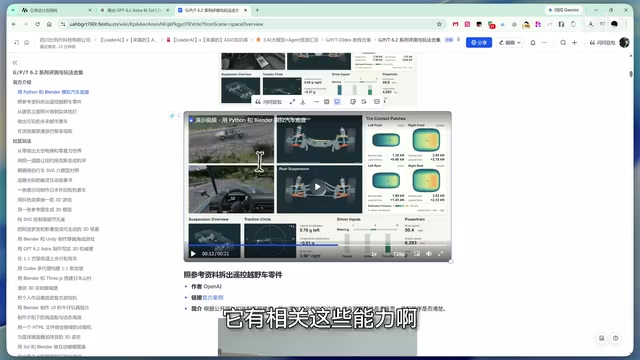
GPT 6.2 Astra/Sol review: strong in 3D modeling and Computer Use, but weak in aesthetic alignment and intent understanding. Benchmarks vs Claude Fable 5.2 and value analysis.

Anthropic IPO Explained: $104B Loss, $1T Valuation — How to Make Sense of It?
Anthropic IPO deep dive: $33B revenue, $104B loss, near-$1T valuation. Decode paper losses from convertible notes, 29x P/S, $900B commitments, and founder control.