Brazil's Serra Verde Begins Heavy Rare Earth Shipments to the US Under 15-Year Long-Term Agreement
Brazil's Serra Verde Begins Heavy Rare…
Brazil's Serra Verde ships heavy rare earths to the US under a 15-year contract, a substantive step in supply chain diversification.
Brazilian rare earth producer Serra Verde has begun shipping heavy rare earths to the US under a 15-year supply agreement. Although the value, volume, and buyer were not disclosed, it signals that non-Chinese heavy rare earth supply chains are moving from planning to actual shipment, and that downstream customers are willing to lock in terms for supply certainty. The article notes that the real bottleneck is separation and purification capacity, and that while a single deal won't change global supply and demand short-term, its demonstration effect is worth watching.
One Long-Term Deal, Two Signals
Brazilian rare earth producer Serra Verde has begun shipping heavy rare earths to the United States under a 15-year supply agreement. This brief item from Hacker News did not disclose the contract value, volume, or the specific buyer, but two signals are already clear enough: the heavy rare earth supply chain outside China is moving from "planning" to "shipping," and the long-term contract format means downstream customers are willing to lock in a term of years in exchange for supply certainty.
Heavy rare earths (such as dysprosium and terbium) are key additive elements in high-performance permanent magnets and are widely used in EV drive motors, wind turbine generators, and certain defense electronic devices. Compared with light rare earths, heavy rare earths have a higher concentration of resources and are more difficult to separate and purify, so every actual shipment from a non-Chinese source is seen as substantive progress in supply chain diversification.
Why a Long-Term Contract Rather Than Spot Purchases
The 15-year term deserves separate attention. The pain point of rare earth projects has never been mining, but rather the construction cycle and ramp-up difficulty of separation capacity—a separation plant often takes years from groundbreaking to stable output, and product consistency during the commissioning period frequently fails to meet standards. For buyers, spot procurement cannot solve the anxiety of "not being able to get goods three years from now"; for sellers, without long-term offtake commitments, it is very difficult to finance capacity expansion.
A long-term contract hedges risks for both sides: the buyer obtains priority supply rights and an anchor for the pricing mechanism, while the seller obtains predictable cash flow to support capacity ramp-up. Serra Verde had already attracted industry attention for its heavy rare earth output, and the start of shipments to the US this time shows that its separation segment has crossed the stage of "whether it can be produced" and entered the stage of "whether it can be delivered stably." This threshold is higher than most people imagine.
The core difficulty of rare earth separation lies in the extremely similar chemical properties of the elements—the ionic radius differences among lanthanides are tiny, and solvent extraction requires dozens or even hundreds of stages of cascade extraction tanks, amplified stage by stage to obtain a single high-purity product. Heavy rare earths (dysprosium, terbium) are present in low concentrations in ore and are complexly associated, with smaller separation factors and more extraction stages, placing far higher demands on process stability and impurity control than light rare earths. In addition, the separation process involves the handling of radioactive associated elements (such as thorium and uranium) and environmental permits, further lengthening the project construction cycle. Therefore, the industry often says "ore is easy to find, separation is hard to build," and the ramp-up curve of separation capacity often determines the real commercialization timing of a rare earth project—which is also why long-term contracts are crucial to seller financing.
The Actual Impact on the Supply Chain Landscape
The weight of a single agreement should be viewed with restraint. Serra Verde's scale is still limited compared with overall demand outside China, and it cannot change the global rare earth supply and demand structure in the short term. Its significance lies more in the demonstration effect: if this 15-year agreement can be performed on time, it will become a reference case in financing negotiations for other Western rare earth projects—"someone has already made it work, so can you."
Another observation point is the downstream certification cycle for heavy rare earths. Magnet manufacturers changing heavy rare earth sources usually need to go through sample testing, batch consistency, and re-validation by end customers, with the entire process measured in quarters or even years. The start of shipments is only the first step; the real test is whether future batches can stably pass certification.
The core downstream application of heavy rare earths is NdFeB permanent magnets: adding dysprosium and terbium can significantly increase the coercivity of magnets, enabling them to maintain magnetism under high-temperature and high-demagnetizing-field environments, which is particularly critical for EV drive motors and direct-drive wind turbine generators. Switching heavy rare earth sources is not a simple procurement substitution for magnet manufacturers; they need to re-validate the performance consistency of magnets under high-temperature aging, damp heat, vibration, and other operating conditions, and submit change applications to downstream vehicle or wind turbine manufacturers. Long certification cycles and high switching costs mean that once a supply chain passes certification and forms stable supply, customer stickiness is strong; conversely, a new supplier's first shipment is only the starting point for entering the certification channel.
Several Things Not Yet Clear
The original information did not specify the buyer's identity, annual supply volume, pricing mechanism (whether fixed price, index-linked, or with price floors and ceilings), or the specific category composition of the heavy rare earths. These details determine the actual value of the deal: if it is only a small-volume initial shipment for sampling and certification purposes, then "15 years" is more of a framework commitment; only if it comes with a clear annual minimum purchase volume does it constitute a true capacity lock-in.
Also unknown is whether the ore source and separation location are entirely within Brazil. In the "de-risking" discussion of rare earth supply chains, diversification at the mining end and diversification at the separation end are two different issues, and the latter is where the bottleneck lies.
Before more details are disclosed, a reasonable judgment is: this is a positive signal with a clear direction, but it is too early to interpret it as "the heavy rare earth supply landscape has already changed." What is worth tracking going forward is the actual shipment pace and whether a second Western magnet or vehicle manufacturer follows with an agreement of a similar term.
One-line Summary
Brazil's Serra Verde ships heavy rare earths to the US under a 15-year contract, marking a substantive step in supply chain diversification.
Paragraph Summary
Brazilian rare earth producer Serra Verde has begun shipping heavy rare earths to the United States under a 15-year supply agreement. Although the contract value, volume, and buyer were not disclosed, it sends two clear signals: the heavy rare earth supply chain outside China is moving from planning to actual shipment, and the long-term contract format indicates that downstream customers are willing to trade locked-in years for supply certainty. The article points out that the real bottleneck for rare earth projects lies in the construction and ramp-up of separation and purification capacity; long-term contracts help buyers obtain a supply anchor and sellers obtain cash flow to support expansion. The volume of a single agreement is limited and will not change the global supply and demand structure in the short term, but its demonstration effect deserves attention. Key details such as the buyer's identity, annual supply volume, pricing mechanism, and separation location remain unclear, and the actual value of the deal still needs to be verified by future shipment pace and certification progress.
Related articles
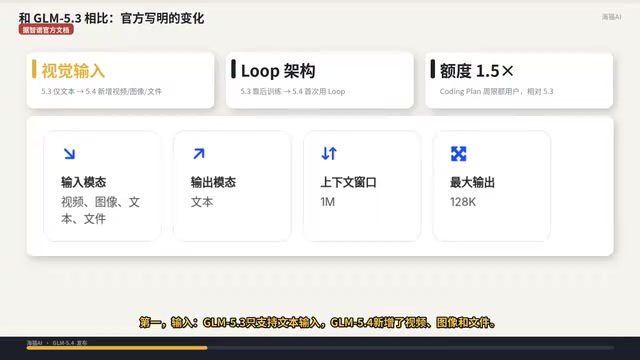
Zhipu GLM-5.4 Released: Loop Transformer Runs 28 Layers Twice
Zhipu releases GLM-5.4, the first Loop Transformer flagship: 28 layers run twice for 2-3T-equivalent intelligence, plus video and image input. API and open weights not yet released.
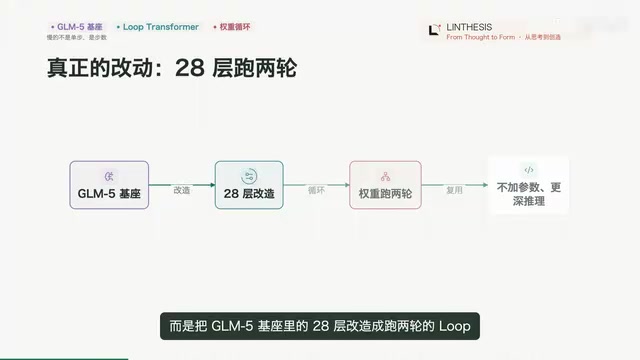
GLM-5.4 Coding Test 4.6x Slower? Unpacking the Loop Transformer Architecture
GLM-5.4 coding test took 431 minutes vs. competitor's 109, 4.6x more steps. We analyze its Loop Transformer architecture, KingBench4 score of 55.3, Max tier's 1.04M token cost, and tier selection advice.
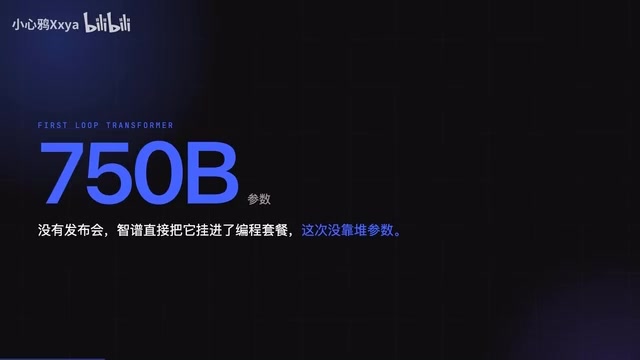
Zhipu GLM-5.4 Quietly Released: A Debut for Loop Transformer Architecture
Zhipu GLM-5.4 quietly lands in coding plans: first Loop Transformer flagship with 750B params, 1M token context, AIM math up from 19.2 to 30.4, and native vision for coding from screenshots.