Brazil Visual Diary: Favelas, the Amazon Rainforest, and Shooting in Extreme Environments

A filmmaker's field diary shooting Brazil's favelas and Amazon in extreme conditions.
This visual diary follows a filmmaking team deep into Rio de Janeiro's favelas and the Amazon rainforest, documenting safety strategies like two-hour card swaps, the rise of Chinese professional cameras, indigenous forest communication systems, and why AI and wearable cameras may soon reshape the entire imaging industry.
A Brazil Photography Journey Full of Tension
Brazil — Rio de Janeiro in particular — is a city of contradictions. As an elderly Brazilian man I met on the flight put it: "If you come to Brazil, you'll meet the warmest people in the world, a nation that lives and breathes football, and the best parties you'll ever find. But if you work with them, you'll also meet the most frustrating collaborators imaginable." That sense of fracture is precisely what makes it such rich material for creators — hidden within the chaos is a kind of beauty that can't be replicated.
For this sample footage diary, our team brought a range of specialized equipment deep into Brazil, hoping to capture the country's true face beneath the World Cup atmosphere. From Rio's favelas to the heart of the Amazon rainforest, this was more than a scenic documentation — it was a masterclass in how to execute professional filmmaking in extremely complex environments.
Shooting in the Favelas: Balancing Safety Strategy and Visual Language
We chose a relatively safe community (the Pavão-Pavãozinho type) as our shooting location, but even so, the presence of guns and drug traffickers remained an unavoidable backdrop. Filming legally required both a government permit and negotiations with local power brokers — our guide's QR check-in was essentially a notification to whoever actually controls the territory.
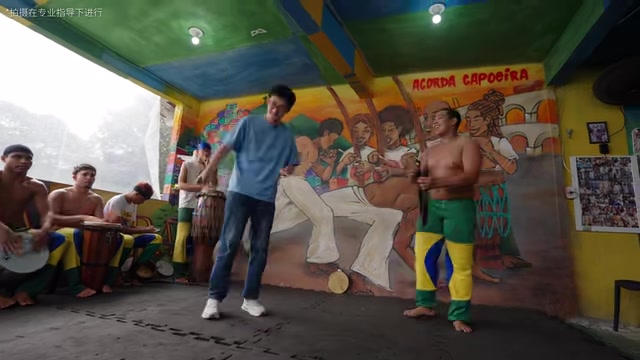
In this kind of environment, our team established one hard rule: swap memory cards every two hours during any unsafe shoot. This is a detail worth borrowing for all outdoor and documentary creators — even if the camera gets stolen, at least part of your footage survives.
Behind this strategy lies a well-developed data security framework for documentary photography. Professional documentary teams typically follow the "3-2-1 backup rule": at least 3 copies, stored on 2 different media types, with 1 copy kept offsite. In high-risk shooting environments, physically distributing memory cards is the lowest-cost form of disaster recovery. Common storage media like CFexpress and SD cards perform reliably in hot, humid tropical conditions, though extreme moisture can still cause contact oxidation. Some professional teams also pair this with encrypted memory cards or real-time wireless transfer solutions that continuously sync footage to cloud storage or a base camp NAS device — fundamentally decoupling "shooting equipment" from "footage security." It's a risk management philosophy centered on data safety, and it's extremely practical.
Another defining visual feature of the favelas is the dense web of electrical wiring. Because water and electricity have long been effectively "free" (the result of large-scale power theft that makes metering nearly impossible), years of unmaintained lines tangle and interweave into a strikingly raw urban texture. That chaos itself is excellent footage material. And the footballers, musicians, and artists who emerged from these much-maligned neighborhoods add yet another layer of powerful narrative weight.
World Cup Atmosphere and Legal Graffiti Culture
Rio's intense World Cup atmosphere was one of the central themes of this shoot. Football culture has fully permeated every corner of the city — at any moment, the streets offer emotional scenes waiting to be captured.
Brazil's street art scene deserves special attention. Since graffiti was fully legalized in 2009, you'd be hard-pressed to find a blank wall anywhere in Rio. This legislative shift has deep historical roots: Brazil's 2009 Environmental Crimes Act amendment explicitly distinguished between "destructive tagging" (pixação — Gothic-style lettering on unauthorized surfaces, still illegal) and "artistic street creation" (graffiti — permitted with property owner consent), with the latter now legally protected. Brazilian artists like Os Gemeos and Eduardo Kobra have earned international recognition for their massive photorealistic murals, with works now held in collections at institutions including the British Museum. The richness and artistic quality of these works transcends the "graffiti" label — they read more like public art installations at urban scale. Our team used the Chinese-made Vesta camera for street shooting here — compact enough to be placed anywhere for extended static shots, ultimately delivering a quiet, restrained, purely static visual style. Creators interested in street photography will also discover an added bonus: Brazilians have an incredibly high tolerance for cameras and almost never avoid the lens.
The Vesta represents a microcosm of the recent rise of Chinese professional imaging equipment. Over the past decade, Chinese manufacturers like DJI and Insta360 have made sustained breakthroughs in consumer imaging hardware, while emerging brands like Vesta are targeting the professional creator market — leveraging compact bodies paired with high dynamic range sensors to carve out a distinct competitive position in documentary filmmaking. From a global supply chain perspective, Chinese manufacturers hold significant pricing power across key components including CMOS sensors, lens coatings, and image processing chips. This has allowed them to enter professional markets previously dominated by Sony, Canon, and Panasonic at significantly lower cost — a trend that has accelerated markedly alongside the broader domestic substitution wave in recent years.
The Amazon Rainforest: Imaging Challenges in an Extreme Natural Environment
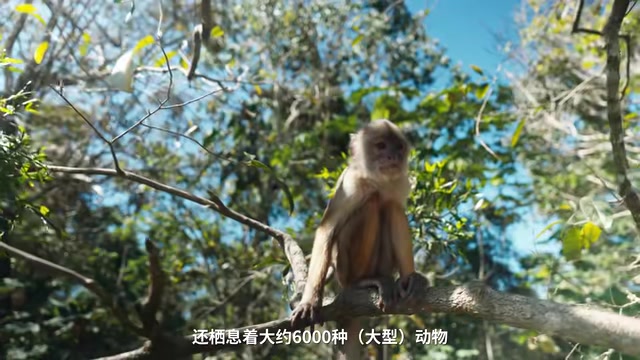
Leaving the city, our team pushed deep into the Amazon rainforest — Brazil's portion covers approximately 4 million square kilometers, or roughly 60% of the entire rainforest. It's home to around 6,000 animal species and over 40,000 plant species, making it the planet's largest repository of biodiversity and the ultimate proving ground for extreme environment cinematography.

Deep in the rainforest, the team took part in a local Arapaima fishing experience (scientific name: Arapaima gigas, known locally as Pirarucu). This fish — dubbed the "Amazon cod" — is extraordinarily powerful; adults can reach 3 meters in length and weigh over 200 kilograms. What makes it particularly remarkable is its primitive lung, which requires it to surface every 10–20 minutes to breathe — a trait that once made it devastatingly easy to harvest. By the mid-20th century, it had been pushed to the brink through overfishing. Starting in 1996, the Brazilian government partnered with the WWF to implement a "sustainable management quota system," authorizing local communities to independently monitor population numbers and harvest within quotas — aligning economic incentives with conservation goals. The UN Food and Agriculture Organization has cited this as a global model for community-led fishery conservation. Interestingly, the "fishing" here doesn't involve hooks at all; it's essentially an interactive feeding experience, and the population has been gradually recovering from the edge of endangerment.
Another major challenge of rainforest shooting is the complete unpredictability of the weather. Rainstorms arrive without warning, placing extreme demands on equipment protection and shooting schedules — waterproofing solutions and contingency plans are both non-negotiable.
Indigenous Wisdom: The Human Narrative in Visual Documentation
To truly penetrate the rainforest, the team followed a local indigenous guide. Our guide Pico is the son of a tribal chief, and his family has lived here for over 25 years. He can fashion a tree-climbing aid system called "Pekonya" from vines with his bare hands in a matter of seconds — a display of survival skills that commands genuine awe.
Even more fascinating was the indigenous "forest communication system" — a set of sound signals similar to Morse code with an effective range of up to three kilometers. From an information theory perspective, this system encodes meaning through rhythmic and tonal variations in sound, closely mirroring the binary dot-dash logic of Morse code, yet developed entirely independently within the rainforest ecosystem — a vivid example of convergent evolution in human information transmission. Their beliefs also hold that you must never call out each other's names directly in the forest, as once a name is "heard" by nature, it invites interference. This cultural logic is itself superb documentary material, lifting the footage beyond pure visual recording and into the deeper dimensions of human storytelling.
What This Journey Reveals About the Next Turning Point in the Imaging Industry
At the journey's end, our creator shared an observation with real industry insight: over the past year or two, his enthusiasm for camera reviews had waned, because traditional camera products have become increasingly homogeneous — sensors converging, bodies looking alike, with little genuine breakthrough.
But recently, his interest has been reignited, because the industry is approaching a genuine inflection point. The convergent rise of smartphones, handheld gimbal cameras, and AI capabilities is forcing traditional imaging manufacturers to deliver truly differentiated products. He's particularly bullish on two directions: a new leap forward for mirrorless cameras, and the emerging form factor of "glasses-based shooting" — still in its infancy, but with long-term potential not to be underestimated.
"Glasses-based shooting" points to a new category of wearable imaging devices represented by Meta Ray-Ban smart glasses and the RayNeo Air series. These devices embed cameras into eyeglass frames to enable "first-person perspective passive recording," fundamentally disrupting the traditional camera paradigm of raise-focus-shoot. For documentary photography in particular, the implications are profound. AI integration is manifesting across multiple layers: real-time computational photography can perform HDR compositing and noise processing at the moment of capture; AI editing assistants can automatically identify highlight moments and generate rough cuts; and as text-to-video models mature, the boundary between "shooting" and "generating" is increasingly blurred. The real threat facing traditional camera manufacturers isn't just the closing gap from smartphone computational photography — it's the paradigm-level restructuring of the entire image creation workflow driven by AI. Competition on hardware specs will gradually give way to "AI-native" end-to-end creative experiences.
This perspective offers genuine reference value for readers tracking imaging technology: when traditional hardware hits an innovation ceiling, real breakthroughs tend to come from reimagining form factors and interaction models, and from deep integration of AI capabilities. And this Brazilian shoot — beautiful in its chaos — serves as a vivid cross-section for observing the co-evolution of visual storytelling and imaging technology.
Key Takeaways
Related articles

Free Unlimited Claude Code Solution: Agnes AI + CC Switch Setup Guide
No paid subscription needed — pair the free AI platform Agnes AI with the open-source tool CC Switch to provide a backend for Claude Code, enabling unlimited free calls to text, image, and video models. This guide covers the full setup, test results, and usage boundaries.

A Complete Zero-Cost Guide to Getting Started with Claude Code for Beginners in China
A beginner's guide to Claude Code for users in China: two installation methods (command line and IDE plugin), full configuration steps for replacing the official API with the free domestic LongCat model, and a hands-on demo of building a small tool with natural language, plus tips.

When the NSA Gets Involved: The AI Supply Chain Crisis Behind Open-Source CVEs and API Key Hijacking
Multiple open-source projects disclosed severe CVEs in one day, PHP flaws alarmed the FBI, and Railway and OpenCode were breached with API keys stolen. This article breaks down the vulnerability window, AI-accelerated exploitation, and the AI supply chain crisis behind the API key black market, with a developer defense checklist.