Breaking Down the Core Skills of an AI Application Engineer: From Beginner to Industrial-Grade Deployment

A systematic breakdown of the four core skill blocks and four-stage roadmap for AI application engineers.
Knowing how to call an API doesn't make you an AI engineer. This article breaks down the complete capability structure of an AI application engineer—covering Python fundamentals and underlying principles, small-model engineering, LLM fine-tuning (LoRA/QLoRA), Agent development, and enterprise-grade projects—along with a four-stage learning roadmap to help you advance systematically.
Knowing How to Call an API Doesn't Make You an AI Engineer
As deploying large model applications becomes a hard requirement for enterprises, "AI Application Engineer" has become one of the hottest technical roles on the market. But the reality is that this industry has a particularly clear dividing line: on one side are people who only know how to play with prompts and call APIs, and on the other are engineers who can truly bring models into industrial-grade projects. The gap between the two—in both salary and career prospects—is far from trivial.
Knowing how to call an API doesn't make you an engineer. What truly determines whether you can enter the industrial world is a complete, clear skill structure. This article systematically breaks down the core capabilities a qualified AI application engineer should possess, and includes an actionable four-stage learning roadmap.
Fundamentals Are Non-Negotiable: Python and Underlying Principles
No matter which technical path you take, fundamentals are the first hurdle you can't avoid. Python must be second nature to you—but that's far from enough; you can't just know how to call libraries.
The engineering depth of Python goes far beyond writing scripts. Python became the language of choice for AI engineering not only because of its clean syntax and rich library ecosystem, but also because its underlying mechanisms align exceptionally well with AI engineering. Truly mastering Python means: understanding how NumPy's broadcasting mechanism efficiently performs vectorized operations without copying data, thereby avoiding inefficient Python loops; being familiar with the working principles of PyTorch's dynamic computation graph and its automatic differentiation engine (Autograd), and knowing the specific implications of .grad, .detach(), and no_grad() in memory management; mastering Python's asynchronous IO (asyncio) and multi-threading/multi-processing concurrency models, which are crucial when building high-concurrency inference services; and understanding memory management and the impact of the GIL (Global Interpreter Lock) on multi-threading performance.
It's worth specifically noting that the GIL (Global Interpreter Lock) is a mutex mechanism designed by the CPython interpreter to protect memory safety. It ensures that only one thread can execute Python bytecode at any given moment—meaning Python's multi-threading can hardly achieve true parallel acceleration on CPU-intensive tasks. In engineering, you typically need to work around this limitation via multiprocessing or C extensions (such as the BLAS library underlying NumPy). The coroutine model of asyncio, on the other hand, is designed specifically for IO-intensive scenarios, and can handle large numbers of concurrent requests with extremely low memory overhead in high-concurrency inference services. These "invisible" low-level details often play a decisive role in performance tuning and bug troubleshooting in production environments, and are also the hidden threshold that distinguishes junior from senior engineers in interviews.
Why the Underlying Principles Can't Be Skipped
Many beginners are content to import various libraries and stitch together ready-made code, but the moment they enter an interview, the problems are exposed. How the low-level forward pass is written, how attention is computed—you must truly understand these, otherwise an interviewer can see through you in two sentences.
The attention mechanism and forward propagation are core interview topics. The attention mechanism is the core mathematical foundation of modern large models. Its history can be traced back to the early explorations by Bahdanau et al. in machine translation in 2014—at that time, they found that the traditional Seq2Seq approach of compressing an entire input sequence into a single fixed vector caused a serious information bottleneck, so they introduced dynamic alignment weights to let the decoder "focus" on different positions of the input sequence at each step. This idea matured in the form of the Transformer architecture in the landmark 2017 paper Attention Is All You Need published by the Google Brain team, which completely abandoned the sequential recurrence structure of RNN/LSTM. Using pure attention mechanisms, it achieved more efficient parallel computation and stronger long-range dependency capture, thereby pioneering the technical paradigm of modern large models.
Taking the Transformer architecture as an example, Self-Attention measures the correlation between tokens in a sequence by computing the dot products of the Query, Key, and Value matrices. Its core formula is Attention(Q,K,V) = softmax(QKᵀ/√dk)V, where dividing by √dk mitigates the vanishing gradient problem caused by overly large dot product values. Multi-Head Attention executes this mechanism in parallel multiple times, allowing the model to simultaneously capture semantic associations from different "representation subspaces"—this is the common cornerstone of all mainstream large models such as GPT and LLaMA. The forward pass refers to the complete computation process in which input data starts from the network's input layer, passes layer by layer through linear transformations (matrix multiplication) and nonlinear activation functions (such as ReLU, GELU), and finally outputs a prediction result—it is the basic unit of neural network inference. Truly understanding these two means you can implement them in code from scratch, rather than just calling the wrapped APIs of PyTorch or HuggingFace.
Backpropagation is equally an unavoidable underlying fundamental. In contrast to forward propagation, backpropagation is the core algorithm for neural network training. In essence, it is the systematic application of the chain rule on a computation graph: starting from the loss function, it computes the partial derivative (gradient) of the loss with respect to each parameter layer by layer in reverse along the computation graph, then updates the weights in the gradient direction via an optimizer (SGD, Adam, etc.).
Understanding backpropagation requires not only knowing the formulas, but also being able to explain why deep networks are prone to vanishing/exploding gradient problems. The root cause of vanishing gradients lies in the fact that the derivative value ranges of activation functions like sigmoid and tanh fall between (0, 1). When gradients propagate backward through dozens of layers, the cumulative multiplication effect causes them to decay exponentially toward zero, making the parameters in shallow layers almost impossible to update. Exploding gradients are the opposite—in structures like RNNs, gradients can expand exponentially when the weight matrix norm is large. Residual connections (the skip structure of H(x) = F(x) + x) provide a "highway" for gradients that directly bypasses several layers, allowing gradients to propagate unimpeded to shallow layers. Batch normalization (BatchNorm) stabilizes the distribution of activation values during training by normalizing each layer's output to a standard distribution. This depth of understanding—"knowing the why behind the what"—is the fundamental watershed that distinguishes a true engineer from a "library caller."
This means that in addition to engineering skills, you also need a solid mathematical and code-level understanding of core concepts like neural network forward propagation and the attention mechanism. This is the first threshold that separates "library callers" from true engineers.

Four Essential Blocks of Enterprise-Grade Capabilities—None Can Be Missing
After laying a solid foundation, the real advancement lies in enterprise-grade capabilities. The following four modules are all indispensable.
Block One: Engineering Skills for Small Models
In real business, not every scenario requires a large model with billions of parameters. The training, deployment, optimization, and engineering implementation of small models are often the preferred solution—cost-controllable and faster to respond. Mastering small-model engineering skills is the fundamental value base of an AI engineer.
Small-model engineering covers the complete technical chain from compression to deployment. In industrial deployment scenarios, transforming a model from a research state to a production state requires a series of engineering processes: Model quantization compresses model parameters from FP32 floating-point numbers to INT8 or even INT4 integer representations, shrinking model size by 4–8x and significantly boosting inference speed with minimal precision loss. The core challenge of quantization lies in handling the numerical range differences of weights (the outlier problem), which is also the main breakthrough of post-training quantization algorithms like GPTQ and AWQ designed for large language models. ONNX (Open Neural Network Exchange) is an open neural network exchange format jointly launched by Microsoft and Facebook. Its core value lies in breaking the "ecosystem barriers" between deep learning frameworks—after exporting a model trained in PyTorch or TensorFlow into the standard ONNX computation graph format, it can achieve seamless cross-framework deployment across different hardware platforms (CPU, GPU, NPU, edge devices) and inference engines (ONNXRuntime, TensorRT, OpenVINO), greatly reducing the migration cost of models from lab to production. TensorRT is NVIDIA's high-performance deep learning inference optimization library for its GPUs. Through techniques such as operator fusion (merging multiple computation nodes into a single CUDA Kernel to reduce memory read/write operations), precision calibration (FP16/INT8 mixed precision), and dynamic shape optimization, it can compress inference latency to the extreme, and is the industry-standard solution for GPU server deployment in production environments. In addition, in edge deployment scenarios, you also need to master techniques for further compressing models, such as model pruning (removing redundant weight connections) and knowledge distillation (using a large model to teach a small model).
Choosing an inference serving framework is another key engineering skill. Beyond model compression, how to efficiently "package" a model into an inference service that can handle production traffic also tests an engineer's system design ability. Triton Inference Server (by NVIDIA) supports parallel hosting of multiple models and frameworks, with a built-in dynamic batching mechanism that automatically aggregates scattered requests into larger batches to improve GPU utilization. vLLM is a high-throughput serving framework designed specifically for large language model inference. Its core innovation, PagedAttention, borrows the paging idea from operating system virtual memory, dividing the KV Cache into non-contiguous memory blocks for management, minimizing memory fragmentation, with measured throughput several to over ten times higher than the native HuggingFace implementation. The KV Cache is essentially an optimization strategy that caches the already-computed Key-Value matrices during Transformer autoregressive generation—since each generation step only needs to attend to the newly added token, reusing the cache avoids redundant computation, and PagedAttention brings the memory management efficiency of this cache close to the operating system level. BentoML provides a model serving encapsulation closer to the application layer, supporting one-click cloud deployment. Understanding the design principles and applicable scenarios of these frameworks means you can make reasonable technical choices when facing inference needs of different business scales, rather than "only having one hammer." This series of engineering skills for "compressing and deploying" models is the core engineering competitiveness that distinguishes you from an algorithm researcher.
Block Two: Large Model Fine-tuning Skills
General-purpose large models struggle to directly meet vertical business needs, making fine-tuning capabilities a core competitive advantage. Whether it's full-parameter fine-tuning or efficient fine-tuning methods like LoRA, being able to tune an open-source large model into a specialized model adapted to the business is a hard requirement in industry.
LoRA is currently the most mainstream fine-tuning solution for enterprise deployment. LoRA (Low-Rank Adaptation) is a parameter-efficient fine-tuning method (PEFT) proposed by Microsoft Research in 2021. Its mathematical principle is based on a key assumption: during the adaptation of a pretrained model's weight update matrix for a specific task, the update is essentially low-rank—that is, it can be approximated by the product of two small matrices. This assumption was inspired by research into the "over-parameterization" phenomenon in deep learning—the parameter space dimensionality of large pretrained models far exceeds the degrees of freedom required for a specific downstream task, so the amount of weight change required for task adaptation actually lies on a low-dimensional manifold.
In concrete implementation, while freezing all weights of the original pretrained model, LoRA injects two trainable low-rank decomposition matrices A (shape d×r) and B (shape r×k) in parallel into each Transformer's attention layer, where the rank r is much smaller than the original dimensions d and k (typically 4, 8, or 16). During training, only A and B are updated, and during inference, the product BA is added back to the original weights, achieving zero additional inference latency. This makes the number of trainable parameters typically only 0.1%–1% of full-parameter fine-tuning, making it possible to fine-tune 7-billion-parameter (7B) or even 13-billion-parameter (13B) models on consumer-grade GPUs (such as a single RTX 3090/4090 with 24GB VRAM), greatly lowering the hardware threshold for industrial deployment. LoRA and its variants QLoRA (combined with 4-bit NF4 quantization, enabling fine-tuning of 65B-parameter models on a single 24GB VRAM GPU) and DoRA (Weight-Decomposed Low-Rank Adaptation, further improving convergence quality) are currently the most mainstream technical solutions for enterprises to privately deploy vertical-domain specialized models. Mastering the complete QLoRA engineering workflow—from data preparation and hyperparameter tuning to model merging and release—is an essential skill for a large model engineer.
Fine-tuning data engineering is a critical yet often overlooked step. There's a widely circulated consensus in the industry: "For model fine-tuning, seventy percent depends on data, thirty percent on method." The impact of data quality on fine-tuning results often far exceeds algorithm selection itself. In engineering practice, data engineering covers several key steps: Data collection and cleaning, which includes building the training set from various channels such as raw business logs, manual annotation, and the Self-Instruct method (having an existing strong model generate instruction data), and ensuring data quality through deduplication (algorithms like MinHash LSH) and quality filtering (perplexity filtering, rule-based filtering). Instruction format design—different base models (LLaMA, Qwen, Baichuan, etc.) have their own chat templates, and an incorrect format will prevent the model from correctly understanding instructions. Data mixing strategy—in multi-task fine-tuning scenarios, the mixing ratio of different types of data significantly affects the model's performance on each task, requiring ablation studies to determine the optimal ratio. Catastrophic forgetting prevention and control—that is, how to preserve the model's original foundational reasoning and language abilities by adding general-capability retention data, while gaining improvements in vertical-domain capabilities. Catastrophic forgetting is essentially the neural network's tendency to overwrite the parameter space of old tasks when learning new ones; in engineering, beyond mixing data, regularization methods like EWC (Elastic Weight Consolidation) can also be used for prevention and control. A true large model engineer must possess an end-to-end data flywheel mindset, rather than just "running a training script."
Block Three: Agent Development Skills
As AI applications move from "conversation" to "execution," Agent development is becoming the most cutting-edge direction. Endowing models with the ability to call tools, plan tasks, and perform multi-step reasoning is currently the hottest and most demanding technical direction, testing one's comprehensive foundation.
Understanding the underlying architecture of Agents is essential for building reliable AI systems. The concept of AI Agents originates from the "autonomous agent" idea in software engineering, and the emergence of large models has given them true language understanding and dynamic planning capabilities. A complete AI Agent system typically operates through the coordination of four core modules: The Planning module is responsible for decomposing a user's complex goal into an executable chain of subtasks, including task decomposition and self-reflection. The Memory module is divided into short-term memory (the conversation context window) and long-term memory (historical information stored in an external vector database), solving the problem of the model's limited context length. The Tool Use module allows the Agent to call external tools via the Function Calling mechanism, such as search engines, code interpreters, database query APIs, and calculators, breaking through the knowledge and capability boundaries of a pure language model. The Action module is responsible for actually executing the planned operations and returning results.
ReAct (Reasoning + Acting, proposed by Princeton University and Google Brain in 2022) is the most widely adopted Agent reasoning paradigm today. Its core innovation lies in interweaving the "reasoning trace" (Chain-of-Thought) and "action execution" into a unified sequential output, completing complex tasks through alternating loop iterations of "Thought—Action—Observation." Compared to pure reasoning or pure action approaches, it offers stronger interpretability and error-correction capabilities. Chain-of-Thought itself is a prompting technique proposed by Google Research in 2022, which significantly improves the accuracy of complex reasoning tasks by guiding the model to output its reasoning process step by step rather than giving an answer directly. ReAct fuses this idea with real-world tool interaction, and is the foundational design paradigm of current industrial-grade Agent systems.
The current mainstream Agent development frameworks include LangChain (the most complete ecosystem, with a component-based design suitable for rapid prototyping), LlamaIndex (focused on deep optimization of data indexing and RAG scenarios), and Microsoft's AutoGen (supporting a Multi-Agent collaboration architecture that allows multiple specialized Agents to converse and collaborate to complete complex tasks, representing a cutting-edge direction for industrial-grade complex scenarios). Engineers need to understand the underlying implementation logic of these frameworks, not just how to call their high-level APIs, so they have the ability to customize and extend when the frameworks can't meet requirements.
Agent reliability engineering is the real challenge for production deployment. In an experimental environment, an Agent can complete impressive demonstrations; but in a production environment, reliability issues are the core challenges engineers face daily. These include: Error handling and retry mechanisms for tool calls—the model may generate malformed tool call parameters (such as non-compliant JSON format), and the system needs graceful degradation capability. State persistence for long-chain tasks—when an Agent needs to execute dozens of operations, the storage of intermediate states and the resume-from-checkpoint mechanism are crucial. Token consumption control—the context of complex Agent tasks grows exponentially with the number of conversation rounds, requiring a reasonable context compression strategy. Prevention and control of erroneous actions caused by hallucinations—hallucinations generated by the model during the planning phase may lead to calling the wrong tool or passing incorrect parameters, requiring the design of Human-in-the-Loop approval nodes to control high-risk operations. The ability to handle these engineering details is the essential gap between being able to make a Demo and being able to build a product.
Block Four: Enterprise-Grade Hands-On Project Experience
The first three blocks are the capability foundation, and the fourth—real enterprise-grade hands-on project experience—is your core bargaining chip for landing a high salary. In interviews, a complete project deployment experience is more convincing than any theoretical certificate.

What You Fear Most in Learning Isn't Difficulty, but the Lack of a Roadmap
What you fear most in learning isn't difficulty—it's the lack of a roadmap. If the direction is wrong, no amount of effort will pay off.
The Four-Stage Learning Roadmap
The following four stages clearly tell you what to learn first, what to learn next, what books to read, and what projects to practice—a plan you can follow point by point:
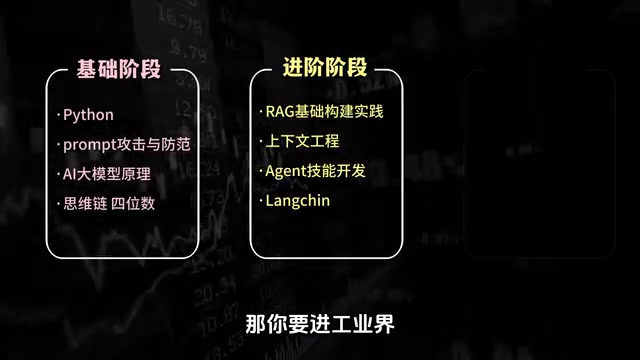
- Stage One: Solidify Python and the underlying principles of deep learning (focus: hand-writing Attention, implementing MLP forward and backward propagation)
- Stage Two: Small-model engineering and large-model fine-tuning practice (focus: hands-on LoRA fine-tuning, model quantization and ONNX deployment)
- Stage Three: Agent development and RAG (Retrieval-Augmented Generation) hands-on practice
- Stage Four: Complete enterprise-grade project deployment
RAG is the most core deployment technology of Stage Three. RAG (Retrieval-Augmented Generation) was formally proposed by Meta AI Research in the 2020 paper Retrieval-Augmented Generation for Knowledge-Intensive NLP Tasks. It is the mainstream engineering solution for solving the two core pain points of large models—insufficient knowledge timeliness (training data has a cutoff date and cannot perceive new events occurring after training) and the hallucination problem (where the model "talks nonsense with a straight face" when lacking sufficient knowledge support). The root of the hallucination problem lies in the fact that a language model's generation mechanism is probability-distribution-based next-token prediction—the model tends to generate content that "sounds reasonable" rather than being strictly fact-based. RAG constrains this behavior at the engineering level by forcibly injecting external factual knowledge into the context.
The RAG workflow is divided into two stages: In the offline construction stage, enterprise private documents (PDF, Word, web pages, etc.) are split into fixed-size text chunks according to a certain strategy (Chunk, typically 512–1024 tokens, with an appropriate overlap window set to preserve contextual coherence). Each text chunk is transformed into a high-dimensional semantic vector (typically 768 or 1536 dimensions) via an Embedding model (such as OpenAI's text-embedding-ada-002, or open-source models like BGE-large-zh and M3E) and stored in batch into a vector database (such as Faiss for lightweight local deployment, Chroma for development prototyping, and Milvus and Weaviate for production-grade distributed scenarios). In the online retrieval stage, the user's input query is also vectorized, and the most semantically relevant Top-K text chunks are retrieved from the vector database via approximate nearest neighbor search (ANN, such as the HNSW algorithm), then concatenated into the prompt's context to guide the large model to generate answers based on these real materials, rather than fabricating them.
The essence of an Embedding model is to map text into semantically similar regions of a high-dimensional vector space, so that expressions that differ but are semantically close—such as "Beijing's weather" and "the capital's climate"—are close in the vector space, while the vector database uses efficient indexing structures like HNSW (Hierarchical Navigable Small World graph) to achieve millisecond-level approximate nearest neighbor retrieval among billions of vectors. Together, these two form the technical foundation of a RAG system.
Beyond standard RAG (Naive RAG), engineering practice also requires mastering advanced variants such as: HyDE (Hypothetical Document Embeddings, which first has the LLM generate a hypothetical answer before retrieval, improving recall for low-frequency long-tail questions), Self-RAG (where the model autonomously decides whether retrieval is needed and critically evaluates the retrieval results), and GraphRAG (proposed by Microsoft, which builds document knowledge into a knowledge graph structure, significantly improving the answer quality of complex multi-hop reasoning questions). In addition, hybrid search (fusing and re-ranking vector semantic retrieval and BM25 keyword retrieval results via the RRF algorithm) has become a standard strategy for improving recall in production environments. BM25 is a classic information retrieval algorithm based on word frequency statistics, good at precisely matching specific keywords (such as product models and proper nouns), complementing the semantic understanding capabilities of vector retrieval. RRF (Reciprocal Rank Fusion) is a fusion algorithm that can merge and rank multi-path retrieval results without any parameter tuning, balancing effectiveness and simplicity in engineering practice.
A RAG evaluation system is an important hallmark of engineering maturity. A production-grade RAG system must not only "run" but also be "quantifiable." Mainstream RAG evaluation frameworks in the industry, such as RAGAS, provide a systematic set of multi-dimensional evaluation metrics: Faithfulness measures the factual consistency between the generated answer and the retrieved context—i.e., whether the model "says what the context supports." Answer Relevancy measures how relevant the generated answer is to the original question. Context Precision and Context Recall respectively evaluate the proportion and coverage of useful content in the text chunks returned during the retrieval stage. In engineering practice, establishing this automated evaluation pipeline and integrating it into the CI/CD process is key infrastructure for ensuring the iteration quality of a RAG system. Being able to design and implement a RAG evaluation system is an important watershed distinguishing "being able to build RAG" from "being able to build a RAG product." RAG has become a standard technology stack for scenarios such as enterprise knowledge base Q&A, intelligent customer service, compliance review, and code assistants, and is also one of the highest-frequency topics examined in AI engineer interviews. You must be able to build a complete pipeline from scratch and understand the optimization space of each stage.
Conclusion: What You Compete On Is Structure, Not Time
This industry is highly competitive, but what you compete on is structure, not time.
Simply piling up study hours won't create a gap; true competitiveness comes from the completeness and systematic nature of your skill structure. Rather than blindly grinding away, it's better to first establish a clear roadmap and advance solidly stage by stage. For AI application developers who want to enter the industrial world, this capability checklist is worth repeatedly referencing and continuously planning around.
Related articles

WorkBuddy Step-by-Step Tutorial: Get an Automated Workflow Running in Half an Hour
A step-by-step breakdown of the WorkBuddy automated workflow: why most people only use it as a chat app, how the 27-anchor course and 12 templates help beginners get up and running in half an hour, plus notes on usage boundaries.

The Truth About Free Claude Code: Three Legitimate Paths and One Scam
Is free Claude Code possible? We break down the real cost of Pro and Max (with exchange rates and taxes), how community free methods work and their privacy trade-offs, plus fake installers and phishing traps—and three legitimate free paths.
Codex Cloud Mode Explained: Environment Setup and Use Cases
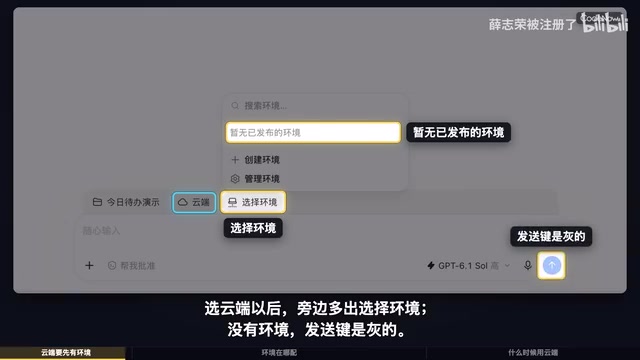
This article explains how Codex cloud mode works, environment setup steps, and use cases, including how to create environments, connect GitHub repositories, set scheduled tasks, and compare cloud vs. local mode.