Building a Theresa-Themed Plugin for DeepSeek Harness by Hand, Open-Sourcing Planned

Bilibili creator builds a Theresa theme plugin for DeepSeek Harness, delaying open-source due to material copyright concerns.
Bilibili creator Zhuge and Da Feiyu shared a "Theresa" theme plugin for DeepSeek Harness, integrating Arknights character Theresa's visual elements into the AI coding tool's interface. The plugin offers day/night background transparency adjustment, sidebar image upload and sizing, and phantom page text customization. Due to copyright concerns over official materials and fan art, open-sourcing is pending community feedback, though the article suggests a "code open-source, materials external" approach to mitigate risks.
Bilibili creator Zhuge and Da Feiyu (hereafter "Zhuge") recently shared a "Theresa" theme plugin custom-built for DeepSeek Harness, showcasing the plugin's full interface and customization options. The plugin deeply integrates visual elements of the Arknights character Theresa into the AI tool's interface. The author is currently soliciting community feedback on material copyright issues and plans to open-source it directly on GitHub if conditions permit.
What the Plugin Looks Like: Full Replacement from Background to Logo
According to the video demonstration, the entire interface has been rebuilt around a Theresa theme. The background uses images of Theresa, the sidebar features her character art, and even DeepSeekAd Harness's original logo has been replaced with the Black Crown. According to Zhuge, the plugin module in the bottom-right corner comes from another developer's "Little Whale plugin" — he simply swapped the character to Theresa. The bottom-left corner features two artistic signatures designed by Doujie as decorative elements for the interface.
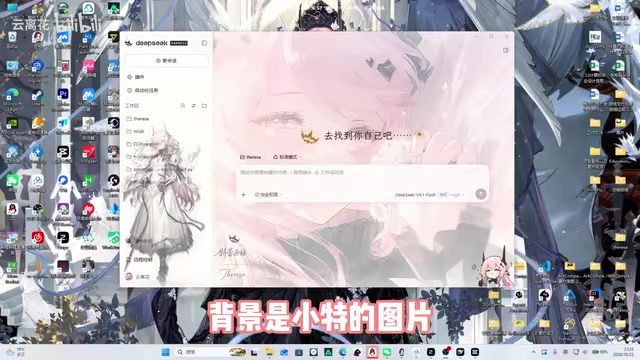
This level of customization isn't just a simple color swap or image replacement — it's a component-by-component replacement of the Harness interface. For users who enjoy injecting personal aesthetics into their development tools, these theme plugins offer significant emotional value — turning a cold AI coding environment into a familiar character scene makes the immersive experience noticeably different when working.
DeepSeek Harness is an AI coding tool released by DeepSeek (similar to an agent runtime environment within an IDE). Its "plugin" mechanism allows developers to replace or extend interface components by mounting modules. The "theme plugin" discussed in this article is not an official extension in the store, but rather an unofficial customization created by community developers using Harness's open interface hooks (such as sidebar, background layer, Logo slots, etc.). Understanding this is crucial: it demonstrates that Harness's interface layer is programmable, but it also means these plugins don't enjoy official compatibility guarantees — after Harness version updates, the author may need to sync adaptations.
Customization Capabilities: Transparency, Image Upload, and Phantom Page Text
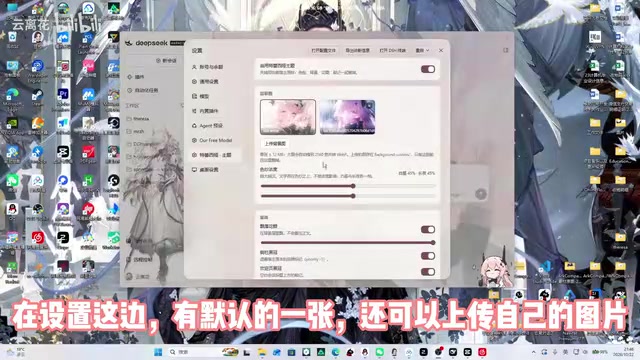
Zhuge provides several adjustable parameters on the settings page. Two progress bars control background transparency for day mode and night mode respectively, allowing users to adjust based on ambient light or visual preference. Sidebar images also support upload and size adjustment, not limited to default materials.
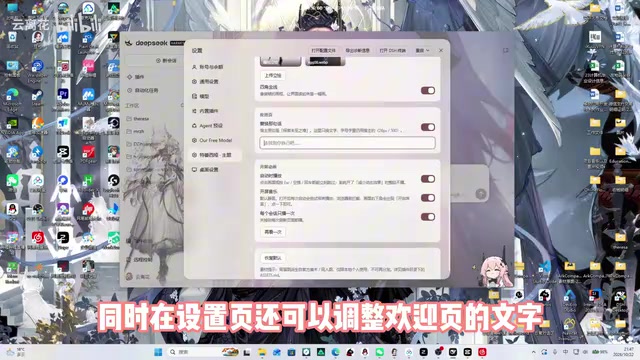
Additionally, the settings page supports adjusting the text content of the phantom page. This feature makes the plugin more than just a "reskin" — it offers a degree of personalized configuration space. For users who want to completely transform the interface into their own exclusive style, these options lower the barrier to secondary modification.
Open-Source Uncertainty: Copyright Concerns Over Official Materials and Fan Art
Zhuge explicitly stated in the video that it's currently uncertain whether the plugin can be open-sourced, as it uses official materials and some fan art. He hopes the community can offer insights — if possible, he'll open-source it directly on GitHub for everyone to download and try for free.
This concern is not unfounded. When theme plugins involve visual materials such as character art and logos, redistribution of official materials may touch copyright boundaries, and the use of fan art also requires respecting the original artists' authorization wishes. A feasible compromise: open-source the plugin code framework but don't bundle copyrighted image resources in the repository — instead, have users prepare materials themselves and place them in designated directories. This way, technical implementation can be shared while avoiding direct material distribution risks.
In open-source practice, the copyright status of "code" and "materials" are separate. Plugin source code can typically be released under permissive licenses like MIT or Apache-2.0, but the rights to image materials such as character art and logos remain with the original rights holders or fan artists — the code license does not automatically cover these resources. Therefore, the common community practice is "code open-source, materials external": the repository only retains loading logic and placeholder files, with users placing legally obtained images themselves. This neither hinders technical sharing nor allows the repository to become a distribution source for infringing materials.
Significance for the DeepSeek Harness Ecosystem
As an AI coding tool, DeepSeek Harness's plugin ecosystem is still in its early stages. A theme plugin may seem like just a visual change, but it validates the customizability of the Harness interface and provides a reference for more community plugins to follow. From the "Little Whale plugin" to the "Theresa theme," we can see developers have been spontaneously exploring the boundaries of Harness extensibility.
If the plugin is ultimately open-sourced successfully, it could become one of the earlier reusable theme templates in the Harness community, attracting more users to participate in interface customization and plugin development. For AI tools, ecosystem vitality often depends not only on core functionality but also on these seemingly peripheral community creations that enhance users' sense of belonging.
Currently, the open-source decision for the plugin awaits Zhuge's communication with the community. Users interested in the project can leave suggestions under the original Bilibili video or follow the subsequent developments of its GitHub repository.
One-line Summary
Bilibili creator builds a Theresa theme plugin for DeepSeek Harness, delaying open-source due to material copyright concerns.
Paragraph Summary
Bilibili creator Zhuge and Da Feiyu shared a "Theresa" theme plugin custom-built for DeepSeek Harness, deeply integrating visual elements of the Arknights character Theresa into the AI coding tool's interface: background, sidebar character art, and even the logo have all been replaced, while the bottom-right module is reused from another developer's "Little Whale plugin." The settings page offers day/night mode background transparency adjustment, sidebar image upload and size adjustment, and phantom page text customization, providing room for secondary configuration. Due to the plugin's use of official materials and fan art, the author has not yet decided whether to open-source it and is soliciting community feedback. The article notes that the plugin validates the customizability of the Harness interface and, if open-sourced, could become one of the community's earlier theme templates, suggesting a "code open-source, materials external" approach to avoid copyright risks.
Related articles

Build an AI Super Employee System at Zero Cost: A Full Breakdown of Automated Agent Workflows
A deep breakdown of the AI super employee system demoed on Bilibili: agent orchestration, digital human voiceovers, map and enterprise lead generation, 24/7 customer service, and legal modules. We analyze the business logic and compliance risks behind zero-cost signup to help entrepreneurs judge the real ROI of this AI digital employee system.

The Essential Difference Between Chatbots and AI Agents: Crossing from Conversation to Execution
What's the difference between a chatbot and an AI agent? Based on the MCP series on the Learn Tech channel, this article uses examples like booking flights and summarizing notes to explain: a chatbot only gives answers, while an agent actually completes tasks through a think-act-observe loop. It breaks down the four core components—model, tools, memory, and goal—as well as MCP's role as a bridge, and discusses agents' applicable boundaries and permission risks.

Free GitHub Repo: 342 Hours of AI Courses, from Math to MCP Servers
A free GitHub repo offers 342 hours of AI courses: 523 lessons across 20 phases, from math fundamentals to agent building and MCP servers. Nearly 100,000 learners have started.