Building an Enterprise Knowledge Base with RAG: A Complete Guide from Principles to Optimization

A complete guide to building and optimizing enterprise RAG knowledge base systems from principles to production.
This article provides a deep dive into building enterprise knowledge bases using RAG (Retrieval Augmented Generation) technology. It covers the six core optimization areas: vector database selection (Milvus), text chunking strategies, Embedding model choices, multi-strategy retrieval including hybrid search, re-ranking with Cross-Encoders, and Agent/workflow integration for complex scenarios. It also highlights how AI projects differ from traditional software in their evaluation criteria.
What is RAG? Why Do Enterprises Need It?
RAG (Retrieval Augmented Generation) is one of the most critical technical architectures in current large model applications. In simple terms, RAG essentially supplements large models with an external knowledge base, enabling them to generate content based on real data when answering questions rather than relying solely on knowledge learned during training. This significantly reduces the probability of "hallucinations."
The "hallucination" problem of large language models is one of the biggest obstacles to AI application deployment today. The root cause lies in the fact that LLMs are fundamentally probabilistic models—they predict the next token based on statistical patterns in training data rather than truly "understanding" facts. When a model encounters domains that are uncovered or insufficiently covered in its training data, it still attempts to generate fluent responses, outputting seemingly reasonable but actually incorrect or entirely fabricated information with extremely high confidence. RAG introduces external knowledge sources during inference, "anchoring" the model's generation process to real data. It essentially transforms open-ended generation into evidence-based conditional generation, which is why RAG is considered the most cost-effective solution for addressing hallucinations today.
This external data can be structured (such as relational databases) or unstructured (such as PDFs, Word documents, Markdown files, or even images). For enterprises, building a knowledge base from internally accumulated business documents, product manuals, customer service FAQs, and other data, combined with the generative capabilities of large models, enables the creation of high-accuracy intelligent Q&A systems, customer service systems, and other applications.
The Basic RAG Pipeline: Complexity Behind Three Steps
The overall RAG pipeline appears simple, but each step conceals significant complexity:
Step 1: Build the Knowledge Base. Collect various data sources (local files, databases, web data, etc.), chunk the text data, convert chunks into vectors using an Embedding model, and store them in a vector database.
Step 2: User Query. After a user inputs a question, the system converts the question into a vector and performs similarity search in the vector database to find the most relevant content fragments.
Step 3: Generate Response. The retrieved results undergo re-ranking and other processing, then are assembled with the user's question into a prompt and passed to the large model, which generates the final answer.
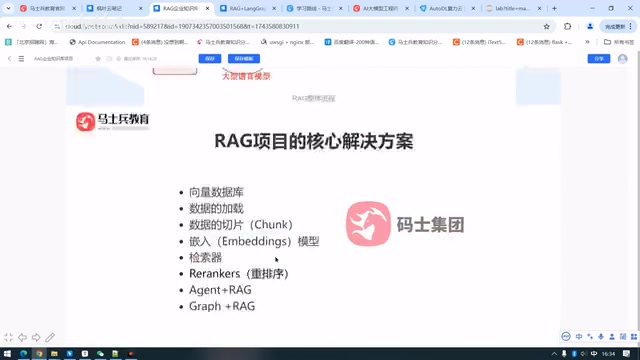
While the principles can be explained in three steps, it's important to emphasize: If you think RAG is simple, you haven't truly gone deep enough. The core difficulty of RAG projects lies not in "getting it to work" but in "optimization"—how to make the final generated answers meet enterprise-level requirements in terms of precision and recall.
Six Core Areas of RAG Optimization
Vector Database Selection: The Foundation of RAG Systems
The vector database is the foundation of the entire RAG system. Without a vector database, chunks have nowhere to be stored, retrieval is impossible, and re-ranking becomes castles in the air.
The core difference between vector databases and traditional relational databases lies in their indexing and retrieval mechanisms. Traditional databases use B-tree or Hash indexes for exact matching, while vector databases use Approximate Nearest Neighbor (ANN) algorithms to perform semantic similarity searches in high-dimensional spaces. Common ANN algorithms include HNSW (Hierarchical Navigable Small World, which achieves efficient search by constructing multi-layer graph structures), IVF (Inverted File Index, which partitions vectors through clustering to narrow the search scope), and PQ (Product Quantization, which reduces storage and computational overhead through vector compression). Different index types involve trade-offs between query speed, memory usage, and recall accuracy, requiring selection based on specific scenarios.
The current industry-leading choice is Milvus—a professional open-source vector database. In large enterprise projects, Milvus has an extremely high adoption rate. It supports efficient storage and retrieval of large-scale vector data while offering both local and server deployment options suitable for different application scales. Milvus is widely adopted in enterprise scenarios also because it supports multiple index types, provides distributed architecture to handle billion-scale vectors, supports hybrid queries combining scalar filtering with vector search, and has comprehensive data consistency guarantees. Besides Milvus, Pinecone, Weaviate, Qdrant, ChromaDB, and others are also common vector database choices, each with their own suitable scenarios.
You might not have noticed that the "table" concept in vector databases corresponds to a Collection. If you're storing both text vectors and image vectors simultaneously, they must be stored in different Collections because they use different Embedding models, resulting in different vector dimensions and semantic spaces.
Data Loading and Text Chunking: The Most Underestimated Step
Data loading requires handling multiple formats: PDF, Word, Markdown, TXT, etc., each with different parsing methods.
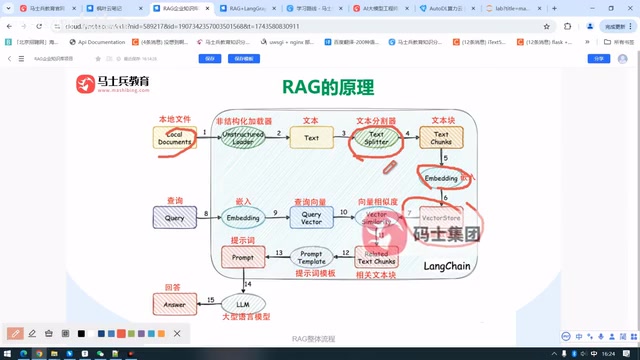
Text chunking is one of the most underestimated steps in RAG. Common chunking strategies include:
- Fixed-length chunking: Splitting by fixed character count, e.g., 200 characters per chunk—simple but prone to breaking semantic integrity
- Punctuation-based chunking: Splitting at natural breakpoints like periods and paragraphs
- Semantic chunking: Intelligent splitting based on semantic understanding, preserving complete semantic units
- Structural chunking: Splitting PDFs by page, Markdown/HTML by heading hierarchy
Chunking quality directly impacts the final RAG performance. If a complete sentence is split in the middle, its semantic features are destroyed, making it impossible to find the correct content during subsequent retrieval, ultimately causing the large model to hallucinate.
In practical engineering, chunking also needs to consider Overlap strategies—maintaining some overlapping text between adjacent chunks (typically 10%-20% of chunk length) to prevent key information from being severed at chunk boundaries. Additionally, chunk size selection requires trade-offs: chunks that are too small may lose contextual information, while chunks that are too large may introduce noise and increase token consumption. The industry generally recommends chunk sizes between 200-1000 tokens, depending on document type and business requirements.
Embedding Model Selection: The Key to Text Vectorization
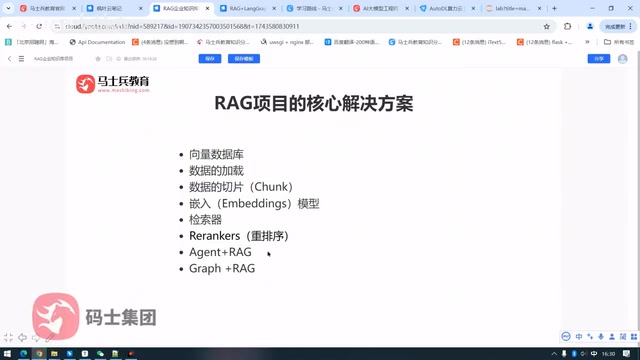
Embedding models are responsible for converting text or images into vector representations. Their core task is mapping discrete text symbols into a continuous high-dimensional vector space so that semantically similar texts are also close in vector space. Modern text Embedding models (such as OpenAI's text-embedding-3-large, BGE series, M3E, etc.) are typically based on the Transformer architecture and trained through Contrastive Learning—bringing semantically similar text pairs closer in vector space while pushing dissimilar ones apart. Vector dimensions typically range from 768 to 3072; higher dimensions theoretically offer stronger expressiveness but also bring higher storage and computational costs.
Available options include:
- Commercial models: OpenAI Embedding, Zhipu, Tongyi Qianwen, etc.—stable performance but with API costs
- Open-source models: Various open-source Embedding models from HuggingFace that can be deployed locally with better data privacy
When selecting an Embedding model, consider its performance in specific domains (such as Chinese, legal, medical, etc.), as general-purpose models may have insufficient semantic capture capabilities in vertical domains. You can refer to the MTEB (Massive Text Embedding Benchmark) leaderboard to evaluate different models' performance on retrieval, classification, clustering, and other tasks.
It's particularly important to note that text Embedding and image Embedding use different models. Images require specialized visual Embedding models (such as CLIP, SigLIP, etc.), which are trained through vision-language alignment to map images into a semantic space shared with text. This is one reason why text vectors and image vectors must be stored in different Collections—unless using a unified multimodal Embedding model.
Diversified Retrieval Strategies: The Core Battlefield of RAG Optimization
The retriever is the component most worth investing effort in for RAG optimization. Simple RAG only uses similarity search, but enterprise-grade RAG often requires combining multiple retrieval strategies:
- Similarity search: Matching based on vector cosine similarity, excelling at capturing semantic-level relevance
- Range search: Setting similarity thresholds to filter low-quality results and avoid introducing noise
- Group search: Retrieving by category or source groups, suitable for multi-knowledge-base scenarios
- Hybrid search: Combining the advantages of vector search and keyword search (e.g., BM25), balancing semantic matching and exact matching
- Full-text search: Traditional text keyword matching, more effective for exact queries involving proper nouns, serial numbers, etc.
Among these, Hybrid Search is currently one of the most recommended strategies in enterprise RAG. Pure vector search excels at understanding semantics (e.g., "how to return items" can match "return and exchange process"), but may not match precise keywords (e.g., product model "RTX-4090") as well as the traditional BM25 algorithm. Hybrid search merges and ranks results from both retrieval methods through RRF (Reciprocal Rank Fusion) or weighted fusion, leveraging the strengths of each.
In real projects, multiple retrieval strategies are typically used simultaneously, combining results from various strategies to improve retrieval accuracy and recall. Additionally, query rewriting (such as expansion, decomposition, and error correction) is an important technique for improving retrieval effectiveness—optimizing the user's original question before retrieval to make it more suitable for the retrieval system to understand.
Re-ranking: The Leap from Similar to Relevant
After retrieving Top-K results, their ordering is not necessarily optimal. Re-ranking uses specialized models to perform secondary sorting of retrieval results, transforming "similarity-based ranking" into "relevance-based ranking."
Re-ranking models (such as Cohere Reranker, BGE-Reranker, Cross-Encoder, etc.) differ fundamentally from the Bi-Encoder used in the initial retrieval stage. A Bi-Encoder independently encodes the query and document separately before computing similarity—efficient but limited in precision because there's no direct attention interaction between query and document. A Cross-Encoder concatenates the query and document together as input, allowing them to fully interact through the Transformer's self-attention mechanism, capturing more fine-grained semantic associations (such as negation, conditional qualifications, etc.), but at higher computational cost. Therefore, in practice, a two-stage "coarse retrieval + fine ranking" strategy is typically adopted: first using a Bi-Encoder to quickly recall Top-K candidates from massive documents (e.g., Top-50), then using a Cross-Encoder to precisely rank these candidates, finally taking the Top-N (e.g., Top-5) to pass to the large model.
This step is crucial because the order of context passed to the large model directly affects generation quality. Research has shown that large models exhibit a "Lost in the Middle" phenomenon—content at the beginning and end receives higher attention weights, while content in the middle tends to be overlooked. If the most relevant content isn't ranked first, the quality of the model's response will noticeably decline.
Combining Agents and Workflows: Handling Complex Business Scenarios
RAG can also be combined with Agents and Graph Workflows to implement more complex reasoning and decision-making processes. This enables RAG systems to handle not just simple Q&A but also multi-step, multi-turn interactive complex business scenarios.
An Agent refers to an AI system with autonomous planning, tool-calling, and memory capabilities. When RAG is combined with an Agent, the system is no longer a simple linear "retrieve-generate" pipeline but can perform multi-step reasoning: the Agent can determine whether the user's question requires retrieval, choose which knowledge base to search, evaluate whether retrieval results are sufficient, and decide whether additional retrieval or other tools (such as calculators, API interfaces, code executors, etc.) are needed. For example, facing a compound question like "What was the highest-selling product in the East China region last quarter, and what's its return rate?", an Agent can decompose it into multiple sub-questions, retrieve separately from the sales database and after-sales knowledge base, and then synthesize a comprehensive answer.
Graph Workflow orchestrates complex business logic as directed graphs (DAG or cyclic graphs), where each node represents a processing step (such as intent recognition, knowledge retrieval, result validation, answer generation, etc.), supporting conditional branching and loops. Common workflow orchestration frameworks include LangGraph, Dify, etc. This architecture enables the system to handle complex scenarios such as multi-turn dialogue state management, cross-database query aggregation, answer self-verification and correction, and human-AI collaborative review—representing a critical architectural upgrade for RAG to evolve from "demo-level" to "production-level."
The Fundamental Difference Between AI Projects and Traditional Projects

Here's a critically important point: AI projects and traditional software projects have completely different evaluation criteria.
Traditional projects (such as Java/Web development) have delivery criteria of: features complete + tests passed + no bugs = ready to ship. Their behavior is deterministic—the same input always produces the same output. RAG project delivery criteria, beyond functional completeness, must focus on three core metrics:
- Precision: Whether the proportion of correct answers meets the standard—how many of the retrieved results are truly relevant
- Recall: Whether all relevant content has been retrieved—how many of all relevant documents were successfully retrieved
- Hallucination rate: Whether fabricated information exists—how much of the model's generated content cannot be traced back to the knowledge base
These three metrics often have mutually constraining relationships. For example, improving recall (retrieving more documents) may decrease precision (introducing more noise), while overly strict filtering may miss key information. RAG system evaluation typically also uses F1-Score (the harmonic mean of precision and recall), the RAGAS framework (including dimensions like Faithfulness, Answer Relevancy, Context Precision, etc.), and other comprehensive evaluation systems.
If these metrics don't meet enterprise requirements, continuous optimization of various RAG components is needed—this is the true source of RAG project complexity. Requirements might be just one sentence ("build an AI customer service system"), but the optimization work behind it may require weeks or even months of continuous iteration. This "effectiveness-driven" rather than "feature-driven" project characteristic requires teams to possess experimental thinking and data-driven optimization capabilities.
Summary
The core of enterprise RAG knowledge base projects lies not in "whether it can work" but in "whether it can be optimized sufficiently." From vector database selection, data chunking strategies, and Embedding model choice to multi-strategy retrieval, re-ranking, and Agent integration, every component offers substantial room for optimization. Deeply understanding the principles and best practices of these components is the key to building high-quality enterprise-grade RAG systems.
It's worth noting that RAG technology itself is evolving rapidly. From the initial Naive RAG, to Advanced RAG (introducing pre-retrieval optimization and post-retrieval processing), to Modular RAG (modular, pluggable architecture design), and the latest convergence with long-context models, GraphRAG (knowledge graph-based RAG), and other directions—this field continues to innovate. Maintaining awareness of cutting-edge technologies while solidly mastering fundamental principles is essential for continuously delivering value in enterprise AI applications.
Key Takeaways
Related articles
Understanding GitHub's Availability Report: Platform Stability and Developer Response Strategies
Deep dive into GitHub's monthly availability report: analyzing service degradation impacts, CI/CD fault tolerance, and platform dependency risk strategies for resilient development.
OpenAI's Claim of Solving a Millennium Prize Problem Sparks Academic Controversy
OpenAI claims its AI solved a Millennium Prize Problem, sparking debates over attribution, verification, and AI's role in reshaping mathematical research.
Ledoit-Wolf Covariance Shrinkage in Practice: 57% Lower Turnover + 10x GPU Acceleration
Learn how Ledoit-Wolf covariance shrinkage reduces portfolio turnover by up to 57% and how cuML GPU acceleration cuts backtest time from 1.5 hours to 9 minutes.