California Billionaire Tax Fails: Tech Leaders Spend Big to Oppose
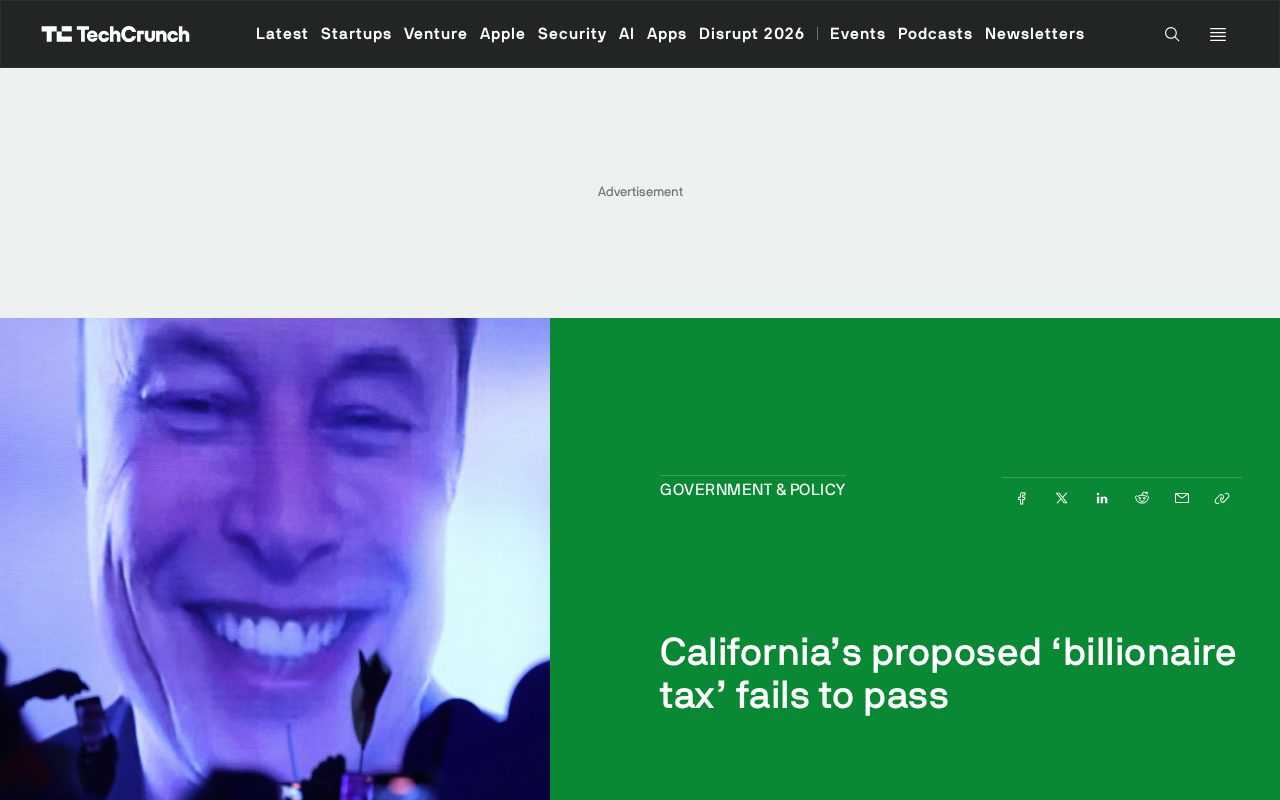
California voters rejected Proposition 40, a one-time 5% billionaire tax, as the tech industry won with a 10-to-1 spending advantage.
California voters rejected Proposition 40, which would have imposed a one-time 5% tax on billionaires. Tech leaders defeated supporters with roughly a 10-to-1 spending advantage, becoming a decisive force in the ballot fight. The vote reflects growing tension between tech capital and public policy. Founders and economists TechCrunch interviewed before the vote were divided: one camp believed it would drive wealthy residents away and erode the tax base; the other argued a one-time tax would have limited impact on wealth and would not trigger large-scale migration. The proposition's failure offers an important reference for similar wealth tax proposals—the tech industry's strong opposition and massive lobbying spending may make policymakers more cautious in the future, showing that in regions with highly concentrated tech capital, policies touching wealth redistribution will face powerful resistance.
Proposition Defeated, Tech Industry's Heavy Spending Pays Off
According to the Associated Press, California voters rejected Proposition 40—a measure that would have imposed a one-time 5% tax on billionaires. Tech leaders defeated supporters with roughly a 10-to-1 spending advantage, emerging as a decisive force in the ballot fight.

This vote was not just about taxation—it reflects the growing tension between tech capital and public policy. The founders and economists TechCrunch interviewed before the vote were divided on whether the tax would drive wealthy residents away or merely reduce their wealth.
California's ballot proposition mechanism is key background for understanding this event. California practices direct democracy: citizens can gather signatures to place a bill or constitutional amendment on the ballot, where it is voted on directly by statewide voters on election day rather than being deliberated by the state legislature. Once a proposition passes, it becomes law, and the governor has no veto power. Proposition 40 entered the ballot through this route. This mechanism allows well-funded interest groups to directly influence voter decisions through large-scale advertising, which is why the opposition camp's roughly 10-to-1 spending advantage was decisive—in ballot fights, spending on TV, digital ads, and voter mobilization is often highly correlated with outcomes. This also explains why the tech industry was willing to spend heavily: compared with lobbying the state legislature case by case, defeating a ballot proposition in one stroke is more cost-effective and offers greater certainty.
Tech Leaders' Overwhelming Spending Advantage
The tech industry's investment in this ballot fight was striking. Opposition spending was about 10 times that of supporters—a funding gap rarely seen even in California political history. Tech leaders clearly viewed the tax as a direct threat to the innovation ecosystem and wealth creation.
This scale of spending reflects a reality: when policy touches the core interests of tech elites, they are willing to spend heavily to influence election outcomes. It has also sparked widespread discussion about the political influence of wealth.
Economists Divided: Driving Out the Rich or Merely Cutting Their Wealth?
The founders and economists TechCrunch interviewed before the vote were sharply divided on the tax's potential impact. One camp argued that a one-time 5% tax on billionaires would prompt some wealthy residents to leave California, eroding the tax base and weakening the state's economic vitality.
The other camp argued that such a one-time tax would have limited impact on billionaires' wealth and would not trigger large-scale migration—amounting to little more than symbolic wealth redistribution. This divide reflects the ongoing economic debate over the effects of high-tax policies.
A one-time wealth tax has fundamentally different economic incentive effects from an annual wealth tax. A one-time 5% levy targets accumulated wealth rather than annual flow income, and in theory does not change individuals' marginal incentives to work or invest, which leads some economists to view its behavioral distortions as relatively small. But critics point out that even a one-time tax changes expectations about future policy uncertainty—wealthy residents may worry that such taxes will recur and therefore relocate or move assets in advance. California already has one of the highest personal income tax rates in the country (13.3%), and high-income groups are highly sensitive to changes in tax burden. In addition, California's tax base relies heavily on capital gains and high-income earners, which means any tax policy targeting the wealthy must carefully assess its net impact on fiscal revenue.
Policy Implications and Future Directions
The failure of Proposition 40 offers an important reference for similar wealth tax proposals. The tech industry's strong opposition and massive lobbying spending may make policymakers more cautious when introducing similar measures in the future.
For those following tech policy and wealth distribution, the outcome of this ballot shows that in regions where tech capital is highly concentrated, any policy touching wealth redistribution will face powerful resistance. The aftermath of this battle may influence tax policy debates in other states and even at the federal level.
Related articles

How Do Cursor, Devin, TRAE, and Copilot Compare on Price? Calculate Your Credits Before You Compare Monthly Fees
Side-by-side comparison of individual and team pricing for Cursor, Devin Desktop, TRAE, and Copilot, breaking down credit rules, third-party model inclusion, overage billing, and practical methods for measuring usage before paying, setting spending caps, and choosing the right tool.

Copilot Retires Three Models: Pro Users Left With Only One Alternative
GitHub Copilot retires Claude Opus 4.8, Claude Opus 5, and GPT-5.6 Tera on Nov 16 across Chat, code completion, and Agent mode. Pro users have only GPT-6 Luna left; Legacy annual plans miss Opus 5.5; admins must enable replacements manually.

Gemini 4 Carbon Arrives: The LLM Race Enters the Era of Million-Token Context and Trillion-Parameter Open Source
Google launches Gemini 4 Carbon and multi-agent tool Swarm; Anthropic debuts million-context Fable 5.2 and Mythos 5.2; OpenAI releases security-focused GPT-6 Cyber; Mistral and Kimi open-source trillion-parameter models — the LLM race accelerates across the board.