Can AI Knowledge Graphs Be Cloned Independently of Code?
The difficulty of cloning AI knowledge graphs lies in the deep coupling of embeddings, reasoning rules, and code, requiring layered decoupling.
The article explores whether AI knowledge graphs can be cloned independently of operational code. It points out that this is not ordinary database replication, because embeddings depend on model versions, reasoning rules are intertwined with graph structure, and contextual state semantics depend on code paths. Cloning can be divided into three levels: data layer (feasible), semantic layer (difficult), and behavioral layer (close to infeasible), with implicit dependencies as the core challenge. Practical compromise solutions include externalizing reasoning logic into declarative rules, versioning embedding models, and defining graph contracts. The question reveals the architectural trend of AI systems evolving from "code + database" to the ternary entanglement of "model + knowledge + logic," and suggests that teams clarify the boundary between knowledge and code as early as possible.
The Core Question: Decoupling Knowledge from Operational Code
On Reddit, a developer raised a question that is becoming increasingly common in AI engineering practice yet is rarely discussed systematically: can a persistent AI knowledge graph be cloned independently of the code that operates it?
This question appears to be a technical detail, but it actually touches on a fundamental contradiction in modern AI system architecture—where is the boundary between data and logic? When a knowledge graph carries the memory and reasoning foundation of an AI, it is no longer an ordinary database, but a "cognitive asset" deeply coupled with code.
Why This Is Not an Ordinary Database Replication Problem
Traditional database cloning only needs to consider schema, indexes, and data consistency. But AI knowledge graphs face a more complex situation:
- Embeddings depend on the model version that generated them. The same piece of text produces incomparable vector spaces under different models, which means that when cloning a graph, the embedding model itself becomes part of the migration.
- Reasoning rules are intertwined with graph structure. Many systems encode business logic in the definition of graph relationships, and code and graph schema are mutually causal, making them difficult to separate.
- Contextual state. AI knowledge graphs often contain dynamic metadata such as conversation history, reasoning chains, and confidence annotations. The semantics of this data can only be correctly interpreted under specific code paths.
In other words, the "persistence" of a knowledge graph does not mean "portability."
Embeddings are a technique that maps discrete objects (such as text and images) into a continuous vector space, so that semantically similar inputs are closer together in the space. In AI knowledge graphs, nodes and edges often carry embeddings to support semantic search and reasoning. However, embeddings are not universal representations: they are generated by specific models (such as BERT and text-embedding-3) on specific training data, and the vector spaces produced by different models are incompatible with each other. Therefore, when cloning a graph, if only the vectors are copied while the generating model is ignored, the new system will be unable to correctly compute similarity or perform cross-modal retrieval, causing semantic retrieval to fail. This is also why the version information of the embedding model must be migrated together with the graph as metadata.
The Three Levels of Cloning
From an engineering perspective, this problem can be broken down into three progressive levels:
1. Data-layer cloning (feasible but insufficient)
Exporting nodes, edges, attributes, and vector indexes is technically entirely feasible. Mainstream graph databases and vector databases all provide some form of export mechanism. But this is only a "snapshot." Once separated from the code, the graph is merely a static structure and loses the ability to be effectively queried and reasoned over.
2. Semantic-layer cloning (difficult)
To make the cloned graph maintain the same semantic behavior in a new environment, it is necessary to migrate at the same time: the embedding model and its version, the constraint logic of the graph schema, query patterns, and reasoning rules. The core challenge here is implicit dependencies—many AI systems hard-code critical logic in the application layer rather than in the graph itself.
3. Behavioral-layer cloning (close to infeasible)
If the goal is for the cloned system to produce the same reasoning outputs as the original system, then in essence the entire runtime environment must be reproduced. This is exactly the crux of the problem: the "knowledge" of a knowledge graph exists not only in the data, but also in the code that operates it.
Practical Compromise Solutions
Although complete decoupling is very difficult, there are already some pragmatic approaches in the community:
- Externalize reasoning logic into declarative rules. Abstract graph operations scattered throughout the code into an exportable rule set, so that the graph itself carries more behavioral semantics.
- Version the embedding model. Make the embedding model identifier part of the graph metadata and migrate it together during cloning to avoid vector space mismatch.
- Define a Graph Contract. Clearly specify which behaviors are guaranteed by data and which by code, forming a verifiable interface boundary.
Declarative rules are a formal method of expressing logic in terms of "what to do" rather than "how to do it," as opposed to imperative code. In graph scenarios, externalizing reasoning logic into declarative rules means abstracting graph operations scattered throughout application code (such as "if A is B's father and B is C's father, then A is C's grandfather") into an exportable rule set (such as Datalog, SHACL, or a custom rule language). These rules can be stored and migrated together with the graph, enabling the graph itself to carry more behavioral semantics and reducing dependence on specific code paths. Community tools such as Neo4j's Cypher query language and Apache Jena's rule engine support such declarative expression, but refactoring existing code into declarative rules still requires significant engineering investment.
Implications for AI System Architecture
This question from Reddit deserves serious attention because it points to a broader trend: AI systems are evolving from the binary structure of "code + database" to the ternary entanglement of "model + knowledge + logic." As the intersection of knowledge and logic, the portability problem of knowledge graphs is in fact asking—how much of our AI systems' "cognition" is truly transferable?
For teams building persistent AI memory systems, the earlier the boundary between knowledge and code is clarified, the lower the cost will be in future migration, backup, and multi-environment deployment. There is no standard answer to this question, but it should become an explicit issue considered at the architecture design stage.
Background Supplement
The constraint logic of a graph schema refers to the set of rules in a graph database that define node types, edge types, attribute value ranges, and the relationships among them. In traditional databases, schema mainly ensures data integrity; but in AI knowledge graphs, schema often carries business semantics—for example, specifying that a "User" node must be connected to a "Product" node through a "Purchase" edge, and that the purchase time must be later than the registration time. These constraints are often implemented in code (such as application-layer validation or a graph database's constraint language) rather than stored declaratively within the graph. When cloning a graph, if only the data is copied while these constraint logics are ignored, the new system may accept invalid data or fail to execute reasoning correctly, causing semantic behavior to deviate.
One-line Summary
Related articles

Claude Solves Two Open Problems in Black Hole Physics: A New Sample of AI-Assisted Research
Anthropic's research paper documents Claude solving two open black hole problems: whether hot gas transitions to black holes abruptly, and the lightest black hole mass limit. The model produced 22 candidates in hours, with the agent running in the background for about six weeks; results were reviewed by physicists, though Anthropic says they don't directly apply to our universe.
Claude Derives Black Hole Bound of 9.1266 — Who Verified the AI Physics Result?
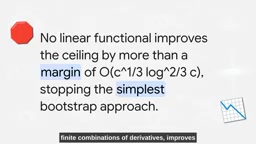
Claude derives an exact closed-form modular bootstrap bound, pinning the black hole threshold at c/9.1266, and completes a three-loop Hawking-Page calculation. But verification has flaws: Lean formalization scope is undefined, key conclusions rest on a single sign, and there is no peer review. This article dissects the verifiability and limits of the AI physics results.
AI Cracks a 23-Year-Old Physics Problem: Claude Solves a Black Hole Physics Mystery
Anthropic announced Claude solved two black hole physics and quantum gravity problems, one open for 23 years. In a six-week self-replicating mode, it explored 22 open problems, with two proofs verified by Lean, though Anthropic says they don't prove anything about the real universe.