Can Free AI Coding Models Handle Industrial-Grade Code? A Realistic Look at Your Options
Can free AI models produce commercial-grade code? A practical guide to multi-provider rotation and local deployment strategies.
A developer on Reddit asked whether free AI models alone can support industrial-grade, commercially deployable software development. The article breaks down three core pain points — frequent 429 rate limit errors, limited reasoning capability on free tiers, and multi-day cooldown windows — then proposes a layered strategy: rotate across OpenRouter and Groq to avoid single-point throttling, deploy open-source models like Qwen Coder or DeepSeek Coder locally for privacy-sensitive or high-throughput needs, and reserve a small paid budget for core public-facing code. The conclusion: zero-cost commercial output is idealistic, but a layered approach can satisfy most individual developers' real needs.
Where the Question Begins: Building Commercial Software with Free Models
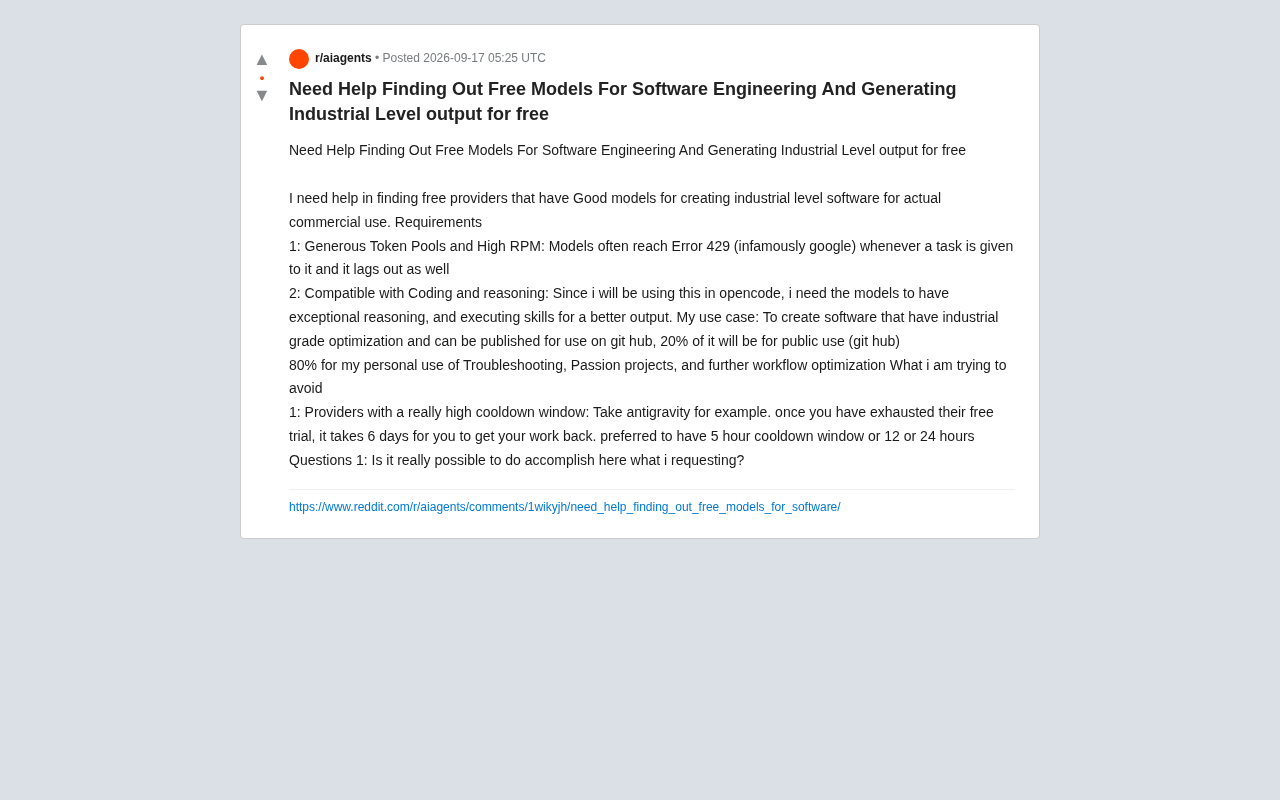
In a Reddit developer community, one user raised a question that many people can relate to: is it possible to build truly commercial-grade, GitHub-publishable software using only free AI models?
His requirements were quite specific: models with sufficient token quotas and high requests-per-minute (RPM), stable enough to run in tools like opencode, and capable of strong reasoning and code execution. In terms of use case, roughly 20% of the output would be open-sourced on GitHub for public use, while the remaining 80% would go toward personal debugging, hobby projects, and workflow automation.
The question sounds straightforward, but it touches on a number of real-world constraints in today's free AI coding tool ecosystem.
Three Core Pain Points with Free Tiers
The frustrations the original poster described are ones almost everyone relying on free AI coding services will encounter.
Frequent 429 Errors
He specifically called out Google's models, noting that dispatching tasks often triggers Error 429 (Too Many Requests) and even causes hangs. This is a classic symptom of free or low-quota services — when your request rate or total volume exceeds the limit, the server simply refuses to respond. For coding tasks that require multiple rounds of back-and-forth, these interruptions severely disrupt development flow.
HTTP status 429 (Too Many Requests) is the standard server-side response mechanism for enforcing rate limiting. AI API providers typically set limits along two dimensions: RPM (requests per minute) and TPM (tokens per minute processed). Free tiers commonly cap RPM somewhere between 10 and 60, while paid tiers can reach hundreds or even thousands. For AI coding tools like opencode, a single code generation task or multi-turn conversation can fire off multiple API requests in succession, making it easy to hit the RPM ceiling on a free tier. Some providers also enforce daily quotas (RPD) — even if your per-minute rate is low, once you exhaust the daily total you'll keep getting 429s until the next reset.
The Capability Floor for Reasoning and Execution
The author emphasized the need for models with exceptional reasoning and execution ability, since industrial-grade optimized code demands rigorous logic. This exposes an inherent tension: the most capable models tend to be the most expensive, and free tiers usually only offer weaker versions or apply strict rate limits.
Excessively Long Cooldown Windows
Using Antigravity as an example, he complained that once the free trial runs out, you have to wait up to 6 days before you can use it again. His ideal cooldown window would be 5 hours, 12 hours, or 24 hours. For developers working continuously, waiting days at a time is functionally the same as the service being unavailable.
The Realistic Answer: Possible, but Requires a Combined Strategy
Looking at the current ecosystem, relying entirely on a single free service to achieve "industrial-grade, commercially deployable, uninterrupted" output is not realistic. That said, with a smart combination of tools, there's quite a bit of room to work with.
Rotating Across Multiple Providers
Rather than betting everything on one service, register with multiple providers and switch when you hit rate limits. Common sources of free or generous quotas include OpenRouter (which aggregates multiple models with a free tier), Groq (known for high-speed inference), and the official free API tiers of certain models. Rotating between them can effectively sidestep single-point 429 errors and cooldown restrictions.
OpenRouter is an API aggregation platform that provides access to dozens of model providers through a unified interface — developers need just one API key to switch between models on demand. Its free tier includes limited quotas for some open-source models (such as Mistral and the Llama series), making it a useful fallback node in a rotation strategy. Groq, on the other hand, is known for its proprietary LPU (Language Processing Unit) hardware, which delivers inference speeds far beyond traditional GPU setups. Its free tier offers relatively high RPM quotas, making it particularly well-suited for latency-sensitive, real-time coding assistance. Keep in mind that the free policies of aggregation platforms and high-speed services like these tend to shift with business priorities — it's worth checking the latest quota details regularly.
Open-Source Local Models
If your hardware allows it, running local open-source models (such as Qwen Coder, DeepSeek Coder, and similar series) is a way to completely bypass rate limits and cooldown windows. Local deployment has no RPM ceiling and no cooldown period — the only costs are hardware and electricity. For the 80% of personal use cases, this is often the most stable option.
Qwen Coder is a code-focused model series from Alibaba Cloud; Qwen2.5-Coder performs close to closed-source commercial models on multiple code benchmarks. The DeepSeek Coder series is similarly designed with code capability as a core objective. Both offer a range of parameter sizes — from 1.5B to 33B — so you can choose based on your local GPU's VRAM. For local runtime frameworks, Ollama and llama.cpp are currently the mainstream choices: the former offers a Docker-like model management experience, while the latter is deeply optimized for CPU inference, meaning even smaller models can run without a discrete GPU. Beyond eliminating rate limits, local deployment's other key advantage is data privacy — your proprietary code never passes through a third-party server.
Matching Tools to Use Cases
The author already divided his use cases 20/80, and that's actually the key insight. The 20% that truly needs "industrial-grade" quality for public release is worth investing in a stronger model — even if that means occasionally paying or carefully managing a high-quota free tier. The larger 80% of debugging and hobby work can be handled perfectly well by a mid-tier but stable free or local model.
The Hidden Costs of Free
It's worth being clear-eyed: "free" never means zero cost. The price of a free tier usually shows up as time costs (waiting out cooldowns, handling rate limit errors), stability costs (policies can change at any time), and capability ceilings (top-tier models are rarely kept free indefinitely).
For software that's genuinely going commercial, code quality, security, and maintainability directly affect your product's reputation. Once a project reaches a certain scale, allocating a modest budget for stable, high-quality output on the core parts is often more cost-effective than constantly fighting over free quotas.
Recommendations for Anyone in This Situation
Taking everything into account, the original poster's goals are partially achievable:
- Short-term: Use multi-provider rotation combined with free high-speed services (e.g., Groq, OpenRouter free tier) to cover day-to-day development;
- Medium-term: Consider locally deploying open-source code models to completely escape rate limiting;
- For core public-facing projects: Keep a small paid budget or carefully conserve your strongest free quota to ensure output quality.
Producing commercial-grade software continuously at absolute zero cost is idealistic. But through a layered strategy and the right combination of tools, the vast majority of individual developers' practical needs can be met.
Related articles
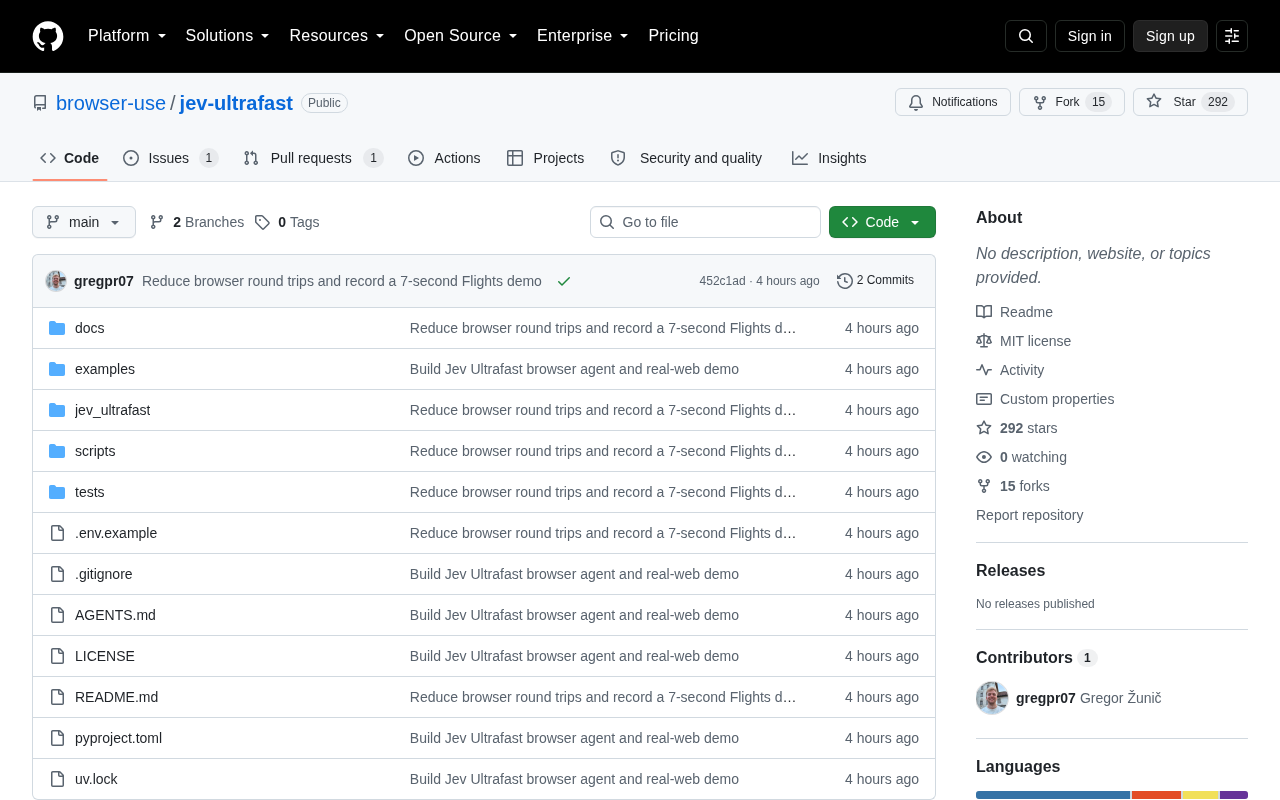
Jev Ultrafast: A Browser Agent with Dynamic Indexed Action Space
Jev Ultrafast is a browser agent built around a dynamic indexed action space, optimizing element targeting for ultra-fast browser automation. A deep-dive into its design.
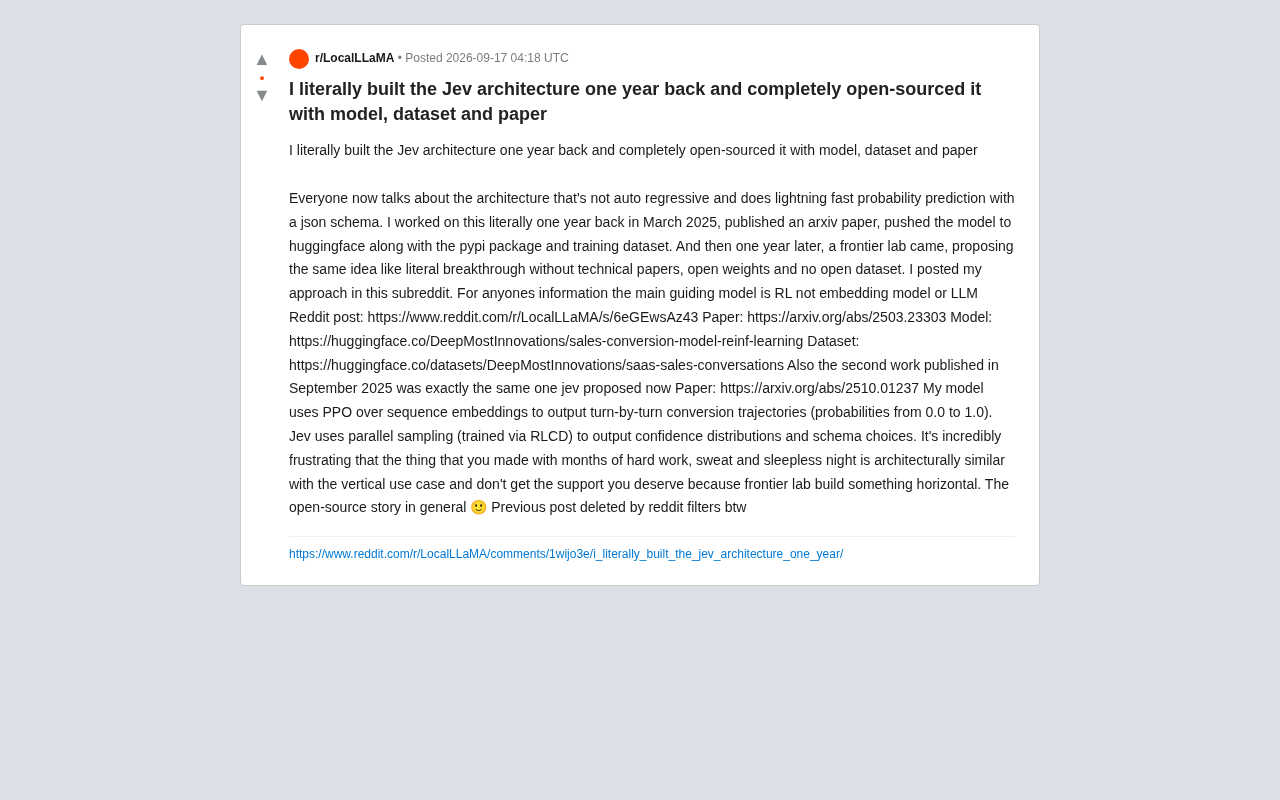
The Open Source Dilemma: A Non-Autoregressive Architecture Pioneer Overshadowed by Frontier Labs
An indie developer claims a frontier lab repackaged his year-old open-source non-autoregressive RL architecture as a breakthrough. We compare PPO sequence embeddings vs. RLCD parallel sampling and examine open source attribution gaps.
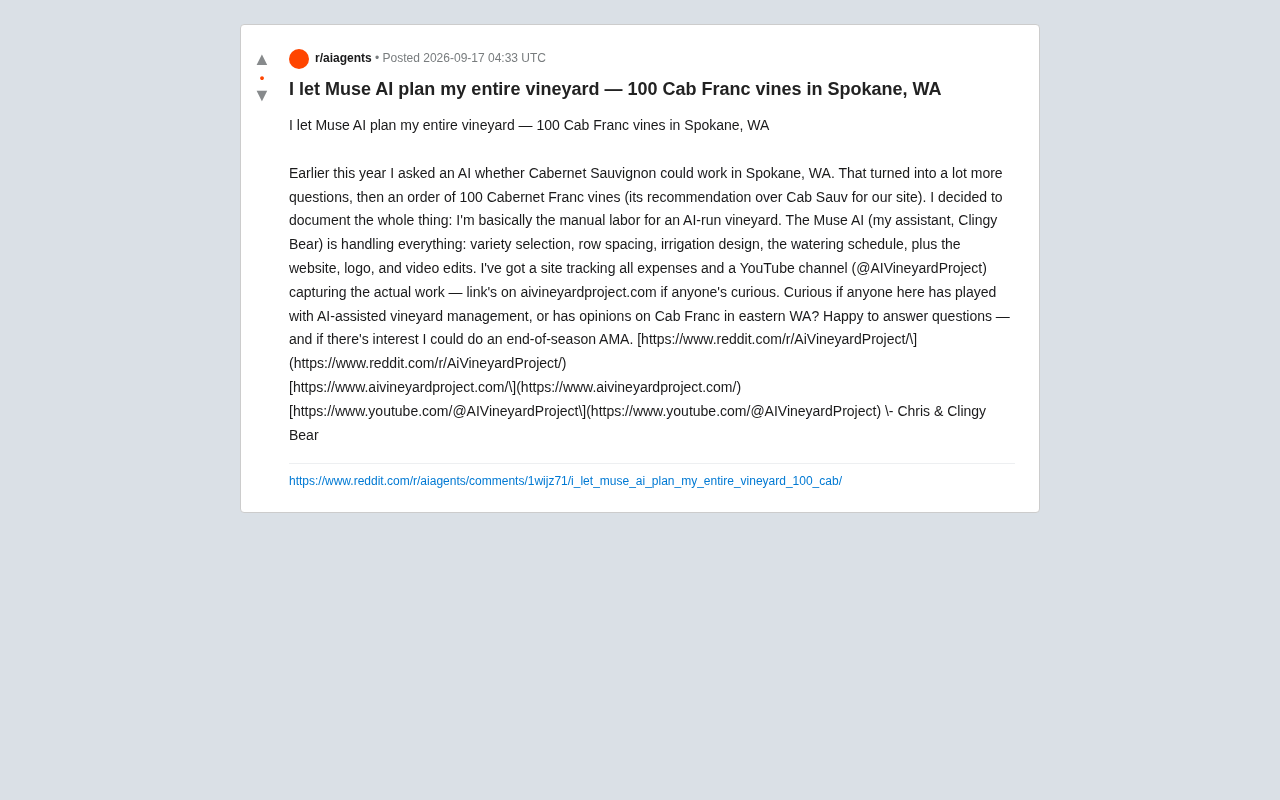
AI Plans an Entire Vineyard: A Real-World Experiment with 100 Grapevines
A Spokane hobbyist let Muse AI plan his entire vineyard — variety, spacing, irrigation, even the logo. He planted 100 Cabernet Franc vines and is documenting everything publicly.