Can Surgery Restore Lost Memories in Alzheimer's Disease?

Experimental surgery in China helps Alzheimer's patients recognize family after surgery, bringing new hope to a long-stagnant field, though efficacy remains unverified.
A video from China shows Alzheimer's patients able to answer questions and recognize family members after experimental surgery, drawing widespread attention. Alzheimer's research has long been stalled, with directions like the amyloid hypothesis repeatedly failing, highlighting the disease's complexity. The surgery offers new possibilities, suggesting memory function is not completely irreversible, but details are limited and peer review and long-term follow-up data are lacking—the video is better seen as a signal worth tracking than an established therapy. For patient families, cautious optimism is the rational stance; the real answer requires more scientific evidence.
A Turning Point for Alzheimer's Treatment?
A video from China has sparked heated discussion online: an Alzheimer's patient who previously struggled even to communicate was suddenly able to answer questions after undergoing an experimental surgery.
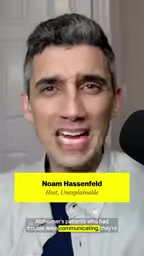
Even more moving is that they began to recognize their family members again. For families tormented by this disease, such a scene is almost unimaginable.

Alzheimer's disease not only attacks the body—what's more terrifying is that it steals a person's identity. Precisely because of this, any hint of therapeutic progress touches countless hearts.
A Long History of Failure and Stagnation
For a long time, Alzheimer's research could almost be described as "despairing." Countless attempts ended in failure, and one seemingly promising direction after another ultimately led to dead ends.
These failures were not due to insufficient effort from researchers, but because the complexity of this disease far exceeds imagination. From the amyloid hypothesis to tau protein, the scientific community groped in the dark for far too long.

But recently, the situation seems to be changing. This experimental surgery by a Chinese team has brought new possibilities to this long-stagnant field.
The amyloid hypothesis has been the dominant theory driving Alzheimer's drug development for nearly three decades. This hypothesis holds that plaques formed by abnormal aggregation of β-amyloid (Aβ) in the brain are the initiating factor of the disease, making clearance of Aβ the key to treatment. Based on this hypothesis, multiple pharmaceutical companies invested billions of dollars developing anti-Aβ antibody drugs, but clinical trials repeatedly stumbled—either failing to significantly improve cognition or being forced to terminate due to side effects such as brain edema. These failures not only caused enormous economic losses but also prompted the scientific community to reflect: Aβ deposition may be just one link in the disease chain, not the sole core. For this reason, in recent years, multi-faceted hypotheses such as tau protein, neuroinflammation, and metabolic dysfunction have regained attention, and research strategies have shifted from single targets to multi-pathway interventions.
Tau protein is another key protein closely associated with Alzheimer's disease. In healthy neurons, tau protein is responsible for stabilizing microtubule structures and maintaining the cellular transport system. But in the disease state, tau protein becomes hyperphosphorylated, detaches from microtubules, and aggregates to form neurofibrillary tangles, disrupting internal neuronal transport and ultimately leading to cell death. Unlike amyloid plaques, the distribution of tau tangles correlates more strongly with the degree of cognitive decline, making it an important therapeutic target as well. However, clinical trials targeting tau also face challenges, including how to effectively penetrate the blood-brain barrier and how to selectively clear pathological tau without affecting normal tau function.
Experimental Surgery: Hope and Uncertainty Coexist
Details about this surgery remain limited, but the effects shown in the video are enough to make people re-examine the direction of treatment. The cognitive improvement patients exhibited after surgery at least suggests that memory function is not completely irreversible.
The specific mechanism of this surgery awaits verification through more publicly available data. In the absence of peer review and long-term follow-up, these videos are better viewed as a signal worth tracking rather than an established therapy.
For families of Alzheimer's patients, maintaining cautious optimism may be the most rational attitude. The real answer will require more time and scientific evidence to reveal.
Peer review is a core quality control system in scientific publishing. Before formal publication, research papers must be anonymously reviewed by independent experts in the same field, who evaluate the rigor of methodology, reliability of data, and reasonableness of conclusions. For experimental therapies, peer review means that details such as study design, patient selection criteria, and efficacy assessment methods have undergone external professional scrutiny. Currently, information about this surgery is primarily disseminated through videos and has not yet undergone this process, making it difficult to independently assess its true efficacy, applicable population, and potential risks. In the hierarchy of medical evidence, individual case video reports constitute the lowest level of evidence, far below randomized controlled trials.
Long-term follow-up is particularly critical when evaluating Alzheimer's therapies. Alzheimer's progresses slowly, and short-term cognitive improvement may be influenced by multiple factors, including placebo effects, changes in post-operative care, or natural fluctuations. Only through regular cognitive assessments, imaging examinations, and biomarker monitoring over months or even years can one determine whether the efficacy is sustained, whether it has disease-modifying effects, and whether delayed side effects emerge. Without long-term follow-up data, any preliminary observation can only be regarded as an exploratory signal rather than an established clinical conclusion.
Related articles

Build an AI Super Employee System at Zero Cost: A Full Breakdown of Automated Agent Workflows
A deep breakdown of the AI super employee system demoed on Bilibili: agent orchestration, digital human voiceovers, map and enterprise lead generation, 24/7 customer service, and legal modules. We analyze the business logic and compliance risks behind zero-cost signup to help entrepreneurs judge the real ROI of this AI digital employee system.

The Essential Difference Between Chatbots and AI Agents: Crossing from Conversation to Execution
What's the difference between a chatbot and an AI agent? Based on the MCP series on the Learn Tech channel, this article uses examples like booking flights and summarizing notes to explain: a chatbot only gives answers, while an agent actually completes tasks through a think-act-observe loop. It breaks down the four core components—model, tools, memory, and goal—as well as MCP's role as a bridge, and discusses agents' applicable boundaries and permission risks.

Free GitHub Repo: 342 Hours of AI Courses, from Math to MCP Servers
A free GitHub repo offers 342 hours of AI courses: 523 lessons across 20 phases, from math fundamentals to agent building and MCP servers. Nearly 100,000 learners have started.