Can You Tell If an Image Is AI-Generated? Human Detection Is Losing the Race to Algorithms
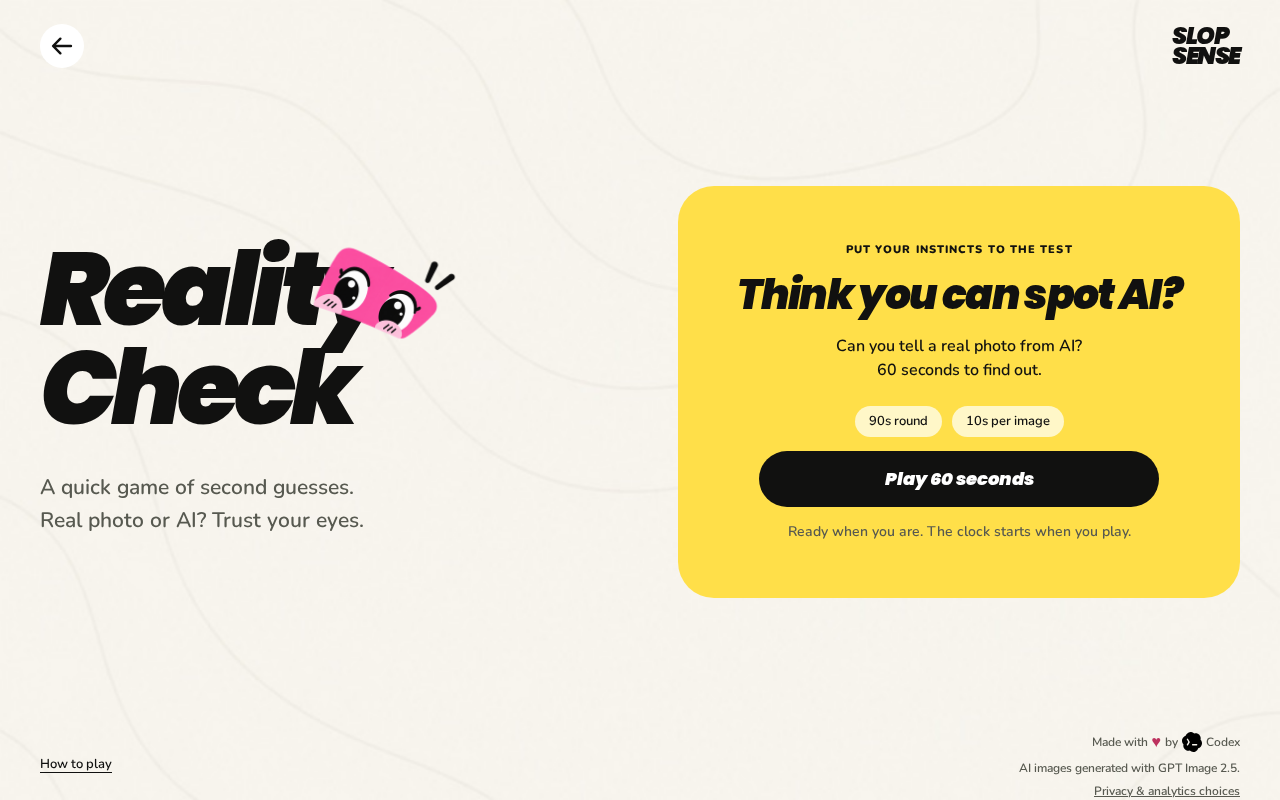
As AI-generated images surpass human detection limits, trust must shift from visual judgment to source verification.
Diffusion models have advanced so rapidly that ordinary people can barely distinguish AI-generated images from real photographs, performing only marginally better than random chance. Traditional detection cues — distorted fingers, broken text, contradictory lighting — are being systematically patched. Technical countermeasures like C2PA provenance standards, invisible watermarks, and AI detectors each have significant limitations. The article argues the most sustainable path is shifting the trust model: stop relying on "can you tell" and build systems grounded in digital signatures and verifiable publishing channels.
A Question That's Getting Harder to Answer
"Can you tell which images are AI-generated?" What seems like a simple question is becoming one of the thorniest challenges of the digital age. As generative AI technology iterates at a blistering pace, machine-synthesized images have grown so convincing that they approach — and in some contexts surpass — the limits of human visual detection.
The topic recently sparked discussion on Hacker News and other tech communities, reflecting a widespread anxiety: when images can no longer be trusted by default, how do we rebuild a foundation of trust for visual information?
A quick caveat: the original source material for this article is limited (a single community discussion thread), so what follows is more of an extended analysis of the topic's background and current state rather than a recap of any specific test results.
The Reality of Human Detection Limits
Multiple published studies have shown that ordinary people distinguishing real photographs from AI-generated images perform only marginally better than random chance. Early AI images had obvious tells — distorted fingers, nonsensical text, unsettling background details — all common "gotcha" signals.
But generative models have advanced at a staggering rate. Modern diffusion models are now quite sophisticated at handling lighting consistency, texture detail, and facial features. The cues people once relied on are rapidly becoming obsolete, and it's increasingly difficult for everyday users to make accurate judgments based on intuition alone.
The direct consequence of this capability gap is stark: the traditional role of visual content as "evidence" is eroding. A photograph can no longer automatically be treated as a record of fact.
Why Detection Cues Are Failing
The tricks people used to rely on fall into a few categories: anatomical errors (wrong number of fingers, malformed teeth), violations of physical laws (contradictory light sources, abnormal reflections), and text rendering defects.
As training datasets have grown and model architectures have improved, these flaws have been systematically patched. The latest generation of models generating human faces, natural landscapes, and everyday objects rarely exposes these basic tells anymore.
The deeper challenge is that the human visual system is itself easily fooled by images that "look right." Our brains tend to accept scenes that match our expectations, rather than actively scrutinizing every pixel-level detail. This cognitive tendency is exactly what AI-generated images exploit.
What are Diffusion Models? Diffusion models are the core architecture behind today's mainstream AI image generation. Unlike earlier GANs (Generative Adversarial Networks), diffusion models generate images through a "progressive denoising" process: random noise is added to an image until it becomes completely random, and then a neural network is trained to learn the reverse — restoring a clear image from noise, step by step. This mechanism gives models much finer control over local details, with far superior performance on lighting, texture, and materials compared to previous techniques. Stable Diffusion, Midjourney, and DALL-E 3 all operate on similar principles. Diffusion models can also be combined with text guidance (using models like CLIP to align text and image semantics), making "generate from description" possible — and making results more aligned with human expectations of a "believable scene," which makes them even harder to detect intuitively.
Technical Approaches to the Problem
As naked-eye detection fails, the industry is exploring several technical paths forward.
Content Provenance and Watermarking
Standards like C2PA (Coalition for Content Provenance and Authenticity) aim to attach tamper-resistant metadata signatures to images, logging their generation and editing history. Some AI generation tools are also beginning to embed invisible watermarks that mark content as machine-made.
What is C2PA? C2PA (Coalition for Content Provenance and Authenticity) is an industry standards organization co-founded in 2021 by Adobe, Microsoft, Intel, the BBC, and others, with the goal of creating a traceable "birth certificate" for digital content. Its technical core involves embedding cryptographically signed metadata manifests into image, video, and other media files — recording the creation tool, creation time, editing history, and publisher identity. This information is bound using asymmetric encryption and theoretically cannot be altered without breaking the signature. Camera manufacturers like Leica and Nikon have begun supporting C2PA signing at the hardware level, and some smartphone makers are piloting it as well. However, C2PA faces a significant challenge: it can only prove that "signed content has not been tampered with." It's powerless against images that were never signed in the first place (the vast majority of content that exists), and metadata is often stripped when an image is screenshotted or re-uploaded.
AI Detectors
Specialized detection models attempt to identify AI-generated content by analyzing frequency-domain characteristics, noise patterns, and other machine fingerprints. But these detectors face a fundamental contradiction: they are locked in a continuous arms race with generative models. Once a detection method is made public, the generation side can optimize specifically to evade it.
How do AI image detectors work? AI image detectors typically rely on two categories of features. First, frequency-domain analysis: AI-generated images often exhibit frequency distribution patterns in Fourier transforms that differ from camera-shot photographs, because physical processes like sensor noise and lens distortion leave statistical fingerprints that artificial neural networks struggle to fully replicate. Second, semantic consistency detection: models learn to identify subtle contradictions that defy physical reality — unusual background bokeh, unnatural skin highlight distribution, and so on. However, these detectors suffer from serious generalization problems: a detector trained against one generative model will see its accuracy drop significantly when faced with images from a different architecture. More troubling still, "adversarial fine-tuning" techniques can perturb image pixels in ways invisible to the naked eye, defeating detectors entirely. This is the core dilemma of the arms race — making a detection method public turns it into a target for the generation side to optimize against.
Platform Responsibility
Social media and content platforms are beginning to require labeling of AI-generated content, but enforcement and coverage remain inconsistent.
This Game Has No Endgame
It's worth reflecting that detecting AI-generated images will only get harder over time, not easier. Hoping to develop a "trained eye" capable of long-term resistance to generative technology isn't realistic — this is a race human senses are destined to lose.
A more sustainable approach may be to shift the trust model entirely: rather than defaulting to assuming visual content is real, we should build a trust system grounded in source verification, digital signatures, and credible publishing channels. In other words, the answer to the question shouldn't depend on "can you see through it," but on "can this image be verified."
For everyday users, maintaining healthy skepticism toward visual information, paying attention to content sources, and avoiding reflexive faith in "seeing is believing" may be the most practical self-protective strategy available today.
Conclusion
The value of asking "Can you tell if an image is AI-generated?" may lie not in testing anyone's detection skills, but in reminding us that visual authenticity is undergoing a profound reconstruction. At this inflection point, technical tools, platform policies, and user literacy all need to evolve together — only then can we rebuild the foundation of trust in the digital visual world.
Related articles
M&M's Spent Millions Replacing Artificial Blue Dye — Why Is It So Hard?
Mars spent millions trying to replace artificial blue dye in M&M's with spirulina, but thick material clogs pipes and residue risks mold, forcing a full production-line rebuild. Here's the engineering behind the reformulation.

Teammate Wanted for Meta Global AI Developer Hackathon: Computer Vision & Medical AI
A Reddit developer seeks teammates for the Meta Global AI Developer Hackathon, focusing on computer vision and medical AI. This article analyzes the track logic, skills-complementarity needs, and topic selection strategy behind this teaming signal.
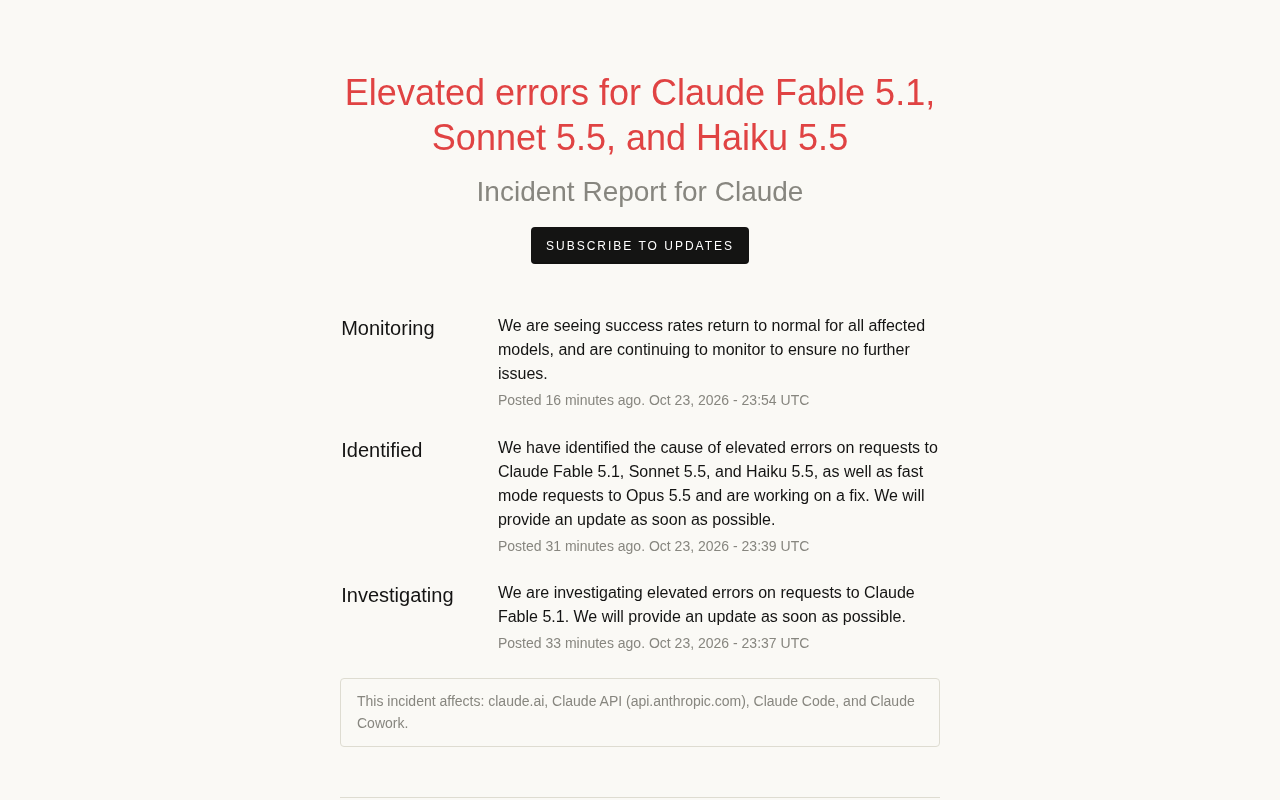
Multiple Claude Models Hit by Errors: A Postmortem of Fable 5.1, Sonnet 5.5, and Haiku 5.5
Claude Fable 5.1, Sonnet 5.5, Haiku 5.5, and Opus 5.5 fast mode saw elevated errors; Anthropic identified and resolved the issue in 17 minutes. This postmortem covers the timeline, the technical reasons for the multi-model cascading failure, and practical lessons for retry and degradation strategies.