CardPointers 8: The Smart Assistant for Maximizing Credit Card Rewards Gets a Major Update
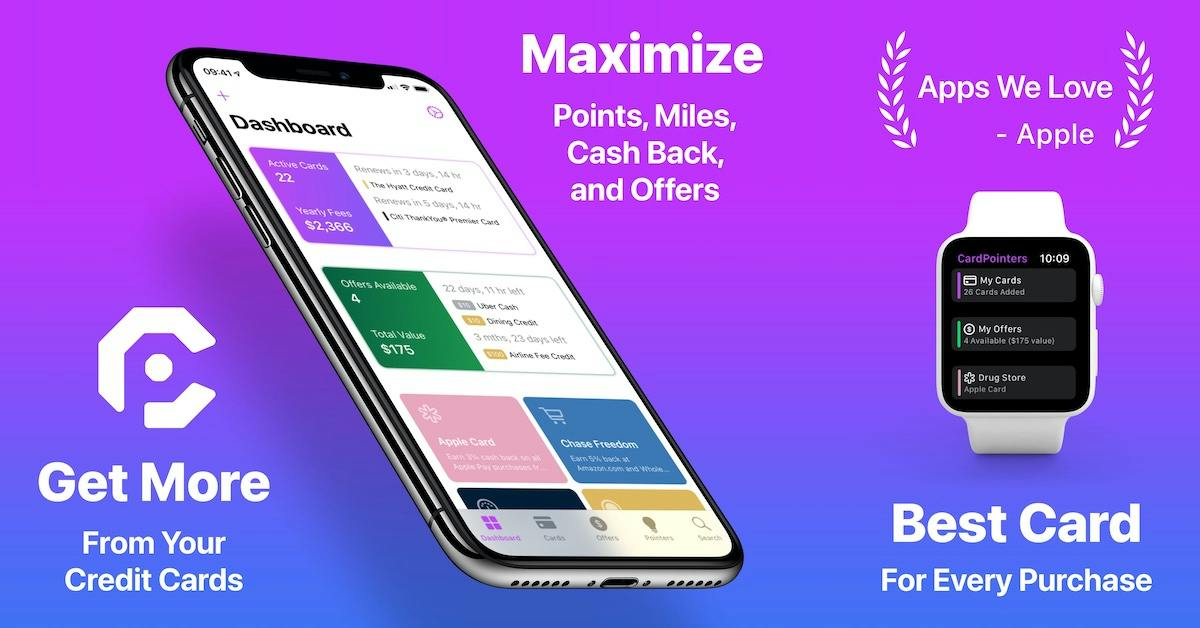
CardPointers releases its eighth-generation update, strengthening decision assistance for credit card selection at the moment of spending.
CardPointers is a tool that helps users choose the optimal credit card for everyday spending to maximize points and cashback, and it recently released its eighth major version update. Its core value is solving the instant checkout decision of "which card to use," not simple points tracking. The developer says the update includes the "most requested feature" and a breakthrough once thought "impossible," with details coming next week. The article analyzes the real pain points—information asymmetry and manual tracking costs—and notes the indie Fintech product has reached version 8 with 69 upvotes on Product Hunt in an early exposure stage.
Credit card rewards management tool CardPointers recently released its eighth major version update, attracting considerable attention on Product Hunt. The app's core goal is to help users earn credit card points and cashback more efficiently in everyday spending, and this update is said to include the developer's "most requested feature" and a breakthrough that was "once thought impossible."
Evolution from a "Tracking Tool" to a "Decision Assistant"
CardPointers is not positioned as a simple bill management or points lookup tool. According to its Product Hunt page description, it aims to solve the instant decision problem cardholders face at checkout: "which card should I use?" Users often hold multiple credit cards, each with different cashback rates across merchant categories, and when you layer on rotating quarterly bonuses and sign-up bonuses, memorizing it all manually is nearly impossible. CardPointers' value lies in automating this decision.
The eighth-generation version is called "the biggest update yet" by the developer. Although specific feature details won't be fully revealed until next week, the phrase "most requested feature" suggests the new version likely delivers a significant leap in scenario coverage, automation, or cross-platform experience. The app currently covers the Android platform (based on its category tags) and continues to deepen its presence in the Fintech space.
Merchant Category Codes (MCC) are the technical foundation of credit card reward rules. Card networks such as Visa and Mastercard assign each merchant a four-digit code representing its industry category (e.g., supermarket, gas station, dining). Issuers' multi-point rules are usually tied directly to these codes rather than to merchant brands. This means the same brand at different locations (such as a pharmacy inside a supermarket) may be classified into different categories, with reward rates changing accordingly. One of the core tasks of tools like CardPointers is maintaining a mapping table from MCC to reward categories and identifying the merchant's corresponding code when a transaction occurs. Because acquirers may enter data inconsistently or merchants may mix businesses, MCC matching has errors—one of the main technical challenges facing automated recommendation tools.
Why Credit Card Reward Optimization Is a Real Pain Point
The credit card rewards market has long suffered from information asymmetry. Issuers attract spending through complex points rules, category rotations, and merchant partnerships, while ordinary users find it hard to consistently track the optimal strategy. Although various points forums and comparison sites exist, most require users to actively look things up and cannot provide advice at the moment of payment.
CardPointers tries to fill exactly this "last mile" gap. By integrating a card database and merchant category recognition, it advises users on "which card to use" when they spend. For users who hold multiple cards and want to squeeze more value out of everyday expenses, the direct economic return of such tools is visible—each time you choose the right card, it may mean several times more cashback.
Rotating Categories are a typical source of credit card reward complexity. Represented by products such as Chase Freedom and Discover it, issuers designate specific spending categories each quarter to earn 5% cashback, but the categories change every three months and usually come with a quarterly cashback cap (e.g., $1,500 in spending). Users need to actively activate the current quarter's categories and remember to use the right card at the corresponding merchants. Once you stack multiple cards' rotation cycles, the cognitive burden of manual optimization becomes extremely high. CardPointers' value lies in digitizing these rotation rules and incorporating them into real-time decisions, preventing users from losing cashback because they forgot to activate or chose the wrong card.
The Suspense of Version 8 and Product Rhythm
In the release notes, developer Emmanuel Crouvisier deliberately kept the core features under wraps, saying "more details will be shared next week." This launch strategy is not uncommon among indie developer products: first gain early attention and feedback through Product Hunt, then gradually release feature details to sustain momentum.
Looking at the product iteration rhythm, CardPointers has reached its eighth major version, indicating a stable user base and sustained development investment. The combination of 69 upvotes and zero comments may reflect that the product's exposure on Product Hunt is still in an early stage, or that user discussion mostly happens in the official community rather than on the launch page.
The Typical Path of an Indie Developer Product
CardPointers is led by an individual developer, which is uncommon in the Fintech tools space—financial data products usually need to deal with multiple hurdles such as compliance, security, and bank interfaces. Being able to iterate to an eighth version shows that the developer has found a sustainable model for data maintenance and user experience.
For users, choosing such an indie product requires attention to two things: first, the update frequency of the card database (bank policies change frequently); second, privacy handling (spending data is sensitive). The Product Hunt page does not disclose these details, but given that the product has been operating for a long time, the developer has most likely established corresponding maintenance mechanisms.
Welcome Offers / Sign-up Bonuses are the largest-value part of the credit card rewards ecosystem and a key variable that decision tools need to handle. Issuers often require new cardholders to spend a certain amount within a few months of opening the account (e.g., $3,000) to earn tens of thousands of points. While completing the task, users should prioritize spending on that card rather than on the card with the highest cashback rate. This means the "which card to use" decision cannot rely solely on category cashback rates; it must also consider sign-up bonus progress. If CardPointers integrates sign-up bonus tracking, it would require users to authorize transaction data or manually enter progress—a trade-off between data privacy and automation.
Directions Worth Looking Forward To
Although the official specific feature list for version 8 has not been announced, combining the product claim of "earn more rewards every day" with the clue of the "most requested feature," it is reasonable to speculate that the new version may act in the following directions: smarter scenario recognition, deeper integration with the payment flow, or automated recommendations for multi-card combination strategies. Regardless of the specific form, the "decision assistance at the point of spending" track represented by CardPointers is becoming a noteworthy niche in personal finance tools.
For cardholders, the significance of such tools is not to replace financial planning but to lower execution costs—turning "knowing which card to use" into "automatically using the right card," which itself is a quantifiable improvement in returns.
One-line Summary
CardPointers releases its eighth-generation update, strengthening decision assistance for credit card selection at the moment of spending.
Paragraph Summary
CardPointers is a tool that helps users choose the optimal credit card for everyday spending to maximize points and cashback, and it recently released its eighth major version update. The app's core value lies in solving the instant decision problem at checkout—"which card should I use?"—rather than simple points tracking. The developer says this update includes the "most requested feature" and a breakthrough once thought "impossible," but specific details won't be announced until next week. The article analyzes the real pain points of credit card reward optimization—information asymmetry and the cost of manual tracking—and notes that CardPointers, as a Fintech product led by an indie developer, has iterated to its eighth version, received 69 upvotes on Product Hunt, and is in an early exposure stage.
Related articles

No Coding Required: He Shipped an App Store App by 'Cutting Features' and Nitpicking with AI
A game designer with zero frontend/backend skills shipped a dual-platform App Store app with AI—not via one-click generation, but by cutting scope and nitpicking like a demanding client.

What Is Harness Engineering? From Concept Origins to Enterprise-Level Agent Implementation
What is Harness Engineering? This article traces the concept's origins and analyzes enterprise-level Agent requirements for tool call fault tolerance, data security, tenant isolation, and memory gaps.

Coze in Practice: A Three-Tier Agent Classification and a Multi-Agent Collaboration Guide
A Bilibili tutorial breaks down the multi-agent collaboration toolchain into three categories: building platforms like Coze Studio and Dify, Agent software like Claude Code, and development frameworks like LangChain—plus a Coze demo of industry templates, three-platform interoperability, local Agent integration, and the trade-offs of credit consumption.