Causal Inference-Driven Edge AI Self-Healing: Full-Stack Reliability from Sensors to Chips

The paper proposes a causal cross-layer self-healing edge AI framework that uses causal inference to locate coupled fault root causes and trigger cross-layer repairs.
Edge AI compresses sensing, inference, microarchitecture, reliability, security, and energy consumption into the same physical node, where anomalies in each layer propagate through physical coupling, making traditional isolated troubleshooting ineffective at pinpointing root causes. This arXiv paper proposes a causal cross-layer self-healing edge AI framework: it continuously collects synchronized telemetry data including sensor health, inference uncertainty, hardware performance counters, accelerator and memory activity, power and thermal state, and communication conditions, and feeds them into a time-aware causal inference engine that estimates the most likely origin of anomalies and quantifies diagnostic uncertainty—even under concurrent disturbances it can produce a probabilistic ranking of root causes. The self-healing module then coordinates cross-layer actions accordingly to avoid fixing one layer while worsening another; security and energy efficiency are treated as jointly optimized dimensions. Limitations include the on-device overhead of the causal engine and the extra resource consumption of telemetry collection.
Edge AI pushes inference capabilities down to resource-constrained IoT devices, reducing latency and improving data locality—but it also tightly couples sensing quality, inference behavior, microarchitectural activity, hardware reliability, security, and energy management within the same physical node. When system performance degrades, operators often struggle to determine the root cause: Is it a sensor fault, data distribution drift, malicious execution, a hardware defect, or resource and thermal stress? A paper from arXiv proposes a causal cross-layer self-healing edge AI framework that attempts to answer this question using a causal inference engine.
Background: The "Coupling Dilemma" of Edge Intelligence
Fault diagnosis in traditional cloud AI is relatively straightforward: compute, storage, and network layers have clear boundaries and can be isolated layer by layer. But edge devices compress all these layers into a single package with constrained power and thermal budgets, so anomalies in any one layer propagate to other layers through physical coupling. For example, thermal stress causes CPU throttling, which in turn lengthens inference latency and may be misdiagnosed as model degradation; or sensor aging introduces noise that is mistaken for data distribution shift.
The paper points out that most existing edge intelligence solutions handle these dimensions in isolation—energy management looks only at power consumption, security modules look only at anomalous execution, and reliability engineering looks only at hardware error counters. This fragmented view barely works for single-point failures, but under concurrent disturbances it becomes nearly impossible to pinpoint the root cause.
Core Idea: Continuous Observation and Causal Diagnosis
The core of the framework is continuous observation of synchronized telemetry data, covering multiple layers:
- Sensor health: signal quality, drift, noise characteristics
- Inference uncertainty: confidence distribution of model outputs
- Processor hardware performance counters: microarchitectural metrics such as instruction count, cache hit rate, and branch misprediction rate
- Accelerator and memory activity: DMA, bandwidth utilization, memory access patterns
- Power and thermal state: voltage, frequency, temperature
- Communication conditions: link quality, packet loss rate, bandwidth fluctuation
These data are fed into a time-aware causal inference engine. Unlike simple correlation analysis, causal inference attempts to estimate the most likely origin of anomalous behavior and quantify diagnostic uncertainty—even when multiple disturbances occur simultaneously, it can produce a probabilistic ranking of root causes.
Hardware Performance Counters (HPC) are a class of special registers built into processors that record microarchitectural-level events at extremely low overhead, such as retired instruction count, L1/L2 cache hits and misses, branch mispredictions, and memory stall cycles. Compared with software instrumentation, HPC barely perturbs the observed workload, making it particularly suitable for continuous collection on the edge. In edge AI scenarios, HPC can reveal the actual execution path and resource contention of inference tasks: for example, a sudden drop in cache hit rate may correspond to anomalous memory access patterns or side-channel probing, and a rise in branch misprediction rate may indicate that control flow has been disturbed. Only after aligning HPC with telemetry such as sensors, power, and temperature can the causal inference engine trace phenomena like "inference slowdown" back to specific microarchitectural origins, rather than停留在 application-layer guesswork.
Causal Inference is fundamentally different from common correlation analysis. Correlation can only tell us that two metrics "change together," whereas causal inference attempts to answer "how would the outcome change if we intervened on a certain variable," typically using structural causal models, causal graphs, or intervention/counterfactual inference. In edge fault diagnosis, this distinction is crucial: rising temperature and rising inference latency are highly correlated, but what actually needs intervention may be the cooling strategy or workload scheduling rather than the model itself. A time-aware causal engine also exploits temporal precedence to distinguish "cause before effect," so that even when multiple concurrent disturbances mask one another, it can still produce a probabilistic ranking of root causes and explicitly quantify diagnostic uncertainty, avoiding mistaking high correlation for high-confidence causal conclusions.
Self-Healing Mechanism: From Diagnosis to Action
Diagnosis is only the first step. The "self-healing" part of the framework triggers corresponding actions based on causal inference results: if it is a sensor fault, it may switch to a redundant sensor or adjust the filtering strategy; if thermal stress causes throttling, it dynamically adjusts inference workload or frequency; if it is a security anomaly, it isolates the suspicious execution flow. The paper emphasizes that self-healing actions themselves also require cross-layer coordination to avoid secondary problems of "fixing one layer while worsening another."
One detail worth noting: the causal inference engine needs to handle diagnostic uncertainty. Under concurrent disturbances, multiple root causes may coexist and mask one another, and the framework quantifies uncertainty to avoid overconfident erroneous repairs.
Synergy Between Security and Energy Efficiency
The paper treats security and energy efficiency as two dimensions within the same framework rather than independent modules. Malicious execution is often accompanied by anomalous microarchitectural activity patterns (such as cache side-channel attacks), and these patterns overlap with the characteristics of hardware faults; the causal engine needs to distinguish between the two. At the same time, energy management actions (such as dynamic voltage and frequency scaling) may be exploited by attackers to create thermal stress, so the framework needs to jointly optimize between security policies and energy policies.
Dynamic Voltage and Frequency Scaling (DVFS) is an energy management mechanism in which the processor adjusts operating voltage and frequency in real time according to workload and thermal state; dynamic power consumption is approximately proportional to the cube of frequency times voltage. It can significantly save power during load troughs, but it also brings side effects: frequency switching changes execution timing and microarchitectural activity patterns, and attackers can exploit this controllable timing variation to amplify the signal-to-noise ratio of cache side-channel attacks. Therefore, the framework regards DVFS as a double-edged sword—it serves as a means of regulating thermal stress and energy consumption, while security policies must limit the room for its abuse. This is precisely why security and energy efficiency need joint optimization rather than separate treatment.
Practical Significance and Limitations
The value of this work lies in proposing a system-level perspective: the reliability of edge AI cannot be patched at a single layer; it requires cross-layer causal modeling. For IoT devices deployed in industrial, automotive, medical, and other scenarios, the accuracy of root-cause diagnosis directly determines maintenance costs and system availability.
The limitations are also obvious: the computational overhead of the causal inference engine itself may be substantial, and how to run it efficiently on resource-constrained edge devices is a deployment challenge; the scale of validation and actual deployment results in the paper still need more evidence. In addition, the collection of cross-layer telemetry data itself introduces extra power and storage pressure, requiring trade-offs at design time.
Conclusion
The next stage of competition in edge AI may not be just about model accuracy and inference speed, but about system robustness under real-world physical disturbances. The causal cross-layer self-healing framework offers a direction worth watching: making devices not only "smart," but also aware of what is broken and what needs fixing when problems arise.
One-line Summary
Related articles

Figma Workplace Scandal: Employee Sues CEO for Forcing Confrontation with Harasser
Figma and its CEO are sued by a current employee alleging sexual harassment and discrimination, and forcing the victim to confront her harasser. This article outlines the background, potential impact, and industry reflection.

Jensen Huang and Nvidia: Elite Privilege Behind the Revolving Door of Business and Politics
An opinion piece uses Jensen Huang's reappointment as Nvidia CEO to examine business-government ties and elite impunity, questioning free-market ideals and AI industry governance.
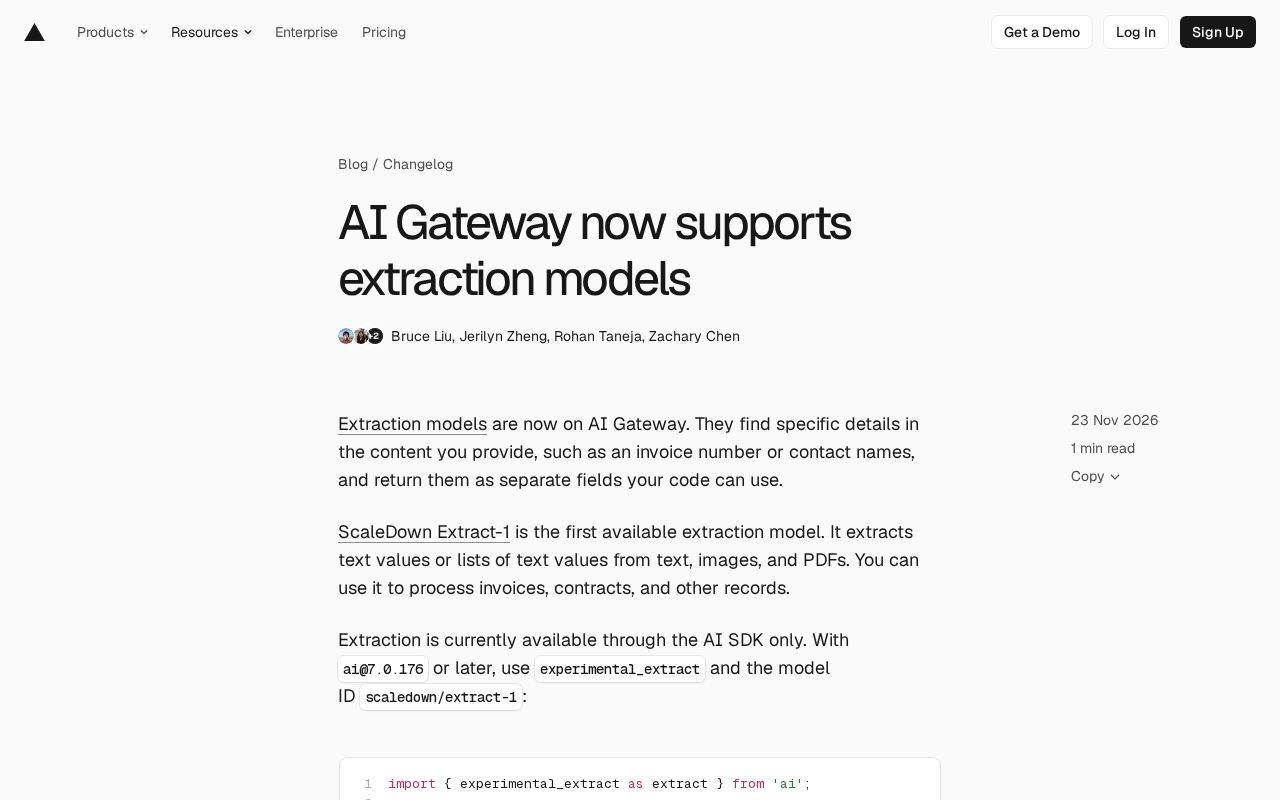
AI Gateway Launches Extraction Models: Precisely Pull Structured Fields from Invoices and Contracts
AI Gateway adds extraction models, debuting with ScaleDown Extract-1, which pulls fields like invoice numbers and contacts from text, images, and PDFs, returning confidence scores and character offsets via AI SDK's experimental_extract.