Chalk and Airplane: A Metaphor Revealing the AI Programming Dilemma

The "chalk and airplane" metaphor reveals the core tension of AI programming: tools have taken off, but the usage paradigm remains stuck at the blackboard.
Starting from the title of a low-traffic Hacker News post, "The Chalk and the Airplane," the article interprets chalk and airplane as a metaphor for the mismatch between tools and scenarios, and applies it to AI programming. The author notes that many developers still hold "chalk thinking," using AI only as a faster code completion tool for boilerplate code, syntax fixes, and unit tests; the real "airplane" is letting AI participate in system design, cross-file refactoring, and end-to-end transformation. Community discussions show that AI productivity gains are concentrated in low-complexity tasks, with diminishing returns on architecture-level tasks, and the bottleneck is the usage paradigm rather than tool speed. The article proposes a path of change at three levels—task selection, validation mechanisms, and mental models—and emphasizes treating AI as a junior engineer who needs clear instructions, makes low-level mistakes, but works extremely fast.
A Thought Provoked by a Title
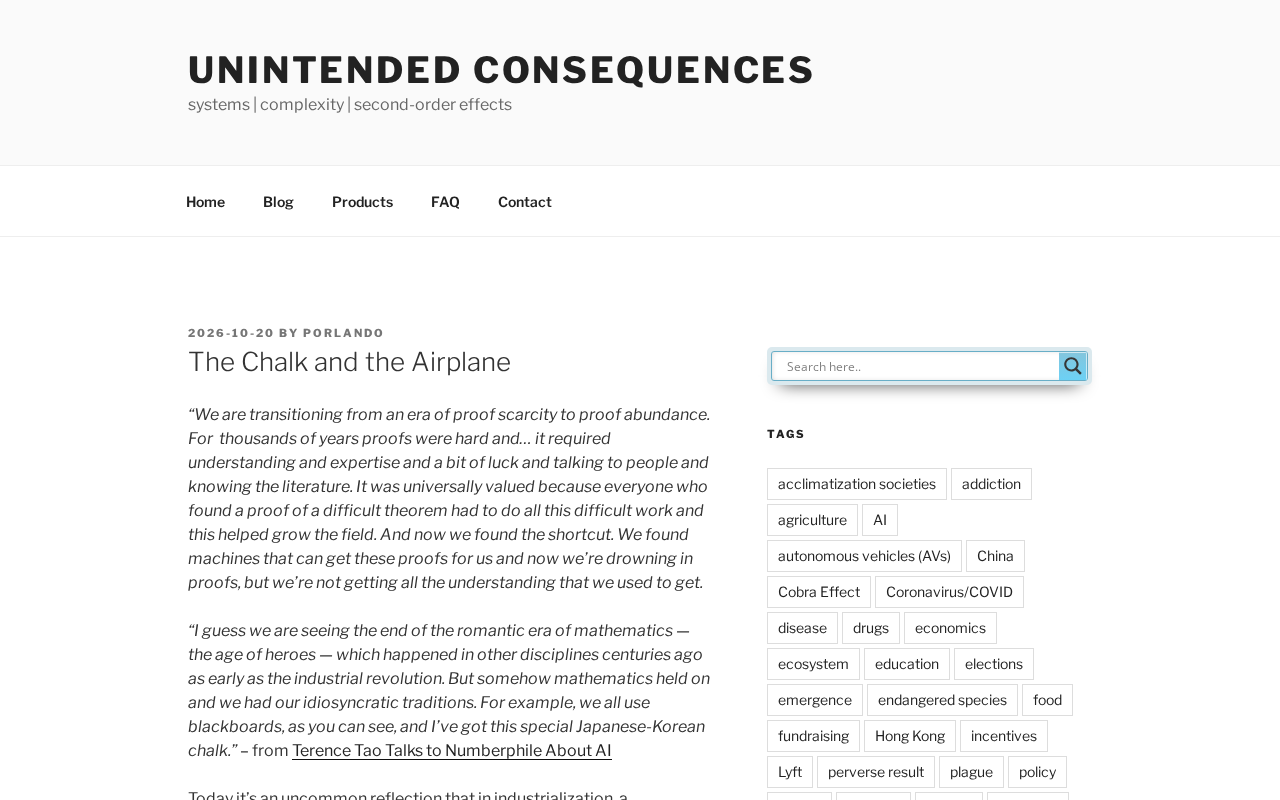
On Hacker News, a post titled "The Chalk and the Airplane" may have only 3 points and 0 comments, but the title itself forms a thought-provoking set of metaphors. Chalk represents a traditional, manual, tangible writing tool; the airplane represents a modern, high-speed, complex engineering system. Placing the two together suggests a certain mismatch between tools and goals—using chalk to draw an airplane, or using airplane-level thinking to understand chalk.
This kind of mismatch is especially common in AI programming. We often apply old mental frameworks to new technological capabilities, and the result is like using chalk to trace a flight path: the tool itself is not wrong, but the scenario is completely mismatched.
"Chalk Thinking" in AI Programming
So-called "chalk thinking" refers to developers treating AI programming assistants merely as faster code completion tools. They use AI to generate boilerplate code, fix syntax errors, and write unit tests—these tasks can indeed be accelerated, but in essence they are still "writing on the blackboard with chalk," just with a smoother piece of chalk.
What, then, is the real "airplane"? It is letting AI participate in system design, cross-file refactoring, and end-to-end transformation from requirements to code. According to past discussions in the Hacker News community, many teams that introduce AI programming tools see productivity gains concentrated in low-complexity tasks, with diminishing returns on architecture-level tasks. This shows that the bottleneck is not tool speed, but the usage paradigm.
End-to-end transformation in the context of software engineering refers to directly generating deployable code from requirement descriptions (natural language, design mockups, API contracts), without a manual step of writing implementation code in between. In traditional processes, requirements analysis, architecture design, coding, and testing are completed in stages by different roles; end-to-end transformation attempts to use AI to compress these stages, turning "requirements → code" into one or a few model calls. The difficulty is that requirements themselves often contain ambiguity, implicit constraints, and cross-module dependencies, which models struggle to resolve automatically. Therefore, current practice mostly adopts a "semi-end-to-end" approach: AI generates the skeleton and adaptation layer, while humans complete business rules and boundary conditions.
Cross-file refactoring refers to modifying related code distributed across multiple files at the same time, such as renaming interfaces, adjusting module dependencies, or migrating framework versions. Such tasks require the model to understand the call relationships and type constraints of the entire codebase, not just the local context of a single file. AI programming assistants perform well within a single file, but across files they easily miss references and break interface consistency. Common mitigation methods include retrieval augmentation (injecting relevant files into the context), validation with static analysis tools, and small commits backed by automated tests.
Tool Evolution and Cognitive Lag
Aeronautical engineers would not use chalk to design an airplane, but they would use chalk to quickly jot down inspiration beside a wind tunnel. The key is to distinguish which steps require precise manual control and which steps can be handed over to automated systems.
AI programming tools are currently in a transitional zone "between chalk and airplane." They are powerful enough to write runnable code, yet unreliable enough that humans need to review every line of output. The challenge developers face is not learning to use the tools, but redrawing the boundary of human-machine division of labor.
Diminishing returns in productivity evaluation of AI programming tools refers to the gradual shrinking or approach to zero of the efficiency gains brought by the tools as task complexity increases. Low-complexity tasks (boilerplate code, syntax fixes, unit tests) have clear patterns and low validation costs, and AI accelerates them almost linearly; architecture-level tasks involve trade-offs, implicit requirements, and non-local constraints, and AI output requires substantial manual review and rework, so net gains decline. This explains why, after many teams introduce the tools, overall productivity gains are concentrated in the long tail of the task distribution, while core design work changes little. Recognizing this curve helps teams set reasonable expectations and use AI in the task range with the highest returns.
From Metaphor to Practice
To replace "chalk" with "airplane," three levels of change are needed:
In task selection, prioritize using AI for information-intensive but clearly patterned tasks, such as generating adaptation layers from API documentation or turning design mockups into component skeletons.
In validation mechanisms, establish automated validation pipelines stricter than manual code review, because AI-generated code has a much higher probability of "looking right" than human-written code.
In mental models, treat AI as a junior engineer who needs clear instructions, makes low-level mistakes, but works extremely fast—not as a reliable compiler.
The title "The Chalk and the Airplane" may have been chosen casually by the author, but it precisely captures the core tension in the current AI programming field: the tool has taken off, while the user's cognition is still stuck in front of the blackboard.
Frequently Asked Questions
Q: What exactly does the chalk-and-airplane metaphor refer to? A: It refers to the mismatch between tool capabilities and usage scenarios—using traditional manual thinking to control modern automated systems, or conversely using complex engineering thinking to handle simple tasks.
Q: What is the biggest limitation of AI programming tools today? A: It is not generation speed, but the unclear reliability boundary of the generated results. Developers find it hard to predict which tasks AI can complete independently and which must be taken over by humans.
Q: How can you judge whether a task is suitable to hand over to AI? A: Look at whether the task has clear input/output specifications, whether there are automated validation methods, and whether the cost of errors is controllable. The more of these three conditions are met, the more suitable the task is for AI to lead.
One-line Summary
The "chalk and airplane" metaphor reveals the core tension of AI programming: the tool has taken off, but the usage paradigm is still stuck in front of the blackboard.
Paragraph Summary
Starting from the title of a low-traffic Hacker News post, "The Chalk and the Airplane," the article interprets chalk and airplane as a metaphor for the mismatch between tools and scenarios, and applies it to AI programming. The author points out that many developers still hold "chalk thinking," treating AI only as a faster code completion tool for boilerplate code, syntax fixes, and unit tests; the real "airplane" is letting AI participate in system design, cross-file refactoring, and end-to-end transformation. Community discussions show that AI productivity gains are concentrated in low-complexity tasks, with diminishing returns on architecture-level tasks, and the bottleneck is the usage paradigm rather than tool speed. The article proposes a path of change at three levels: task selection, validation mechanisms, and mental models, and emphasizes that AI should be treated as a junior engineer who needs clear instructions, makes low-level mistakes, but works extremely fast.
Related articles

64GB Laptop Running LLMs: Only 46.7GB Actually Usable
ASUS ProArt 16 test: only 46.7GB of a nominal 64GB is usable for models; the 128GB model is officially capped at 120B parameters. We break down the 9,000 yuan gap.
Ollama Beginner's Tutorial: A Getting Started Guide to Local LLM Deployment
Ollama beginner's tutorial: Learn what Ollama is, its core features, and the value of local LLM deployment. Covers open-source and free, cross-platform, CPU/GPU scheduling, API integration, and more to help you quickly get started with local LLM management.
Row-Bot 5.3.0 Released: Built-in Browser and Security Approval Redefine AI Agents
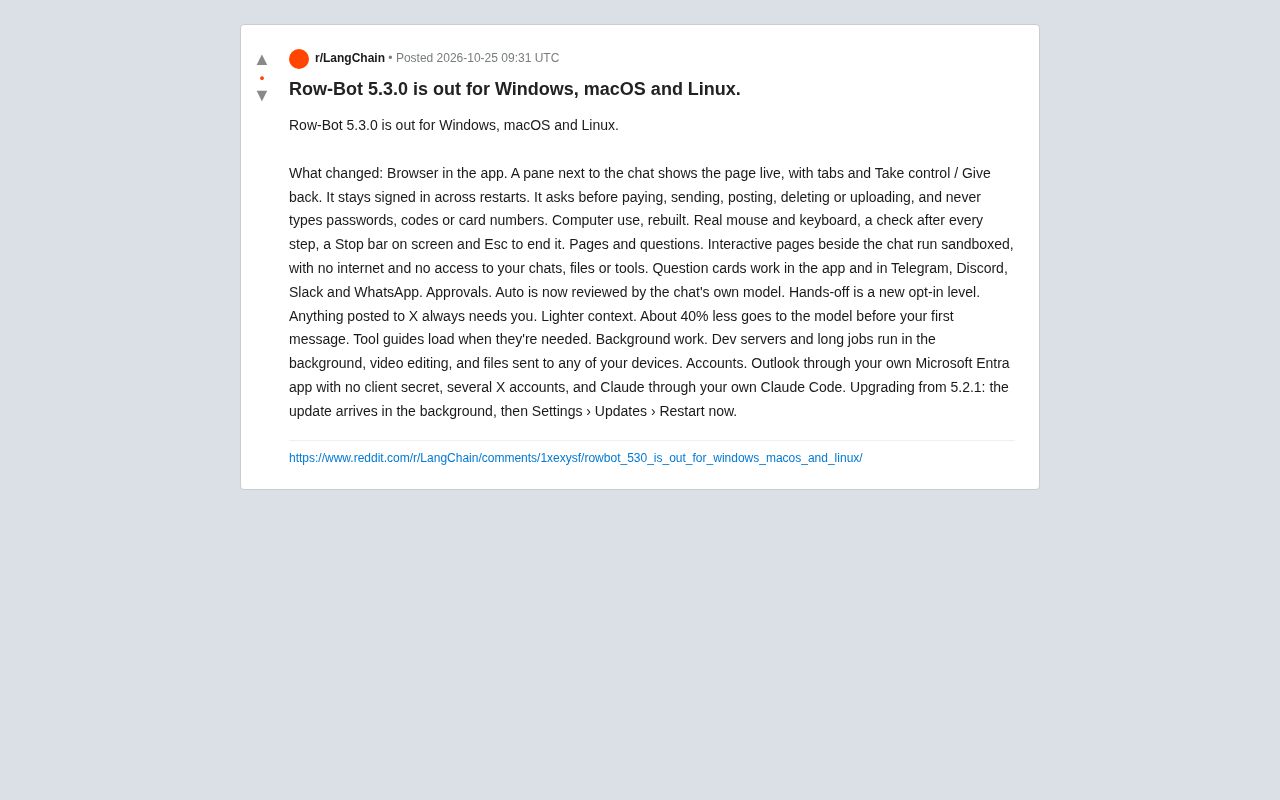
Row-Bot 5.3.0 arrives on Windows, macOS, and Linux with an in-app browser, real-input computer control, tiered approvals, sandboxed pages, ~40% less context, and background tasks.