Chatbots, Workflows, and AI Agents: The Three Layers of AI Capability Explained

AI capabilities come in three layers—chatbots, workflows, and Agents—and the dividing line is who makes the decisions.
The article breaks AI capability into three progressive layers: chatbots driven by LLMs that answer passively without personal data or real execution; AI workflows with human-designed steps chaining tools, running fixed instructions that stall on anything outside the process; and AI Agents that receive only a goal and decide sources, tools, evaluation, and revisions themselves through a reasoning-acting-observing-adjusting loop. They nest rather than compete—the real difference is decision-making authority.
Many people use ChatGPT every day to write emails and Claude to organize content, but the vast majority are only using the tip of the AI iceberg. What's truly worth paying attention to is AI's leap from "waiting for your instructions" to "figuring out how to complete tasks on its own"—this is the core of AI Agents. The YouTube channel Web Oracle breaks down AI capabilities into three layers using everyday examples, and this article offers further interpretation on that basis.
Layer 1: AI Chatbots—You Ask, It Answers
Tools like ChatGPT, Claude, and Gemini are powered by large language models (LLMs), and their essential job is to understand instructions and generate responses. Ask it to write a business email requesting a meeting, and it will produce one; but if you ask "when is my next meeting," it likely won't be able to answer.
There are two reasons for this: the model doesn't automatically have access to your personal data or real-time information; and ordinary chatbots are in a "passively waiting" state by default. It can offer suggestions, write content, and help you brainstorm solutions, but there's a gulf between "knowing what to do" and "actually doing it." This also explains why simply stacking prompts can't solve every problem—what's missing isn't expressive capability, but an execution channel.
A large language model (LLM) refers to a neural network trained on massive amounts of text that generates coherent language by predicting the next word—GPT, Claude, and Gemini all belong to this category. It is itself a stateless inference engine: each conversation generates a response based solely on the current context (including prompts and message history), and it does not remember your calendar, email, or real-time data—unless that information is explicitly placed into the context. For this reason, a chatbot's capability ceiling depends heavily on the information you feed it and whether it can call external tools.
Layer 2: AI Workflows—Automated Execution by Preset Process
To answer "when is my next meeting," you can build a process: receive the question → query the calendar → extract the event → have AI compose a reply. This is an AI workflow: humans pre-design the steps, then chain multiple tools together.
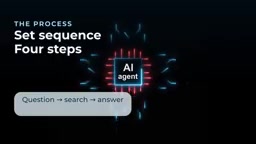
The limitations of workflows are equally obvious. If you then ask "what's the weather like when I arrive," a system designed only for calendar queries will get stuck—because there's no weather step in the process. You can keep adding steps, connect a weather service, generate voice, push to your phone, and even have it run automatically every morning. But automation is not intelligence: a workflow executes the same set of preset instructions every time, like an assembly line where each stage has its fixed role in a fixed order.
A commonly mentioned concept here is RAG (Retrieval-Augmented Generation). According to Web Oracle, its essence is to feed the model relevant material—documents, company records, or other connected services—before it generates an answer. RAG can be a part of a workflow, but it is not itself an Agent.
RAG (Retrieval-Augmented Generation) consists of two steps—"retrieval" and "generation": the system first converts the user's question into a vector, retrieves the most relevant fragments from a vector database or document store, then feeds those fragments together with the original question into the model to generate an answer. Its value lies in enabling the model to answer based on external, updatable knowledge, thereby mitigating outdated knowledge and "hallucination" problems. But RAG is merely an information injection method—what to retrieve and when to retrieve it are still determined by a human-designed process, so it does not itself have autonomous decision-making capability.
Layer 3: AI Agents—Give a Goal, Find the Path Yourself
Suppose you want to publish trending tech content every morning. A traditional workflow would collect articles, summarize, generate posts, and save them to a spreadsheet in a fixed sequence; when results aren't ideal, you have to manually revise instructions, rerun, and repeatedly adjust.
An Agent is different: you only give the goal—"find relevant tech news and write engaging social media posts." It decides which sources to search, which tools to call to gather information, how to summarize, how to draft, and then evaluates the output: Is the content relevant? Accurate? Properly formatted? Is the opening compelling enough? If not, it revises and rechecks.

The key difference is decision-making authority. An Agent doesn't just execute a fixed sequence; it approaches the goal through a loop of reasoning, acting, observing results, and adjusting strategy. This ability to "make its own decisions" is the root of what makes agentic systems powerful.
Of course, Agents also make mistakes: using the wrong tools, producing unreliable results. When important operations are involved, human approval remains necessary. Web Oracle gives a typical scenario: have an Agent find all clips containing skiers in a massive library of video material. A human provides only the goal; the Agent handles analysis, identification, and returning results—dramatically reducing the work of watching footage frame by frame and labeling it manually.
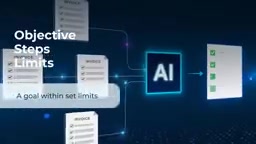
This holds true in business scenarios as well: researching competitors, preparing reports, organizing leads, and managing content production can all be upgraded from "assigning one task at a time" to "giving a larger goal and letting it advance on its own within permissions and boundaries." This is a completely different way of using AI.
The loop of "reasoning—acting—observing—adjusting" is often referred to in the industry as the ReAct (Reasoning and Acting) pattern: the model first outputs a thought, decides which tool to call or which action to take, observes the result returned by the tool, and then revises its next plan accordingly, repeating until the task is complete or a stopping condition is reached. This loop enables Agents to handle open-ended tasks whose steps cannot be fully enumerated in advance, but it also amplifies the risk of errors—a single incorrect tool call gets inherited by subsequent reasoning. Therefore, permission boundaries, tool whitelists, and human approval points are key engineering constraints for taking Agents from demo to production.
The Essential Differences Among the Three
- Chatbots: receive prompts, generate responses.
- AI Workflows: execute steps pre-designed by humans, typically chaining multiple tools to achieve automation.
- AI Agents: receive goals, reason about what to do, call tools, evaluate results, and adjust paths when necessary.
These three capabilities are not mutually exclusive: an Agent can run inside a workflow, and a workflow can include AI models. The real dividing line is "who makes the decisions." Automation solves the problem of completing work with less manpower; agentic AI adds the ability to judge "how the work should be done." As systems mature, knowing how to harness Agents may become as important as knowing how to use chatbots is today.
FAQ
What's the difference between an AI Agent and an automation script? An automation script executes according to preset rules; an Agent, given a goal, chooses its own path and revises its approach based on feedback from results.
Can someone who doesn't know programming use an Agent? Yes. The three-layer distinction in this article doesn't depend on programming knowledge; understanding the "goal—action—evaluation—adjustment" loop is enough to get started.
Will Agents replace workflows? No. The two are in a containment relationship; stable, repetitive processes are more controllable as workflows, while tasks requiring flexible judgment are better suited to Agents.
One-line Summary
AI capabilities fall into three layers: chatbots, workflows, and Agents—the dividing line is who makes the decisions.
Paragraph Summary
The article breaks AI capabilities into three progressive layers: chatbots are driven by large language models and respond passively, neither automatically possessing personal data nor truly executing tasks; AI workflows have humans pre-design the steps and chain multiple tools to achieve automation, but each execution runs the same fixed set of instructions and gets stuck on problems outside the process; AI Agents receive only a goal, deciding for themselves which sources to search, which tools to call, evaluating outputs, and repeatedly revising—the core being the loop of reasoning, acting, observing, and adjusting. The three are not mutually exclusive but in a containment relationship, and the real difference lies in where decision-making authority resides. Automation reduces manpower input, while agentic AI adds the ability to judge "how the work should be done"; important operations still require human approval.
Related articles

WorkBuddy Agent in Action: From AI Q&A to Automated Office Work
WorkBuddy is Tencent's AI agent desktop workbench that reads local files, operates office software, executes multi-step tasks, and runs on schedules. This article explains its core features, key differences from traditional AI tools, and use cases.

Anthropic Research: LLMs Make Formal Software Verification at Scale Possible
Anthropic Frontier Red Team research shows LLMs can generate formal proofs at the RISC-V assembly level for over 100 real open-source libraries, covering 123 OSS-Fuzz libraries and 239 entry points, totaling about 180 million lines of Rocq proofs and finding hundreds of bugs. The article analyzes specification generation, the proof pipeline, trust boundaries, and cost reduction paths.

Prompt Engineering for Beginners: From Writing Prompts to Building AI Collaboration Skills
From the four functions of prompts to the six-step prompt engineering process, this article systematically covers core concepts, business value, and three layers of limitations to help beginners build a complete cognitive framework for prompt engineering.