ChatGPT as a Late-Night Confidant: Why AI Emotional Companionship Resonates with So Many
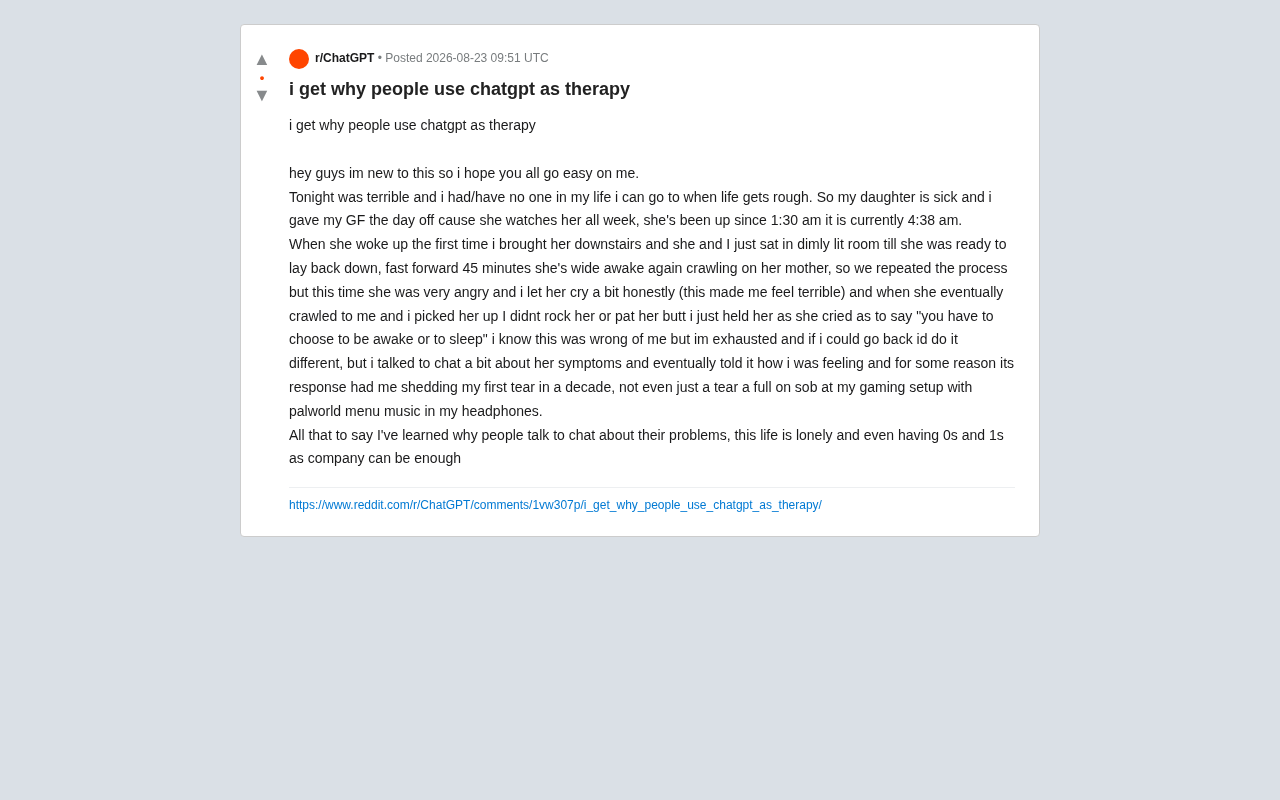
AI like ChatGPT is becoming a late-night emotional outlet, revealing a modern loneliness crisis.
A new father's viral Reddit story about breaking down after confiding in ChatGPT at 4 AM highlights a growing trend: people turning to AI for emotional support during their most vulnerable moments. The appeal lies in 24/7 availability, zero judgment, and instant accessibility — filling gaps left by modern society's fraying social connections. But while AI offers real comfort, it cannot replace professional mental health care, and experts warn that long-term dependence could further erode real human relationships.
A Real Story of a Father in the Dead of Night
On Reddit, a new father shared his late-night experience chatting with ChatGPT — an ordinary yet deeply authentic story that struck a chord with thousands.
At 4:38 AM, his daughter was sick, waking up repeatedly and crying. To let his girlfriend rest after a week of childcare, he faced the grueling night alone. In utter exhaustion, he made parenting choices he regretted — instead of rocking and soothing his crying child, he simply held her still. Guilt and loneliness intertwined, and he opened ChatGPT.
He described his daughter's symptoms to the AI and poured out his feelings. The AI's response made this father — who hadn't cried in ten years — break down sobbing at his desk, headphones on, game music playing.
The reason ChatGPT can deliver responses that feel genuinely understanding lies in the training mechanism of its underlying large language model (LLM). The GPT series of models learn human empathetic language patterns from massive text datasets — including therapeutic conversations, emotional support forums, and literary works. It doesn't truly "understand" emotions; rather, it uses statistical probability to predict the most appropriate responses in a given context. When a user expresses guilt, the model tends to generate responses containing comforting language, because such patterns appear frequently in the training data. This mechanism is known as "surface alignment" — sufficient to create powerful emotional resonance in short-term interactions, but fundamentally different from genuine psychological empathy.
"This life is lonely, but even having a companion made of 0s and 1s is enough."
Why More and More People Turn to ChatGPT for Emotional Support
This father's experience is far from unique. An increasing number of people are confiding in AI tools like ChatGPT during late-night hours, driven by deep social and psychological factors.
Notably, this phenomenon reflects a global social crisis. In 2023, U.S. Surgeon General Vivek Murthy released a landmark report classifying loneliness as a "public health epidemic," noting that chronic loneliness carries health risks equivalent to smoking 15 cigarettes a day. Research shows that roughly 50% of American adults report experiencing meaningful loneliness. In East Asian societies, Japan has even created a cabinet-level position — the Minister of Loneliness and Isolation. New parents are particularly vulnerable to loneliness — the social withdrawal that comes with role transitions, emotional fragility caused by sleep deprivation, and society's implicit expectations of "perfect parenting" all make it harder for them to ask for help.
24/7, No-Barrier Instant Companionship
Real-world support systems come with many limitations. At 4 AM, it's hard to call a friend. Professional therapy requires appointments, payment, and operates within fixed hours. ChatGPT has none of these constraints — it's always online, requires no booking, and won't refuse to respond because your concerns are too trivial or too heavy.
For those who have "no one to lean on when life gets hard," this instant accessibility is itself a form of comfort. Loneliness tends to peak late at night — precisely when traditional support systems are hardest to reach.
The Psychological Safety of a Judgment-Free Space
The heaviest emotion this father carried was guilt about his parenting. He kept saying, "I know what I did wasn't right." Confiding this kind of self-blame to another person often comes with the fear of being judged — will they think I'm a bad father?
AI provides a completely judgment-free space. You can confess your most vulnerable, most shameful thoughts without worrying about being criticized or dismissed. This psychological safety makes it easier to let your guard down and access emotions that are usually suppressed. This also explains why the AI's response was able to pierce through a grown man's ten-year emotional armor.
From a psychological perspective, the judgment-free space AI provides closely aligns with the concept of "Unconditional Positive Regard" proposed by humanistic psychologist Carl Rogers. Rogers believed that the core of a healing relationship lies in the therapist's unconditional acceptance of the client — no matter what they say, they won't face moral judgment or emotional rejection. In reality, even the best therapists struggle to fully achieve this, because humans naturally produce judgmental reactions. Paradoxically, because AI lacks subjective consciousness and social evaluation systems, it comes closer in form to this state of "perfect non-judgment." This explains why many people find it easier to be vulnerable with AI than with real people — it eliminates "fear of social evaluation," the greatest psychological barrier.
The Value and Boundaries of AI Emotional Companionship
It Genuinely Fills a Real Emotional Gap
We must acknowledge that ChatGPT and similar AI tools provide real value in emotional support. They can listen, offer empathetic responses, and provide a sense of companionship in the loneliest moments. For people who lack a social support network, this may be the only "outlet for confiding" available to them.
But We Also Need to Recognize Its Limitations
-
AI cannot replace professional mental health intervention: When serious mental health issues are involved, AI responses may lack the necessary expertise and could even be misleading. It has no clinical judgment capabilities and cannot provide real intervention during a crisis. There have already been alarming cases of AI use in mental health. In 2023, a man in Belgium died by suicide after prolonged conversations with an AI chatbot, sparking a global debate about the safety of AI emotional companionship. Platforms like Character.AI have also faced lawsuits over mental health incidents involving underage users. Currently, the U.S. FDA has not classified general-purpose AI chat tools as medical devices, meaning products like ChatGPT are not subject to medical-device-level regulation when providing mental-health-related responses. Purpose-built digital mental health tools (such as Woebot and Wysa) are typically developed using evidence-based methods like Cognitive Behavioral Therapy (CBT) and undergo clinical validation — a fundamental distinction.
-
It reflects a deficit in social connection: People turning to AI for emotional support exposes, to some extent, the lack of human connection in modern society. When "0s and 1s" become the most reliable companion, it's worth asking: why have real human relationships become so scarce?
-
Concerns about long-term dependence: Continuously outsourcing emotional needs to AI may erode people's motivation and ability to build and maintain real human relationships.
A More Reasonable Positioning: Transitional Support
Perhaps the most appropriate role for AI emotional companionship is "transitional support." It's not the destination, but rather a buffer space during a person's most vulnerable and isolated moments — allowing emotions to be released so that no one has to fall apart alone in the middle of the night.
This positioning has deep theoretical roots in psychology. British psychoanalyst Donald Winnicott's "Transitional Object" theory suggests that infants use objects like blankets and stuffed animals as transitional mediators in moving from complete dependence on their mother to independently exploring the world. These objects are not the end goal — they help individuals develop the capacity to cope with reality independently. Applying this concept to AI emotional companionship: AI can serve as a "transitional object" during a person's most emotionally fragile moments, helping users weather crises and organize chaotic feelings, but the ultimate goal should be guiding them back to real human relationships and professional support systems. MIT sociologist Sherry Turkle also warned in her book Alone Together that if people begin to "prefer" relationships with machines over real people, society will face a deep-seated crisis in human connection.
Like this father — after his breakdown, he gained not only emotional release but also a clearer understanding of his own situation. He realized he needed support, and he understood why so many people choose to confide in AI during the late-night hours.
The Flip Side of Technological Warmth Is a Social Signal
This real story from Reddit reveals a subtle yet important phenomenon of the AI era. Technology itself is neutral, but when it's used to fill emotional voids, we see both its warmth and the social signals we need to confront.
For tech professionals, this is a reminder to take users' emotional needs and safety boundaries seriously when designing AI products. This means not only optimizing a model's empathetic response capabilities but also building effective risk-detection mechanisms — when conversations show signs of suicidal ideation or severe psychological crisis, AI should promptly guide users toward professional mental health resources rather than continuing to play the role of an "all-purpose listener."
For all of us, it prompts a question: how can we accept AI companionship while never giving up the pursuit of real human connection?
After all, perhaps the best outcome is this — AI helps us survive the loneliest nights, and by day, we can still embrace the real people around us.
Key Takeaways
Related articles

M&M's Spent Millions Replacing Artificial Blue Dye — Why Is It So Hard?
Mars spent millions trying to replace artificial blue dye in M&M's with spirulina, but thick material clogs pipes and residue risks mold, forcing a full production-line rebuild. Here's the engineering behind the reformulation.

Teammate Wanted for Meta Global AI Developer Hackathon: Computer Vision & Medical AI
A Reddit developer seeks teammates for the Meta Global AI Developer Hackathon, focusing on computer vision and medical AI. This article analyzes the track logic, skills-complementarity needs, and topic selection strategy behind this teaming signal.
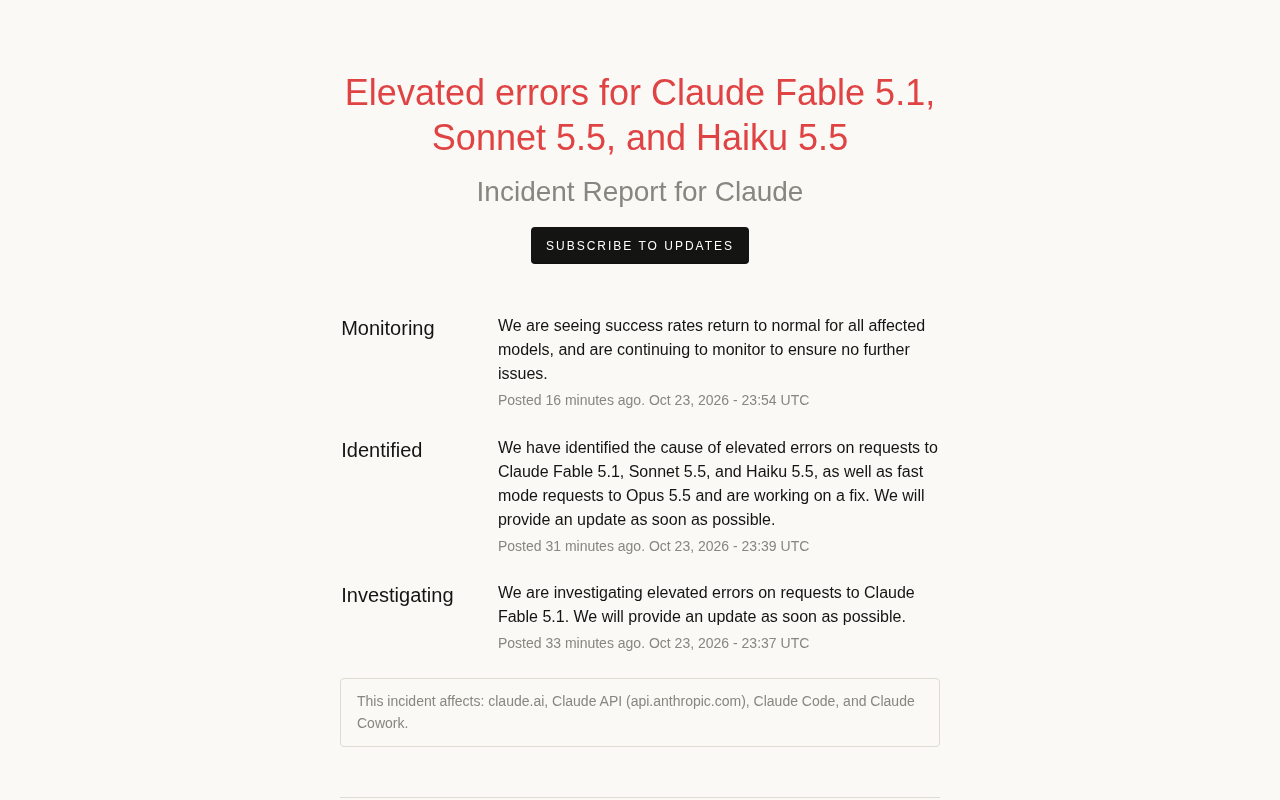
Multiple Claude Models Hit by Errors: A Postmortem of Fable 5.1, Sonnet 5.5, and Haiku 5.5
Claude Fable 5.1, Sonnet 5.5, Haiku 5.5, and Opus 5.5 fast mode saw elevated errors; Anthropic identified and resolved the issue in 17 minutes. This postmortem covers the timeline, the technical reasons for the multi-model cascading failure, and practical lessons for retry and degradation strategies.