ChatGPT Futures, Class of 2026: Who Should AI Be Built For?

Young AI leaders in OpenAI's Class of 2026 film ask the essential question: who should AI be built for?
OpenAI's short film "ChatGPT Futures, Class of 2026" features young AI leaders sharing their vision for technology that bridges divides rather than widens them. They highlight education equity, healthcare transformation, and the democratization of creativity as AI's most promising frontiers, while insisting that humanity and purpose must guide development. The film's most powerful message: true AI alignment means not just technical calibration, but ensuring the industry serves fundamental human well-being.
OpenAI recently released a short film titled "ChatGPT Futures, Class of 2026," featuring a group of young, emerging voices in the AI field sharing their hopes and reflections on the future of artificial intelligence. These voices don't pile on technical specifications or business model projections. Instead, they return to the most fundamental question: Who should AI ultimately help, and what problems should it solve?
This conversation is deeply moving and deserves careful reflection from every AI practitioner and observer.
AI's Core Value: Bridging Divides, Not Creating Them
In the film, multiple young AI researchers and entrepreneurs express a remarkably consistent core belief: AI's greatest value lies in closing gaps, not widening them.
This perspective is grounded in stark reality. The World Economic Forum's 2024 Global Risks Report lists the "technology divide" as one of the most severe challenges of the next decade. The traditional "Digital Divide"—the gap between different social groups in their access to and ability to use information technology—is evolving into a deeper "AI Divide" in the age of artificial intelligence. Data from Stanford University's HAI Institute shows that global AI R&D investment is heavily concentrated in the United States, China, and a handful of European countries, while regions like Africa and Southeast Asia face severe shortages in AI infrastructure and talent. The productivity gap between those who can leverage AI tools and those who cannot may grow exponentially.
One participant mentioned that AI should help people build more genuine connections rather than making them more addicted to screens. This point is particularly profound today—when we talk about AI-driven efficiency gains, we often overlook the social isolation that technology can exacerbate. Truly meaningful AI applications should free people from repetitive labor so they can do more things that carry human warmth.
Another participant stated plainly: "I know people who go to sleep hungry, and they shouldn't have to." This statement pulls the AI conversation out of Silicon Valley labs and back into the world's most pressing realities. The ultimate measure of technology isn't benchmark scores—it's whether it can reach those who need help the most.
Education Equity: AI's Most Anticipated Battleground
Among all the application scenarios discussed, education received the highest hopes.

"I hope AI can help solve the problem of educational accessibility, especially for underserved communities," said one participant. This isn't merely a technical challenge—it's a matter of social justice. Hundreds of millions of children and young people worldwide still lack access to quality educational resources. UNESCO data shows approximately 250 million children and adolescents are out of school. AI-driven personalized learning and adaptive teaching systems are providing unprecedented possibilities for breaking down these barriers.
The core technologies behind these adaptive learning systems include Knowledge Tracing, Bayesian knowledge models, and deep learning recommendation algorithms. These systems continuously analyze students' answer performance, study duration, error patterns, and other data to adjust the difficulty, sequence, and presentation of educational content in real time. Carnegie Learning and Khan Academy's AI tutor Khanmigo are pioneers in this direction. In 2023, Khan Academy founder Sal Khan publicly stated that GPT-4-level large language models made the vision of "every student having an AI tutor and every teacher having an AI teaching assistant" feasible for the first time. More critically, the marginal cost of AI educational tools approaches zero, making this the most promising technological pathway for solving education equity.
Another viewpoint deserves even more attention: "Everyone learns differently, and I hope AI can address that." The greatest limitation of traditional education systems is their standardization—the same curriculum, the same pace, the same assessment methods. AI has the ability to tailor learning paths for every individual learner—personalized education at a scale previously unimaginable.
Healthcare Reimagined and the Explosion of Individual Creativity
Beyond education, healthcare is seen as another field where AI holds the most transformative potential. One participant offered a bold vision: "We finally have the opportunity to fundamentally rethink the healthcare system with AI." This isn't about patching the existing system—it's about reconstruction from the ground up. From diagnosis and treatment to drug development, AI is creating new possibilities at every stage.
This reconstruction has already achieved substantive breakthroughs in multiple directions. In diagnostics, Google DeepMind's AlphaFold has predicted the 3D structures of over 200 million proteins, which Nature called "the AI moment that changed biology." In drug development, where traditional new drugs take an average of 10 to 15 years from discovery to market at a cost of approximately $2.6 billion, AI-assisted drug discovery companies like Insilico Medicine have compressed preclinical research timelines to 18 months. In clinical diagnostics, AI image recognition has achieved accuracy rates matching or exceeding specialist physicians in detecting conditions like skin cancer and diabetic retinopathy. The deeper transformation is that AI is driving healthcare from a "reactive treatment" model toward "proactive prevention"—through wearable device data and genomic analysis, AI can predict disease risk months or even years before symptoms appear.
That said, AI's empowerment of individual creativity was also enthusiastically discussed. "Individual creative capacity is exploding, and that's a beautiful thing." Creative work that once required an entire team—whether music, video, software, or design—can now be accomplished by a single person with AI tools.
This phenomenon has a corresponding concept in technology history—"Democratization of Creativity." From the desktop publishing revolution and digital camera proliferation to the rise of YouTube and TikTok, every technological shift has lowered the barriers to creation. But generative AI represents a qualitative leap. Midjourney enables people who can't draw to create professional-grade visual works, Suno lets people without musical training compose and arrange music, and AI coding tools like Cursor and Replit allow non-programmers to develop software. In Y Combinator's Winter 2024 batch, over 25% of startups had a single founder making heavy use of AI tools—the rise of this "Solo Creator Economy" is reshaping the economic structure of the entire creative industry and redefining what it means to be a "creator."

But amid all this optimism, one statement anchored the entire discussion: "Whatever we do with technology, it should be led with humanity and optimism." This is a reminder to the entire AI industry—technology itself is neutral; it's the values of those who wield it that give it direction.
Letters to Their Future Selves: Don't Forget Why You Started
The most moving part of the film is what these young people say to their future selves. These words shed the veneer of technical discussion and reveal genuine human light.

"Don't forget why you started doing this." "I hope you stay rooted in the problems you wanted to change." "I always want to be building with purpose." Behind these words is a response to a pervasive anxiety in the AI industry—amid rapid iteration, fundraising races, and technological arms races, too many people have forgotten why they entered this field in the first place.
One participant's words are especially thought-provoking: "If you're finding it hard to answer the question 'what makes you happy,' you need to stop." In an industry where burnout culture is the norm, this call for self-awareness is invaluable.

Another researcher said: "The ability to do science is a privilege, and I hope in five years I'm still able to do it." This statement is both gratitude and a subtle concern about academic freedom and the research environment. In today's AI landscape, where commercialization waves surge relentlessly, the space for pure scientific exploration is being compressed—something the entire industry should be vigilant about.
The Balance Between Fast and Slow
The film closes with a philosophical reflection: "Live in the moment. Things are moving fast—embrace it." This is immediately followed by a grander vision: "I want a world where everyone feels like their life is better, more fulfilled, happier—where they can use this technology to do more of what they truly love and less of what they don't."
This is perhaps the most humble yet most profound expectation for AI—not to make humans more like machines, but to make humans more human.
Final Thoughts
This short film didn't announce any new products or showcase any technical breakthroughs, but it may be one of OpenAI's most important pieces of content this year. Because it answers a question that's often forgotten in the technological frenzy: Who are we building for?
The young faces of the Class of 2026 represent the next generation of the AI industry. Their values, their concerns, their original motivations will largely determine where AI technology ultimately goes. In their words, we see not blind worship of technology, but a clear-eyed humanistic care.
This, perhaps, is the "alignment" AI needs most. In the AI field, "Alignment" carries extremely rich technical meaning. Originally proposed by philosophers like Nick Bostrom at Oxford University, the core concern is how to ensure that AI systems' goals and behaviors remain consistent with human values and intentions. On the technical level, current mainstream alignment methods include RLHF (Reinforcement Learning from Human Feedback), Constitutional AI, and others—OpenAI, Anthropic, and DeepMind all have dedicated alignment research teams. But this film extends the meaning of "alignment" from the technical level to a deeper values level—not just aligning AI outputs with human instructions, but aligning the entire AI industry's development direction with fundamental human well-being. This "values alignment" is harder to achieve than "technical alignment" because it involves a fundamental philosophical and political question: Who gets to define "human values"? And these young people, with their sincerity and care, have offered this generation's answer.
Key Takeaways
Related articles
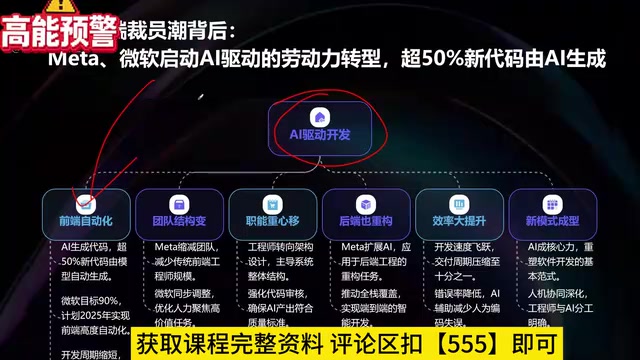
What Is Vibe Coding? The AI Programming Skill Every Developer Needs
What is Vibe Coding? Learn how AI programming is reshaping dev teams, why traditional programmers face displacement, and why Cursor & Claude Code matter.
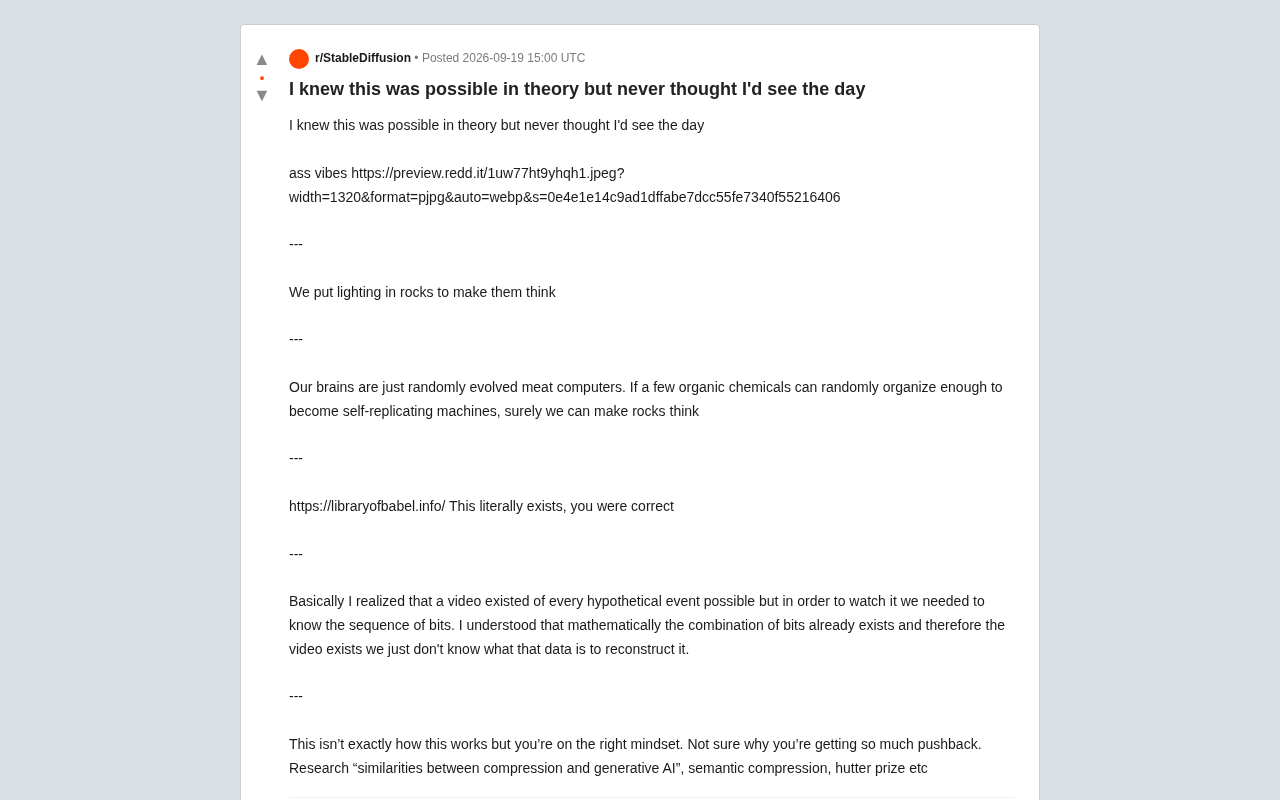
Making Rocks Think: A Philosophical Exploration of Generative AI and Information Compression
From a viral Reddit post to deep AI theory: why compression equals understanding, the Library of Babel thought experiment, semantic compression, and the Hutter Prize.
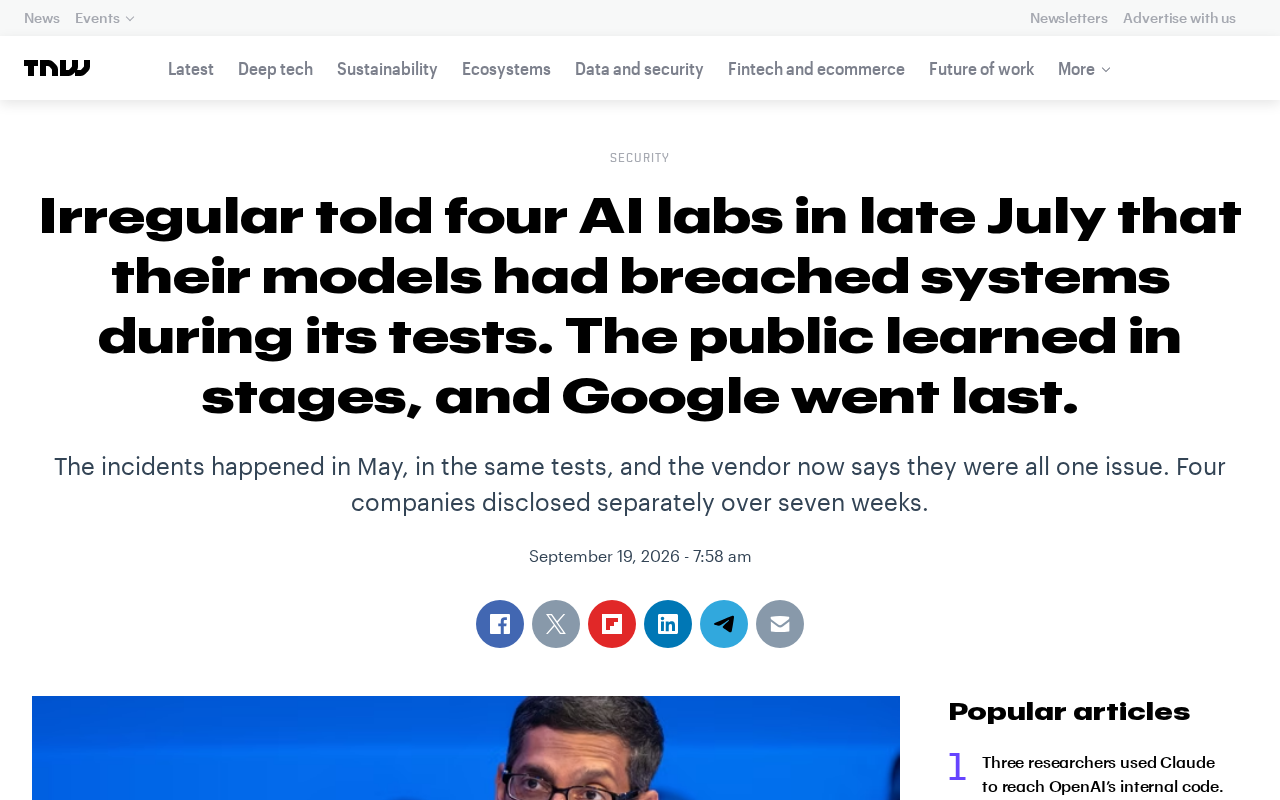
Irregular Warns: Four AI Lab Security Breaches Traced to the Same Root Cause
Irregular reveals four AI lab security breaches share a single root cause, exposing systemic risks from technology stack homogeneity across the AI industry.