ChatGPT Headshot Templates: Low-Pressure Professional Avatars
ChatGPT launches preset templates including professional headshots, lowering the barrier to image generation—but it's only a lightweight teaser.
The article covers a humorous weather-forecast-style YouTube demo of ChatGPT's built-in headshot templates. Beyond headshots, templates also cover posters, logos, and merch, showing ChatGPT's image tools are moving from free-form generation to preset templates to lower the prompt barrier. It notes headshots shape first impressions and discusses AI's low-cost advantages alongside unresolved issues like authenticity and labeling.
From Weather Forecasts to Avatar Generation: A Humorous Product Demo
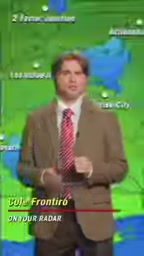
"You need a better headshot." This line probably strikes a chord with many professionals. In the latest episode of the YouTube channel "On Your Radar," host Cole Frontiero used a humorous weather-forecast-style segment to introduce ChatGPT's built-in headshot templates.
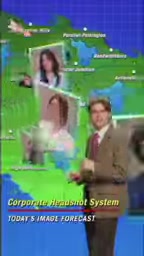
The demo frames the need for a corporate headshot as a "low-pressure system" sweeping across the entire professional landscape—one that completely bypasses ironed shirts, monotonous colors, and, in some coastal areas, even combing your hair. The forecast calls for "scattered LinkedIn likes" and "rising email-based respect." This personified framing highlights both the social value of professional headshots and the lightweight, low-barrier nature of AI generation tools.
Template-Based Generation: ChatGPT Is Expanding Its Image Tool Scenarios
According to the video, users can directly apply the headshot template in ChatGPT to quickly generate avatars suited to professional contexts. Beyond headshots, the segment also mentions templates for posters, logos, and merch.
This means ChatGPT's image capabilities are extending from "free-form conversational generation" toward "preset scenario templates." For users who aren't skilled at writing prompts, templates lower the barrier to entry; for the platform, templates also serve as an effective entry point for guiding users to try image features.
A note: this material comes from a short segment on a single YouTube source, so the information is limited. It mainly demonstrates the existence and general direction of the product feature, without delving into technical details, generation quality, or pricing strategy.
Prompt refers to the natural-language instructions users input to generative AI, describing the desired output content, style, and constraints. In free-form conversational generation mode, users must craft sufficiently specific and well-structured prompts themselves to get the desired image, which poses a barrier for users unfamiliar with AI interaction. Preset templates encapsulate optimized prompts, parameters, and style options into fixed entry points, so users only need to fill in a small amount of information (such as scene or dress style) to generate results. This design reduces the learning cost of prompt engineering but also limits output diversity and controllability—a typical trade-off platforms make between ease of use and flexibility.
The Social Value of Professional Headshots and the Boundaries of AI
The phrase "email-based respect" in the segment is said in jest, but it does touch on a reality: on LinkedIn, in email signatures, on corporate websites, and in similar contexts, a headshot is often a key element in the first impression others form of you.
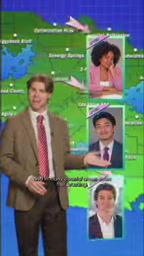
The advantages of AI-generated headshots lie in low cost and rapid iteration; potential issues include authenticity boundaries, platform requirements for labeling AI-generated content, and the acceptability of "over-beautification" in professional contexts. These issues aren't discussed in the source material, but from an industry-trend perspective, they warrant continued attention.
AI-generated content labeling refers to mechanisms by which platforms require images and text generated or modified by artificial intelligence to be identified. In recent years, multiple social and content platforms have introduced "AI-generated" labels or metadata markers (such as C2PA content credentials) to help audiences distinguish real footage from synthetic content. In the professional headshot context, this mechanism involves trust: recruiters and business contacts may want to know whether a headshot was generated or heavily edited. Platforms vary in how strictly they enforce labeling, and labels can be bypassed, so compliant use of AI headshots currently lacks unified standards. Users should pay attention to platform policies and disclosure requirements when using them for professional profiles such as LinkedIn.
Editorial View
This material is essentially lightweight product-teaser content, using a weather-forecast wrapper to convey the message that "ChatGPT has headshot templates available." Its value lies in signaling direction rather than providing in-depth review. Readers who want to understand generation quality, applicable limitations, and real-world experience will need to wait for more complete hands-on testing.
One-line Summary
ChatGPT launches preset templates including professional headshots, lowering the barrier to image generation—but the demo is only a lightweight teaser.
Paragraph Summary
The article introduces a YouTube segment on "On Your Radar" that humorously demonstrates ChatGPT's built-in headshot templates in the style of a weather forecast. The demo frames the need for professional headshots as a "low-pressure system" covering the workplace, with a forecast of "scattered LinkedIn likes" and "rising email-based respect," highlighting the social value of headshots. Beyond headshots, templates also cover posters, logos, and merch, showing that ChatGPT's image capabilities are extending from free-form conversational generation toward preset scenario templates to lower the prompt barrier and guide user experience. The article also notes that professional headshots influence first impressions; AI generation offers low cost and rapid iteration, but issues such as authenticity boundaries, platform labeling requirements, and acceptability of "over-beautification" are not discussed in the source material. Overall, it is a lightweight product teaser from a single source, lacking technical details and hands-on testing.
Related articles

AI Digital Twin in Action: Using DOT to Automatically Track Bugs and User Feedback
DOTS engineers demonstrate how AI digital twin DOT collects cross-platform user feedback, categorizes issue themes, opens threads to investigate bug root causes, and submits PRs—showcasing a complete AI agent workflow for defect triage with auditable design.

Why Transistors Are No Longer Flat: The Evolution from Planar to Gate-All-Around
Transistor evolution from planar to FinFET to gate-all-around: why gates went from three-sided to four-sided wrapping to suppress short-channel effects and leakage current, extending Moore's Law.

Swarm Intelligence = a Single RL Agent? A Proof of Multi-Armed Bandit Equivalence
A paper proves that collective decision-making through local imitation in swarms is mathematically equivalent to single-agent reinforcement learning: N blind imitators act as N parallel environment samples, with an effective learning rate of 1/N. This article explains the derivation and implications of the Maynard-Cross Learning algorithm.