ChatGPT Launches Live Dictation: Transcribe as You Speak, Available on All Platforms

ChatGPT launches live dictation, transcribing synchronously while speaking, open on all platforms and all plans.
ChatGPT has launched Live Dictation, which transcribes microphone speech into text in real time while speaking, eliminating the wait for recording to end and shifting interaction from "record—wait—get results" to a continuous real-time stream. It's rolled out globally to all plan users across web, desktop, iOS, and Android. Real-time feedback compresses latency to the word level, lowering the psychological threshold for voice input, with clear benefits for long prompts, complex instructions, and mobile questioning. The simultaneous launch across all platforms and plans shows the streaming ASR solution is stable and cost-controllable. The article also notes that the technical challenges lie in streaming segmentation, low-latency recognition, and stable text appending, and whether it can change input habits depends on long-term accuracy and multilingual support.
From "Transcribe After Speaking" to "Transcribe While Speaking"
ChatGPT's voice input experience has received a key upgrade. According to official information, ChatGPT now supports a feature called Live Dictation, where speech received by the microphone is transcribed into text in real time, rather than having to wait for the user to finish speaking and end the recording before processing begins, as was the case in the past. This means that while you're speaking, the text on screen is being generated synchronously, and the interaction rhythm has shifted from "record—wait—get results" to a continuous real-time stream.
This feature is being rolled out globally to all ChatGPT plan users, covering the web, desktop app, and iOS and Android mobile platforms. In other words, whether you're using the free version or a paid subscription, and whether you're in a browser or on a mobile app, you can use this capability. For users accustomed to using voice instead of keyboard input, this is a fairly direct productivity boost.
Streaming ASR (Automatic Speech Recognition) is the key technical context for understanding this upgrade. Traditional speech recognition typically uses "end-to-end whole-segment processing": first fully recording the audio, then feeding it all at once into acoustic and language models for decoding. The advantage is complete context and high accuracy; the disadvantage is that no results can be produced while speaking. Streaming recognition instead continuously segments audio into short frames (commonly tens to hundreds of milliseconds), and the model outputs "temporary results" when it has only seen part of the audio, continuously correcting them as more audio arrives. In engineering, "dual-channel" or "chunking + context caching" approaches are commonly used to balance low latency and accuracy. Live dictation is the productized form of streaming ASR, requiring sufficiently low recognition latency and stable text appending, which places higher demands on model inference efficiency and device/cloud coordination.
What Live Dictation Changes
An Experience Closer to "Speaking Is Writing"
The psychological burden of traditional voice transcription lies in "having to finish a whole paragraph." When recording, users often have to organize their language in advance, and if they misspeak midway they have to start over, because the system only produces text after you stop recording. Live dictation compresses the feedback cycle to nearly zero: you say a word, and it appears; if you misspeak, you can see it immediately and adjust. This instant visibility greatly lowers the psychological threshold for using voice input.
The psychological threshold for voice input is closely related to the concept of "feedback latency" in interaction design. Research shows that when system response latency exceeds about 100 milliseconds, users perceive lag; and if voice transcription only produces results after the entire segment ends, the latency can be as long as tens of seconds, during which users cannot confirm whether the system "heard correctly." Live dictation compresses feedback to the word level, allowing users to continuously calibrate—this is precisely the mechanism by which it reduces psychological burden. In addition, traditional whole-segment transcription forces users to complete "pre-organization" before speaking, increasing cognitive load; speaking-while-transcribing allows "thinking, speaking, and editing simultaneously," which is closer to the natural human rhythm of thought and expression, and is especially friendly for long prompts and complex instructions that require repeated refinement.
Dual Benefits for Input Methods and Conversation Scenarios
The value of this feature isn't just in "writing long texts." In ChatGPT, voice input is already a common way to ask questions, especially on mobile. Live transcription lets users see the text recognized by the system while dictating their question, so they can correct recognition errors immediately rather than discovering after sending that ChatGPT misunderstood the question. Scenarios such as long prompts, complex instructions, and multi-turn follow-ups all become more controllable thanks to "what you see is what you write."
Coverage and Usage
Official information shows that the feature has been launched simultaneously on the web, desktop, and both major mobile platforms, and is available across all plan tiers. When using dictation, users can tap the corresponding control—the original text mentions "tap or," i.e., triggering or controlling the dictation flow by tapping; specific interaction details are subject to the actual interface on each platform.
It's worth noting the "all platforms, all plans" coverage. Many AI products' new features are often first rolled out in paid tiers or on a single platform in grayscale. Live dictation, however, has been deployed directly to all entry points, indicating that the underlying speech recognition pipeline already has sufficient stability and cost controllability.
Simultaneous launch across "all platforms and all plans" is uncommon in AI product release strategies. Typically, new features are first rolled out in paid tiers or on a single platform in grayscale to control inference costs and risks. Live dictation covering free users directly means that the marginal cost per unit time of speech recognition has been brought within an acceptable range, and the consistency of the streaming pipeline across multiple ends (web, desktop, iOS, Android) has been validated. From a product perspective, this is also an "entry point equality" strategy: the value of voice input amplifies as user scale grows, and the earlier it's rolled out, the more real-world scenario data can be accumulated, which in turn optimizes recognition accuracy and multilingual support.
A Sober Assessment
The technical challenge of live dictation isn't "whether it can transcribe," but the engineering pressure brought by "transcribing while speaking": audio must be streamed in segments, recognition must be low-latency, text must be stably appended rather than frequently revised, and the experience must be consistent across multiple platforms. ChatGPT's choice to launch simultaneously on all platforms and all plans indicates that this streaming solution has passed the internal validation stage.
For ordinary users, the most practical significance of this feature is that it turns voice input from an "emergency measure" into a "daily option." Keyboard input has natural disadvantages for long texts, mobile scenarios, and multitasking, and the instantly visible transcription precisely fills the biggest shortcoming of voice input in the past—the sense of uncontrollability. As for whether it can truly change users' input habits, that still depends on the long-term performance of recognition accuracy and multilingual support.
FAQ
What's the difference between live dictation and ordinary voice input?
Ordinary voice input only begins transcribing after the user ends the recording, while live dictation generates text synchronously during speech, with feedback that is nearly instantaneous.
Which platforms support it?
The web, desktop app, iOS, and Android apps all support it.
Does it require payment?
It's available on all ChatGPT plans, including free users.
One-line Summary
ChatGPT launches live dictation, transcribing synchronously while speaking, open on all platforms and all plans.
Paragraph Summary
ChatGPT has launched Live Dictation, a feature that transcribes speech received by the microphone into text in real time while speaking, eliminating the need to wait for the recording to end before producing results, and shifting the interaction from "record—wait—get results" to a continuous real-time stream. The feature is being rolled out globally to all plan users, covering the web, desktop app, and iOS and Android mobile platforms. Real-time feedback compresses transcription latency to the word level, lowering the psychological threshold for voice input, with clear benefits for long prompts, complex instructions, and mobile questioning scenarios. The simultaneous launch across all platforms and all plans indicates that its streaming speech recognition solution already has stability and cost controllability. The article also notes that the technical challenges lie in streaming segmentation, low-latency recognition, and stable text appending, and whether it can change users' input habits still depends on the long-term performance of accuracy and multilingual support.
Related articles
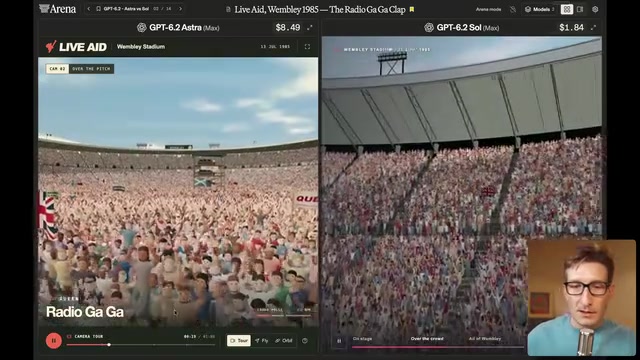
GPT-6.2 Astra vs Sol Hands-On Test: 6x Stronger at 6x the Cost — Which to Use as Your Daily Driver
GPT-6.2 Astra vs Sol hands-on test: Astra wins on detail, depth of field, and data viz but costs ~6x more; Sol beats it on dynamism, camera work, and regular UI. Here's which to use as your daily driver, by scenario.

How the European Commission Rolled Out Matrix to 40,000 Employees
The European Commission rolled out Matrix to over 40,000 employees. Element's blog reviews the phased strategy, digital sovereignty, and open-source adoption lessons.
Why AI Is Going Local: A Deep Dive wit…
Why AI Is Going Local: A Deep Dive with Moonshine Voice Creator Pete Warden
Moonshine Voice creator Pete Warden explores the trend toward local AI, analyzing the four drivers of latency, privacy, cost, and reliability, and what local-first design means for developers and product teams.