Why AI Is Going Local: A Deep Dive with Moonshine Voice Creator Pete Warden
Why AI Is Going Local: A Deep Dive wit…
Pete Warden argues that latency, privacy, cost, and reliability are pushing AI from the cloud to the device.
The article centers on Pete Warden's views on AI localization, noting that latency, privacy, cost, and reliability are driving AI from cloud data centers to devices. Moonshine Voice, a speech recognition project designed to run locally, embodies a "local-first" trade-off: not chasing leaderboard accuracy but seeking a usable balance under real device constraints. Distillation and quantization lower the barrier to local deployment, making specialized tasks more practical on-device. The article also discusses impacts on product forms and engineering iteration, arguing cloud and local will divide labor rather than replace each other.
From Cloud to Device: A Paradigm Shift in AI Compute Deployment
For a long time, implementing AI capabilities has almost by default relied on cloud data centers. But Pete Warden, creator of Moonshine Voice, offered a contrarian observation in a recent discussion: AI is "wanting" to become local. This isn't mere nostalgia or technical purism—it's a structural shift driven by four forces: latency, privacy, cost, and reliability.
The core of Warden's argument is that once models are small and efficient enough, the benefits of local inference quickly outweigh cloud-based approaches. Moonshine Voice itself is a case in point—it focuses on speech recognition and is explicitly designed to run locally. The project's direction alone hints at this: the real-time demands of voice interaction make the "send audio to the cloud and wait for a result" path increasingly inadequate for meeting experience expectations.
Four Practical Drivers of Local AI
Warden's discussion points to several concrete forces. Latency is the most intuitive: the response window for voice interaction is measured in milliseconds, and network round-trips alone consume precious budget. Privacy is a more fundamental consideration—voice, images, and other data are inherently personal, and local processing can keep sensitive information from leaving the device. On cost, the ongoing expense of cloud inference becomes a burden at scale, while the marginal cost of local inference approaches zero. Reliability concerns offline availability: when the network is unstable or services are disrupted, local models can still maintain basic functionality.
These four factors are not new arguments, but Warden's contribution is linking them to the trend of model miniaturization. As distillation, quantization, and architectural optimization dramatically shrink models while maintaining usable accuracy, the technical barrier to local deployment is falling rapidly.
Model distillation and quantization are two key technologies driving model miniaturization. Distillation (Knowledge Distillation) refers to using a large "teacher model" to guide the training of a small "student model," enabling the student to approximate the teacher's output distribution despite a大幅 reduction in parameters; quantization (Quantization) reduces model weights and activations from 32-bit floating point to 8-bit or even lower precision, thereby compressing memory usage and accelerating inference. The two are often combined, enabling models that once required data-center GPUs to run on phones and embedded devices. Much of the "rapidly falling technical barrier" Warden emphasizes is precisely the result of these two classes of technology maturing.
The Design Philosophy of Moonshine Voice
As Warden's new project, Moonshine Voice is positioned in the specific domain of speech recognition. From public information, the project emphasizes optimization for local execution rather than simply porting a cloud model to the device. This "local-first" design approach means making trade-offs different from cloud models in model architecture, memory footprint, and compute scheduling.
Warden's prior experience in the TensorFlow ecosystem has given him long-standing attention to the proposition of "running machine learning on resource-constrained devices." Moonshine Voice can be seen as a continuation of this thread: not pursuing the highest accuracy on leaderboards, but finding a usable balance point under the constraints of real devices.
Local-First Doesn't Mean Abandoning Capability
A common misconception is that local models necessarily mean degraded capability. Warden's view tends to refute this binary opposition: for specific tasks (such as speech recognition, wake-word detection, and simple text processing), a carefully designed local model can absolutely reach a practical level. The key is whether the task boundary is clear—general conversation and specialized recognition place vastly different demands on models, and the latter is more easily made sufficient under local constraints.
Wake-word detection is a typical landing scenario for local AI: a device needs to continuously monitor ambient sound but only activates subsequent processing when it hears a specific trigger word. Because it involves continuous microphone input, uploading raw audio to the cloud nonstop is both power-consuming and a privacy risk, so such tasks are almost necessarily completed locally. Its relationship with speech recognition is "wake first, then recognize"; the two have different requirements for model size and accuracy, which also shows that task boundary definition is itself part of localization design.
Implications for Developers and Product Teams
Warden's argument has direct reference value for product teams planning AI features. Rethinking "must it go to the cloud?" as a default premise may open up new product forms: offline-capable voice assistants, meeting transcription tools that don't need to upload data, and interfaces that still work in weak-network environments.
From an engineering perspective, local AI also changes the iteration rhythm. Cloud models can be updated silently, while local models involve distribution and version management, requiring teams to make different arrangements in release strategy. Although Warden's discussion doesn't unfold all the details, it points to the existence of this trade-off.
Community Reaction and Room for Discussion
The discussion gained attention on Hacker News, with a limited number of comments, indicating the topic is still in an early diffusion stage. Debates around local AI usually focus on several points: whether device compute is sufficient, how model updates should be managed, and to what extent local approaches can replace the cloud. The answers to these questions will continue to change with hardware progress and model efficiency improvements.
Distribution and version management of local models is far more complex than in the cloud: cloud models only need to be updated on the backend, invisibly to users; local models must be delivered with app packages or via incremental updates to devices of different models and compute capabilities, and must also handle old-version compatibility, rollback, and canary releases. In addition, on-device inference is constrained by memory, power, and heat dissipation, and the same model may perform noticeably differently on different hardware. These engineering details determine that "local-first" is not only a model problem but also a product release and operations strategy problem.
The Future Outline of Local AI
Warden's perspective suggests a more decentralized AI deployment landscape: the cloud handles heavy computation and global knowledge, while the local side handles real-time, private, and offline scenarios. The two are not substitutes but a division of labor. The value of projects like Moonshine Voice lies in pushing forward the capability boundary of the local end, enabling more tasks to be completed in a closed loop on the device.
For practitioners focused on AI application deployment, Warden's argument is worth using as a checklist: when designing the next AI feature, first ask "does this really need to go to the cloud?" The answer isn't always local, but the question itself forces teams to assess requirements more honestly.
One-line Summary
Pete Warden believes latency, privacy, cost, and reliability are pushing AI from the cloud to the device.
Paragraph Summary
The article centers on Pete Warden's views on AI localization, pointing out that the four forces of latency, privacy, cost, and reliability are driving AI from cloud data centers to devices. Moonshine Voice, as a speech recognition project designed to run locally, embodies a "local-first" trade-off approach: not pursuing leaderboard accuracy, but seeking a usable balance under real device constraints. Technologies such as model distillation and quantization have lowered the barrier to local deployment, making specialized tasks easier to reach a practical level on devices. The article also discusses the impact of local AI on product forms and engineering iteration rhythms, arguing that cloud and local will form a division of labor rather than a substitution relationship.
Related articles
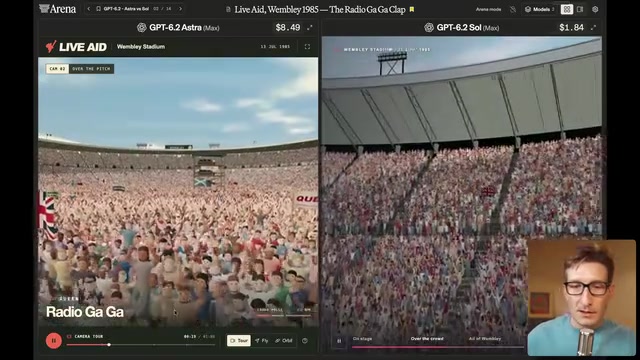
GPT-6.2 Astra vs Sol Hands-On Test: 6x Stronger at 6x the Cost — Which to Use as Your Daily Driver
GPT-6.2 Astra vs Sol hands-on test: Astra wins on detail, depth of field, and data viz but costs ~6x more; Sol beats it on dynamism, camera work, and regular UI. Here's which to use as your daily driver, by scenario.

How the European Commission Rolled Out Matrix to 40,000 Employees
The European Commission rolled out Matrix to over 40,000 employees. Element's blog reviews the phased strategy, digital sovereignty, and open-source adoption lessons.

ChatGPT Launches Live Dictation: Transcribe as You Speak, Available on All Platforms
ChatGPT launches Live Dictation, a real-time transcription feature that transcribes as you speak, now available to all plan users globally on web, desktop, iOS, and Android.