Chorin: Ora et Labora — Building a Real Medieval Monastery in a Game

Indie idle game Chorin recreates centuries of a real Cistercian monastery with calm gameplay.
Chorin: Ora et Labora is an indie idle game modeled on Kloster Chorin, a real Cistercian monastery near Berlin, spanning 1258 to the present. Its calm idle gameplay ties monks' labor to seasons and day-night cycles, gives every monk a name, and cites historical sources in its chronicle. Free, ad-free, in eight languages, and playable offline, it ranked 16th on Product Hunt with 65 votes—a niche but clearly positioned work.
When a Game Becomes a Vessel for History
On Product Hunt, an indie game called Chorin: Ora et Labora caught some attention. Its subtitle is refreshingly direct: "Build a real medieval monastery from 1258 to the present day." Set against the backdrop of Kloster Chorin, a real Cistercian monastery near Berlin, the game uses idle mechanics to recreate the rise and fall of a monastery over hundreds of years.
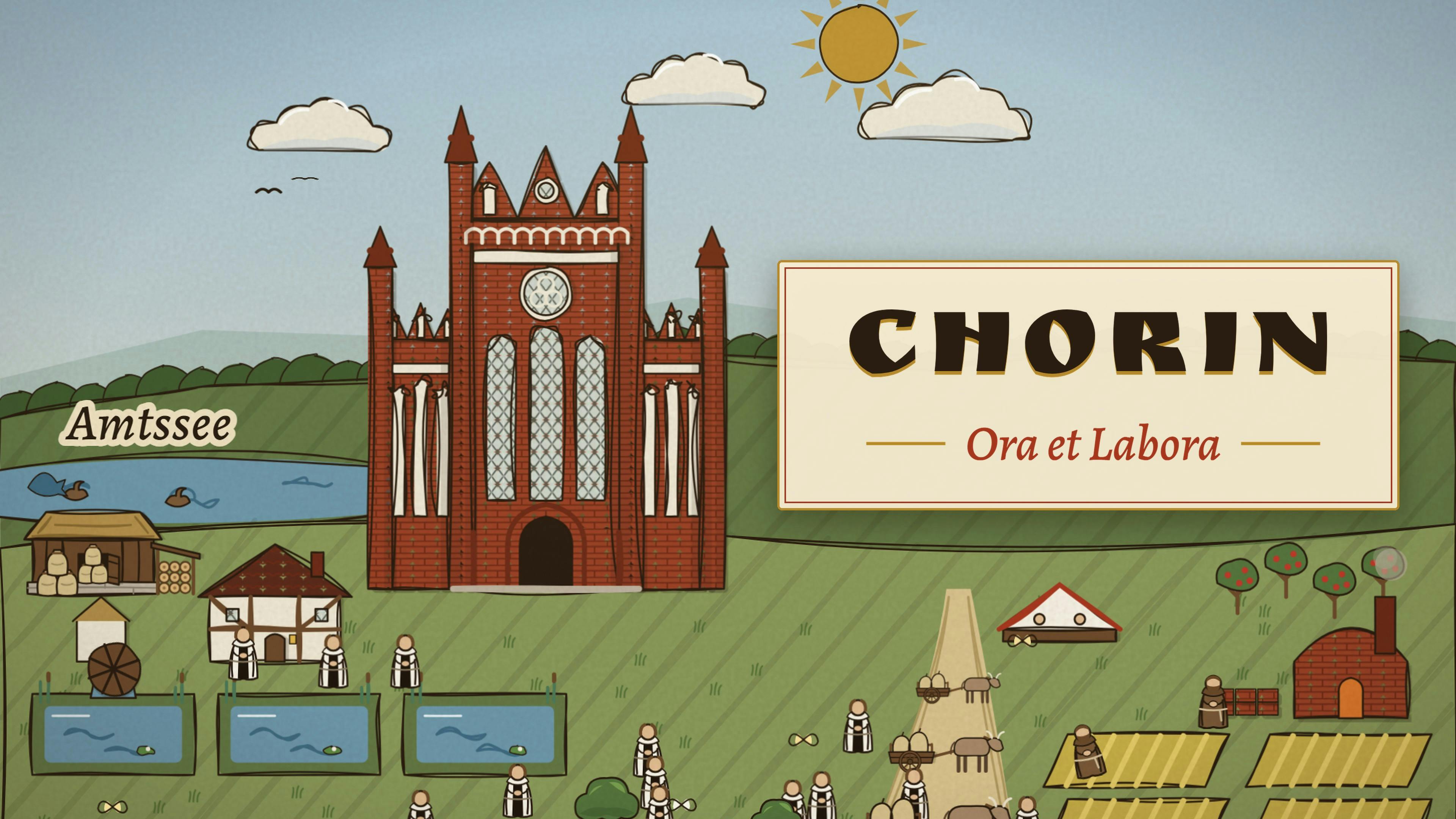
Unlike the typical strategy or management sim, its core experience is remarkably restrained: quiet, slow, and focused on how changing seasons and the day-night cycle affect the monks' labor. Every monk has a name, and every page of the chronicle cites its historical sources. That kind of dedication to historical authenticity is rare in indie games.
The Cistercian Order is a Catholic religious order that branched off from the Benedictines in the 12th century, emphasizing a return to strict observance of the Rule of St. Benedict: poverty, simplicity, and equal weight given to labor and prayer. Its Latin motto, Ora et Labora (pray and work), is exactly where the game's subtitle comes from. Cistercian monasteries were typically built in remote valleys, and their architecture was known for its plainness and lack of ornamentation—a stark contrast to the ornate Gothic churches of the same era. Understanding this context helps explain why the rhythm of the monks' daily labor matters so much in the game: in the Cistercian tradition, labor was not a secondary activity but a core component of the spiritual life.
Kloster Chorin is a Cistercian monastery founded in 1273, located in Brandenburg about 60 kilometers northeast of Berlin. It is famous for its remarkably well-preserved brick Gothic architecture and is one of the most important medieval monastery sites in northern Germany. The game sets its starting point at 1258—just before the monastery's founding—allowing players to take part in its centuries-long history from the laying of the foundation stone.
Gameplay and Design: A Meticulous System Beneath a Calm Surface
Idle Gameplay Meets Historical Simulation
Chorin: Ora et Labora is classified as a "calm idle game." Players don't need to act frequently; instead, they watch the monastery operate as time passes. Seasons and nighttime change what the monks work on—which sounds simple, but implies a simulation system running underneath. Each monk has an individual name, suggesting the game cares about individual identity rather than treating monks as interchangeable resource units.
Idle games are a genre built around "low interaction frequency and automatic resource accumulation," with representative titles including Cookie Clicker and Adventure Capitalist. Players typically only need to click occasionally or make strategic choices, with the main progression driven automatically by the passage of time. In recent years, the category has spun off a "calm idle" subgenre that downplays numerical inflation and competitive pressure in favor of atmosphere, narrative, and aesthetic experience—examples include Kind Words and Wobbledogs.
What makes Chorin's combination of this mechanic with historical simulation distinctive is that the game isn't driven by abstract resources but by seasonal change, day-night cycles, and the individual states of monks. This means the idle mechanic is no longer just "waiting for numbers to grow" but simulating the natural evolution of an institution over centuries, with the player acting more as observer than controller.
The Chronicle and Source Citations
The game's most striking design feature is its "chronicle pages." The development team claims that every page of the chronicle cites its sources. This means that as players progress, what they see isn't just fictional narrative but documented historical fragments. For a game modeled on a real monastery, this approach both boosts credibility and enhances educational value.
Technical Details and Accessibility
The game is free to start, ad-free, available in eight languages, and playable offline. These features count as user-friendly design in the indie space, lowering the barrier to entry. Offline play is especially well suited to the rhythm of an idle game—players don't need to be online constantly, and the monastery keeps running according to its own schedule.
Why This Game Is Worth Noticing
An Indie Developer's Attempt at Historical Narrative
The Maker field lists only "Bohdan," indicating this is the work of an individual or a small team. On Product Hunt it received 65 votes, ranked 16th, and drew 7 comments—not explosive numbers, but enough to get a small group of players interested in historical simulation to take note. Indie games often take bolder risks with subject matter, and Chorin chose a relatively obscure historical subject—a Cistercian monastery—rather than castles or kingdoms.
Product Hunt is a launch and discovery platform for tech and creative products, where users can upvote and comment on new products. Ranking 16th means a mid-to-upper position among products launched that day, and 65 votes is typical data for a niche indie work—not enough to make the front-page spotlight, but enough to reach a specific community interested in its subject matter. For individual developers, Product Hunt's value lies more in early feedback and media exposure than in direct sales conversion.
Historical themes in indie games have been on the rise in recent years—Pentiment (2022), set in 16th-century Bavaria, and Attentat 1942, set in Nazi-occupied Czechoslovakia, are examples. Such works are usually developed by small teams or even individuals, relying on historical research rather than big budgets, and differentiating themselves through narrative depth and the uniqueness of their subject matter. By choosing a monastery over the more common war or dynasty themes, Chorin further narrows this niche.
A New Direction for Idle Games
Idle games have long centered on numerical growth and resource stacking. Chorin combines idle mechanics with historical simulation, using seasons, day-night cycles, and individual monks to drive change—which may bring a slightly different character to the genre. It doesn't aim for excitement but offers a "calm" experience that echoes the rhythm of life in a monastery itself.
Balancing Authenticity and Playability
Emphasizing historical sources is a double-edged sword. On one hand, it attracts history enthusiasts and gives the game educational value; on the other, strict adherence to historical fact can limit gameplay freedom. From what's available so far, the game seems to take a middle path: using a real monastery as its stage while keeping the relaxed feel of an idle game. Whether this balance succeeds will need to be tested by actual play.
Conclusion
Chorin: Ora et Labora is a small but clearly ambitious work. It tries to prove that idle games can be more than a way to pass the time—they can also serve as a window into medieval monastic life. Being free, ad-free, multilingual, and offline-capable makes it easy to try. For players who enjoy historical themes or are looking for a slower-paced experience, this may be an indie game worth keeping an eye on.
One-line Summary
Indie idle game Chorin is modeled on a real Cistercian monastery and uses calm gameplay to recreate centuries of history.
Paragraph Summary
Chorin: Ora et Labora is an indie idle game modeled on Kloster Chorin, a real Cistercian monastery near Berlin, spanning from 1258 to the present day. It uses "calm idle" gameplay in which seasons and day-night cycles affect the monks' labor, each monk has an individual name, and chronicle pages cite historical sources to emphasize authenticity. The game is free to start, ad-free, available in eight languages, and playable offline. It received 65 votes and ranked 16th on Product Hunt, marking it as a niche but clearly positioned work. The article argues that the game attempts to combine idle mechanics with historical simulation, bringing a new direction to the genre while seeking a balance between historical authenticity and gameplay freedom.
Related articles

How Do Cursor, Devin, TRAE, and Copilot Compare on Price? Calculate Your Credits Before You Compare Monthly Fees
Side-by-side comparison of individual and team pricing for Cursor, Devin Desktop, TRAE, and Copilot, breaking down credit rules, third-party model inclusion, overage billing, and practical methods for measuring usage before paying, setting spending caps, and choosing the right tool.

Copilot Retires Three Models: Pro Users Left With Only One Alternative
GitHub Copilot retires Claude Opus 4.8, Claude Opus 5, and GPT-5.6 Tera on Nov 16 across Chat, code completion, and Agent mode. Pro users have only GPT-6 Luna left; Legacy annual plans miss Opus 5.5; admins must enable replacements manually.
Gemini 4 Carbon Arrives: The LLM Race Enters the Era of Million-Token Context and Trillion-Parameter Open Source
Google launches Gemini 4 Carbon and multi-agent tool Swarm; Anthropic debuts million-context Fable 5.2 and Mythos 5.2; OpenAI releases security-focused GPT-6 Cyber; Mistral and Kimi open-source trillion-parameter models — the LLM race accelerates across the board.