CirclePanel: An AI-Native End-to-End User Research Platform

CirclePanel is an AI-native platform that unifies user research planning, recruiting, and analysis in one place.
CirclePanel is an AI-native user research platform built by Mostafa Gafaar and launched on Product Hunt. It positions itself as an end-to-end solution covering planning, participant recruitment, and analysis. Its core value propositions are: an AI-native architecture that automates each stage — from generating research plans to matching participants and surfacing interview insights — and a unified platform that breaks down the tool silos common in UX research workflows. The product is primarily aimed at UX researchers, product managers, and small-to-mid-sized teams without dedicated researchers. It earned 73 upvotes on launch day, a respectable result, though as a new product, key capabilities like AI accuracy and recruitment quality remain to be validated in practice.
What Is CirclePanel
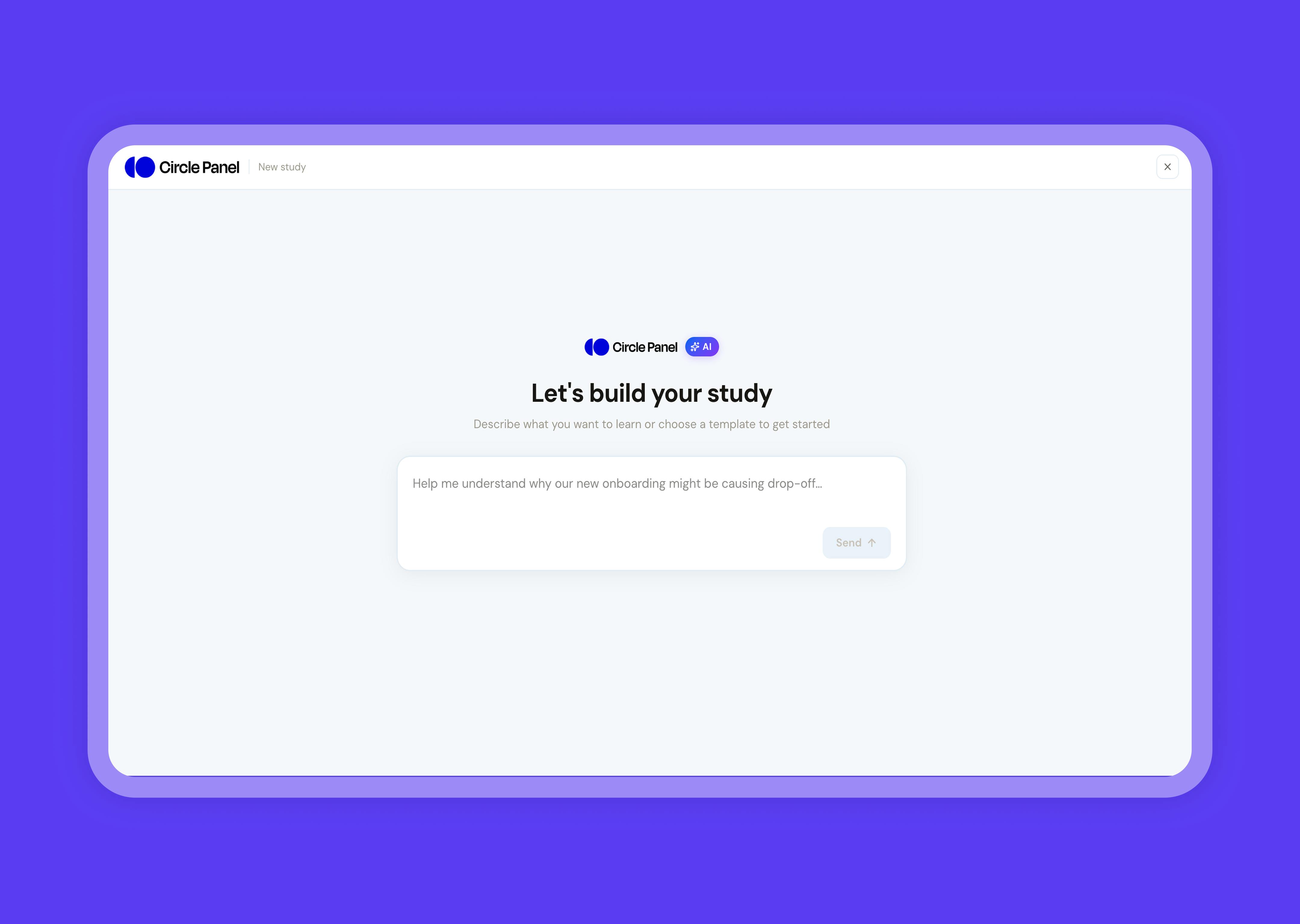
CirclePanel is an AI-native UX research platform that debuted on Product Hunt, positioning itself as an "end-to-end" solution covering the three core stages of user research: Plan, Recruit, and Analyze. Built by maker Mostafa Gafaar, the product earned 73 upvotes and ranked 17th on its launch day, categorized under Design Tools, User Experience, and UX Design.
For designers and product teams, user research has long been a fragmented process — switching between different tools to handle research planning, participant recruitment, and post-session data analysis. CirclePanel aims to consolidate all of these stages into a single platform, with AI woven throughout the entire workflow.
What "AI-Native" Actually Means
The product's core selling point is being "AI-native" — which is fundamentally different from simply bolting AI features onto a traditional tool. Being AI-native means AI capabilities are built into the foundation of the architecture from day one, not added as an afterthought.
In the context of user research, AI can play a meaningful role across multiple stages:
- Planning: Automatically generating interview guides, survey questions, or recommending appropriate research methods based on stated objectives.
- Recruiting: Matching and screening participants based on target audience profiles to improve recruitment efficiency.
- Analysis: Auto-transcribing interview recordings, clustering open-ended responses by theme, and surfacing insights — typically the most time-consuming part of traditional research.
It's worth noting that the available source material only outlines the platform's overall positioning without detailing how each AI feature is implemented or how well it performs. The points above are reasonable inferences based on the platform's stated direction.
In the analysis stage of user research, AI hallucination is a risk that deserves particular attention. Large language models summarizing interview content may generate insights that sound plausible but don't actually exist in the underlying data, or may overgeneralize the views of a small number of participants into sweeping conclusions. This is especially dangerous in high-stakes domains like healthcare or finance. Mature AI-native research tools typically address this through citation grounding — where every insight can be traced back to a specific passage in the source material. When evaluating products like CirclePanel, the verifiability and transparency of analysis outputs is a critical dimension for assessing real-world readiness.
The Value of End-to-End Integration
The user research tooling market has long suffered from a "tool silo" problem. Teams might use one tool for surveys, another to recruit participants, and a third-party platform for data analysis. Moving data between tools and converting formats introduces overhead and risks information loss along the way.
CirclePanel's "end-to-end" positioning directly targets this pain point. Unifying planning, recruiting, and analysis under one platform can theoretically deliver several benefits:
- Data flows naturally through the process, reducing the need for manual import/export.
- Research context is preserved, so the analysis stage can directly reference the goals set during planning.
- Team collaboration becomes smoother, with different roles working in the same platform.
This integrated approach isn't unique to CirclePanel, but combining it with an AI-native architecture creates an opportunity for meaningful differentiation in efficiency.
The user research tool market currently features several distinct categories of players: Dovetail and Aurelius focus on organizing and analyzing interview data; UserTesting and Maze emphasize usability testing and participant recruitment; Typeform and SurveyMonkey lead in survey collection. Each excels in a specific area, but most cover only one part of the research workflow, leaving teams to maintain multiple subscriptions and manually sync data across tools. In recent years, as AI has matured, the "full-stack research platform" space has started heating up, with tools like Ethnio and Respondent gradually expanding their feature sets. CirclePanel entering this space faces not just feature-level competition, but the harder challenge of convincing teams with established tool stacks to migrate their entire research workflow.
Who Is This Built For
Based on its product categories and positioning, CirclePanel is primarily aimed at UX researchers, product managers, and design teams — particularly those who regularly conduct user interviews, usability tests, and concept validation studies.
For small to mid-sized product teams without a dedicated researcher, a platform that automates tedious workflows can significantly lower the barrier to conducting user research. For more established research teams, AI-assisted analysis can free up human effort from repetitive transcription and coding work, allowing researchers to focus on higher-level interpretation of findings.
Participant recruitment is one of the most tension-filled aspects of user research, where cost and quality are constantly in conflict. Traditional approaches rely on professional recruitment platforms (such as Prolific or User Interviews) or a team's own user pool. The former tends to be expensive and may attract participants motivated by compensation rather than genuine feedback; the latter requires teams to build and maintain their own outreach infrastructure. AI-assisted matching can improve screening efficiency, but the quality and diversity of the participant pool remains the core variable — no matter how capable the AI, it cannot conjure real users matching a specific profile out of thin air. For CirclePanel's recruitment feature, the key evaluation criteria are the scale of its participant database, geographic and demographic coverage, and how it verifies the authenticity of participant information.
A Grounded Perspective
As a product that just launched on Product Hunt, publicly available information about CirclePanel is still limited. A score of 73 upvotes is solidly above average in a competitive daily ranking, suggesting its positioning has generated genuine interest.
The questions that truly matter are: How good is the quality of AI-generated research plans? Can participant recruitment deliver adequate reach and authenticity? Can automated analysis avoid the hallucinations and oversimplifications that commonly plague AI-generated qualitative insights? These all need to be validated through real-world use.
For teams currently exploring user research tools, CirclePanel offers a new option worth trying. That said, it's worth running a small-scale pilot within your specific research context before committing to a full adoption.
Related articles

Qwen 4 First Test Leaks: Performance Rivals Opus 5.5, DeepSeek V4 Series Surfaces
Early Qwen 4 test outputs leak, with front-end generation said to rival Opus 5.5; DeepSeek V4 Mini, Flash, and Pro names appear in a code repo; Ant Group's Ling-3.1-flash surfaces too. Here's the latest on model tiering and on-device lightweight models.

OpenCode Makes DeepSeek V4.1 Flash Free, AI Daily Roundup
AI daily roundup: OpenCode makes DeepSeek V4.1 Flash free, StepFun Step5 Preview and Ling 3.1 Flash open-sourced, Grok Voice 3.0 tops speech leaderboard, Matrix Game 4.0 open-sourced, and the EU opens its first AI Act enforcement probe into OpenAI and Anthropic.

DeepSeek V4.1 Flash 1017 Released: Reasoning and Coding Upgrades, Search and Fetch API Now Available
DeepSeek releases V4.1 Flash 1017 with major gains in reasoning, coding, and agentic tasks, plus web search and fetch APIs at 5 yuan per 1,000 requests. Tencent Hunyuan open-sources High Memory 2.0, Perplexity open-sources multimodal decision models, and MOFCOM seeks comments on AI export catalog.