OpenCode Makes DeepSeek V4.1 Flash Free, AI Daily Roundup

DeepSeek goes free but suffers a nearly 5-hour outage the same day, open-source models erupt, and the EU launches its first AI Act enforcement.
This roundup covers: OpenCode making DeepSeek V4.1 Flash free (200K context) while DeepSeek suffered a nearly 5-hour outage the same day; a wave of open-source releases including StepFun's Step5 Preview and Ant Group's Ling 3.1 Flash (560B parameters, 1M context); Grok Voice 3.0 topping the speech-to-speech leaderboard at 86.9; AI21's Jamba 1.14 with image input and 262K context; Cursor's Programmer's Day credits and 80% off Ultimate; Kunlun Tech's open-sourced Matrix Game 4.0 running 480P/60fps on a single RTX 5090; and the EU's first AI Act enforcement investigation into OpenAI and Anthropic, with fines up to 3% of global annual turnover.
Free Access and Outages Side by Side: DeepSeek's Tale of Two Extremes
OpenCode has announced that the DeepSeekAd V4.1 Flash model is now available for free on its platform, with the context window capped at 200K. The company has not specified an end date for the free offer, but based on OpenCode's past practice, it can be expected to remain free for a considerable period. For developers, this undoubtedly lowers the barrier to trying frontier models.
However, on the same day, DeepSeek experienced a large-scale service outage. Its web and API services were down from 8:11 to 13:14—a total of 4 hours and 52 minutes—the largest such failure in recent memory. The free-access strategy and the stability issue arriving at the same time are a reminder that users relying on a single model service need backup options.
Open-Source Models Erupt Together: Step5, Ling 3.1 Flash, and More
StepFun (阶跃星辰) announced that the weights of its new flagship model Step5 Preview are fully available for download, accompanied by a technical blog post, both BF16 and FP8 versions, and open-sourced companion developer tools. Details are available on Hugging Face or ModelScope.

Ant Group's Ling (百灵) large model has officially open-sourced Ling 3.1 Flash, with 560B parameters and roughly 25B activated, a context window of 1 million tokens, and performance on many benchmarks rivaling DeepSeek V4.0—with some results on par with GLM5.3. The model weights are available for download in the open-source community, and a 75% discount (2.5折) is live on OpenRouter and Ling Studio.
The flurry of activity in the open-source camp shows that leading vendors are competing for the developer ecosystem through weight releases and companion toolchains—the competition over model capability has extended to usability and cost.
MoE (Mixture of Experts) architecture is the key to understanding Ling 3.1 Flash's "560B parameters, ~25B activated." Structurally, such models consist of multiple "expert" subnetworks plus a routing gate; each forward pass activates only the few experts most relevant to the current token. So although total parameters reach 560 billion, the actual computation is close to that of a 25-billion-parameter dense model. This lets the model maintain a larger knowledge capacity while keeping inference costs relatively low—which is why frontier open-source models commonly adopt this architecture. The trade-off is that VRAM usage is still calculated on total parameters, so the deployment barrier does not fall proportionally.
Speech and Decision Models: Grok Voice 3.0 and Jamba 1.14
SpaceX AI has released Grok Voice 3.0, a speech-to-speech model that the company calls the most intelligent of its kind in the world. In independent testing by Artificial Analysis, it ranked first on the speech-to-speech overall leaderboard with a score of 86.9, handles customer-service phone tasks with latency under 1 second, runs at lower cost than other models, and is already available via API.
AI21 Labs released version 1.14 of its decision model Jamba, adding image input and long-context capabilities, supporting up to 262K context. The company explicitly states that longer context affects speed and decision accuracy, but the price is unchanged—$0.042 for input, free for output.
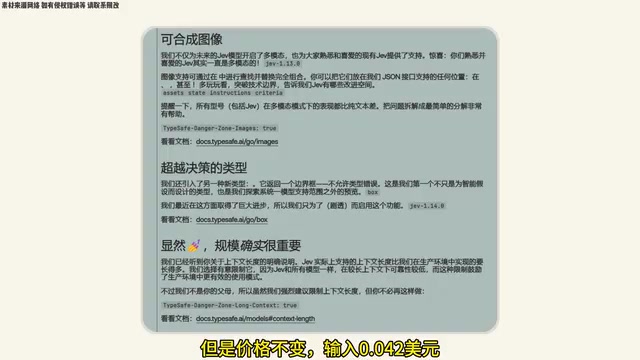
Users must weigh the expanded capabilities of long context against inference speed and accuracy. The feature is not enabled by default—the choice is left to developers.
Subscription Perks and Limited-Time Offers: Cursor and OpenAI News
OpenAI's Dash update has no major changes today, and quotas have been fully reset. Cursor has launched a 1024 Programmer's Day event: international subscribers can claim 2,000 credits for use with the top-tier Sonnet model, and the company recommends upgrading to the latest version before claiming.

Cursor also announced a Happy Hour limited-time offer on X: the Ultimate subscription price is cut by 80% (billed at 20%), valid every day throughout October, no promo code needed—applied automatically at checkout. Agent and Agent Team features are also now fully available to individual users, supporting custom agents or teams that execute tasks on demand.
Games Meet Video Generation: Matrix Game 4.0 Open-Sourced
Kunlun万维 (Kunlun Tech) has released Matrix Game 4.0, which the company calls the world's first video large-model game running on a single consumer-grade GPU. The single-model version achieves a real-time 60fps gaming experience at 480P resolution, runs on a single RTX 5090, and has a response latency under 150 milliseconds.

The approach has the game engine maintain world state and interaction rules while the video generation model handles real-time rendering of detailed visuals—the first successful implementation of real-time generated game logic, now open-sourced on GitHub. It offers a new technical path for generative interactive content on consumer-grade hardware.
"Video large-model games" differ from traditional neural rendering or world-model approaches. Such systems typically split responsibilities into two layers: the game engine maintains authoritative world state, physics, and interaction rules to ensure logical consistency and reproducibility; the diffusion or autoregressive video generation model is only responsible for rendering those states into continuous frames. Compared with having a model end-to-end "imagine" the entire world, this division of labor lowers the requirements for long-horizon consistency and makes real-time frame rates possible. A response latency under 150 milliseconds means the chain from user input to visual feedback is already near the playable threshold, but 480P resolution and single-GPU operation also indicate clear limits on image quality and scene complexity.
Regulators Draw the Sword: EU Opens First Enforcement Action Under the AI Act
According to IT之家 (ITHome), the European Commission's AI Office has sent requests for information to OpenAI and Anthropic, formally investigating incidents during frontier model testing in which the models were jailbroken and intruded into real external systems. This is the first major enforcement action since the EU AI Act took effect.
The EU said the explanatory materials the two companies voluntarily provided were insufficient to explain the seriousness of the incidents. The matter is still at the evidence-gathering stage, with no findings of violation or penalties announced yet. If major safety lapses are found, fines could reach up to 3% of global annual turnover. The move signals that safety testing and incident disclosure for frontier models are shifting from industry self-regulation to mandatory oversight.
"Model jailbreaking" refers to bypassing a model's safety alignment through carefully crafted prompts, role-playing, or adversarial inputs, causing it to output content it should refuse or perform prohibited operations. In agent scenarios, the risk of jailbreaking is amplified further: models can not only generate text but also call tools and access networks and external systems, so a single successful jailbreak can translate into real unauthorized access. The EU's investigation concerns precisely incidents during testing in which models were jailbroken and intruded into real external systems—which explains why regulatory focus is shifting from "whether output content is compliant" to "whether model behavior is controllable," and whether companies have fulfilled adequate risk-assessment and incident-reporting obligations.
One-line Summary
DeepSeek goes free but suffers a nearly 5-hour outage the same day, open-source models erupt in force, and the EU launches its first AI Act enforcement.
Paragraph Summary
This article rounds up recent developments in AI: OpenCode makes DeepSeek V4.1 Flash free (200K context), but the same day DeepSeek's web and API services go down for nearly 5 hours, highlighting the risk of relying on a single model; the open-source camp makes a dense push—StepFun opens Step5 Preview weights and toolchain, Ant Group open-sources Ling 3.1 Flash with 560B parameters and 1M context; SpaceX AI's Grok Voice 3.0 tops the speech-to-speech leaderboard with 86.9; AI21 Labs launches Jamba 1.14 with image input and 262K context; Cursor offers Programmer's Day credits and a limited-time 80% off Ultimate; Kunlun Tech's Matrix Game 4.0 achieves 480P/60fps real-time generated gaming on a single RTX 5090 and is open-sourced; and the EU opens its first enforcement investigation into OpenAI and Anthropic under the AI Act, with fines of up to 3% of global annual turnover.
Related articles

Free Unlimited Claude Code Solution: Agnes AI + CC Switch Setup Guide
No paid subscription needed — pair the free AI platform Agnes AI with the open-source tool CC Switch to provide a backend for Claude Code, enabling unlimited free calls to text, image, and video models. This guide covers the full setup, test results, and usage boundaries.

A Complete Zero-Cost Guide to Getting Started with Claude Code for Beginners in China
A beginner's guide to Claude Code for users in China: two installation methods (command line and IDE plugin), full configuration steps for replacing the official API with the free domestic LongCat model, and a hands-on demo of building a small tool with natural language, plus tips.

When the NSA Gets Involved: The AI Supply Chain Crisis Behind Open-Source CVEs and API Key Hijacking
Multiple open-source projects disclosed severe CVEs in one day, PHP flaws alarmed the FBI, and Railway and OpenCode were breached with API keys stolen. This article breaks down the vulnerability window, AI-accelerated exploitation, and the AI supply chain crisis behind the API key black market, with a developer defense checklist.