Claude Academy Launches: A Deep Dive into Anthropic's Official AI Learning and Certification Platform
Anthropic launches Claude Academy, its official AI learning and certification platform for the Claude stack.
Anthropic has launched Claude Academy, an official learning platform offering structured courses spanning prompt engineering fundamentals, Claude API development, and advanced multi-agent workflows. The platform includes official certification paths, positioning it as both an educational resource and a strategic ecosystem play. This move reflects a broader industry trend where AI companies invest in user enablement to drive adoption and build developer communities.
Anthropic Enters AI Education: Claude Academy Makes Its Debut
AI company Anthropic recently launched its official learning platform, Claude Academy, on Product Hunt, quickly climbing to #5 on the daily leaderboard with 95 upvotes. The platform's positioning is crystal clear — it aims to be a one-stop learning hub for mastering the entire Claude technology stack.
From a product standpoint, Claude Academy is not just a collection of docs or an FAQ page. It's a structured, interactive learning environment that brings together self-paced courses, developer tutorials, and official certification paths under one roof, covering everything from basic prompt writing to building complex multi-agent workflows. Users can access it directly at academy.claude.com.
This move marks Anthropic's formal push into the AI education ecosystem. Previously, official learning resources from both OpenAI and Anthropic were scattered across documentation, blog posts, and developer guides. The arrival of Claude Academy signals that Anthropic is now systematically investing in user enablement. It's worth noting that major players have taken different approaches to AI education. OpenAI primarily relies on its Platform Docs and Cookbook example library, while also partnering with platforms like Coursera to offer courses. Google DeepMind provides hands-on tutorials through Google AI Studio and Colab notebooks. Meta embeds learning resources within its Llama model open-source community. Meanwhile, third-party education platforms such as DeepLearning.AI (founded by Andrew Ng) and Hugging Face's course offerings also hold significant positions in the ecosystem. Anthropic's decision to launch a standalone learning platform shows it has chosen a heavier, self-built approach. While this requires greater upfront investment, it offers natural advantages in content authority and user data acquisition.
Claude Academy Curriculum: A Complete Learning Path from Beginner to Advanced
According to official descriptions, Claude Academy's curriculum spans three distinct tiers, forming a clear capability growth curve.
Foundation Tier: AI Literacy and Prompt Engineering
The bottom tier targets newcomers to AI and beginner developers. It covers basic prompt writing (prompting) and AI literacy (AI fluency). This is arguably the most critical yet most overlooked aspect of AI adoption — many users find AI "unhelpful" simply because they don't know how to communicate effectively with the model.
Prompt Engineering, as an emerging technical discipline, matured rapidly after 2023. It evolved from simple instruction writing into a range of advanced techniques including Chain-of-Thought, Few-shot Learning, Role-playing, and more. The core challenge is that large language model output quality is highly dependent on how the input is phrased — the same request, worded differently, can produce dramatically different results. For example, the simple prompting strategy of asking the model to "think step by step" (Let's think step by step) has been shown to significantly improve model accuracy on logical reasoning tasks. This is precisely why systematic prompt education is essential for AI adoption — it's not just about accumulating tricks, but about a cognitive upgrade in understanding how models work.
Developer Tier: Claude API Tutorials and Hands-On Practice
The middle tier is designed for developers and provides technical tutorials. This likely covers Claude API integration, context management, tool use, and other development scenarios. The Claude API supports streaming responses, function calling, vision, and many other capabilities. Developers need to understand how to properly manage token windows, design system prompts, and handle context truncation in multi-turn conversations — all real-world engineering challenges. For teams looking to integrate Claude into their own products, structured tutorials like these can significantly lower the onboarding barrier and save countless hours of debugging and trial-and-error.
Advanced Tier: Building Multi-Agent Workflows
The highest tier focuses on building "complex multi-agent workflows." This is one of the most cutting-edge application areas in AI today.
Multi-agent workflows are architectural patterns where multiple AI agents each assume specific roles and collaborate through coordination and communication mechanisms to accomplish complex tasks. Typical scenarios include: one agent handling information retrieval, another generating code, and a third performing quality review — forming either a pipeline or a negotiation-based working relationship. This approach emerged from the limitations of single models when handling complex, multi-step tasks. When a task involves knowledge from multiple domains and calls to various tools, specialized agents working together tend to be more reliable and efficient than a single agent working alone.
Anthropic has already invested heavily in this space. Its Model Context Protocol (MCP) provides a standardized interface for tool invocation and context sharing between agents, while the Computer Use feature further extends agent capabilities by enabling direct manipulation of desktop applications. Meanwhile, open-source frameworks like Microsoft's AutoGen, LangChain's LangGraph, and CrewAI are also actively advancing multi-agent architectures. By incorporating this content into its official curriculum, Anthropic not only demonstrates its commitment to the agent ecosystem but also signals its intent to define best practices and standard paradigms for multi-agent development.
Official Claude Certification: An Authoritative Credential for AI Skills
One of Claude Academy's major highlights is its official certification paths. This is a strategically significant design choice.
At a time when AI skills are rapidly becoming essential currency in the workplace, an official certification from the model provider itself carries obvious weight. It's analogous to certification programs from cloud providers like the provider and Google Cloud — it not only helps individuals prove their competence but also quietly builds a developer ecosystem and talent network centered around Claude.
Cloud provider certification programs offer a mature business model reference. Take the provider as an example: it launched its certification program in 2013 and now offers 12 certifications ranging from foundational to professional levels, with over one million certified individuals worldwide. Google Cloud and Microsoft Azure have built similar multi-tier certification systems. These programs have generated significant ecosystem effects: industry surveys show that Anthropic-certified engineers earn roughly 25% more annually than their uncertified peers, and enterprises tend to favor platforms where their teams already hold certifications. This positive feedback loop of "certification → talent aggregation → market share growth → more people pursuing certification" has proven to be an effective moat-building strategy for platform companies.
For Anthropic, the certification mechanism is a clever ecosystem lock-in strategy: the more developers who earn Claude certifications, the more likely they are to prioritize Claude in real projects, creating a virtuous cycle. This is especially relevant in enterprise procurement decisions, where "how many of our team members hold official Claude certifications" could become a key factor in technology selection.
Strategic Analysis: Why AI Companies Are Racing to Build Education Platforms
Claude Academy's launch becomes even more interesting when viewed against the broader industry backdrop.
Competition among AI models is gradually extending beyond raw performance benchmarks to a new dimension: "can users actually use it well?" No matter how powerful a model is, if users can't leverage it effectively, its commercial value remains untapped. This phenomenon is not new in tech history — during the PC era, Microsoft drove the adoption of Windows and Office through MSDN and partner training programs; in the mobile era, Apple cultivated the iOS developer ecosystem through WWDC and developer academies. Both are classic examples of converting technical advantages into ecosystem advantages through education investment. Education and capability building are becoming the new battleground for AI companies.
Through its official learning platform, Anthropic achieves several objectives:
- Lowering the barrier to entry: Helping more users and enterprises get up and running with Claude smoothly, reducing the churn chain of "can't use it → think it's not good → abandon it"
- Building a developer community: Using courses and certifications as the connective tissue to bring developers together, fostering a community of technical exchange and knowledge sharing
- Strengthening brand perception: The authority of an "official" offering helps establish a professional image and differentiate from competitors like OpenAI and Google
- Driving advanced use cases: Guiding users from simple conversations toward complex applications like multi-agent systems, increasing platform stickiness and per-user value
- Capturing user behavior data: Through learning paths and course completion data, Anthropic gains deep insight into users' skill levels and pain points, feeding back into product iteration
Interestingly, the platform is still in its early stages — there's only one review on Product Hunt, indicating its reach is still growing. But judging by the completeness of the product design, Anthropic is clearly serious about this.
Conclusion: What Claude Academy Means for Developers and the Industry
The launch of Claude Academy is a microcosm of AI companies shifting from "providing tools" to "empowering users." For developers and AI enthusiasts, it's a solid opportunity to systematically learn the Claude technology stack. For the industry, it signals that AI education is becoming a critical component of big tech ecosystem competition.
From a broader perspective, the emergence of AI education platforms reflects a deeper trend: AI capabilities are evolving from tools exclusive to a technical elite into universal skills. Just as every knowledge worker needed to master the Office suite 20 years ago, proficiency with AI tools may soon become a baseline workplace competency. Whoever captures the education gateway in this wave of AI literacy will likely gain a first-mover advantage in the next decade's technology ecosystem.
As more courses and certification content are rolled out, whether Claude Academy can become the go-to platform for AI learners is worth watching. Interested readers can head directly to academy.claude.com to start exploring.
Related articles

M&M's Spent Millions Replacing Artificial Blue Dye — Why Is It So Hard?
Mars spent millions trying to replace artificial blue dye in M&M's with spirulina, but thick material clogs pipes and residue risks mold, forcing a full production-line rebuild. Here's the engineering behind the reformulation.
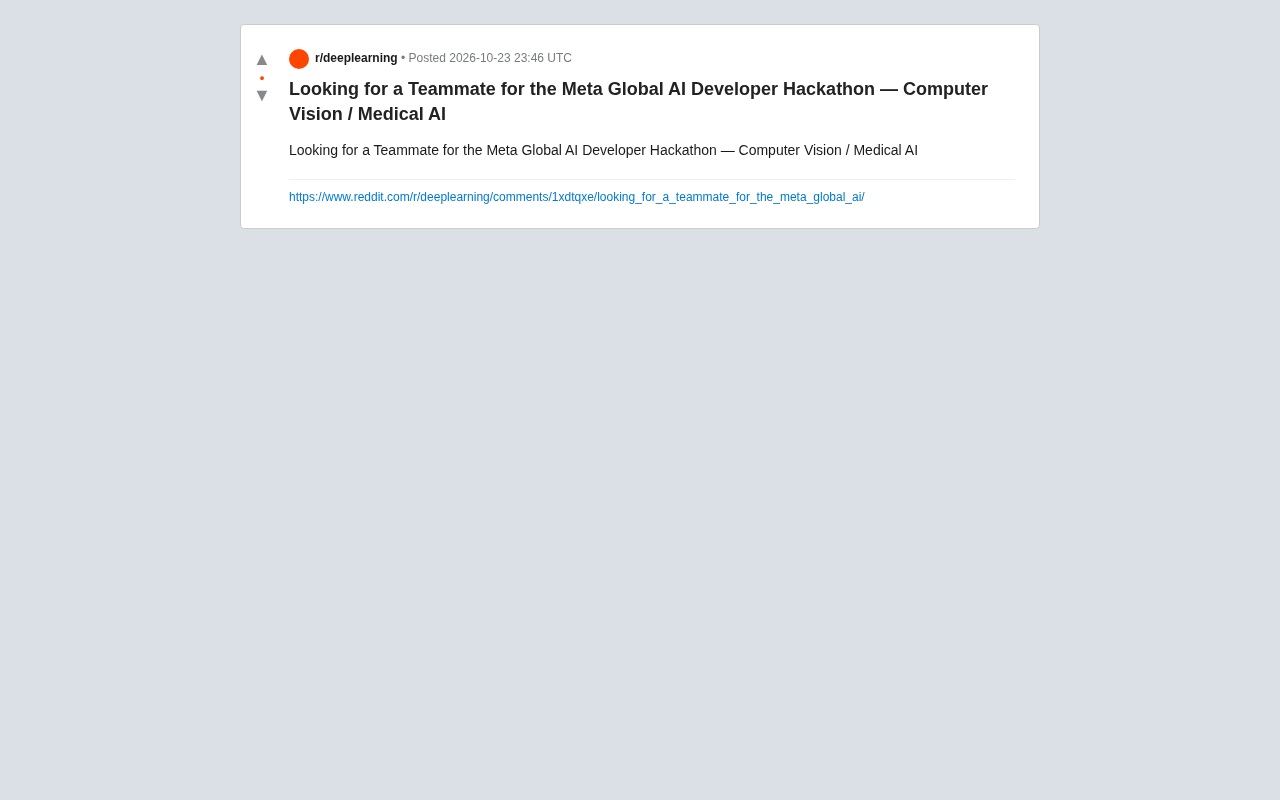
Teammate Wanted for Meta Global AI Developer Hackathon: Computer Vision & Medical AI
A Reddit developer seeks teammates for the Meta Global AI Developer Hackathon, focusing on computer vision and medical AI. This article analyzes the track logic, skills-complementarity needs, and topic selection strategy behind this teaming signal.
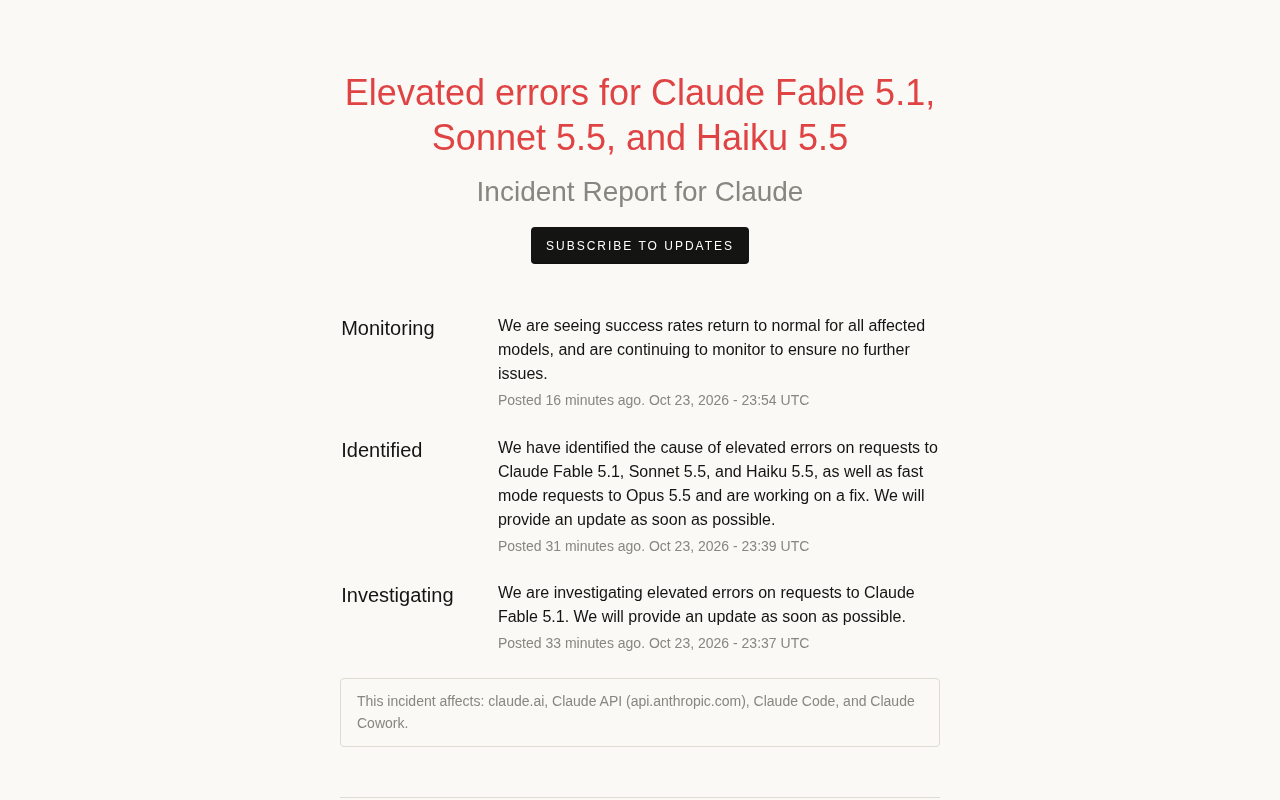
Multiple Claude Models Hit by Errors: A Postmortem of Fable 5.1, Sonnet 5.5, and Haiku 5.5
Claude Fable 5.1, Sonnet 5.5, Haiku 5.5, and Opus 5.5 fast mode saw elevated errors; Anthropic identified and resolved the issue in 17 minutes. This postmortem covers the timeline, the technical reasons for the multi-model cascading failure, and practical lessons for retry and degradation strategies.