Claude Fable 5.2 and Mythos 5.2 Spark Hacker News Discussion
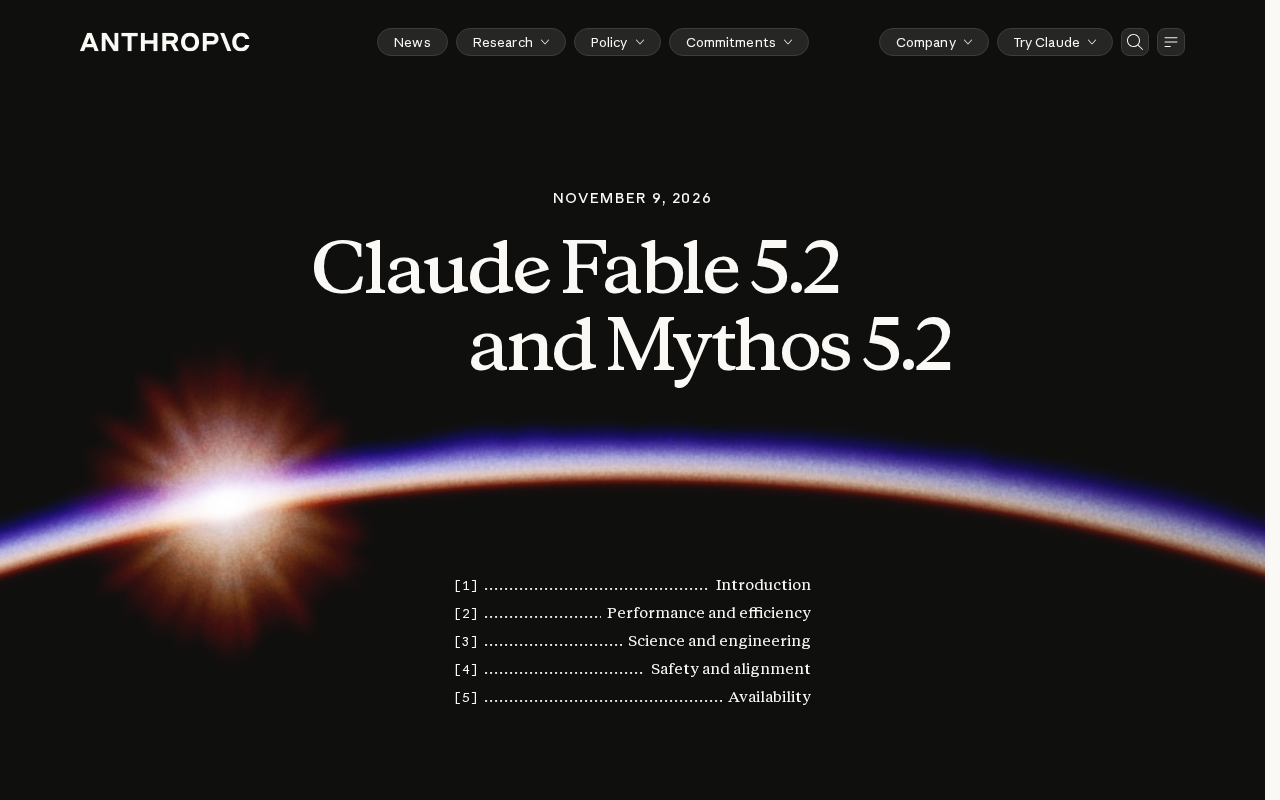
Hacker News buzzes over Claude Fable 5.2 and Mythos 5.2, hinting Anthropic may launch dual product lines for creation and reasoning.
A discussion post about Claude Fable 5.2 and Mythos 5.2 appeared in the Hacker News community, receiving 39 points and 3 comments. The article analyzes that Fable may focus on narrative creation and long-form generation, while Mythos may focus on deep reasoning, complex system modeling, or multi-agent collaboration, possibly forming parallel product lines from Anthropic. However, the post lacks substantive information such as parameters, context window, pricing, and release date, and the community remains largely wait-and-see. The article recommends developers choose models by task scenario and verify actual output differences through small-scale A/B testing rather than migrating blindly based on version numbers.
New Faces on Hacker News: Claude Fable 5.2 and Mythos 5.2
According to discussions in the Hacker News community, two model versions named Claude Fable 5.2 and Mythos 5.2 were mentioned together, with the post receiving 39 points and generating 3 comments. Although the discussion volume is small, the simultaneous appearance of two version numbers in the title suggests that Anthropic may be advancing multi-line updates to the Claude series—one leaning toward narrative and creation (Fable), and the other toward deep reasoning or system-level capabilities (Mythos).
At a time when AI model naming is increasingly homogeneous, this approach of distinguishing sub-models with "Fable" and "Mythos" is worth noting. It may mean the vendor is trying to use more intuitive labels to help users select models by scenario, rather than relying solely on version numbers.
Hacker News is a tech community under Y Combinator, built around user-submitted links and vote-based ranking, and has long been an important venue for early technical feedback on AI model releases, papers, and tools. The "points" a post receives reflect the degree of agreement among community members, while the comment count reflects the depth of discussion; a decent number of points but few comments usually means the title attracted attention, but the body lacks substantive information for in-depth discussion. For model release posts, the community often only forms meaningful discussion after official documentation, API changelogs, or benchmark results appear.
The Product Logic Behind the Naming
The word Fable is usually associated with stories, fables, and narrative generation. If this version indeed focuses on long-form writing or character consistency, it would be consistent with Claude's prior reputation in writing assistance. Mythos carries the sense of a "mythological system," possibly pointing to more expansive context understanding, complex system modeling, or multi-agent collaboration capabilities.
Although the brief Hacker News discussion did not elaborate on details, the low comment count combined with a decent point score indicates that users who clicked into the post mostly took a wait-and-see attitude—people care more about actual benchmark performance and API availability than about the naming itself.
In a model product line, sub-model naming usually serves to distinguish capability focus and use scenarios. Dividing models by creation and reasoning implies that the vendor may be differentially tuning different training data mixes, post-training strategies, or inference budgets: creation-oriented models emphasize long-range coherence, style control, and fine-grained instruction following, while reasoning-oriented models rely more on chain-of-thought, tool calling, and multi-step planning. This naming strategy also lowers the cost of user selection, but only if the vendor provides clear benchmark comparisons and usage scenario descriptions; otherwise, the labels themselves may cause misjudgment of capability boundaries.
Community Reaction and Information Gaps
Currently, the post has only 3 comments and lacks substantive disclosure of model parameters, context window, pricing, or release date. This means any assertion about performance improvements can only remain speculative. For developers following the Claude ecosystem, the more pragmatic approach is to wait for official documentation or API changelogs rather than infer capability boundaries from version numbers.
Model release information usually requires attention to several key dimensions: parameter scale and architecture, context window length, training data cutoff time, pricing and rate limits, and public benchmark results. Before official documentation or API changelogs are released, version numbers in community discussions can only serve as clues and cannot support claims about capabilities. For developers, reliable evaluation paths include consulting model cards, comparing API pricing pages, and running small-scale evaluations on their own task sets, rather than relying on community rumors or naming implications.
Implications for Developers
If Fable and Mythos are indeed parallel product lines, the selection logic will shift from "use the latest version" to "match by task." Creation-intensive workflows can prioritize testing Fable, while scenarios requiring cross-document reasoning or tool calling are suitable for Mythos. Before official information becomes clear, it is recommended to verify actual output differences through small-scale A/B testing and avoid blindly migrating due to version-number marketing.
Related articles

How Do Cursor, Devin, TRAE, and Copilot Compare on Price? Calculate Your Credits Before You Compare Monthly Fees
Side-by-side comparison of individual and team pricing for Cursor, Devin Desktop, TRAE, and Copilot, breaking down credit rules, third-party model inclusion, overage billing, and practical methods for measuring usage before paying, setting spending caps, and choosing the right tool.

Copilot Retires Three Models: Pro Users Left With Only One Alternative
GitHub Copilot retires Claude Opus 4.8, Claude Opus 5, and GPT-5.6 Tera on Nov 16 across Chat, code completion, and Agent mode. Pro users have only GPT-6 Luna left; Legacy annual plans miss Opus 5.5; admins must enable replacements manually.
Gemini 4 Carbon Arrives: The LLM Race Enters the Era of Million-Token Context and Trillion-Parameter Open Source
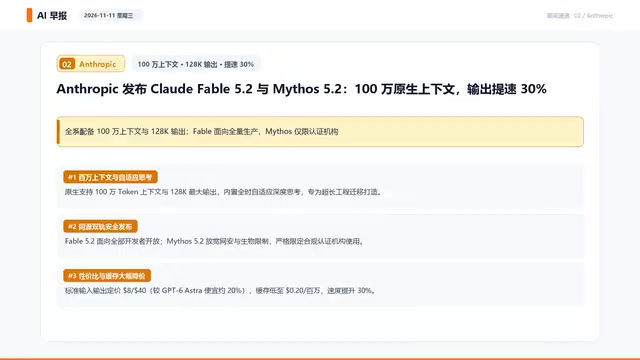
Google launches Gemini 4 Carbon and multi-agent tool Swarm; Anthropic debuts million-context Fable 5.2 and Mythos 5.2; OpenAI releases security-focused GPT-6 Cyber; Mistral and Kimi open-source trillion-parameter models — the LLM race accelerates across the board.