Claude Mythos Cuts AMD GPU Onboarding Software Work to Around Three Days
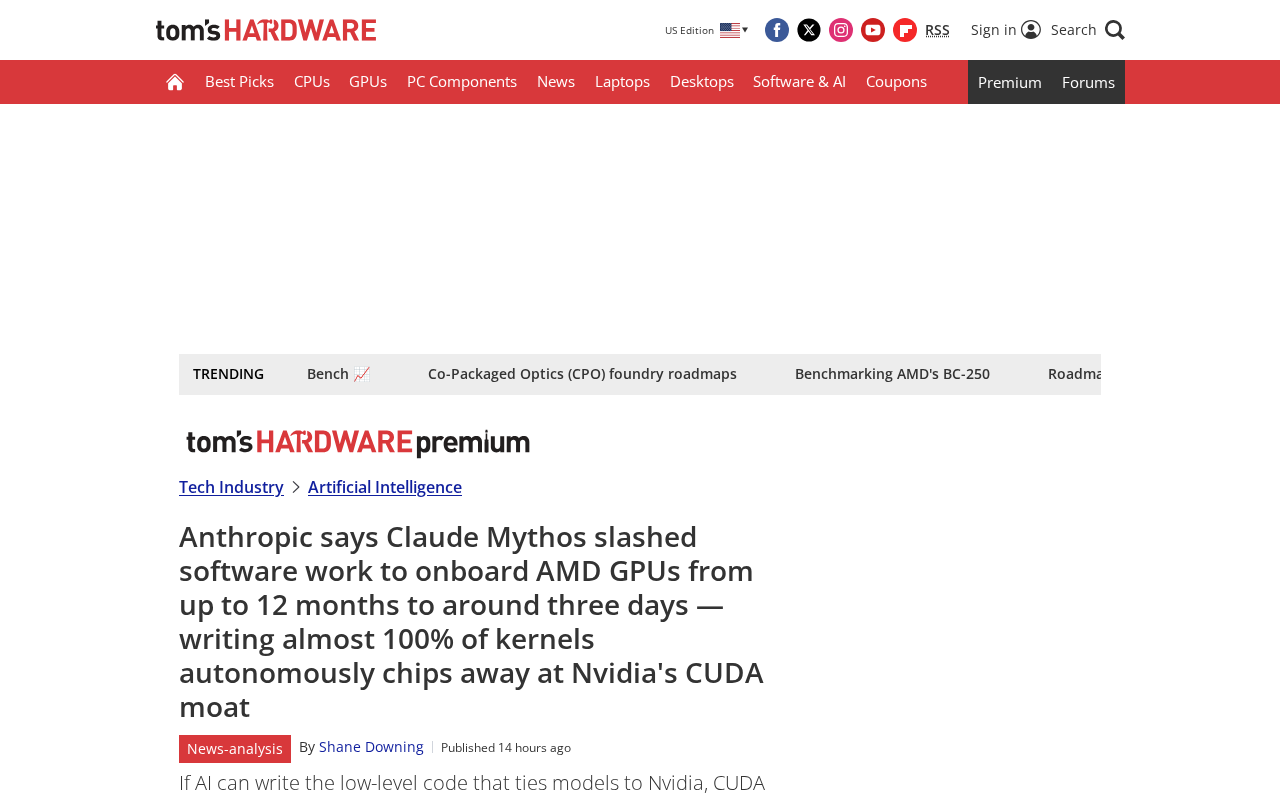
Claude Mythos compresses AMD GPU onboarding software work from weeks to about three days, lowering the barrier to multi-hardware experimentation.
The article discusses a Hacker News item: Claude Mythos compresses AMD GPU onboarding work into an existing software stack to about three days, down from the usual weeks. The real cost lies in the software layer—driver matching, library adaptation, framework backend changes, and performance debugging. The shift from weeks to days changes the feasibility boundary, making multi-hardware trials far more accessible. The author remains cautious: the claim comes from a single source without cross-validation.
From Weeks to About Three Days: How Claude Mythos Changes the Economics of GPU Onboarding
On Hacker News, a discussion titled "Claude Mythos slashed software work to onboard AMD GPUs to around three days" drew attention. The headline points directly to an engineering efficiency question: bringing AMD GPUs into an existing software stack usually requires substantial adaptation work, and Claude Mythos has compressed that software workload down to roughly three days.
This piece of information is brief in itself, but it touches on a real pain point in today's AI infrastructure landscape. GPU onboarding has never been just about plugging in a card and powering up—the real cost is hidden in software adaptation, driver compatibility, operator tuning, and framework support.
The Real Cost of GPU Onboarding Is in the Software Layer, Not the Hardware
For AMD GPUs, developers have long faced a reality: the hardware specs are competitive, but the maturity of the software ecosystem lags behind mainstream options. Onboarding a new hardware platform into an existing training or inference pipeline typically involves driver version matching, compute library adaptation, framework backend modifications, and performance regression debugging.
This work is highly experience-dependent and often hard to reuse. Pitfalls that one team spends weeks stumbling through may be stumbled through all over again by the next team. The "about three days" claimed by Claude Mythos means this kind of work drops from a project-level investment to a task-level investment—which changes the cost structure of the decision for teams considering a multi-hardware strategy.
Why the Number "Three Days" Is Worth Noting
The difference between three days and several weeks isn't just the length of time—it's the boundary of feasibility. When onboarding costs are high enough to require dedicated scheduling and dedicated staffing, most teams choose to wait and see; when the cost drops to a few days, experimentation becomes something you can do on the side. This kind of order-of-magnitude change often drives ecosystem adoption more than performance improvements do.
The Basic Composition of the AMD GPU Software Stack
To understand what "onboarding an AMD GPU" actually means, you need to know the layers of its software stack. At the bottom is ROCm (Radeon Open Compute), AMD's open-source compute platform positioned against CUDA, which includes drivers, compilers (HIP-Clang), math libraries (rocBLAS, rocFFT, MIOpen, etc.), and the runtime. On top of that, deep learning frameworks need to provide corresponding backends, such as the ROCm version of PyTorch and TensorFlow's ROCm support.
The difficulty of onboarding work typically shows up in three places: first, matching drivers with kernel versions and distributions—version mismatches can prevent devices from being enumerated; second, operator coverage—some operators readily available on CUDA need to be mapped to HIP or replaced with alternative implementations; third, performance regression—even if it runs, it may be slower than expected, requiring diagnosis of whether the issue is memory layout, kernel selection, or the communication library. The so-called "several weeks" is often consumed in the second and third layers, while AI tools can mainly accelerate things like documentation lookup, error localization, and boilerplate code rewriting.
The Role of Claude Mythos
Based on the original information, Claude Mythos plays the role of accelerating the software engineering side, not modifying hardware or drivers. Its value lies in quickly converting knowledge scattered across documentation, issues, and trial-and-error into executable adaptation code and debugging paths.
For AI programming tools, this is a pragmatic direction: not aiming to solve all compatibility problems at once, but to compress the distance from "facing an unfamiliar platform" to "getting the basic pipeline running." Subsequent performance tuning still requires humans, but the starting point is pushed much further forward.
The Niche Differences Between CUDA and ROCm Ecosystems
Discussing AMD GPU onboarding costs inevitably brings up CUDA's moat. After more than a decade of accumulation, CUDA has formed a complete loop from compilers, libraries, and debugging tools (Nsight) to community Q&A, and the vast majority of paper code and open-source projects default to CUDA as their primary target. ROCm has caught up significantly in feature coverage, but still lags in toolchain maturity, breadth of third-party library support, and richness of troubleshooting resources.
The direct consequence of this gap is that migration isn't simply "compile with a different backend"—it requires self-diagnosis in the absence of ready-made answers. When developers encounter errors, under CUDA they can often find plenty of similar cases; under ROCm there may be only scattered issues. Therefore, tools that can quickly digest scattered documentation and issues and produce executable debugging paths have amplified value in this scenario—they fill exactly the gap in "answer density."
Caution to Maintain
This discussion on Hacker News has only 4 points and 0 comments—a very small sample lacking cross-validation from actual users. "About three days" is a single-source claim, and the original material doesn't specify which frameworks, which models, or which workloads are covered.
A more reasonable interpretation, therefore, is that this is a signal worth tracking—indicating that AI-assisted tools are entering high-barrier scenarios like infrastructure adaptation. Whether it is reproducible and generalizable still requires practical verification from more teams.
Potential Impact on Multi-Hardware Strategies
If similar efficiency gains can be reliably reproduced, the biggest beneficiaries will be teams that want to bring in a second vendor but are constrained by software manpower. In hardware procurement decisions, software migration cost has always been a hidden barrier, and a decline in this cost will directly change how cost-effectiveness is calculated.
For tool providers, this is also a signal: beyond code generation, adaptation capabilities aimed at specific engineering scenarios may be a more sticky differentiator.
Total Cost of Ownership in Multi-Vendor Strategies
When enterprises evaluate a second GPU vendor, the hardware unit price is just one line in the ledger. The full total cost of ownership also includes: manpower invested during migration, ongoing overhead of maintaining dual stacks, the team learning curve, and troubleshooting time caused by an immature ecosystem. Software migration cost is a hidden barrier precisely because it's hard to quantify before procurement and easy to underestimate.
When the initial onboarding cost drops from weeks to days, what changes is the price of the "trial option"—teams can obtain a working prototype at very low cost before deciding whether to expand investment. But note that there's still a distance between initial onboarding and production-grade stable operation, and ongoing dual-stack maintenance costs won't disappear just because onboarding gets faster. Therefore, this kind of efficiency gain is more likely to drive diffusion in the evaluation and pilot phases rather than immediately changing large-scale procurement decisions.
One-line Summary
Claude Mythos compresses AMD GPU onboarding software work from weeks to about three days, lowering the barrier to multi-hardware experimentation.
Paragraph Summary
The article centers on a piece of information from Hacker News: Claude Mythos compresses the work of onboarding AMD GPUs into an existing software stack to about three days, whereas it previously typically took weeks. The author notes that the real cost of GPU onboarding isn't in the hardware but in the software layer—driver matching, compute library adaptation, framework backend modifications, and performance debugging. The difference between three days and several weeks isn't just efficiency but a change in the feasibility boundary—when onboarding costs are high, teams wait and see; when costs drop to a few days, experimentation becomes easy to do on the side, which changes the cost structure of multi-hardware strategies. At the same time, the article remains cautious: the information comes from a single source, lacks cross-validation from actual users, and the specific frameworks and models covered are unclear, so it should be treated as a signal worth tracking rather than an established conclusion.
Related articles
Three Major Browsers Join Forces: Helping AI Write More Modern Web Code
Chrome, Firefox, and Edge jointly launch a free "modern web guidance" skills package to teach AI coding assistants to write more modern web code. One command integrates it into tools like Cursor, automatically scanning for safely upgradable code patterns—but human review is still required.

Fake Claude Code Extension Leaks Cursor Keys — Users Should Check Immediately
A fake Claude Code extension appeared in Cursor's marketplace and was removed within 11 hours, but leaked keys from a third-party vendor may have accessed chat histories of users without privacy mode enabled. Developers who used Cursor and pasted private keys between 2025 and 2026 should rotate credentials immediately and check privacy settings.
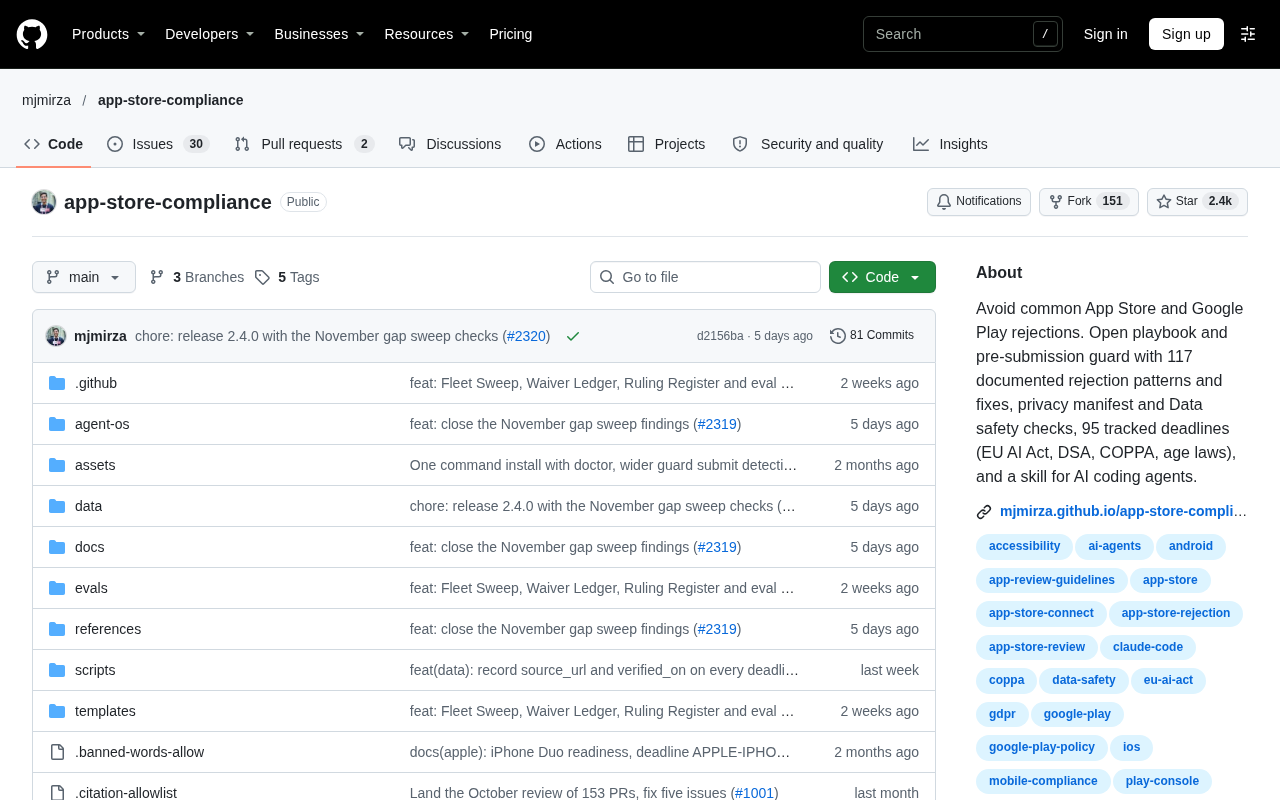
App Store Submission Pitfall Guide: Open-Source Tool Helps You Avoid 117 Rejection Patterns
GitHub open-source project mjmirza/app-store-compliance documents 117 App Store and Google Play rejection patterns with fixes, offering privacy manifest checks, 95 regulatory deadline tracking, and AI coding agent compliance automation.