Claude Opus 5.5 Levels Up, But Meta Muse Is the Real Game-Changer

Opus 5.5, GPT-6 voice tools, and Meta Muse signal every major lab is converging on the same personal agent form factor.
A blogger who spent $3,000 testing new AI tools breaks down three storylines: Anthropic's Opus 5.5 improves writing fluency, code-generated video, and frontend design; OpenAI brings full tool calling to real-time GPT voice across 27 plugins; and Meta's Muse — free at 100M tokens/month — tops the App Store and extends into Ray-Ban glasses and a keychain pendant. The deeper signal: OpenAI, Anthropic, and Cognition are all weeks away from launching personal agents, and every major lab is converging on the same core capabilities. Becoming "agent native" has never been more urgent.
The race among AI models and agents is heating up fast. Just two hours after Anthropic dropped Opus 5.5, OpenAI fired back with GPT-6 Sol and Luna — yet the real shakeup came from Meta's Muse, a personal AI agent app that shot to the top of the App Store overnight. One AI blogger who claims to have burned through $3,000 in two weeks testing these new models and tools delivers a remarkably information-dense weekly roundup.
Opus 5.5: A Triple Leap in Writing, Code-Generated Video, and Frontend Design
Anthropic centered Opus 5.5's launch around writing style. The official pitch is that the model now "communicates more naturally" — a direct response to the most common criticism of Opus 5. This kind of improvement doesn't come through on a launch deck; you have to use it to feel the difference.
The blogger's gut reaction: when you ask a question that calls for a long answer, Opus 5.5 consistently leads with the most important information, writes more concisely overall, and is noticeably easier to talk with on complex topics. He recalls that Opus 4.6, roughly seven months ago, was the biggest generational leap in the model's history — genuinely fun to chat with — but subsequent iterations seemed to make it "progressively dumber," until 5.5 brought back that "smartest model" feeling.
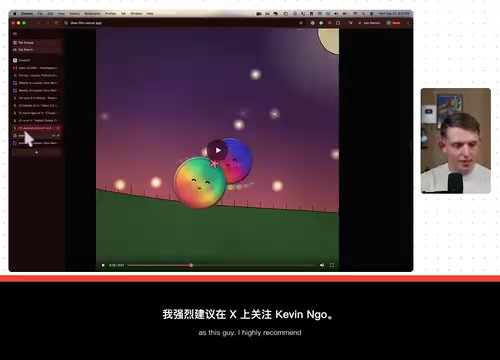
The real showstopper is pure code-generated video. Opus 5.5 can compress an entire animated video into a single JavaScript file. The blogger iterated back and forth with the model, generated roughly 1,300 lines of code, produced a do.html file along with a render file, and ended up with a complete animation. He specifically recommends following Kevin NGO on X, whose work in this area is genuinely impressive.
The third capability — and the one the blogger uses most himself — is frontend design and artifact generation. For anything visually oriented — web pages, mobile views, slide decks — Opus 5.5 demonstrates a strong visual sensibility. Inside the new Claude Projects feature, the model no longer just hands you a design link; it delivers a full Claude Design project with support for multi-round iteration. Even a slide deck requested from a mobile device comes out looking polished.
GPT Real-Time Voice: Full Tool Access While You Talk
OpenAI has added real-time tool calling to GPT voice. On iOS or desktop, the real-time voice model can now directly use plugins like email, calendar, and Slack — paired with the newly released GPT-6 Astra, Sol, and Luna models, this effectively gives a voice agent the ability to operate every app you've connected to your workflow.
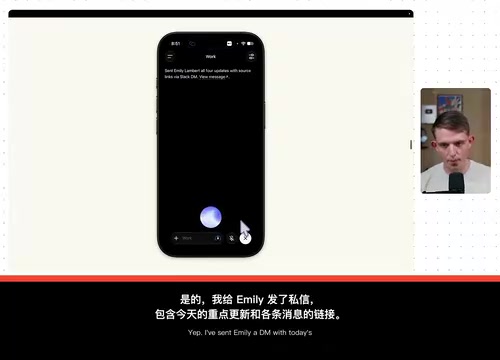
The blogger walked through a full demo: with 27 plugins connected, he used real-time voice to have ChatGPT search recent Slack messages, send a direct message to a colleague named Emily, find a Notion document called "weekly update," add a table under a specific heading, and convert a callout block into a tab layout. Throughout the process, the interface displayed each tool call in real time while he continued talking over the model's execution. He described the handoff as "seamless to an almost absurd degree."
Muse Becomes the World's Fastest-Growing Platform — Zuckerberg's "ChatGPT Moment"
The biggest variable in this week's landscape is Meta's personal agent app, Muse. It's positioned similarly to Grokbot — a personal agent that handles email, controls Notion, runs a browser, accesses your computer, and proactively takes action on your behalf.
The growth gap is stark: Muse has overtaken ChatGPT as the #1 download on the App Store, while Grokbot sits at #196. Muse covers web, desktop, and iOS simultaneously, running on Meta's in-house muse spark 1.3 model (which the blogger predicts will likely be open-sourced). It's fast, engaging, proactively offers suggestions, tracks your goals, and stores generated assets in a built-in library.
The kicker: it's free. Users get one hundred million tokens per month, and the blogger says he's "never paid Meta a cent" while using it regularly for work. The combination of free and genuinely good has him saying outright: "I don't know how anyone else is supposed to compete with this."
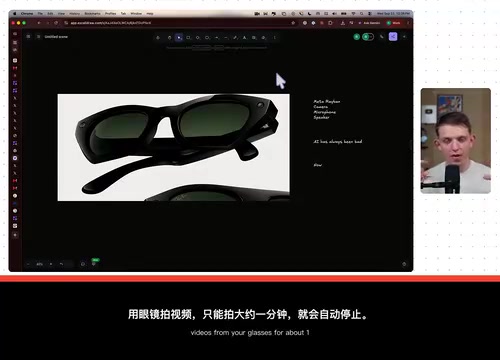
The recent Meta Connect event revolved almost entirely around Muse. Zuckerberg announced that Muse now supports voice and real-time video, letting it work in the background while you speak — and that its capabilities have been integrated into Ray-Ban smart glasses, enabling all-day hands-free interaction.
Hardware Ambitions: Camera-Free Audio Glasses and the Muse Pendant
Meta also unveiled its lightest camera-free, audio-only glasses, plus a keychain-style Muse pendant — a pocket-sized device packing full real-time voice and avatar capabilities. One tap on the fingerprint sensor starts a conversation, no phone unlock or app required. It's slated to ship before Christmas this year.
The blogger puts Zuckerberg's deeper motivation plainly: Meta's products have long been constrained by Apple's App Store, and hardware like glasses and pendants lets users reach Muse while bypassing Apple's ecosystem entirely. This also explains why Meta has been spending so aggressively — recruiting Nat Friedman, acquiring Scale AI and Alexander Wang for roughly $15 billion — all aimed at owning the gateway to "personal superintelligence."
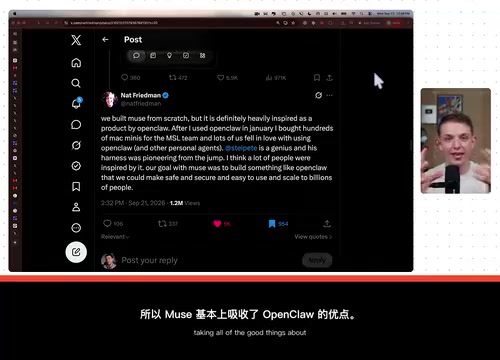
Nat Friedman admitted that while Muse was built from scratch, the product was "deeply inspired by OpenClawAd." After trying OpenClaw early in the year, he bought hundreds of Mac minis for his team; many members fell in love with this category of personal agent and praised OpenClaw creator Peter Steinberger's harness design as groundbreaking. Muse's goal is to take what makes OpenClaw great and deliver it as something safe, accessible, and scalable to billions of people.
A note on "Ambient Context": This is one of the defining concepts in the current personal agent competition. It refers to an agent's ability to continuously perceive a user's physical and digital environment — location, schedule, conversation history, active applications — and proactively infer needs rather than waiting for an explicit command. This is fundamentally different from traditional conversational AI, where the model waits to be asked. An agent with ambient context might proactively summarize action items when a meeting ends, or remind you of an unanswered message as you walk into a coffee shop. Wearables like glasses and earbuds are seen as strategically critical precisely because they capture environmental signals with minimal friction — microphones pick up ambient conversation, sensors track movement — enabling agents to be genuinely "always on and contextually aware." This explains why Meta, Apple, and Google are all betting simultaneously on wearables: control the sensing layer, and you can feed the richest possible context to your agent.
Every Major Player Is Converging on the Same Form Factor
The blogger reveals what he describes as fairly reliable intelligence: OpenAI, Anthropic, and Cognition (makers of Devon) are all set to launch their own personal agents within the next month. Circulating on X is word of an OpenAI project codenamed Aeon (A-E-O-N) — reportedly more than a chatbot, featuring personal profiles, direct messaging, and groups, essentially building a complete social layer around AI. It may appear at Dev Day. This could also explain why Meta is pushing Muse so aggressively right now.
He cites industry observers who note that virtually every major lab is arriving at roughly the same capability set: persistent memory, email and calendar and messaging access, browser and computer control, background task execution, proactive notifications, voice, app and tool calling, and ambient context — which is precisely why glasses and voice matter so much. Always-on wearable devices continuously sense your environment, enabling agents to surface relevant information at exactly the right moment.
Future competition will play out along different dimensions: Anthropic must navigate the trade-off between "highly capable but token-heavy" and "fast like Muse"; everyone has to decide whether to target work or personal contexts, and which user segments to serve. The blogger's conclusion is blunt — becoming "agent native," understanding agents deeply and using them well, has never mattered more than it does right now.
A note on "Agent Native": The term borrows from the earlier "Mobile Native" concept, describing users or organizations that treat agents as a default workflow rather than an auxiliary tool. Mobile Native teams designed products and processes around phones from day one, rather than porting desktop experiences to mobile. By analogy, agent native users internalize capabilities like persistent memory, background tasks, and proactive notifications into their core decision-making loops — rather than occasionally opening a chat window to ask a few questions. The distinction is already producing real differences in competitive outcomes: agent native users can compound the benefits of AI agents, while those who treat AI as a search substitute barely notice generational improvements. The blogger returns to this concept repeatedly, implying that the current window is critical for building a cognitive edge — once personal agents reach mass adoption, early power users will have built a productivity and product-judgment advantage that will be very hard to close.
Related articles

M&M's Spent Millions Replacing Artificial Blue Dye — Why Is It So Hard?
Mars spent millions trying to replace artificial blue dye in M&M's with spirulina, but thick material clogs pipes and residue risks mold, forcing a full production-line rebuild. Here's the engineering behind the reformulation.
Teammate Wanted for Meta Global AI Developer Hackathon: Computer Vision & Medical AI
A Reddit developer seeks teammates for the Meta Global AI Developer Hackathon, focusing on computer vision and medical AI. This article analyzes the track logic, skills-complementarity needs, and topic selection strategy behind this teaming signal.
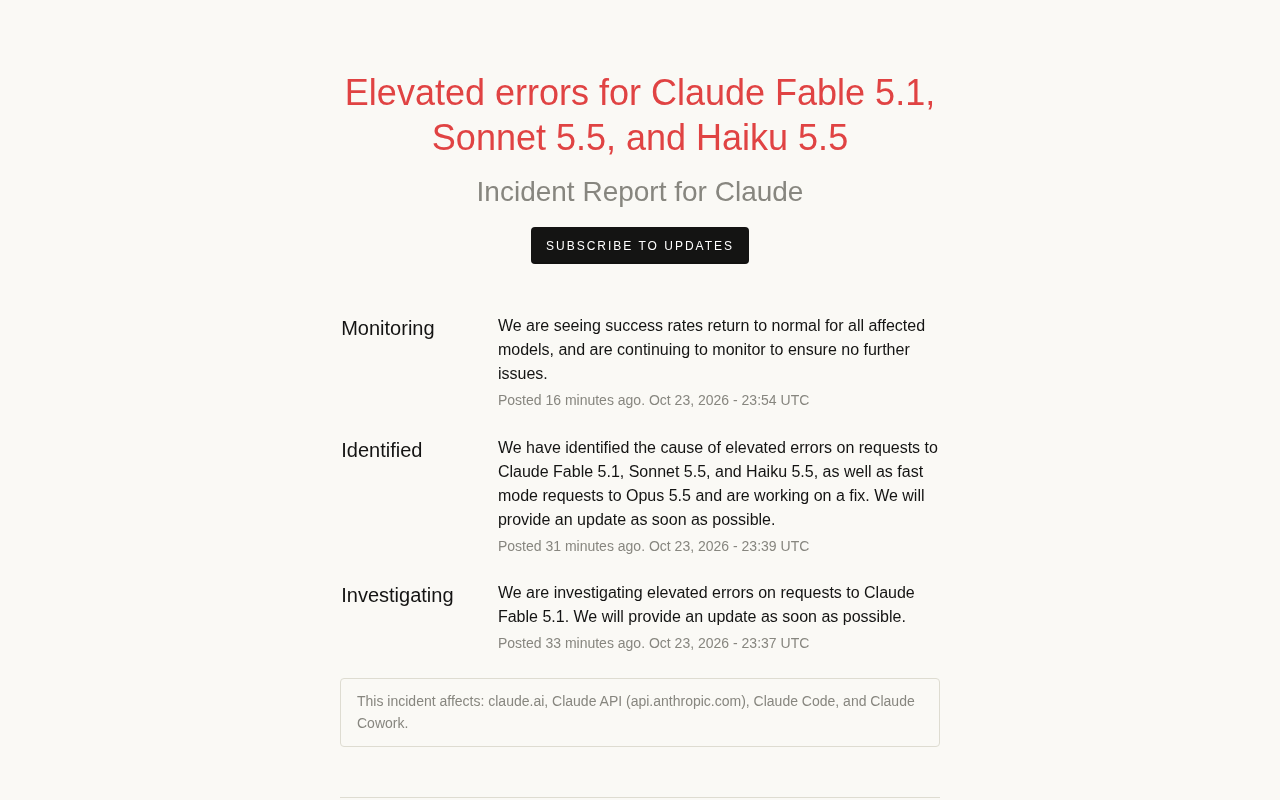
Multiple Claude Models Hit by Errors: A Postmortem of Fable 5.1, Sonnet 5.5, and Haiku 5.5
Claude Fable 5.1, Sonnet 5.5, Haiku 5.5, and Opus 5.5 fast mode saw elevated errors; Anthropic identified and resolved the issue in 17 minutes. This postmortem covers the timeline, the technical reasons for the multi-model cascading failure, and practical lessons for retry and degradation strategies.