Claude's Default Behavior of Appending Session Links to Git Commits Sparks Controversy
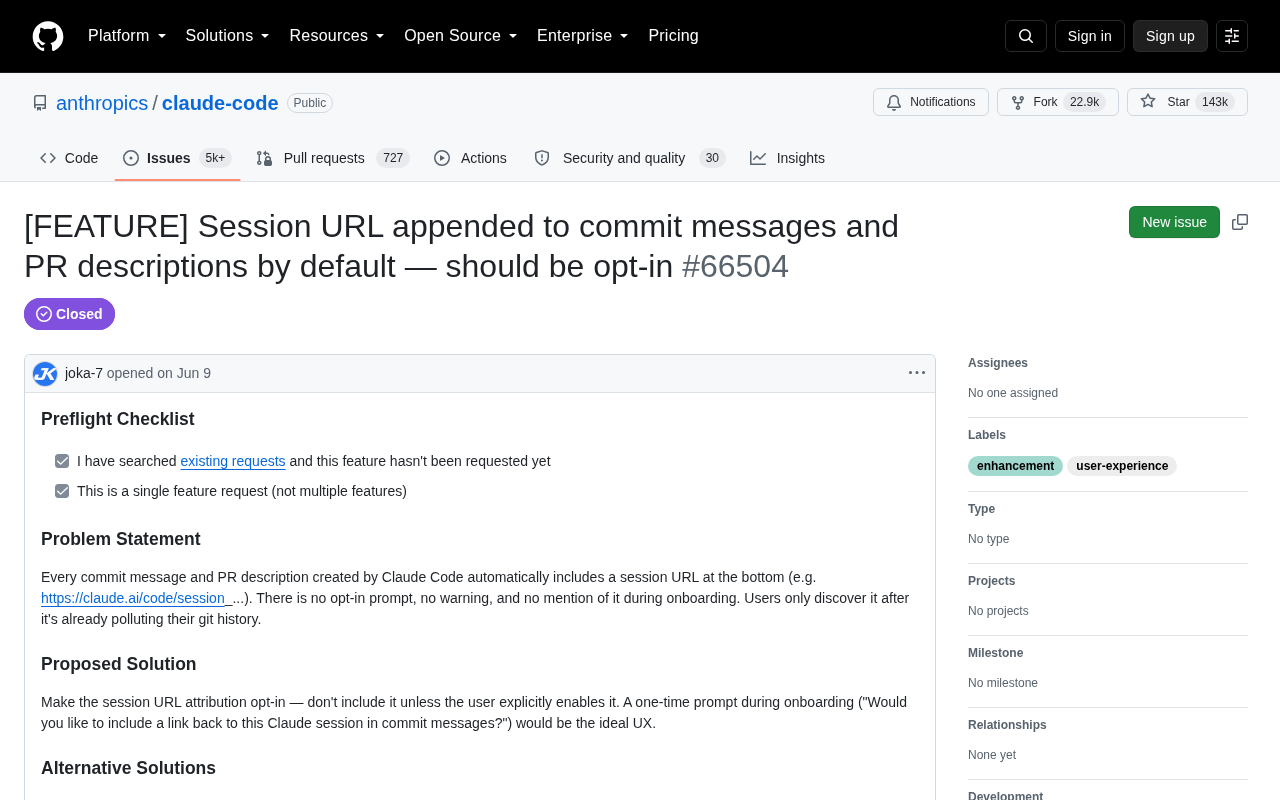
Claude's default Session URL appending in Git commits sparks debate over privacy, defaults, and AI traceability.
Anthropic's Claude AI coding assistant has sparked controversy by appending Session URLs to Git commit messages and PR descriptions by default. Developers raised concerns about privacy risks, commit history pollution, and the hidden power of default settings. The debate highlights the broader challenge of balancing AI traceability and transparency with user control over their code history in an era of AI-assisted programming.
Background
Recently, Anthropic's Claude AI coding assistant has drawn widespread attention from the developer community. A user on Hacker News pointed out that when generating code, Claude appends Claude Session URLs to Git commit messages and Pull Request (PR) descriptions by default. This default behavior has caused quite a stir among developers.
Git is currently the world's most popular distributed version control system, created by Linux creator Linus Torvalds in 2005. Each time a code change is recorded (i.e., "committed"), developers write a commit message describing the content and reason for the change. These commit messages form the project's complete change history and serve as essential references for team collaboration, code review, and troubleshooting. Pull Requests (PRs) are a mechanism provided by code collaboration platforms (such as GitHub and GitLab) that allow developers to submit code changes from their branch for review and merging into the main branch. PR descriptions typically include the background, purpose, and testing notes for the changes. Since both commit messages and PR descriptions are permanently preserved in the project history, the developer community has strict quality expectations for their content.
Although the post wasn't particularly high-traffic (14 upvotes, 2 comments), it touches on an increasingly sensitive core issue in the age of AI-assisted programming: When AI is deeply involved in the software development workflow, how much of a trace should it leave in code history? And who should control those traces?
What Is Session URL Appending?
How It Works
"Session URL appending" refers to the behavior where, after a developer uses Claude's coding features (such as Claude Code or related integration tools) to complete code modifications, the tool automatically appends a link to the current AI session at the end of the auto-generated commit message or PR description.
Claude Code is a command-line AI coding assistant launched by Anthropic that allows developers to interact with Claude directly in the terminal to write, debug, and refactor code. It's part of a rapidly expanding ecosystem of AI coding tools: GitHub Copilot (a collaboration between Microsoft and OpenAI) primarily uses inline IDE completions as its main interaction mode; Cursor is a full-featured code editor with built-in AI capabilities; and emerging tools like Windsurf and Cline each have their own focus areas. The common trend across these tools is an evolution from simple code completion toward "AI agents" — where AI doesn't just generate code snippets but can autonomously perform complete engineering operations like editing files, running commands, and creating Git commits. This is the technical foundation that makes behaviors like "automatically appending Session URLs to commits" possible.
This link typically points to Claude's conversation history page, theoretically allowing collaborators to trace the conversational context in which the code was generated. From a design intent perspective, this is an attempt at traceability — enabling team members to understand the AI reasoning behind a piece of code. Traceability is one of the core principles of software engineering, referring to the ability to track causal relationships between requirements, design decisions, code changes, and test results. In traditional development workflows, traceability is primarily achieved through linking issue tracking systems (such as Jira or Linear) with code commits — developers reference issue numbers in commit messages so that every code change can be traced back to a specific requirement or bug report. In the context of AI-assisted programming, traceability gains a new dimension: not only tracking "why it was changed" but also "who (or what) generated it." Anthropic's design intent of appending Session URLs to commits is essentially an attempt to incorporate the AI's reasoning process into this traceability chain.
Why Being On by Default Is the Problem
The controversy isn't about the feature itself, but about the design choice of making it on by default. Many developers argue that:
- Commit messages are an official part of project history and are permanently stored in the Git repository
- Automatically inserting third-party links without explicit consent raises concerns about data flow transparency
- Session links may contain or point to sensitive contextual information
Core Concerns from the Developer Community
Privacy and Data Security Risks
The most immediate concern is privacy. Claude's session links point to complete conversation records with the AI. If these links are written into the commit history of a public repository, theoretically anyone who can access the link (depending on permission settings) could see the developer's complete interaction with the AI, which may inadvertently contain internal logic, business details, or even credential information.
For enterprise users, this risk is particularly acute. Code commit histories are often covered by compliance audits and security scans, and a link pointing to an external service could become a potential entry point for data leaks. In enterprise software development environments, code repositories are not just technical assets but also important subjects of compliance audits. Security compliance frameworks like SOC 2, ISO 27001, and HIPAA have explicit requirements for code management and data flow. When Git commit histories contain links to external services, multiple compliance concerns arise: first, whether the content the link points to contains protected information (such as personal data, medical records, or financial data); second, whether the external service's data retention policies comply with the enterprise's compliance requirements; third, whether the links could become vectors for social engineering attacks — attackers could analyze Session URL patterns in public repositories to infer an enterprise's AI usage patterns and internal development processes. Additionally, many enterprises deploy DLP (Data Loss Prevention) systems to scan code commits for sensitive information, and the automatic insertion of external URLs could trigger numerous false positives, increasing the operational burden on security teams.
The "Pollution" of Commit History
Another group of developers' resistance is more about engineering standards. Good Git commit messages should be concise and focused on the semantics of the change itself. Inserting AI service session links into commit messages is viewed by many as "pollution" of the commit history.
In teams that follow standards like Conventional Commits, commit messages have strict formatting conventions, and automatically appended non-standard content breaks this consistency while also interfering with downstream automation tools (such as changelog generation and version management). Conventional Commits is a widely adopted commit message format specification with a core structure of: "type(scope): description." Here, type indicates the change type (e.g., feat for new features, fix for bug fixes, refactor for refactoring), scope indicates the area of impact, and description is a brief change description. This specification not only improves the readability of commit history but, more importantly, enables automation tools to automatically generate changelogs (CHANGELOG), determine Semantic Versioning (SemVer) upgrade strategies, and trigger specific CI/CD pipelines. Well-known open-source projects like Angular and Vue.js enforce this specification. When AI tools append non-standard content to the end of commit messages that follow this specification, it can cause these automation tools to fail parsing or produce incorrect output.
The Dilemma of Attribution and Transparency
You might not have noticed, but there are also voices in support of this feature. Marking traces of AI involvement is, to some extent, an honest attribution statement — explicitly informing collaborators that "AI was involved in generating this code," which aligns with current calls for transparency around AI contributions.
This creates a real tension: on one hand, we want AI involvement to be transparent and traceable; on the other hand, this traceability shouldn't come at the cost of users' control over their own code history.
Deeper Industry Reflections
The Hidden Power of Defaults
This controversy actually reflects a recurring principled issue in AI tool design: defaults wield enormous hidden power.
The vast majority of users never actively modify default configurations. Therefore, whether a feature is "on by default" or "off by default" often determines its actual real-world behavior. Setting tracking links to be appended by default means that a large number of users unknowingly change their commit habits.
The power of defaults has a deep research foundation in behavioral economics. Richard Thaler and Cass Sunstein elaborated in their book Nudge on how "default options" profoundly influence people's decisions — research shows that in areas like organ donation and retirement savings plans, simply changing the default option can increase participation rates from under 30% to over 80%. This principle applies equally to software design. In the privacy domain, there's a well-known principle called "Privacy by Default," which is codified in Article 25 of the EU's GDPR, requiring products to adopt the strictest privacy protection settings by default. Mapping this principle to AI tool design means that any feature that could expose user data or behavioral traces to third parties should be off by default.
The reasonable approach is typically: for features involving data outflow or modification of user outputs, adopt a default-off, explicit opt-in strategy, rather than default-on with users needing to actively opt out.
Trace Management in the AI Coding Era
As AI coding tools like Claude Code, GitHub Copilot, and Cursor become more widespread, "what traces AI leaves in code" is becoming a new topic that needs industry consensus:
- Should AI-generated code be labeled as such?
- Should this labeling appear in code comments, commit messages, or separate metadata?
- Who has the decision-making authority — tool vendors, teams, or individual developers?
There are no unified answers yet, and Anthropic's default behavior is one example of how vendors are each exploring this gray area on their own.
Practical Advice for Developers
For developers currently using Claude or planning to use AI coding tools, this incident offers several practical takeaways worth considering:
First, inspect and audit the default configurations of AI tools. Don't assume a tool's default behavior aligns with your expectations, especially regarding data transmission and output modification.
Second, establish clear team commit standards. Reach team-level consensus on "how AI traces should be reflected in commit history" to avoid inconsistent records caused by individual configuration differences.
Third, be vigilant about sensitive information leakage. Before using features that introduce external links or data uploads, assess whether they might expose business logic or sensitive data.
Fourth, monitor vendor responses and updates. Community feedback like this often prompts vendors to adjust their default policies. Stay on top of tool changelogs to keep informed about changes to relevant settings.
Conclusion
Although "Claude appending Session URLs to Git commits by default" is a controversy at the technical detail level, it perfectly illustrates the delicate balance between control, transparency, and privacy as AI becomes deeply integrated into development workflows.
As AI coding assistants become everyday tools for more and more developers, discussions around "default behaviors" and "data traces" will only grow more frequent. For tool vendors, respecting users' control over their own code history and adopting more conservative default policies may be the key to earning long-term developer trust. For developers, maintaining a careful and curious eye on tool behavior is always the wise choice.
Related articles

Wikimedia Foundation Staff Vote to Unionize, Joining CWA
Wikimedia Foundation staff voted overwhelmingly to unionize, joining the CWA. This article examines the impact on Wikipedia's ecosystem, nonprofit labor rights, and the tech unionization wave.
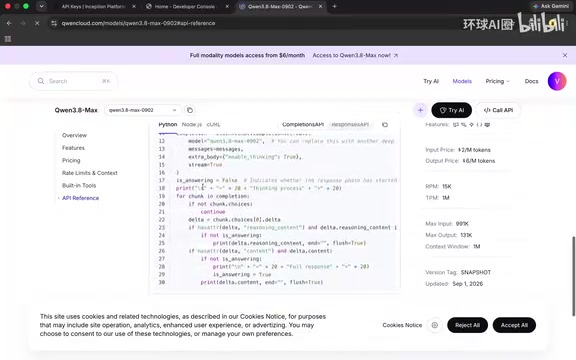
10 Free AI API Platforms Tested: Zero-Cost Guide to Calling GPT/Claude/Gemini
Hands-on review of 10 platforms offering free API keys for GPT, Claude, Gemini, DeepSeek, Grok & more. Covers signup, free quotas, and Codex integration.
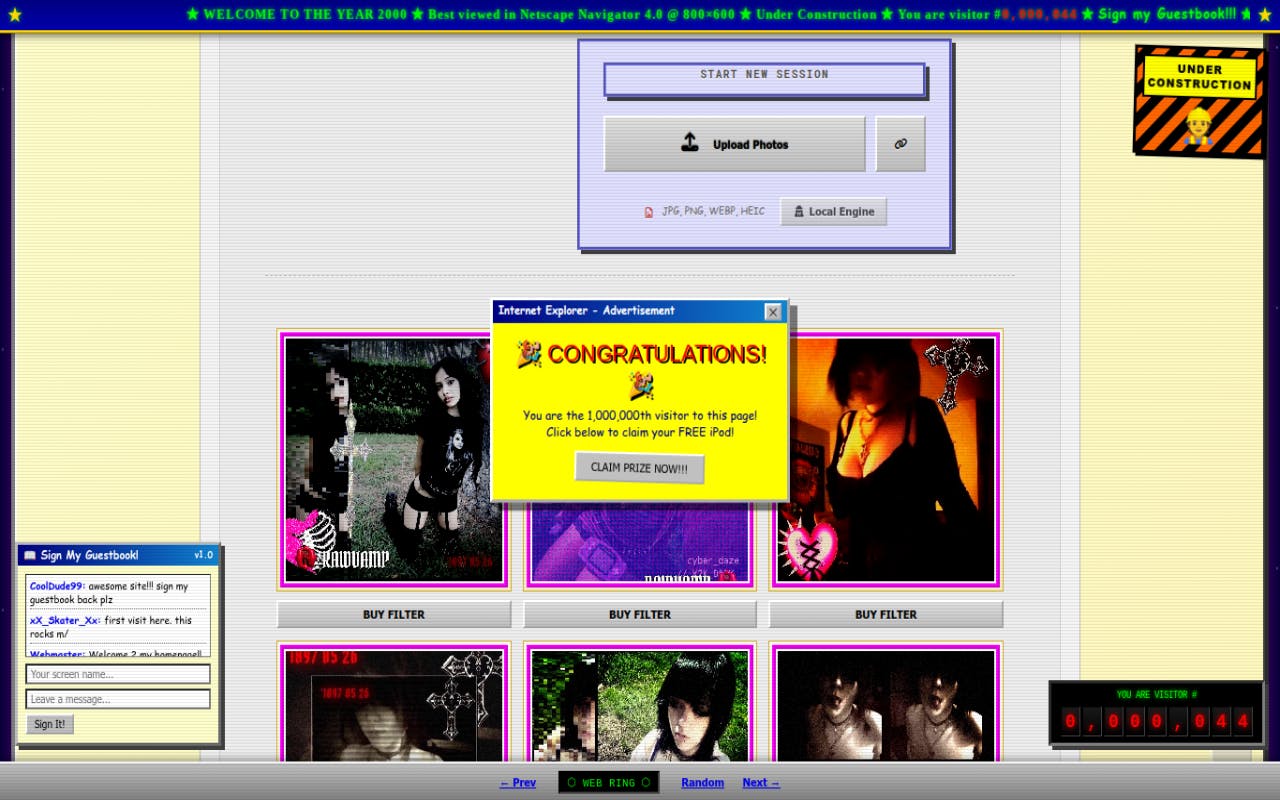
RawY2K: A Chrome Retro Theme Extension That Sends Any Webpage Back to the 90s with One Click
RawY2K is a Chrome extension that transforms any modern webpage into 90s Windows 98 and GeoCities retro style. Explore its features, the Y2K aesthetic revival, and product analysis.