Claude Usage Anxiety: The Hidden Cost Trap of AI Coding Tool Subscriptions

Why cancelling your Claude subscription might cost you more—and the hidden traps of AI tool billing.
A Reddit discussion exposes the anxiety behind AI coding tool subscriptions: cancelling Claude for pay-as-you-go APIs can raise costs, faster tools like Sol burn usage faster, and trust in free strategies and community discussions is eroding. This piece breaks down AI billing logic and real-world cost traps.
A Real-World Rant About AI Subscriptions
Recently on Reddit, a user named Tibo kicked off a discussion that struck a chord with many. This seemingly fragmented conversation actually exposed an increasingly sharp pain point among today's AI coding tool users—the anxiety and cost spiral caused by subscription usage limits.
The core of the discussion wasn't about the merits of any particular product's features, but rather a more practical question: after you pay for an AI tool, how long can you actually use it, and how much? And how are the vast differences in "usage strategies" between vendors shaping user choices?
"I like Aman's original idea better but I cancelled claude over a month ago :( (plus I've been tearing through >$100 since)"
This user admitted that they had cancelled their Claude subscription over a month ago, yet had since spent more than $100. This one sentence perfectly captures the shared predicament of many heavy AI users: cancelling a subscription doesn't mean saving money—switching to pay-as-you-go API billing can actually lead to higher spending.
To understand this situation, we first need to clarify the three mainstream billing models for today's AI tools. Subscription plans trade a fixed monthly fee for a quota, ideal for users with stable usage; API pay-as-you-go charges by the Token, the basic unit of measurement AI language models use to process text—in English, roughly every 3-4 characters corresponds to 1 Token, while in Chinese, roughly every 1-2 characters corresponds to 1 Token; freemium models attract users with complimentary quotas. The cost structures of these three models are fundamentally different, and confusing their metrics can easily lead to misjudgment.
As the basic unit of measurement for AI language models, the Token is rooted in the tokenization mechanism of the Transformer architecture. Modern large language models generally use BPE (Byte Pair Encoding) or similar algorithms to split text into subword units, rather than simply counting by character or word. This means that the same semantic content consumes significantly different amounts of Tokens when expressed in different languages—English typically uses fewer Tokens due to its coarser vocabulary granularity, while Asian languages like Chinese and Japanese often require more Tokens to convey the same amount of information. For developers, this directly affects real-world cost estimation for multilingual applications. Notably, a conversation's "context window" is also entirely counted toward Token consumption—as the number of conversation turns increases, the historical messages carried in each request cause Token usage to grow non-linearly. This is a major reason why many users underestimate their actual consumption.
Users who cancel subscriptions and switch to APIs often underestimate the cumulative cost of pay-as-you-go billing under heavy use, ironically falling into a trap of even higher expenses.
The Massive Differences in Usage Consumption
The most valuable part of the discussion was users' side-by-side comparison of how quickly different products consume usage. One user waited for their Claude subscription to expire before switching to OpenAI, and conducted in-depth real-world testing of both tools.
The Real-World Conflict Between Planning Ability and Usability
"Fable is still better than Sol at planning but what fucking good is it if I can barely use it."
This complaint reveals a key product paradox: Fable performs better at task planning, but if its usage limits are so severe that it's "barely usable," then no amount of capability matters. The user even reported that on a given day, before any heavy use, their usage was already running critically low.
This reflects a deep shift in the dimensions of AI product competition. In the past, when evaluating model capabilities, we focused on "hard metrics" like reasoning quality, code accuracy, and context length—metrics typically quantified through standardized benchmarks like MMLU (Massive Multitask Language Understanding), HumanEval (code generation evaluation), and MATH. MMLU covers 57,000 multiple-choice questions across 57 subject domains, while HumanEval contains 164 programming problems; these tests can effectively differentiate the breadth of knowledge and depth of reasoning among models under controlled conditions. However, such benchmarks have a fundamental limitation: they measure a model's peak performance on single, isolated tasks, not the comprehensive experience of a user making continuous calls over several hours in a real workflow. The experiential dimension of "whether you can keep using it" is becoming just as important as capability itself—if not more so. A high score on a benchmark won't tell you whether you'll still have quota left after four hours of continuous work.
The Faster the Response, the Faster It Burns Through Usage?
Another user's feedback provided an interesting counterpoint:
"I just tried out Sol and like how much faster it is but was surprised with how absurdly fast it ate through my $100/mo plan usage for the week compared to Claude."
Sol's response speed is indeed faster, but it comes at the cost of staggering usage consumption—under the same $100 monthly plan, it "devoured" the weekly usage far faster than Claude, and even faster than Fable, which had only consumed 50% of its weekly usage.
Hidden here is a technical mechanism worth noting: the response speed of AI language models is typically measured in TPS (Tokens Per Second). A faster response speed means the model processes and generates more Tokens per unit of time. Under a subscription plan where usage is calculated by total Token volume or request count, the faster a product responds, the more requests it processes per unit of time—making it even more likely to hit the usage cap.
From an architectural standpoint, faster inference speed typically comes from two technical paths: first, model distillation (Knowledge Distillation), where a small-parameter model mimics the behavior of a large model, sacrificing some capability for speed; second, inference acceleration techniques like speculative decoding, which boost throughput without compressing the model itself. The latter improves speed while maintaining capability, but it also means more computational resources are consumed per unit of time—ultimately reflected in the usage quota of the subscription plan. In pursuing "speed," users may inadvertently be accelerating their cost consumption. There's a subtle trade-off between speed and economy—a hidden cost easily overlooked when choosing AI tools.
The Trust Crisis Behind Free Strategies
Another main thread of the discussion concerned the skepticism sparked by free product promotions—an intriguing part indeed.
The Free Strategy That "Smells Like Fear"
"'Smells like fear' to release it for free. - Tibo. Give it away for free you won't. No balls."
One user, with a somewhat provocative tone, questioned whether releasing a product for free "smells like fear." This view holds that a vendor's rush to give away a product for free may itself be a defensive move under competitive pressure, rather than a pure user benefit.
From a business logic perspective, an AI product's free strategy is essentially a front-loaded investment in Customer Acquisition Cost (CAC)—the vendor is betting that a sufficient proportion of free users will convert to paying customers, and that their long-term retention value (LTV) will cover the upfront subsidy cost. This logic has been repeatedly validated in the consumer internet era, but AI products have one important difference: the compute cost per user is far higher than for traditional software services. This means every free user represents a tangible marginal cost, not a near-zero-cost marginal user. When a free strategy is hastily launched under competitive pressure rather than designed around a clear conversion path, users' instincts are often sharp.
Some users even explicitly stated a reversed willingness to pay:
"Charge me $10 for the $100 subscription and I'll do it. I refuse to use X."
Rather than accepting some "free but with strings attached" scheme, users would rather pay $10 for a subscription worth $100. Behind this is a natural wariness of the "free lunch," and it signals to AI vendors: transparent pricing can sometimes win user approval more effectively than discount subsidies.
Strong Resistance to Platform Lock-In
The repeated refrain of "I refuse to use X" in the discussion exposed users' aversion to platform ecosystem lock-in:
"I'm not going anywhere near X, even for $100 free credit."
Even $100 in free credit couldn't convince some users to step onto a platform they don't trust. This phenomenon is known in product strategy as the "brand contamination effect"—when a platform accumulates negative labels in users' minds (privacy concerns, flip-flopping policies, founder image, etc.), any product attached to that platform gets discounted by association, even if the product itself is of solid quality.
This effect has established theoretical support in marketing, closely related to "Brand Association Transfer." Once users form a negative cognitive schema about a platform, any new product launched on it automatically inherits some of that negative association. This effect is especially pronounced in the highly privacy-sensitive field of AI—AI tools typically require access to users' codebases, documents, communications, and other highly sensitive data, so the trust threshold for the platform hosting that data is far higher than for ordinary social or entertainment apps. A 2023 survey by Stanford's HAI Institute found that over 60% of technical users would refuse to use a company's tech products due to disagreement with the company's ethical stance, even if the product itself led in performance. This serves as a wake-up call for all AI product makers: the effectiveness of free credits as an acquisition tool is highly dependent on user trust in the host platform. When the platform itself has a trust deficit, even the most generous subsidy can backfire.
Data Truths and "Shill" Suspicions
The discussion also surfaced doubts about the authenticity of information—a fairly typical occurrence in today's AI community discussions.
"yeah this just solidifies in my mind that openai is astroturfing lots of conversation on reddit as well"
One user directly accused OpenAI of "astroturfing" on Reddit. The term astroturfing originates from the American artificial turf brand AstroTurf, and refers to the artificial creation of a false, "grassroots" sense of spontaneous enthusiasm—companies hire people or use automated accounts to pose as ordinary users and post positive content in forums and communities to influence public perception. This behavior is especially loathed in tech communities, because the core value of platforms like Hacker News and Reddit lies precisely in peer review based on genuine user experience—once this foundation of trust is contaminated by commercial interests, the entire community's informational value is greatly diminished. AI products are unique in that technical barriers make it difficult for ordinary users to independently verify performance claims, so reliance on community word-of-mouth is higher—and therefore sensitivity to reputation manipulation is greater. In today's fiercely competitive AI landscape, tech communities like Reddit and Hacker News have become important battlegrounds for vendors' reputation wars, so it's no surprise that users remain vigilant. Although this is just one-sided speculation lacking evidence, it reflects a real community sentiment: as AI product competition heats up, users are beginning to systematically doubt the authenticity of community discussions.
Another detail provided an important clarification on the usage cost discussion:
"Kudos to you but its in api credits not the $100 plan anyway. So much less usage than that."
Some seemingly staggering consumption was actually running on API credits, not a $100 subscription plan—and the real usage was nowhere near as extreme. This reminds us that when evaluating AI cost discussions, we must distinguish between three different billing metrics—subscription, API pay-as-you-go, and complimentary quotas—whose cost structures are fundamentally different. Confusing these metrics leads to seriously misleading conclusions. Specifically: the $100 in a subscription plan usually includes a platform premium, so the actual compute you can invoke may be less than what the same amount buys directly via API; meanwhile, vendor-gifted API Credits often come with usage deadlines, model version restrictions, or feature limitations, and are not equivalent to a paid quota. Additionally, some vendors' subscription plans use a "soft limit" mechanism—upon reaching the cap, service isn't fully cut off but is throttled or switched to a lower-capability model. This strategy improves the continuity of the user experience while making true cost comparisons more complex.
Deep Trends in AI Subscriptions Revealed by the Rants
This seemingly scattered Reddit discussion maps out several deep trends worth watching in the commercialization of AI tools.
First, usage transparency is becoming a core competitive advantage. Users increasingly care about "how much actual usage each dollar buys," not just model benchmark scores. Vendors that are evasive about their usage strategies can easily trigger churn and negative word-of-mouth. As the user base matures, products that can clearly provide tools like usage dashboards, consumption rate alerts, and per-scenario cost estimation will build a differentiated advantage on the trust dimension.
Second, speed and cost need to be rebalanced. Faster responses are a selling point, but if they come at the cost of burning through usage faster, actual user satisfaction may drop rather than rise. Product design needs to find the true optimal balance between experience and economy. Some vendors have begun exploring "speed tier" designs—allowing users to switch between a high-speed, high-consumption mode and a low-speed, usage-saving mode, returning the choice to the user. This design approach borrows from the mature "instance type" concept in cloud computing, essentially delegating the flexibility of resource scheduling down to end users, enabling them to make autonomous decisions based on task urgency and budget constraints.
Third, trust is becoming a scarce resource. Whether it's skepticism toward free strategies or suspicion of "shills," both indicate that users remain highly wary of AI vendors' marketing tactics. Since ChatGPT ignited the field in late 2022, the AI product market has undergone an intensive feature arms race and aggressive pricing wars. Several mainstream vendors have triggered strong user backlash over issues like feature downgrades, tightened restrictions, and altered terms—this accumulated pattern of "over-promising and under-delivering" has led tech community users to develop a systematic defensive mindset, which some researchers summarize as the AI market's "trust deficit." In such a market environment, sincere, transparent pricing and communication may build long-term user loyalty more effectively than aggressive subsidies.
For users currently choosing AI coding tools, this discussion offers a pragmatic reminder: don't just look at the marketing materials for model capability and response speed—be sure to dig into the specific usage limits, billing methods, and the real cost structure under genuinely heavy-use scenarios. Before making a subscription decision, it's advisable to conduct a "stress test" using free credits or a small top-up—simulate your real workload with continuous use over several days, observe the actual consumption rate, and then extrapolate the full monthly cost. Pay special attention to the impact of context length: when handling large codebases or long documents, the Token consumption of a single request can be dozens of times that of an ordinary conversation, so be sure to include such scenarios in your stress test. After all, a powerful tool you "can't afford to use" is far less practical than a good-enough tool you "can afford to use."
Key Takeaways
Key Takeaways
Related articles
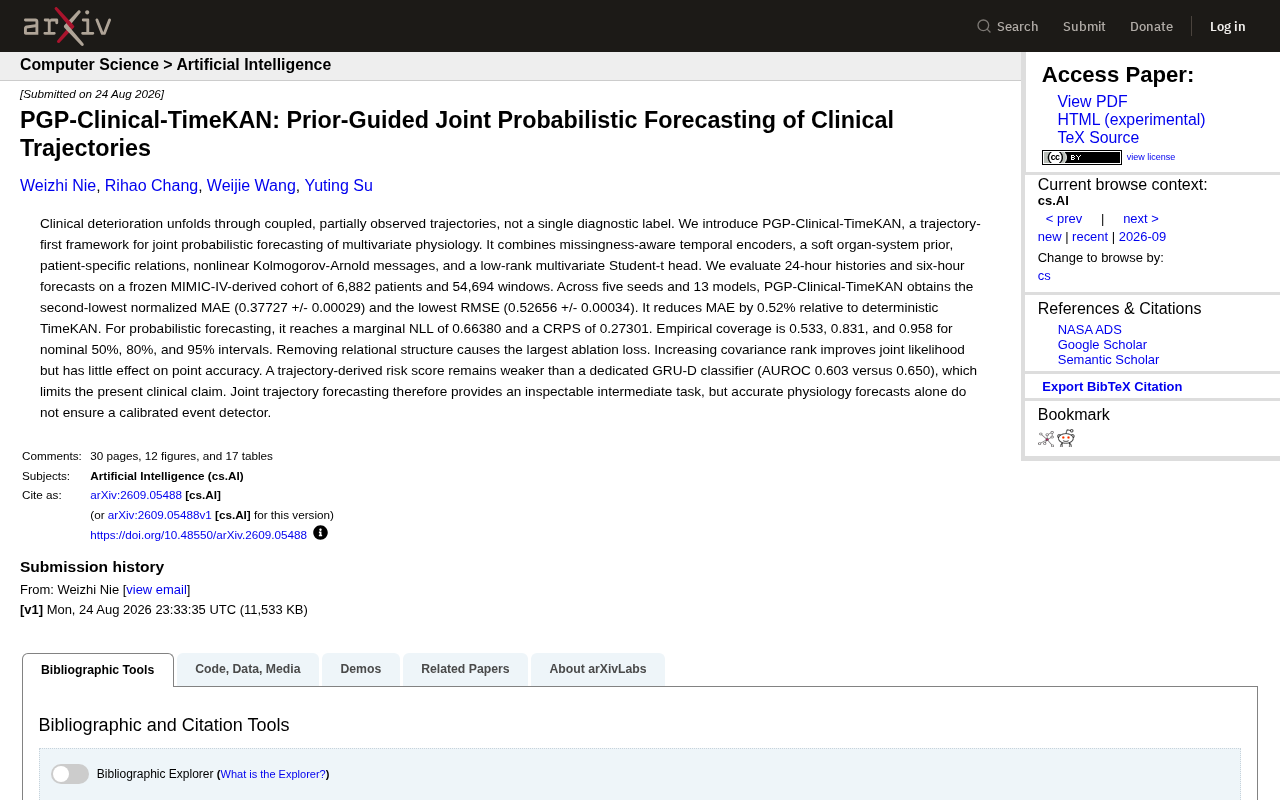
PGP-Clinical-TimeKAN: A Detailed Guide to the Multivariate Physiological Indicator Joint Prediction Framework
An in-depth analysis of the PGP-Clinical-TimeKAN framework for joint probabilistic prediction of multivariate physiological indicators, covering trajectory-first paradigm, KAN message passing, MIMIC-IV validation, and ablation studies.
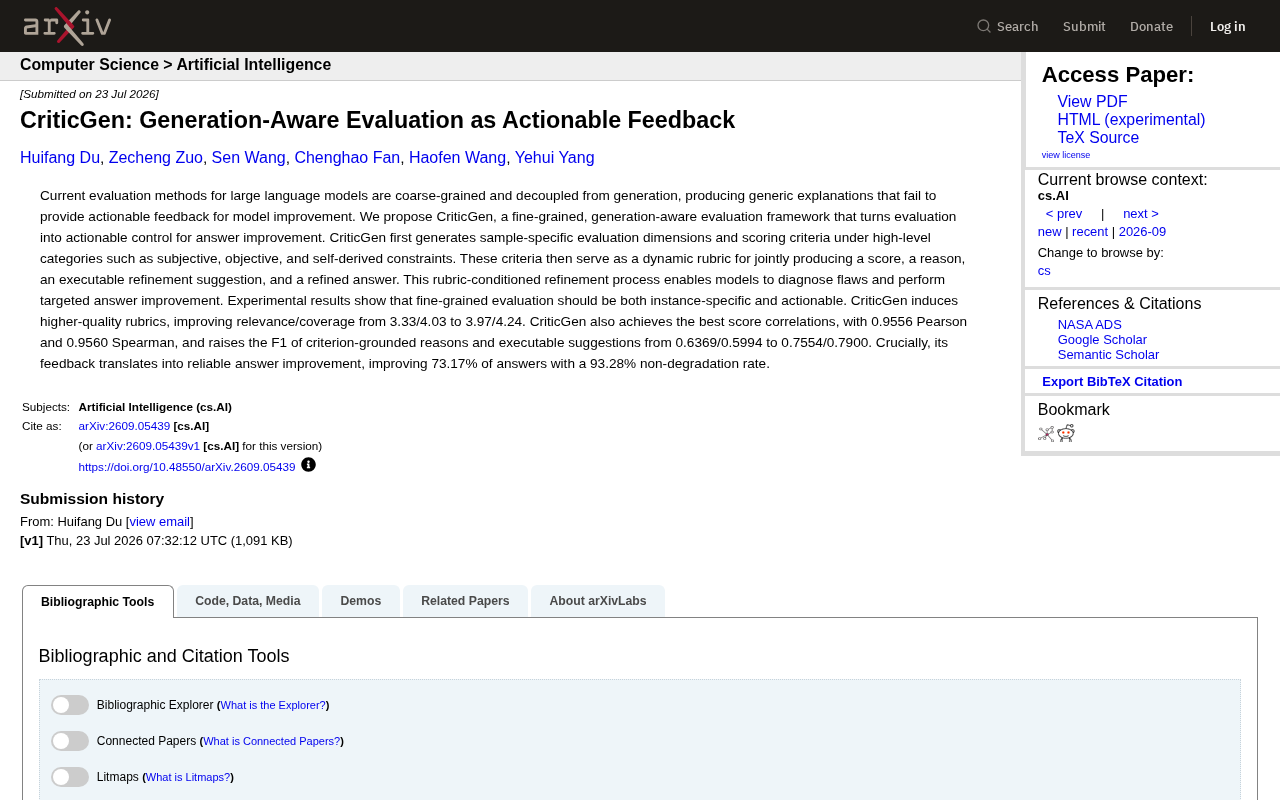
CriticGen: A New Framework That Transforms AI Evaluation into Actionable Improvement Feedback
CriticGen proposes a generation-aware evaluation framework that transforms AI assessment from passive scoring to an active optimization loop, achieving 73.17% answer improvement and 93.28% non-degradation rate.
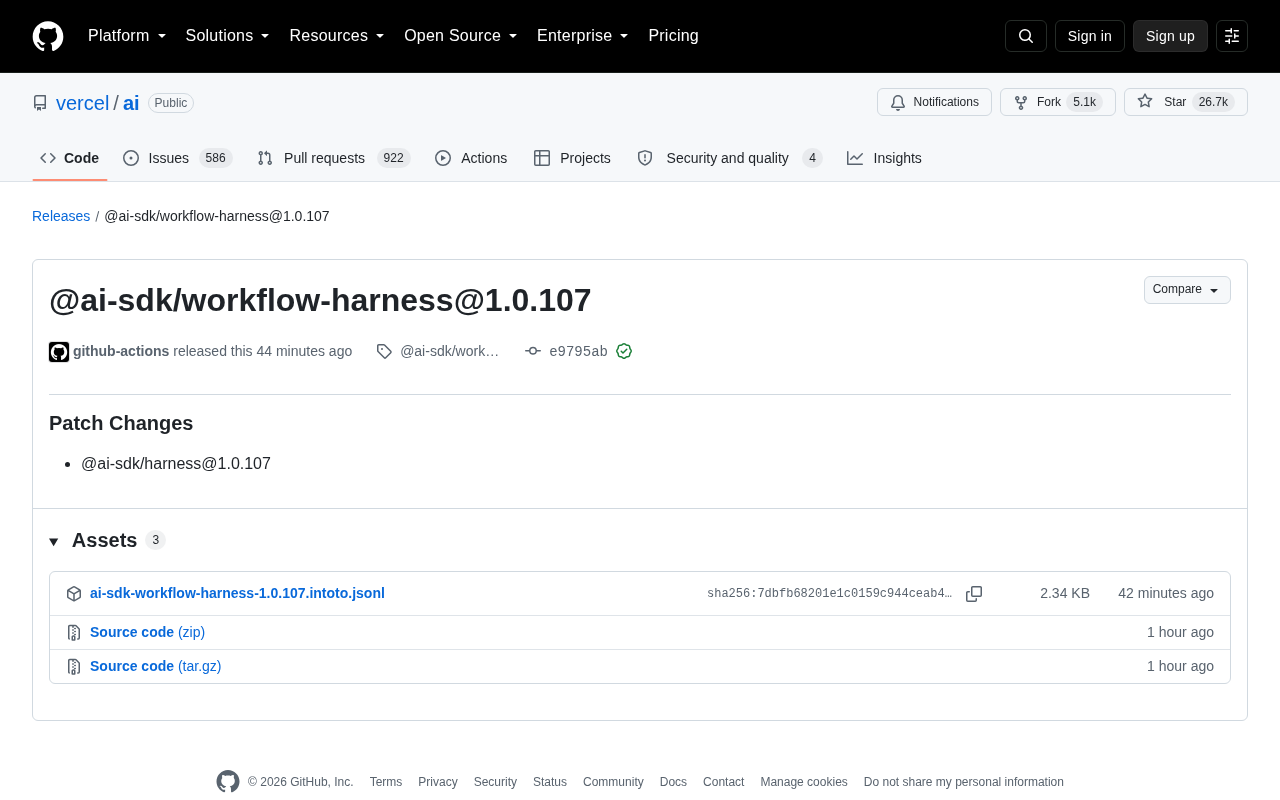
Vercel AI SDK workflow-harness Update Analysis
Deep analysis of Vercel AI SDK workflow-harness 1.0.107 update: architecture design, engineering practices, and developer value for building reliable AI apps.