Clojure Native Apps: Letting AI Reshape Software at Runtime

Clojure's REPL and JVM integration enable runtime reprogramming of native apps, with AI able to inject patches dynamically.
Starting from a Hacker News discussion, the article explores why Emacs-style runtime reprogramming can extend to native apps, with Clojure as a viable path. Clojure's REPL-driven development and deep JVM integration let developers or AI dynamically replace functions and update state without restarting. AI lowers the barrier further: with Clojure's concise syntax, immutable data, and persistent data structures, AI can generate safer, more verifiable patches and test them in the REPL. This is especially valuable for tools, prototypes, and customized software, though it faces challenges in state management, concurrency safety, rollback, performance, and security boundaries. The article argues this "conversational, growable" software form could move from niche to mainstream.
Why Clojure?
A recent discussion on Hacker News raised an interesting question: if Emacs can be reprogrammed while running, why can't native applications? At the heart of this topic is Clojure's live programming capability—developers or AI can modify code directly while the application is running, without restarting. Emacs, as the paragon of programmable editors, has long proven its extensibility, and Clojure, with its functional characteristics and REPL-driven development workflow, is bringing this capability into the realm of native applications.
REPL (Read-Eval-Print Loop) is an interactive programming environment: it reads expressions entered by the user, immediately evaluates them and prints the results, then waits for the next input. Unlike the traditional "write-compile-run" workflow, the REPL turns development into a continuous conversation where developers can verify code segment by segment, inspect state, and rapidly experiment. Clojure's REPL typically connects to a running application (via nREPL or Socket REPL), so modifications take effect directly on the live system rather than on a new instance after restart. This "live system development" model is the technical foundation of runtime reprogramming, and it's the same philosophy behind commands like eval-last-sexp in Emacs.
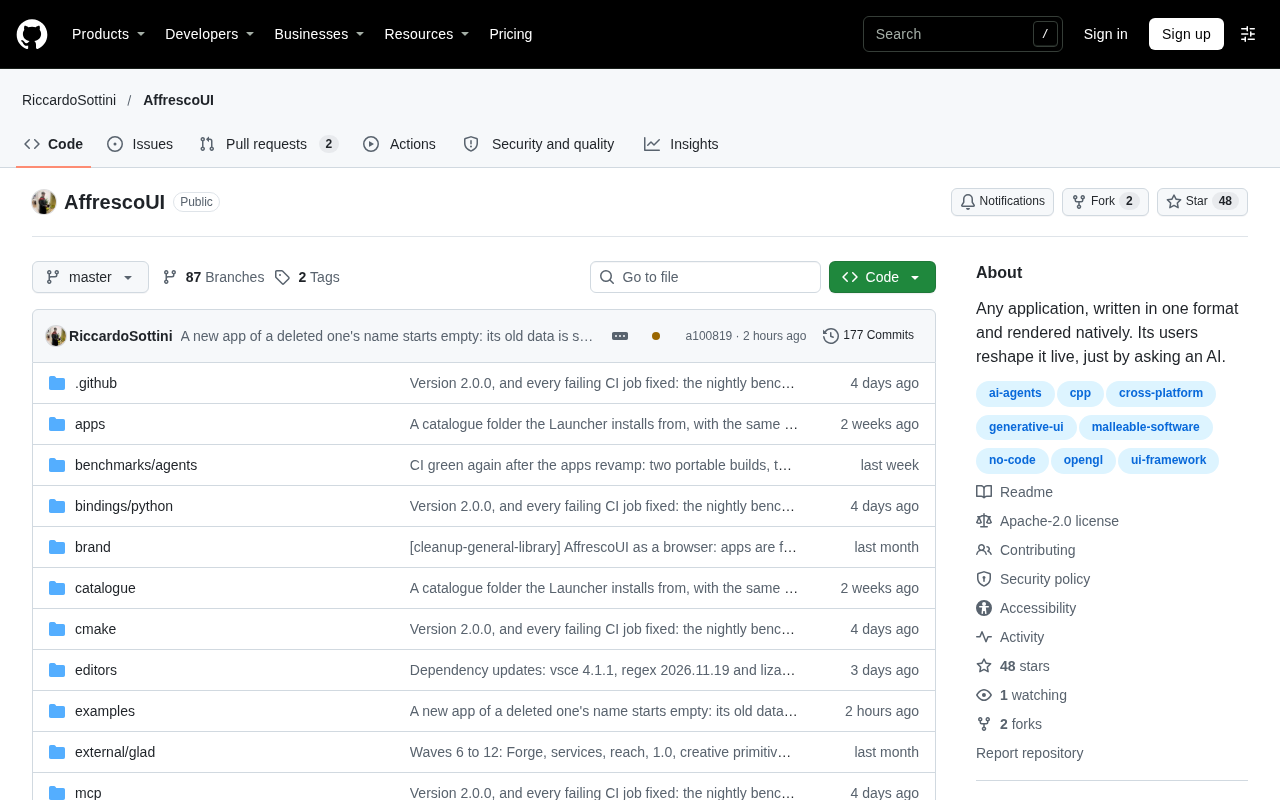
Implementation Paths for Runtime Reprogramming
What makes Clojure unique is its deep integration with the JVM and its interactive REPL (Read-Eval-Print Loop) model. Once the application starts, the REPL connection allows developers to dynamically replace functions, update state, and even refactor entire modules. In Emacs this pattern manifests as commands like eval-last-sexp, while in native applications it can be achieved through an embedded REPL or remote connection. AI's involvement further lowers the barrier—AI can analyze the application's current state, automatically generate patches, and inject them into the runtime, enabling "conversational" feature iteration.
This capability is especially valuable for tool-type software. Imagine a data analysis tool where users don't need to wait for developers to release a new version—they simply describe their needs, and AI generates and loads new Clojure functions in the current session. This not only shortens the feedback loop but also gives software the potential to "grow."
JVM integration refers to Clojure code being compiled to bytecode and running on the Java Virtual Machine. The JVM provides a mature class loading mechanism, just-in-time compilation (JIT), and garbage collection, enabling Clojure to dynamically define and redefine functions—new code is compiled into new classes and loaded, and old call sites automatically take effect through indirect references via mutable Vars. This mechanism makes "hot-swapping" functions possible without restarting the process. At the same time, the JVM's thread model and memory model provide underlying guarantees for concurrency safety, but they also mean that dynamic modification must account for overhead such as classloader leaks and JIT deoptimization. Understanding JVM integration helps assess the performance boundaries of runtime reprogramming.
The Synergy Between AI and Clojure
Clojure's concise syntax and immutable data structures provide natural constraints for AI code generation. When AI models generate Clojure code, the language's characteristics reduce side effects, making generated patches safer and easier to verify. Meanwhile, the REPL environment allows AI to test generated code snippets step by step and correct errors on the fly. This synergy upgrades "AI-assisted programming" from static suggestions to dynamic execution—AI is no longer just code completion but a real-time collaborator on a running application.
However, runtime modification also brings challenges. State management, concurrency safety, and rollback mechanisms all require additional design. Clojure's persistent data structures can alleviate state conflicts to some extent, but production environments still require caution.
Persistent data structures are one of Clojure's core features: "modifying" a collection doesn't change it in place but returns a new version that shares most of its structure, with the old version still available. This structural sharing makes update operations approach constant overhead and naturally supports time-travel-style state snapshots. In runtime reprogramming scenarios, persistent data structures allow AI or developers to safely switch application state—the old state is retained for rollback, and the new state is efficiently built on the old structure, reducing concurrent read-write conflicts. They can't completely eliminate state management complexity, but they provide a more controllable semantic foundation for dynamic patches.
Immutable data structures and side-effect constraints: Clojure uses immutable values by default, and side effects are explicitly isolated in controlled reference types (such as Atom, Ref, Agent). For AI code generation, this constraint significantly narrows the risk surface of "accidentally modifying shared state": generated pure-function patches are easier to reason about and test, while state-involving modifications must be expressed through explicit concurrency primitives. The REPL environment allows AI to evaluate segment by segment, observe results, and correct on the fly before injecting patches. Combined, the two transform AI-generated code from "static suggestions" into verifiable runtime increments, but they also require AI to understand Clojure's reference model, or logical errors may still be introduced.
Limitations and the Future
Despite its enormous potential, runtime reprogramming is no silver bullet. Performance-sensitive applications may not be able to bear the overhead of dynamic replacement; during team collaboration, live-modified code requires version control and auditing. Additionally, security boundaries must be clear—AI-generated code needs to pass through sandboxes or permission checks to avoid accidental damage.
From Emacs to native applications, Clojure offers a viable path. It doesn't seek to replace traditional development workflows but provides a more flexible option for specific scenarios (such as internal tools, prototyping, and customized software). As AI capabilities grow, this "conversational, growable" software form may move from niche to mainstream.
One-line Summary
Clojure's REPL and JVM integration enable native applications to support runtime reprogramming, with AI able to dynamically inject patches.
Paragraph Summary
Starting from a Hacker News discussion, the article explores why Emacs-style runtime reprogramming can extend to native applications and why Clojure is a viable path. The key lies in Clojure's REPL-driven development and deep JVM integration, enabling developers or AI to dynamically replace functions and update state while the application is running, without restarting. AI's involvement further lowers the barrier: leveraging Clojure's concise syntax, immutable data, and persistent data structures, AI can generate safer, easier-to-verify patches and test them step by step in the REPL. This capability is especially valuable for tool-type software, prototypes, and customized software, but it also faces challenges such as state management, concurrency safety, rollback mechanisms, performance overhead, and security boundaries. The article argues that this "conversational, growable" software form has the potential to move from niche to mainstream.
Related articles

AI and Mathematicians Collaborate to Prove the Riemann Hypothesis? The Controversy Behind 1.7 Billion Lines of Lean Code
AI and mathematician Levent Alpoge used 17 million lines of Lean code to prove the Riemann Hypothesis? An AnyGeometry definition sparked controversy, yet an independent audit says the logic holds. This article explains the Riemann Hypothesis, the Yes machine controversy, and the real impact on RSA encryption.

PeppermintOS Launches Void Edition: A Lightweight Experience Without SystemD or XLibre
PeppermintOS launches PepVoid based on Void Linux, featuring XFCE and XLibre with a non-SystemD architecture. This article covers installation, software center experience, preinstalled software, and technical verification for users interested in a lightweight non-SystemD distribution.

Physics Breakthrough Simulator: Exploring New Physics Discoveries with AI
The Physics Breakthrough Simulator project on Hacker News draws attention. This article analyzes how physics simulators use AI to accelerate physics research, discusses their potential value and limitations, and urges a rational view of "breakthrough" claims.