PeppermintOS Launches Void Edition: A Lightweight Experience Without SystemD or XLibre

PeppermintOS launches PepVoid based on Void Linux, non-systemd and using XLibre, praised for its ease of use.
Breaking from its Debian/Dev1 tradition, PeppermintOS has launched PepVoid based on Void Linux. Void is an independent non-systemd rolling distribution, and downstream distributions based on it are rare. PepVoid ships with XFCE, uses the XLibre display server and runit init system, and avoids both systemd and the traditional Xorg stack. Installation uses Calamares and takes about 10 minutes, beginner-friendly. The ISO exceeds 4GB with abundant preinstalled software, and the clean, easy-to-use software center supports XBPS, AppImage, and Flatpak. DistroTube confirmed XLibre 1.25.1.11, runit as PID 1, and PipeWire as the audio server, giving it a "two thumbs up" for ease of use and uniqueness, though some preinstalled software could be trimmed to reduce size.
Why the Void Edition Is Worth Noticing
Peppermint OS has long been based on Debian or Dev1 (the SystemD-free Debian fork), but this time it has set its sights on Void Linux. Void is an independent, non-SystemD rolling release, and downstream distributions based on Void are rare in the community. According to analysis by the YouTube channel DistroTube, this combination makes PeppermintOS Void Edition (also called PepVoid in the community) stand out among the many Debian/Arch derivatives.
PepVoid ships with the XFCE desktop and uses XLibre as its display server rather than traditional X11. This means it avoids both SystemD and the traditional Xorg stack, making it a signal worth noting for users who prefer lightweight, non-SystemD environments.
Void Linux is an independently developed rolling-release distribution. It is not based on mainstream foundations like Debian or Arch; instead, it maintains its own software repository and uses XBPS (X Binary Package System) as its package manager. Its most notable feature is that it uses runit as its init system by default, rather than the systemd used by most distributions. runit is a lightweight, event-driven init solution with fast startup and few dependencies, but its ecosystem toolchain differs from systemd's. Because of its self-maintained repository and independent upkeep, there are very few downstream distributions based on Void—developers must handle package compatibility and updates themselves—so PeppermintOS's decision to use Void as its base is relatively rare and requires an investment in maintenance costs.
Installation Process: Low Barrier Thanks to Calamares
After booting the ISO, you enter the Live environment and see a branded boot screen. According to DistroTube's testing, the ISO is over 4GB in size and is a "full-loaded edition" with a large amount of preinstalled software.
The installer uses Calamares—the standard graphical installer used by many mainstream distributions. The process includes selecting the installer language, time zone, keyboard layout, and disk handling method. For a full-disk installation, you can simply choose "Erase Disk"; if you need a dual-boot setup or custom partitioning, you can partition manually.
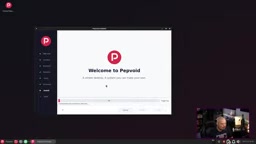
In the virtual machine, DistroTube changed the default 8.8GB swap partition to a swap file to avoid taking up too much space on a 25GB disk. After creating a user, setting the hostname and password, and confirming the summary, installation begins. The whole process takes about 10 minutes; after rebooting, you enter GRUB and the login manager, and the installation completes smoothly.
Software Center and System Updates
On first entering the desktop, a welcome screen pops up offering community entry points such as the forum, Discord, Mastodon, and Matrix. DistroTube particularly praised Peppermint's software center: the interface is clean and uncluttered, and operations are intuitive. Although it looks like an old-school GUI style, it is clear and easy to use.
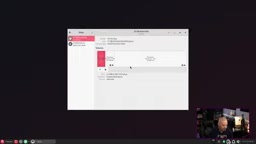
Checking for updates in the software center found 14 available packages. After clicking "Update All" and entering the sudo password, the terminal output showed that all updates succeeded. NeoVim was then installed via XBPS (Void's package manager), which completed in about a minute or so. The software center also offers AppImage and Flatpak as optional installation methods, reflecting its inclusiveness toward multiple package formats.
XBPS is the binary package management system developed in-house by Void Linux. Commands such as xbps-install, xbps-remove, and xbps-query are used to install, remove, and query packages, respectively. It is similar to Arch's pacman, but its design emphasizes simplicity and speed, and it supports atomic updates and rollbacks. Peppermint's software center calls XBPS under the hood to perform package operations while providing a graphical interface on top. In addition, PepVoid also integrates Flatpak and AppImage support. The former is a sandboxed cross-distribution package format, and the latter is a single-file executable format that requires no installation. This allows users to obtain more software beyond the XBPS repository, making up for the relatively limited software sources of an independent distribution.
Preinstalled Software and Desktop Details
As a full-loaded edition, PepVoid comes with a fairly rich set of preinstalled software:
- Accessories: Application Finder, Bulk Rename, clipboard manager, GNOME Disk Utility, Menu Libre, screenshot tool, Thunar file manager, Catfish file search, Galculator calculator, KeePass, LightDM GTK settings, Mousepad text editor, PepFetch system information tool, PepVoid Welcome.
- Development: Genie (a GTK-based IDE with syntax highlighting), NeoVim (requires manual installation).
- Graphics: Document Scanner, GNOME Evince PDF viewer, GIMP, LibreOffice Draw, Ristretto image viewer.
- Internet: FileZilla, Firefox, HexChat, Thunderbird, Transmission.
- Multimedia: Parole, Audacious, VLC.
- Office: the full LibreOffice suite.
According to DistroTube's observations, Firefox is version 161.0, reflecting Void's rolling-release nature. Thunar is version 4.20.10, Mousepad 0.7.0, Ristretto 0.14.0, and Parole 4.20.0.
DistroTube also raised some questions: since VLC is preinstalled (and can handle audio and video), are Audacious and Parole still necessary? FileZilla and HexChat are not used frequently by ordinary users; if the goal is to reduce ISO size, these could be considered for removal.
Technical Verification: Non-SystemD and XLibre
Running echo $XDG_SESSION_TYPE in the terminal returns X11, but this is misleading. Running Xorg -version shows XLibre X server 1.25.1.11, confirming that the system is actually using the XLibre fork.
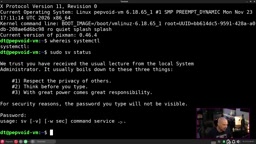
Since Void is a non-SystemD distribution, running whereis systemctl returns no result. Void uses runit as its init system by default; the sudo sv status command exists (though it errors due to missing arguments), and ps -p 1 -o comm= confirms that PID 1 is runit. As for the audio server, whereis pipewire confirms that PipeWire is in use.
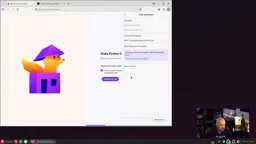
XLibre (originally named X11Libre) is an independent project forked from X.Org Server in 2024, aimed at providing more active maintenance and updates for the traditional X11 display server. Because official X.Org development has long slowed down, XLibre took over the codebase and continues to release new versions while maintaining compatibility with existing X11 clients and drivers. On PepVoid, Xorg -version displays XLibre's version number, while echo $XDG_SESSION_TYPE still returns X11, because at the protocol level XLibre is a replacement implementation of X11. This means users get an updated X11 stack rather than an entirely different display protocol (such as Wayland), offering better compatibility with older hardware and traditional desktop environments.
Wallpapers and Overall Impressions
Right-clicking the desktop and entering desktop settings reveals the wallpaper pack included with Peppermint: several high-quality photographic works, including underwater seaweed, an owl, and more, as well as PepVoid-branded wallpapers in different resolutions. DistroTube specifically mentioned that the seaweed wallpaper was impressive.
Overall, DistroTube gave it a "two thumbs up" rating. He believes PepVoid performs outstandingly in ease of use: the Calamares installer is beginner-friendly, the software center is clear and intuitive, and daily use hardly requires touching the command line. At the same time, its positioning as Void-based and non-SystemD gives it a unique place in a derivative ecosystem dominated by Debian/Arch.
For users who want to try a non-SystemD environment while retaining a graphical, easy-to-use experience, PeppermintOS Void Edition offers an option worth watching.
One-line Summary
PeppermintOS launches PepVoid based on Void Linux, non-systemd and using XLibre, praised for its ease of use.
Paragraph Summary
Breaking from its previous Debian/Dev1 tradition, PeppermintOS has launched PepVoid based on Void Linux. Void is an independent, non-systemd rolling distribution, and downstream distributions based on it are rare in the community. PepVoid ships with the XFCE desktop, uses the XLibre display server (an X11 fork) and the runit init system, avoiding both systemd and the traditional Xorg stack. Installation uses the Calamares graphical installer, takes about 10 minutes for a full-disk install, and is beginner-friendly. The ISO is over 4GB and includes a large amount of preinstalled software; the software center has a clean, easy-to-use interface and supports XBPS, AppImage, and Flatpak. DistroTube's testing confirmed that the system uses XLibre 1.25.1.11, runit as PID 1, and PipeWire as the audio server, and gave it a "two thumbs up" rating, considering it excellent in ease of use and uniqueness, though some preinstalled software could be trimmed to reduce size.
Related articles

AI and Mathematicians Collaborate to Prove the Riemann Hypothesis? The Controversy Behind 1.7 Billion Lines of Lean Code
AI and mathematician Levent Alpoge used 17 million lines of Lean code to prove the Riemann Hypothesis? An AnyGeometry definition sparked controversy, yet an independent audit says the logic holds. This article explains the Riemann Hypothesis, the Yes machine controversy, and the real impact on RSA encryption.

Clojure Native Apps: Letting AI Reshape Software at Runtime
Explore how Clojure enables native apps to be reprogrammed at runtime by developers or AI, drawing on Emacs' extensibility, and analyzing REPL-driven development, AI collaboration, and challenges.

Physics Breakthrough Simulator: Exploring New Physics Discoveries with AI
The Physics Breakthrough Simulator project on Hacker News draws attention. This article analyzes how physics simulators use AI to accelerate physics research, discusses their potential value and limitations, and urges a rational view of "breakthrough" claims.