Complete Guide to Adding SSO for B2B SaaS: WorkOS AuthKit in Practice and Pitfall Avoidance Strategies
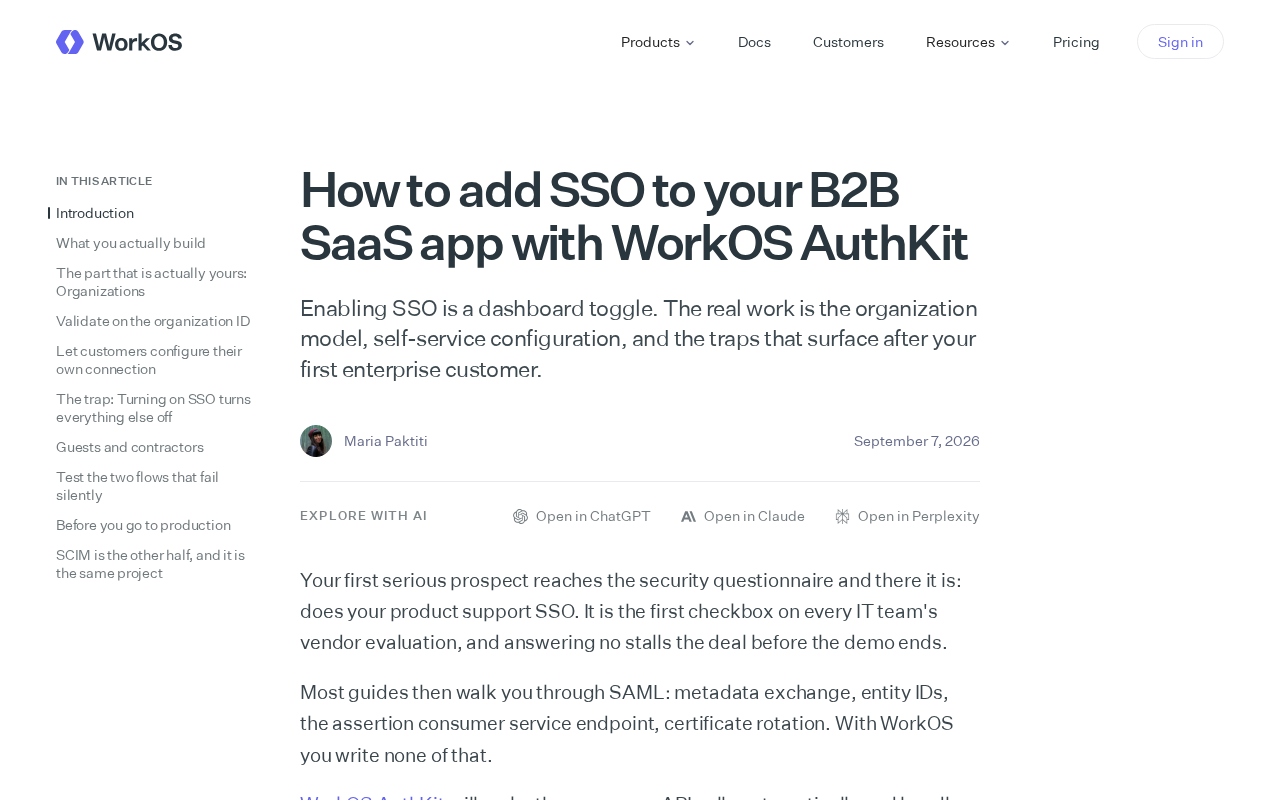
Complete guide to implementing enterprise SSO with WorkOS AuthKit: architecture, pitfalls, and strategies
This guide explores the real challenges of adding SSO to B2B SaaS products beyond basic protocol integration. It covers designing multi-tenant organization models, building self-service configuration systems, and navigating hidden complexities like JIT provisioning, SCIM directory sync, and audit logging. Using WorkOS AuthKit as a case study, it provides a phased implementation strategy and highlights critical alignment between product and sales teams.
Complete Guide to Adding SSO for B2B SaaS: WorkOS AuthKit in Practice and Pitfall Avoidance Strategies
Single Sign-On (SSO) has become a standard feature for enterprise SaaS products. However, many developers discover during implementation that the real challenge isn't the technical integration itself, but rather the entire organizational architecture built around SSO, the self-service configuration system, and the various hidden issues exposed after the first enterprise customer goes live.
SSO Technical Foundations and Enterprise Requirements Background
Single Sign-On (SSO) is an authentication mechanism that allows users to access multiple application systems using a single set of credentials. In enterprise environments, SSO is typically implemented based on SAML 2.0 (Security Assertion Markup Language) or OAuth 2.0/OpenID Connect protocols. SAML is an XML-based open standard primarily used for enterprise identity federation; OAuth 2.0 is an authorization framework that achieves authentication when extended with OIDC.
The Identity Provider (IdP) is responsible for verifying user identity and sending assertions to the Service Provider (SP). The SP trusts the IdP's assertions and grants user access. This trust relationship is established through digital signatures and encrypted metadata, requiring both parties to exchange certificates and configure endpoint URLs. For enterprise customers, SSO not only enhances user experience (employees don't need to remember multiple passwords), but more importantly centralizes identity management and security controls, meeting compliance and audit requirements.
The Surface vs. Reality of SSO Integration: Technical Integration Is Just the Tip of the Iceberg
Technical Integration Is Only the Beginning
On the surface, enabling SSO functionality seems to require only flipping a switch in the control panel. Modern authentication tools like WorkOS AuthKit indeed simplify the integration of protocols like SAML and OAuth, but this simplification only addresses the tip of the iceberg—the underlying technical handshake.
The real engineering challenge lies in: How do you design a flexible Organization Model that allows different enterprise customers to independently manage their members, permissions, and SSO configurations? How do you provide an intuitive self-service configuration interface to reduce manual support costs? These architectural decisions directly impact product scalability and operational burden.
Organization Model: The Core of Multi-Tenant SSO Architecture
Multi-tenancy is a core design pattern in SaaS architecture, where a single application instance serves multiple customer organizations (tenants). At the data layer, there are three main isolation models: shared database with shared schema (distinguished by tenant_id), shared database with separate schemas, and completely separate databases. Organization models in SSO scenarios typically adopt the first approach, where each Organization record is associated with independent SSO configurations, member lists, and permission policies.
In multi-tenant SaaS architecture, the Organization is the carrier of SSO. Each enterprise customer corresponds to an organizational entity that needs to associate the following core elements:
- Identity Provider Configuration: SAML metadata, OAuth client credentials, etc.
- Member Relationship Mapping: How users are associated with existing accounts after SSO login
- Permission Boundaries: Roles and resource access control within the organization
- Billing and Seat Management: User quota tracking for enterprise plans
This architecture requires strict tenant isolation at the application layer to prevent cross-organization data leaks. It must also consider performance isolation (preventing one organization's high load from affecting other tenants) and billing isolation (tracking usage by organization). Without a clear organization model, SSO functionality becomes a "technical demo" unable to truly serve enterprise customers' actual needs.
SSO Self-Service Configuration: The Critical Step from Manual Integration to Productization
Why Self-Service Configuration Is Indispensable
Early B2B products often adopted a "white-glove service" model—having sales or technical support teams manually configure SSO for each customer. This approach is manageable with a small customer base but quickly becomes a bottleneck as scale increases. Each configuration requires:
- Customer provides IdP metadata or configuration information
- Technical team manually enters it in the backend
- Both parties repeatedly test and verify
- Re-intervention needed when customer IT team makes independent changes
Self-service configuration productizes this process, allowing customer IT administrators to independently complete all steps within your application, dramatically reducing operational costs. This is crucial for SaaS products hoping to expand their enterprise customer base.
Key Elements of Building a Self-Service Configuration System
A qualified SSO self-service configuration system should include the following capabilities:
- Wizard Interface: Step-by-step guidance for users to fill in technical parameters like ACS URL, Entity ID
- Real-time Validation: Immediate connectivity testing after configuration submission with clear error messages
- Attribute Mapping Tool: Allows customers to define how attributes returned by the IdP (email, groups, etc.) map to application fields
- Test Account Mechanism: Enables administrators to test the SSO flow without affecting the production environment
WorkOS AuthKit provides pre-built management interface components that can quickly implement the above functionality. However, developers still need to consider how to seamlessly integrate them into their own product experience, ensuring consistency in interface language, brand style, and user flow.
Three Hidden Pitfalls After the First Enterprise Customer Goes Live
Pitfall One: The Unexpected Complexity of JIT Provisioning
Just-in-Time Provisioning is the automatic account creation mechanism in SSO scenarios. Traditional processes require administrators to pre-create user accounts in the application before users can log in via SSO. JIT changes this model: when a user first authenticates through the IdP, the application automatically creates a local account based on attributes in the SAML assertion or OIDC ID Token (email, name, groups, etc.) and completes login.
Just-in-Time (JIT) user creation seems simple: automatically create an account in the system when a user first logs in via SSO. But actual implementation encounters several tricky scenarios:
- Email Conflicts: The user previously registered a personal account with that email—how do you merge identities?
- Default Permissions: What role should newly created users have? Who authorizes them?
- Organization Affiliation: How do you handle identity switching when a user belongs to multiple organizations?
These issues require clear strategies at the product design stage. For email conflicts, you can adopt automatic merging (higher risk), require manual user confirmation for linking, or refuse JIT creation and prompt contact with administrators. Lacking a clear JIT strategy will lead to user confusion and increased support tickets.
Pitfall Two: SCIM and Directory Sync Requirements
SCIM (System for Cross-domain Identity Management) is an IETF-standardized user directory synchronization protocol, currently at version 2.0. It defines RESTful API specifications for automating user lifecycle management between IdPs and applications. Core resource types include User and Group, supporting CREATE, READ, UPDATE, DELETE, and SEARCH operations.
Enterprise IdPs (like Okta) push changes such as employee onboarding, offboarding, and department adjustments to SaaS applications in real-time via SCIM API, avoiding manual maintenance. Many enterprise customers expect to automatically sync employee directories via SCIM. This means your system needs:
- User/group CRUD interfaces supporting the SCIM 2.0 protocol
- Performance optimization for handling bulk sync operations
- Capability to handle user deprovisioning events from the IdP side
Implementing SCIM requires providing standard endpoints like /scim/v2/Users, handling batch operations and incremental syncs, and correctly responding to status codes like 409 Conflict and 412 Precondition Failed. SCIM also supports custom Schema extensions for enterprise-specific attributes. The first enterprise customer may not require SCIM, but the second and third likely will. Planning API architecture in advance avoids painful refactoring later.
Pitfall Three: Audit Logs and Compliance Requirements
SOC 2 (Service Organization Control 2) and ISO 27001 are the most commonly required security compliance certifications by SaaS enterprise customers. SOC 2, established by the AICPA, evaluates five Trust Services Principles: security, availability, processing integrity, confidentiality, and privacy of service organizations. ISO 27001 is an information security management system standard issued by the International Organization for Standardization.
Enterprise customers typically need detailed audit logs to meet compliance requirements like SOC 2 and ISO 27001. Both require establishing a complete audit log system recording all security-related events. SSO-related audit points include:
- Each login attempt (success/failure) and source IP
- SSO configuration change records (who modified SAML settings and when)
- Anomalous login pattern detection (such as multiple failed attempts in a short time)
Logs must include timestamps, user identity, operation type, source IP, result status, and other elements, and guarantee immutability (typically by writing to dedicated logging services or using cryptographic hash chains). Audit log retention periods generally require at least 1 year. Neglecting audit log design will put the team in a passive position during security reviews.
WorkOS AuthKit Technology Selection Analysis
WorkOS is a developer platform focused on enterprise-level identity authentication and authorization, founded in 2020, offering modular products like AuthKit (unified authentication), Directory Sync (directory synchronization), and Admin Portal (management interface). Its core value proposition is abstracting complex enterprise identity infrastructure into simple APIs, allowing developers to quickly implement enterprise-level features without diving into protocol details like SAML and SCIM.
Efficiency Gains from Protocol Abstraction
The Identity Provider market shows oligopolistic competition. Okta is the leader in the independent IdP space, with a market cap exceeding tens of billions of dollars, serving over 17,000 enterprise customers, renowned for its robust integration ecosystem and developer-friendliness. Microsoft Azure AD (now renamed Entra ID) holds the largest market share by leveraging Office 365's massive installed base, particularly with extremely high penetration in enterprises using the Microsoft technology stack. Google Workspace targets the SMB market, deeply integrated with products like Gmail and Drive.
Enterprise customers use a diverse range of Identity Providers (IdPs): Okta, Azure AD, Google Workspace, OneLogin, etc. Each IdP has subtle differences in SAML implementation, such as attribute naming conventions, certificate renewal mechanisms, and inconsistent error response formats. WorkOS abstracts these differences through a unified API layer, eliminating the need for developers to write separate adapter code for each IdP—this is the core value of a middleware platform.
Out-of-the-Box Management Interface
AuthKit provides an embeddable Admin Portal where enterprise administrators can configure SSO, manage members, and view audit logs. This saves a significant amount of work building management interfaces from scratch. The product uses usage-based pricing, charging by monthly active users or API call volume, targeting B2B SaaS products serving enterprise customers. Pre-built interface components follow enterprise-grade design standards, reducing UI/UX investment.
Ongoing Protocol Maintenance Assurance
Specifications for OAuth 2.1, OIDC, and SAML 2.0 continue to evolve, and implementations by various IdPs are constantly updated. For example, security best practices may recommend deprecating certain encryption algorithms, or IdPs may adjust metadata formats. Using WorkOS means entrusting protocol maintenance to a specialized team, effectively reducing long-term technical debt. This is especially important for startups with limited core team size.
Phased Implementation Strategy for SSO
Four-Stage Implementation Path
- Stage One: Integrate basic SSO functionality, supporting mainstream IdPs (Okta, Azure AD)
- Stage Two: Build self-service configuration interface, reducing manual intervention
- Stage Three: Add SCIM support, enabling directory synchronization
- Stage Four: Complete audit logs and advanced security features
Avoid pursuing a "perfect" SSO implementation from the start. Prioritize meeting core needs of the first few enterprise customers, then iterate gradually. This incremental approach provides faster market feedback and avoids over-engineering. Each stage should have clear success metrics—for example, Stage One's goal might be completing SSO configuration for 2-3 pilot customers.
Alignment with Sales Teams
SSO is not just a technical feature but also a sales selling point. The following questions need clarification with sales teams:
- Which plans include SSO functionality?
- Is SSO offered as an add-on charge?
- What delivery timeline is promised to customers?
Misalignment between technical capabilities and sales commitments leads to customer churn or internal team conflicts. Establish regular sync mechanisms between product and sales, ensuring feature descriptions in sales materials match actual technical capabilities. For example, if SCIM functionality is still under development, sales should not promise "immediately available" but rather label it as a "roadmap feature."
Configuration Documentation and Customer Support
Preparing detailed configuration documentation for customer IT teams is crucial:
- Screenshot guides for configuring major IdPs (Okta, Azure AD, Google Workspace)
- Common error codes and corresponding solutions
- Complete checklist for testing SSO configuration
Quality documentation significantly reduces support ticket volume, directly improving customer satisfaction. Documentation should include content for readers at different technical levels: quick start guides for experienced IT administrators, detailed troubleshooting chapters for users configuring SSO for the first time. Consider embedding interactive elements in documentation, such as configuration parameter auto-generators.
Summary
Adding SSO functionality to B2B SaaS is far more than just integrating an authentication library. The real challenges lie in building a robust organization model, providing a smooth self-service configuration experience, and handling various edge cases that emerge after enterprise customers go live. Modern tools like WorkOS AuthKit can accelerate the technical integration phase, but architectural design, product experience, and operational strategy still require careful consideration by development teams.
Planning the complete lifecycle management of SSO upfront will help your product establish competitive advantage in the enterprise market while avoiding accumulation of technical debt. SSO is not a one-time project but a product capability requiring continuous investment. From manual configuration for the first enterprise customer to fully automated directory sync and audit systems, this evolution path requires close collaboration between product, engineering, and customer success teams.
Key Takeaways
- The real challenge of SSO integration lies in organizational architecture design and self-service configuration systems, not merely protocol integration
- Multi-tenant SaaS requires a clear organization model to host independent SSO configurations, member management, and permission boundaries
- JIT Provisioning, SCIM directory sync, and audit logs are three common hidden requirements after enterprise customers go live
- WorkOS AuthKit significantly lowers the technical barrier to SSO integration through protocol abstraction and pre-built components
- Adopt a phased implementation strategy, prioritizing core requirements to avoid over-engineering
- Product and sales teams need alignment on feature scope, pricing models, and delivery timelines
- Detailed configuration documentation and proactive customer support are key to reducing operational costs
Related articles
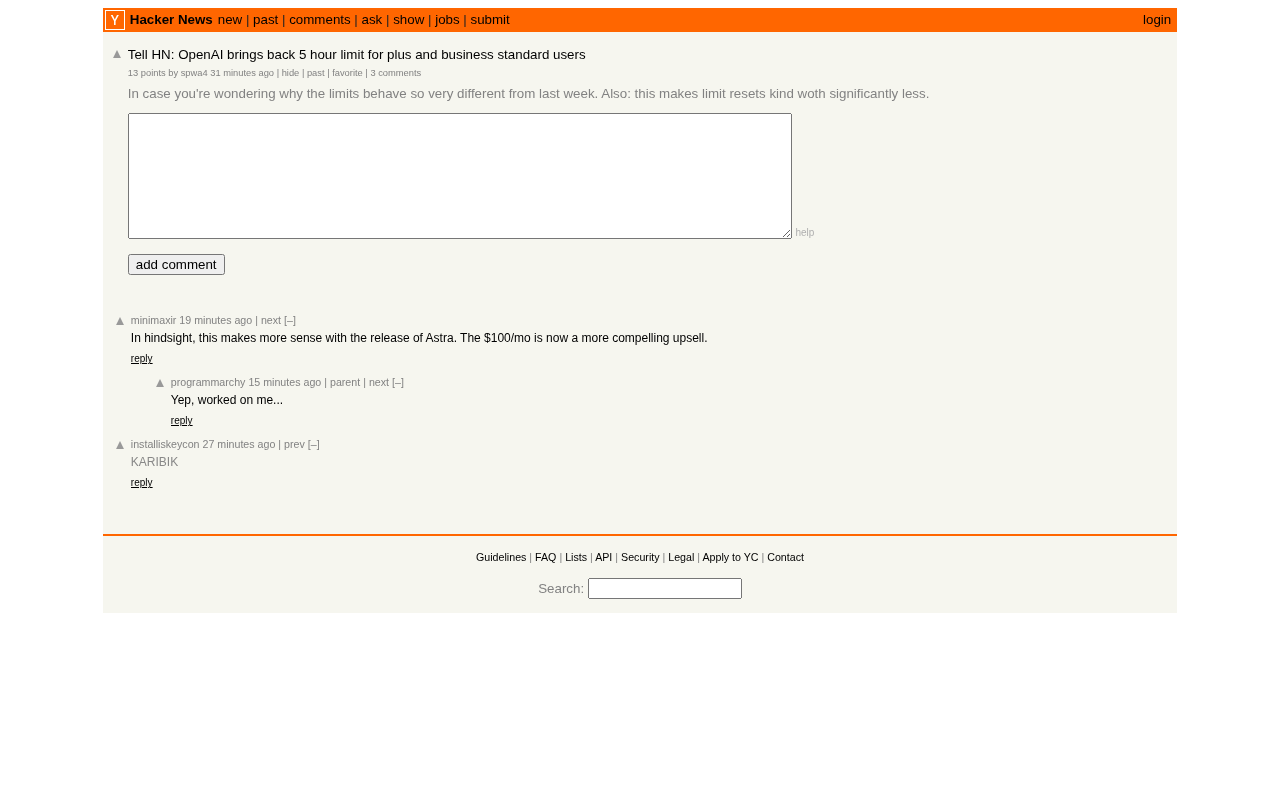
OpenAI Reinstates 5-Hour Limit: Usage Caps Tighten Again for Plus Users
OpenAI reinstates 5-hour usage limits for Plus and Business Standard users, affecting GPT-4 model access. Analysis of reasons, compute costs, tiered pricing, and impact on users.

GPT-6 Astra vs. Claude Fable 5.1: A Full Comparison Across Four Real-World Tests
GPT-6 Astra vs. Claude Fable 5.1: benchmarks, cost, Fortnite clone, UI design, motion graphics, and 3D dashboard — four real-world tests compared.

GPT-6 Astra vs Claude Fable 5.1: Head-to-Head Comparison Across 15 Real-World Work Scenarios
A creator spent thousands testing GPT-6 Astra vs Claude Fable 5.1 across 15 real work scenarios. Astra won 10 rounds and saved $186; Fable excelled in creative copy and visual design.