GPT-6 Astra vs. Claude Fable 5.1: A Full Comparison Across Four Real-World Tests

GPT-6 Astra edges out Claude Fable 5.1 across four practical tests, with a clear cost advantage.
A creator with early access to GPT-6 Astra ran it head-to-head against Claude Fable 5.1 across benchmarks and four real-world projects. Astra won three of four tests (Fortnite clone, landing page, 3D dashboard) and tied on motion graphics, while also delivering comparable benchmark performance at roughly half the token cost. Fable 5.1 remains a strong model, but GPT-6 currently leads on both output quality and cost efficiency.
This week the AI world got a head-to-head matchup between two flagship models: OpenAI's GPT-6 Astra and Anthropic's Claude Fable 5.1, released in quick succession. Astra is still rolling out gradually, and a Bilibili creator with early access (content sourced from Chase AI) put both models through a comprehensive gauntlet — from benchmarks to real projects. Here's a breakdown of the key results to help you decide which model fits your workflow.
Benchmarks: GPT-6 Leads Across the Board — But Read the Numbers Carefully
On paper, GPT-6 Astra beats Fable 5.1 on nearly every benchmark. The tester cautions, though, that these percentages shouldn't be read in isolation — a score of 74.1 on DeepSuite 1.1 doesn't literally mean it's 7.5% better in practice.
AI benchmarks are standardized evaluation frameworks for measuring large language model capabilities, typically covering reasoning, coding, math, and multimodal understanding. Newer benchmarks like DeepSuite and Terminal Bench lean more toward agentic tasks and long-horizon reasoning. One growing concern is benchmark contamination — as model vendors increasingly optimize their training data toward specific test sets, a model may ace a benchmark while underperforming on real tasks. Percentage gaps often fall within statistical margins of error, and there's a meaningful distribution shift between lab conditions and production environments. That's the deeper reason the tester urges a more critical reading of the numbers.
One notable detail: Anthropic was relatively conservative this time around — many benchmarks simply have no reported data from them — while OpenAI published metrics for virtually everything you'd want. That difference in transparency reflects a genuine divergence in how the two companies approach marketing.
The tester's overall take can be summed up neatly:
GPT-6 is a major leap for OpenAI (especially compared to 5.6), while Fable 5.1 feels more like "giving us more of what we already love" — a solid, incremental update.
Cost Is the Hidden Differentiator
Where the gap really opens up is cost efficiency. On Terminal Bench 4.0 at maximum accuracy, the two models are extremely close — Fable 5.1 at 55.8% versus Astra at 56.7%. But the price to get there is dramatically different:
| Metric | GPT-6 Astra | Claude Fable 5.1 |
|---|---|---|
| Terminal Bench 4.0 accuracy | 56.7% | 55.8% |
| Cost to achieve it | $10.35 | $19.50 |
LLM pricing is typically quoted per million tokens, where a token roughly corresponds to 0.75 English words. In other words, GPT-6 delivers comparable performance at nearly half the token cost — meaning on the same budget, Astra can handle roughly 1.88× the workload. That gap compounds fast at scale: a production system making 100,000 calls per day could see annual cost differences running into the millions. GPT models have historically held an edge on price-to-performance, and this data confirms the pattern.
Test 1: Fortnite Clone in the Browser
The first test was a serious challenge — build a browser-based Fortnite clone complete with 99 bots and different weapons. The idea came from YouTuber Cole's video Claude Fable 5.1 is insane.
GPT-6 (via Codex) generated the whole thing in one shot in about 45 minutes, and the result was genuinely impressive: a working lobby screen, battle bus, glider deployment, chest looting, weapon switching (Tab key), a shield system, map view, and building mechanics — plus auto-generated sound effects. The only notable flaw was frame drops during resource harvesting.
OpenAI Codex here isn't just "one-shot code generation" — it's a full agentic pipeline combining function calling, multi-step planning, and sandboxed execution validation. The 45 minutes of background processing involved code decomposition, iterative fixing, and runtime feedback, all hidden from the user. This is architecturally distinct from Fable 5.1's conversational, turn-by-turn construction: Codex is more of a "black-box batch processor," while Fable 5.1 is more of a "transparent interactive flow."
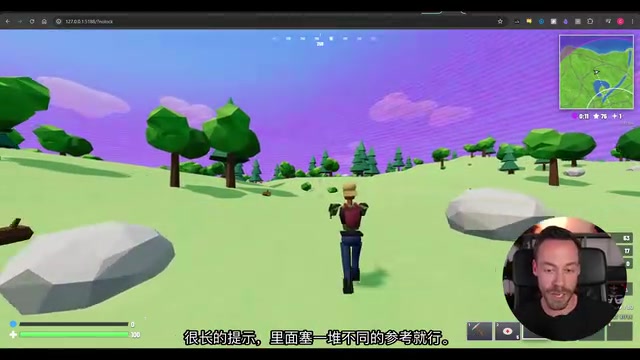
Fable 5.1 took about 1.5 hours and consumed roughly 750,000 tokens. The lobby had richer UI elements, but many buttons did nothing when clicked; camera controls were shakier, built objects had clipping issues, and the shooting felt noticeably off due to ray misalignment. Overall polish was a step below Codex.
Verdict: For single-shot generation, Codex (GPT-6) wins.
Test 2: AI Travel Website Landing Page
The second test focused on frontend and design — build a landing page for an AI travel website. This is traditionally a strong suit for Anthropic's models, which made the result surprising.
GPT-6 produced a clean, minimal page that automatically pulled in images from its built-in image model. It didn't feel like it was "screaming AI" at you — the hero section, FAQ, and footer were all handled well. Fable 5.1's output, by contrast, felt quite basic: dark background, a standard left-text/right-image layout, rounded cards, minimal animation, and an unremarkable light-to-dark-blue gradient.
The default aesthetic of LLM-generated frontend code is heavily shaped by the distribution of training data — if a certain component style dominates the training corpus, the model will default to reproducing it in zero-shot settings. Fable 5.1's conservative "dark background + rounded cards" output is likely a direct reflection of that training bias. The tester's insight here is worth quoting:
The better you are at using AI, the less the model matters — because power users know how to supply reference images and find component libraries. But for someone who just says "build me this," the model's default output quality is everything.
For enterprise-scale UI generation, building a standardized prompt library with design specs often delivers more value than debating which model is better. On median output quality, this round also goes to Astra.
Test 3: 2D Motion Graphics Explainer
The third test had both models invoke the same motion graphics skill via the Higgs Field MCP to produce a 15-second 2D animation explaining how internet messaging (texting) works.
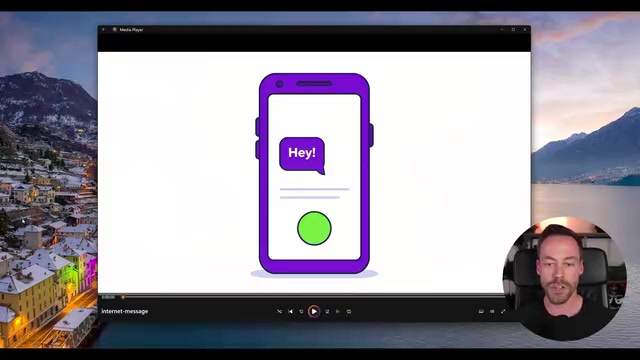
MCP (Model Context Protocol) is an open protocol from Anthropic that standardizes how LLMs interface with external tools and data sources — think of it as a universal "standard library interface" for AI tool calls. Higgs Field MCP is a tool service node built on this protocol, allowing two different models to invoke the same downstream tool, C-Dance 2.5, through a shared interface. This explains why the round was essentially a draw: when the core execution is delegated to the same downstream tool, differences between upstream models get largely flattened. Both handled external tool calls fluently and produced solid motion graphics — a clear sign that in tool-dependent tasks, the gap between models shrinks considerably.
Test 4: 3D Globe Travel Dashboard
The final test was more creative — build a functional 3D globe dashboard web app for selling travel products.

GPT-6's entry, "Orbit," lets you enter an origin and destination, marks both on a globe, and displays flight info at the bottom (e.g., SFO to CPT via a 22-hour layover, $864 round trip per person). Clicking "Explore" surfaces destination photos and activity ideas. There's even a "Chase the Sun" feature that shows the current golden-hour position on the globe in real time. Clean, professional, and functional.
Fable 5.1's entry, "Arclight," led with visual ambition: text that follows the route path, real-time fare fluctuation, a sun clock that updates prices, and flashy fly-in animations when you click a city. Visually striking — but the bright background made some information hard to read, and it clearly prioritized aesthetics over usability. This is a recognizable pattern in frontend generation: without explicit constraints on functional priority, models tend to maximize visual salience over usability.
The tester's take was that Arclight "could really use Astra to balance it out" and would need several more prompt rounds to reach a usable state. Astra takes this round too.
Verdict: Astra 3, Draw 1 — But the Gap Is Smaller Than the Score Looks
Across four tests, Astra won three and the motion graphics test was a draw. Combined with a slight benchmark lead and lower token costs, GPT-6 came out ahead in this matchup.
The tester also offered a more balanced perspective worth keeping in mind:
- These were one-shot attempts and don't fully represent real-world iterative workflows.
- Fable 5.1 is still a "very solid" model — "almost nobody out there says it's bad."
- Built-in image generation is a nice bonus for some users but not a universal need.
Beyond raw model capability, there's a notable policy difference around usage limits worth flagging. LLM subscription "limits" aren't just token caps — they involve rate limits, concurrency ceilings, priority queues, and other multi-dimensional resource allocation mechanisms. Anthropic's 20× plan reportedly "isn't really 20×" — weekly usage still runs around 50%, and limits have actually tightened over the past month. OpenAI, by contrast, resets roughly every three days and provides a more predictable cadence with effectively looser headroom. For developers with cyclical, high-intensity workloads, this difference is quite real.
Perhaps the smarter move is to subscribe to both OpenAI's 5× and Anthropic's 5× plans — same $200/month at the end of the day, but you get the freedom to genuinely test both in your actual daily work.
Ultimately, the real takeaway from this matchup might not be "who won" — it's that both models are already good enough. Instead of agonizing over benchmark numbers, the better investment is getting hands-on with your own projects and letting real results guide the choice.
Related articles
GPT-6 Astra vs Claude Fable 5.1: Head-to-Head Comparison Across 15 Real-World Work Scenarios
A creator spent thousands testing GPT-6 Astra vs Claude Fable 5.1 across 15 real work scenarios. Astra won 10 rounds and saved $186; Fable excelled in creative copy and visual design.

Claude Code Team Interview: How Engineers Shift from Writing Code to Managing AI Goals
Anthropic Claude Code team deep dive: reveals how software engineers shift from line-by-line coding to AI goal management, covering Slack-native Agents, cloud-hosted Loops, workflow fan-out reviews, and AI's profound restructuring of development paradigms.
Claude Code Advanced Guide: 9 Overlooked Advanced Features Explained
Deep dive into 9 advanced features of Claude Code: custom sub-agents, Skills workflow templates, Hooks event-driven automation, MCP integration, Git Worktree parallel development, Headless mode, and more. Level up from basic usage to efficient AI-powered collaborative development.