Complete Guide to Building an AI Agent + Personal Knowledge Base with DeepSeek
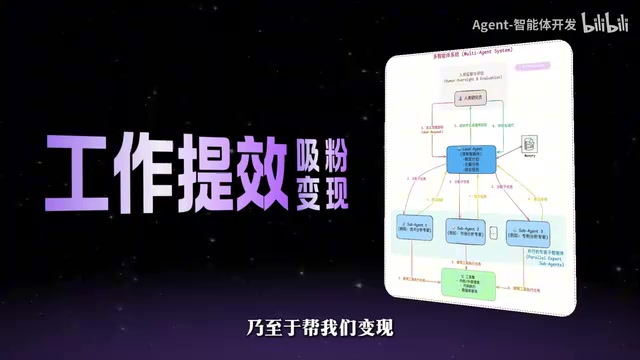
A beginner-friendly roadmap for building AI agents and knowledge bases with DeepSeek R1.
This article introduces a structured course for building AI agents from scratch, arguing that now is an ideal entry window for this emerging skill. The curriculum follows a hands-on-first approach, covering agent fundamentals, private knowledge base construction via RAG, low- and high-level agent implementations using tools like Coze, Cherry Studio, and VS Code's Cline plugin, and workflow-based productivity applications including Deep Research. The article also advises readers to prioritize conceptual understanding over tool-specific steps, given how rapidly the ecosystem evolves.
Why Now Is a Critical Window for Building AI Agents
If we think of technology waves as a series of boarding opportunities, the emergence of AI Agents (intelligent agents) is at a moment similar to the early days of public accounts or short-video platforms — a window that won't stay open forever. The source material makes a compelling point: agents are seen as the flagship product of AI's "real-world deployment era," and those who learn to build them now are among the first movers.
For individuals, an agent isn't just a chat tool — it's more like a "digital assistant" that works continuously, helping with repetitive tasks, supporting content creation, and even participating in audience growth and monetization pipelines. For businesses, the commercial value is even more direct: agents can be embedded into customer service, knowledge management, internal process automation, and more.
This course isn't aimed at any single type of learner. Whether you're a professional, a content creator, a student, or a freelancer, it works as a starting point. Its value lies in breaking down the seemingly high-barrier question of "how to build" into actionable steps, while leveraging high-performance models like DeepSeek R1 to lower the implementation threshold.
Course Goals: Hands-On First, Theory Second
The design logic is straightforward — the first three objectives are entirely practice-oriented, with theory added at the end to ensure you understand not just what to do, but why it works. This structure is beginner-friendly: get a working agent up and running first, then circle back to understand the underlying mechanics, rather than getting buried in concepts from the start.

This "do first, understand later" approach aligns with how tool-based skills are best learned. Agents involve multiple modules — model calls, prompt engineering, knowledge base retrieval, workflow orchestration — and front-loading theory tends to overwhelm learners. Building something that works first creates positive reinforcement; understanding the principles afterward makes the learning curve far smoother.
Core Module Breakdown: From Knowledge Bases to Advanced Agents
The curriculum is organized around several progressive modules that together form a complete build path.
Agent Overview and Core Components
The course opens by distinguishing between early and modern interpretations of agents, then maps out their core components. This foundation is essential — understanding what an agent is made of (model, memory, tool-calling, planning capability) ensures that later build steps aren't just rote copying.
Building a Private Knowledge Base for Personal or Enterprise Use
A knowledge base is what makes an agent truly "know you." The course uses tools including Cherry Studio and Tencent-related platforms to walk through how to build a reliable, practical private knowledge base. The point of a private knowledge base is to connect a general-purpose LLM to your own documents, materials, or industry data — enabling contextually relevant answers rather than generic responses.
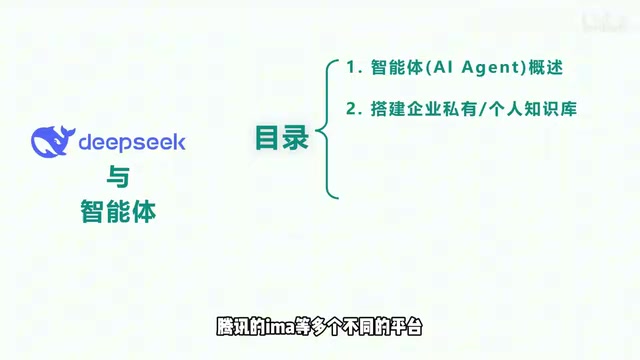
Private knowledge bases are technically built on RAG (Retrieval-Augmented Generation) architecture. The core flow works like this: local documents are chunked and converted into vector embeddings, then stored in a vector database. When a user asks a question, the system first retrieves relevant chunks from the vector store, then feeds them as context to the LLM to generate a response. This approach preserves the LLM's language understanding while allowing it to "read" your private data — without uploading sensitive information to third-party training sets. Tools like Cherry Studio wrap this entire pipeline into a visual interface, allowing non-technical users to complete steps like vectorized ingestion and retrieval testing without manually configuring databases or writing Embedding API calls.
Low-Level and High-Level Agent Implementations
The course acknowledges that agent implementation approaches are still evolving. Using platforms like Coze (扣子) and the Cline plugin for VS Code, the tutorials cover multiple implementation approaches for lower-level agents, plus three distinct paths for building more advanced ones. This dual-track approach — visual platform + code plugin — serves both no-code users and those with some development experience.
The distinction between "low-level" and "high-level" essentially maps to an agent's degree of autonomous decision-making. Low-level agents are typically linear or fixed-branch task executors: given an input, they follow a preset flow to call tools and produce output — transparent, controllable, well-suited for fixed-process scenarios like customer service Q&A or document summarization. High-level agents introduce ReAct (Reasoning + Acting) or multi-step planning capabilities: the model can independently decompose goals, dynamically select tools, adjust subsequent steps based on intermediate results, and even orchestrate multiple sub-agents. The Cline plugin runs inside VS Code and can directly access the local file system and terminal commands — a prime example of high-level agent capabilities. It can autonomously complete a full cycle of "read code → identify issue → modify file → run tests" without requiring step-by-step human instruction.
Workflows: The Core Productivity Layer Right Now
The course positions workflows as "the current embodiment of productivity," and this framing holds up. A single-turn Q&A agent has limited value; what actually drives efficiency is a workflow that chains multiple steps together — automatically fetching information, organizing it, generating content, and distributing it.
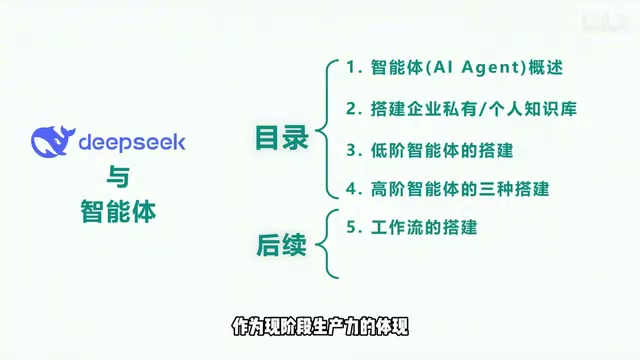
The course focuses on workflow construction within Coze-style platforms, supported by multiple case studies, with additional coverage of advanced capabilities like Deep Research. Deep Research represents the evolution of agents from "answering questions" to "autonomously completing research tasks" — one of the more promising Agent application scenarios today.
Deep Research is a capability recently introduced by leading organizations including OpenAI and Google. It refers to an agent's ability to autonomously formulate a research plan, make multiple rounds of search and reading tool calls, synthesize and cross-validate findings, and generate a comprehensive report — all without human intervention at intermediate steps. The key difference from single-pass retrieval Q&A is iterative reasoning: each round of search results updates the agent's understanding of the problem, generating more precise queries in the next round. This paradigm upgrades agents from "instant answers" to "autonomous task completion," delivering real value in scenarios like competitive analysis, literature reviews, and market intelligence. Platforms like Coze encapsulate this capability through workflow nodes, lowering the barrier to replication.
Learning Recommendations and Realistic Expectations
The value of "zero-to-one" introductory courses like this lies in lowering the barrier and quickly building a holistic mental model. That said, a few things are worth keeping in mind:
- Tools evolve fast: The agent ecosystem — platforms, plugins, interfaces — iterates extremely quickly. The specific tools mentioned (Cherry Studio, Coze, Cline) will keep changing. Understanding the underlying approach matters more than memorizing any particular button.
- "Learn and immediately land a job" deserves skepticism: Building agents is a valuable skill add-on, but whether it translates into career opportunities depends heavily on the specific business context and real project experience you bring to it.
- DeepSeek R1's role: As the underlying model, it handles reasoning and generation — but an agent's actual effectiveness depends heavily on knowledge base quality and workflow design.
Overall, this curriculum offers a complete path from concepts to knowledge bases, from low-level to high-level agents, and on to workflow-based productivity applications. It's a solid starting point for beginners building a systematic understanding of the space. Real mastery, however, comes from repeated iteration on actual projects.
Related articles
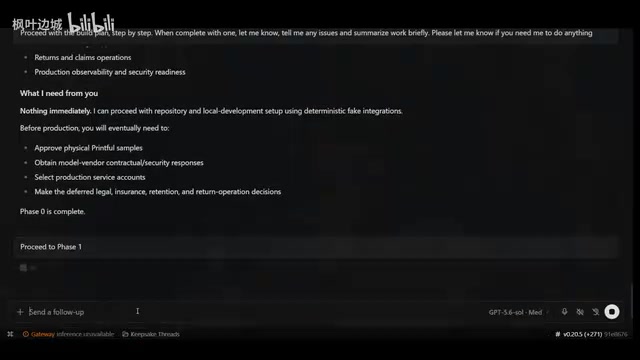
Building an AI-Powered E-Commerce Business from Scratch: A Real-World Account of Multi-Agent Architecture for Print-on-Demand
A blogger builds a print-on-demand e-commerce company from scratch using AI agents — documenting specialized Agent profiles, GPT-5.6 vs Claude Fable multi-model orchestration, and reusable skill accumulation.
AI Agent Earns $10K in One Week: 3 Key Upgrades Explained
A blogger shares how he earned $10K in a week with an AI Agent — not by adding more skills, but through verification, approval gates, and subagents to raise trust and enable true automation.
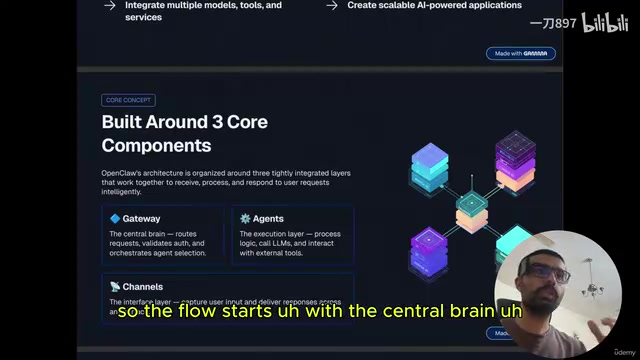
Getting Started with OpenClaw: Multi-Channel AI Agent Gateway and Automated Workflow Guide
OpenClaw is an open-source multi-channel AI agent gateway. This guide covers its three core components — gateway, agents, and channels — plus tool integration and memory mechanisms.