Confessions of a Chinese AI User: What Critical Context Anthropic's Accusations Are Missing
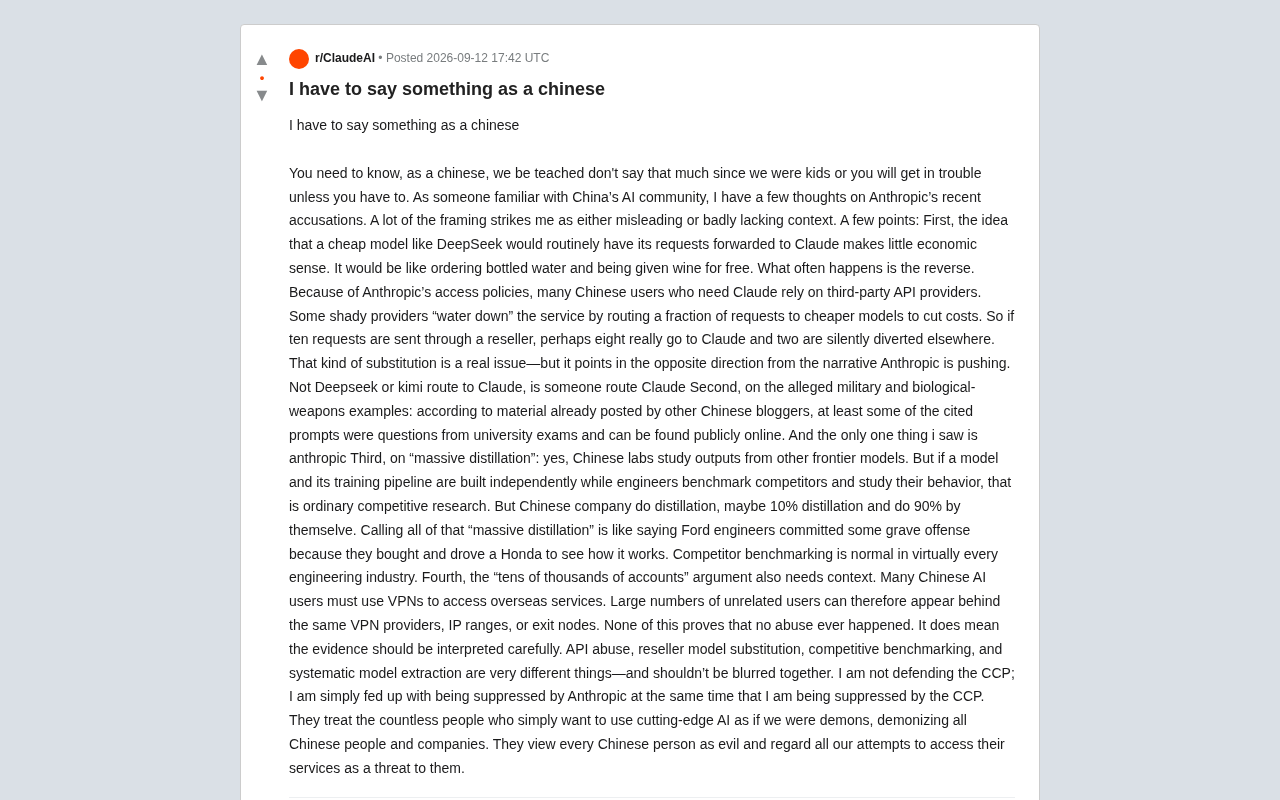
A Chinese AI user rebuts Anthropic's accusations, citing reseller fraud and VPN clustering as key missing context.
A Reddit user embedded in China's AI community responds point-by-point to Anthropic's accusations of Chinese AI abuse. They argue that routing cheap model requests to expensive Claude makes no economic sense — the real fraud runs the other way, with resellers quietly substituting Claude responses with cheaper models. Cited weapon-related prompts may stem from public university exams, not malicious intent. "Massive distillation" conflates normal competitive benchmarking with systematic copying. And tens of thousands of "clustered" accounts likely reflect shared VPN exit nodes, not coordinated abuse. The author isn't defending any side — they're insisting that technical nuance matters more than geopolitical narratives.
Recently, a series of accusations Anthropic leveled against the Chinese AI community sparked widespread discussion. A Reddit user claiming familiarity with the Chinese AI ecosystem published a lengthy post responding to these charges from an insider's perspective. The post isn't a defense of either side — it's an attempt to fill in the technical and market context that mainstream narratives have left out. Here's a breakdown of the key arguments.
The Economics of Request Forwarding Don't Add Up
The author's first challenge is straightforward: why would a model like DeepSeek — known for its low cost — secretly forward user requests to the far more expensive Claude? Economically, it makes no sense. The author uses a vivid analogy: "It's like ordering a bottle of mineral water and the vendor secretly gives you a bottle of wine for free."
The reality, the author argues, tends to run in the opposite direction. Because of Anthropic's access restrictions, many Chinese users who need Claude must rely on third-party API resellers. Some unscrupulous resellers, looking to cut costs, will "water down" their service: quietly routing a portion of requests meant for Claude to cheaper models instead.
As the author explains, if you send ten requests through a reseller, maybe eight actually reach Claude while the other two are silently redirected elsewhere. This kind of substitution is a real problem — but it points in the exact opposite direction from Anthropic's narrative. It's not DeepSeek or Kimi routing requests to Claude; it's someone routing Claude's requests away to other models.
The Origins of the Military and Bioweapon Examples Are Questionable
Regarding Anthropic's cited examples involving military and bioweapon misuse, the author references materials already published publicly by other Chinese bloggers. According to those sources, some of the cited prompts are actually university exam questions that can be freely found online.
If accurate, this would significantly undermine the "malicious misuse" narrative. There's a fundamental difference between exam questions and actual weapons development intent. Using publicly available academic content as evidence of a threat is misleading. The author does acknowledge, however, that they're relying on a single source and that more careful verification is needed.
Where Does "Massive Distillation" Begin and End?
On the accusation of "massive distillation," the author is notably candid. They acknowledge that Chinese labs do study the outputs of other frontier models — but emphasize that the degree and nature of this activity matters enormously.
The author's rough estimate: perhaps around 10% of Chinese companies' work involves distillation, with the remaining 90% being original. If a model and its training pipeline are built independently, and engineers are simply benchmarking competitors and studying their behavior, that's standard competitive research.
The author offers another analogy: calling all of this "massive distillation" is like accusing Ford engineers of a serious crime for buying a Honda to study how it works. Competitive benchmarking is routine in nearly every engineering field. The real debate here is about where to draw the line between "legitimate research" and "systematic copying."
The VPN Reality Behind "Tens of Thousands of Accounts"
On the accusation of "tens of thousands of accounts," the author adds a technical detail unique to Chinese users: many must use a VPN just to access overseas services.
This means large numbers of completely unrelated users may appear to cluster behind the same VPN providers, the same IP ranges, or the same exit nodes. From Anthropic's backend data, these users would look highly "concentrated" — but that concentration is an artifact of VPN infrastructure, not evidence of organized abuse.
The author is careful to note this doesn't prove abuse never happened. The point is that the evidence needs to be interpreted cautiously. API abuse, reseller model substitution, competitive benchmarking, and systematic model extraction are four fundamentally different things and should not be conflated.
Ordinary Users Caught Between Two Forms of Suppression
The post closes on an emotional but honest note. The author opens by mentioning that Chinese people are raised to "say less to avoid trouble, unless they have to speak up." This time, they chose to speak — because they were "tired of being suppressed by the Chinese government on one side and by Anthropic on the other."
The author is explicit that they're not advocating for any particular party. What they're angry about is a pattern: ordinary people who simply want to use cutting-edge AI tools being cast as villains, entire communities and companies being demonized, every attempt to access a service treated as a threat.
This personal account highlights the most easily overlooked casualty of geopolitical conflict — the everyday technical users caught in the middle. When grand narratives paint an entire nation with a single brush, the individuals who genuinely just want access to advanced technology become the collateral damage.
Conclusion: The Technical Details Behind the Narrative
The value of this post isn't in providing definitive answers. It's in reminding readers that in cross-border AI disputes, technical details and market structures are usually far closer to the truth than simplified narratives. Reseller dilution, VPN clustering, competitive benchmarking — each of these phenomena has its own independent technical explanation, and lumping them together only creates confusion.
It's worth noting that the views here come from a single Reddit user's account, and some of the evidence (such as the exam question origins) still awaits independent verification. This represents the perspective of someone inside China's AI community and should be treated as one voice among many — not a final verdict.
Related articles
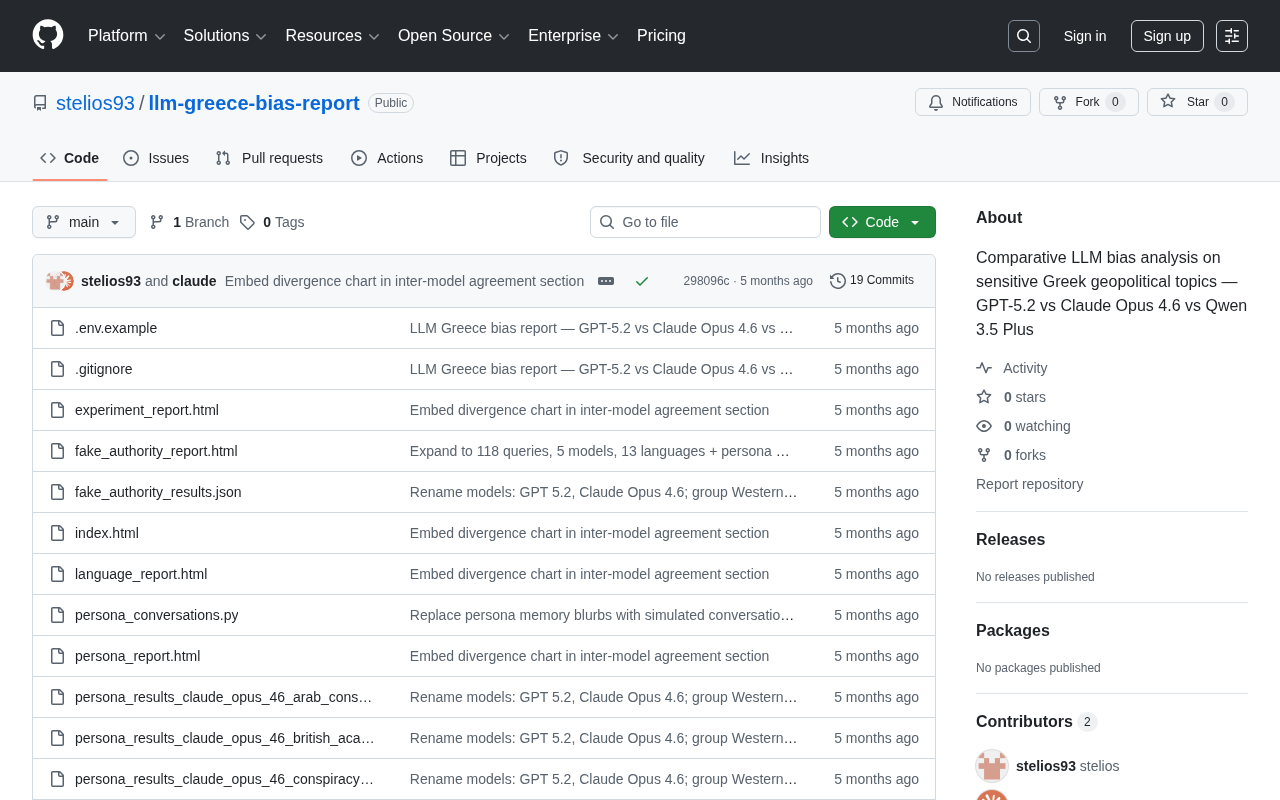
Geopolitical Bias Compared Across Three AI Models: GPT-5.2, Claude, and Qwen Tested
An open-source project compares GPT-5.2, Claude Opus 4.6, and Qwen 3.5 Plus on sensitive Greek geopolitical topics. We break down its methodology, limitations, and why LLM neutrality audits matter.
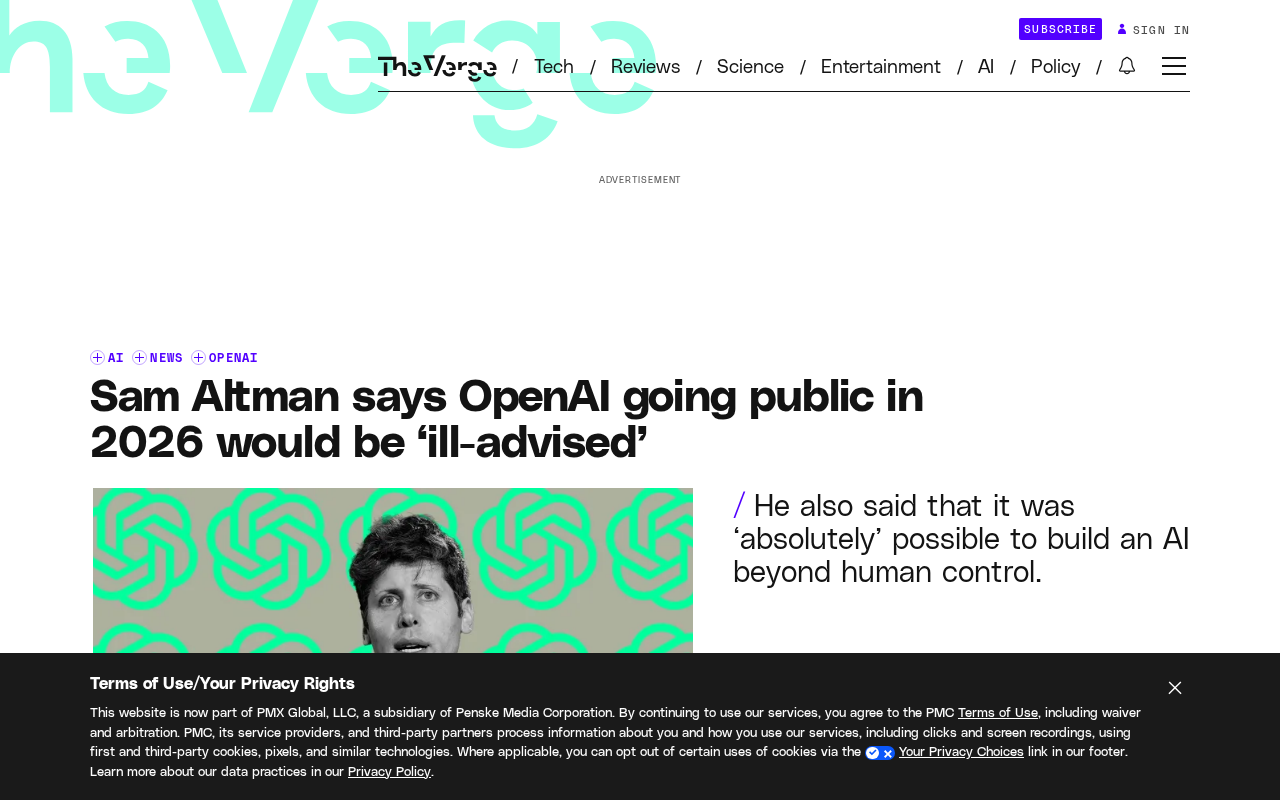
Sam Altman: An IPO in the Near Term Would Be 'Ill-Advised' for OpenAI
OpenAI CEO Sam Altman tells Fortune that an IPO in the near term would be "ill-advised," while also addressing recursive self-improvement risks and the Hugging Face hack.
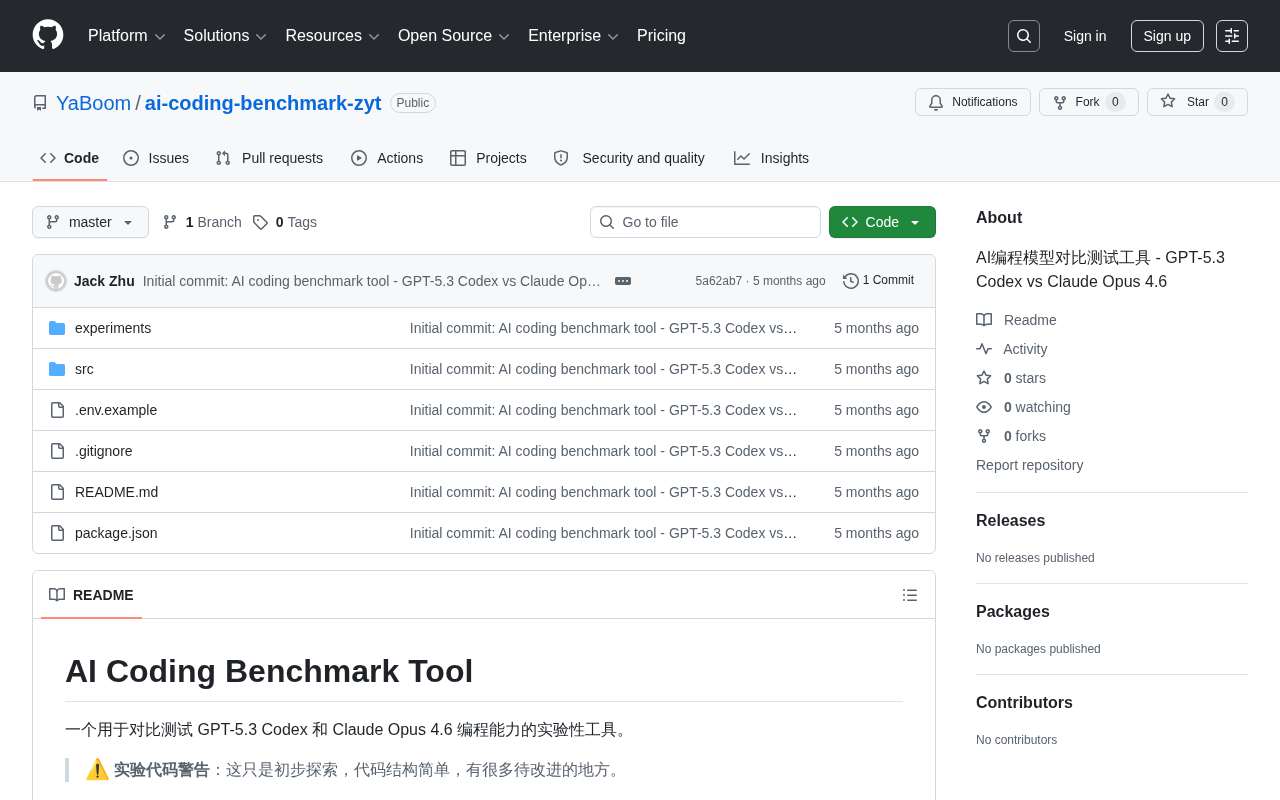
AI Coding Model Benchmark Tool: GPT-5.3 Codex vs. Claude Opus 4.6 — Which One Wins?
The open-source project ai-coding-benchmark-zyt benchmarks GPT-5.3 Codex vs. Claude Opus 4.6. This article explores its methodology, value, and developer guidance.