Conversaflex: AI Role-Play to Boost Spoken Language Skills in Multilingual Teams

Conversaflex uses AI to let employees practice speaking in real work scenarios, with CEFR levels and compliance records.
Conversaflex is an AI oral practice platform for multilingual teams, supporting French, English, and Spanish. Employees converse with AI persona "Madame AI" in real work scenarios like client calls, meetings, and safety briefings, receiving phoneme-level pronunciation feedback. HR gets CEFR levels (A1-C2), progress dashboards, and participation records for internal reporting and compliance audits — especially addressing Quebec's Bill 96 French proficiency requirements. Developed by Séraphin Hochart with pronunciation scoring on Google Cloud Run and data hosted in Canada, it's already used by GSK and Canam. Still early-stage, pronunciation accuracy and system integration need validation; small-scale trials recommended.
From "Afraid to Speak" to "Precision Practice": A New Approach to Enterprise Oral Training
In multinational teams, employees' spoken foreign language skills directly affect client communication, meeting efficiency, and even workplace safety. Traditional training often relies on human tutors — costly, hard to schedule, and difficult to cover every employee who needs practice. A new product on Product Hunt, Conversaflex, aims to change this with AI: letting employees practice conversations in real work scenarios with "Madame AI" and giving feedback on every single pronunciation.
Conversaflex's positioning is clear — an AI oral practice platform for multilingual teams. It currently supports French, English, and Spanish, and employees can simulate real work scenarios such as client calls, meetings, and safety briefings. Shortly after launch, the product received 64 upvotes and 3 comments, ranking 16th on Product Hunt for the day, with category tags including Education, Language, Artificial Intelligence, and Google Cloud Run.
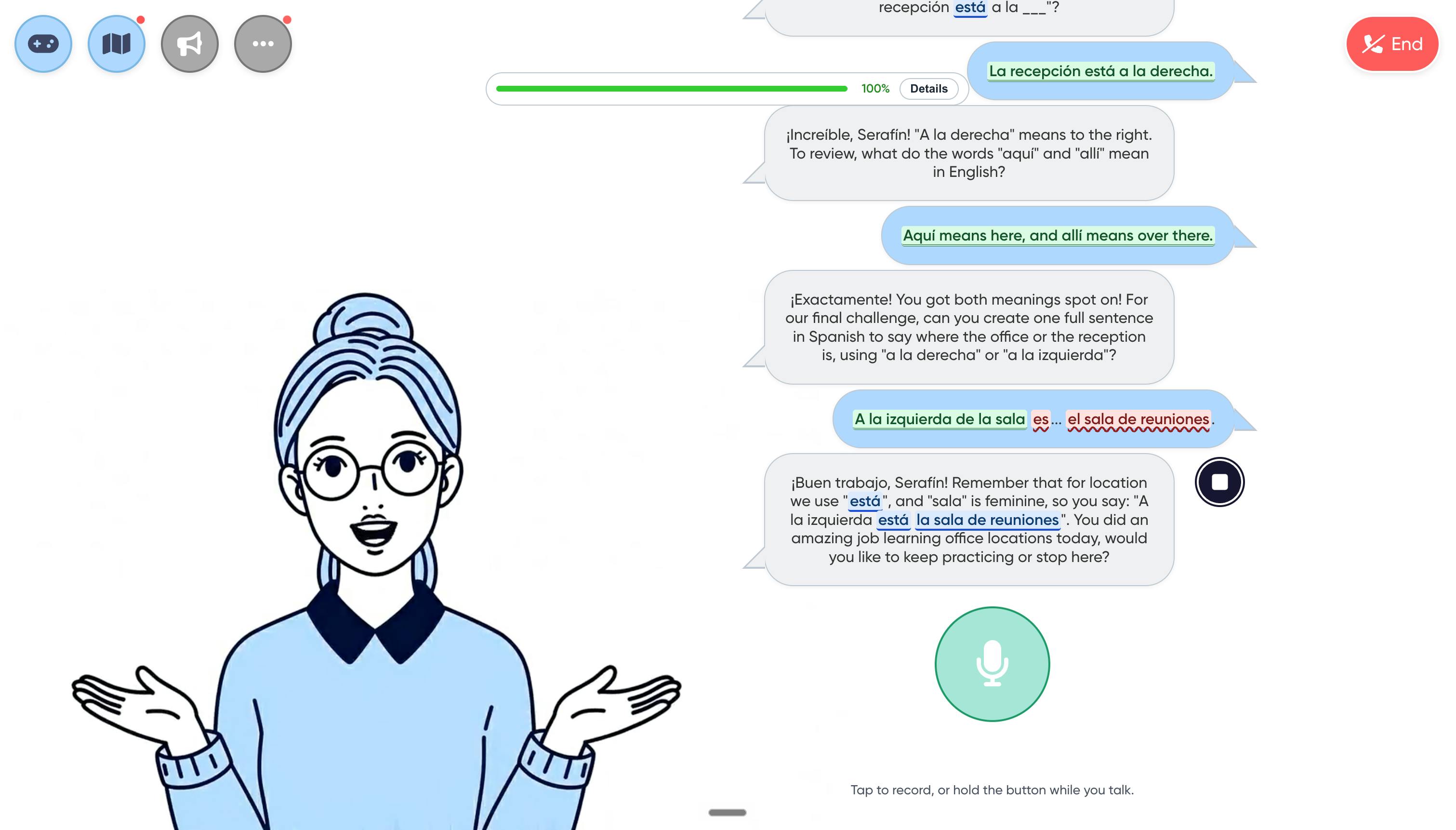
The project was developed by Séraphin Hochart, and the official website lists clients including GSK and Canam. From this information, it can be inferred that Conversaflex is not a general-purpose language learning tool for individual hobbyists, but rather targets enterprise-level training scenarios — especially industries that require compliance records and effectiveness tracking.
Scenario-Based Practice: Getting Employees to Speak in "Real Work"
Unlike consumer language apps such as Duolingo, Conversaflex's core design revolves around work scenarios. Employees don't need to learn generic expressions like "ordering coffee" or "asking for directions"; instead, they directly practice content highly relevant to their roles — client calls, team meetings, safety briefings, and so on. This design approach lowers the difficulty of learning transfer — practice it, then use it.
The AI persona "Madame AI" handles conversations with employees and provides feedback on "every single pronunciation" throughout the process. Although the product hasn't disclosed specific technical details of its pronunciation scoring, the description "pronunciation scoring on Google Cloud Run" suggests that its pronunciation assessment service is deployed on Google Cloud Run, possibly combining speech recognition with scoring models. For a language like French — with complex pronunciation rules and significant accent variation — phoneme-level feedback is particularly valuable.
One detail worth noting: the product explicitly lists Quebec's Bill 96 as one of its compliance scenarios. This bill imposes strict requirements on French usage for businesses in Quebec, and companies need to be able to demonstrate employees' language proficiency. Conversaflex's participation records and progress dashboard directly address this need.
Google Cloud Run is a fully managed serverless container platform provided by Google Cloud. Developers simply package their application into a container image, and Cloud Run automatically handles underlying infrastructure scaling — from scaling to zero instances when there's no traffic, to automatically adding instances under high concurrency, with billing based on actual compute resources used. For a service like Conversaflex that needs to handle speech recognition and pronunciation scoring but may see traffic fluctuate significantly based on enterprise usage patterns, Cloud Run can control costs while ensuring response speed and simplifying operations. Its serverless nature also means teams don't need to pre-provision servers or manage clusters, allowing them to focus more on iterating pronunciation scoring models and developing business logic.
Quebec's Bill 96 is a French language protection bill passed by Quebec in 2022, representing a major revision of the Charter of the French Language. The bill requires businesses in the province to ensure the predominance of French in commercial signage, customer service, employment contracts, internal communications, and other areas, and grants employees the right to demand communication in French. For businesses subject to this bill, demonstrating that employees have adequate French oral proficiency becomes part of compliance work. This means companies not only need to provide French training but also need to retain auditable training records and language proficiency assessment results. Conversaflex combines practice participation records with CEFR levels precisely to address this dual need of "training + evidence."
HR Perspective: CEFR Levels and Progress Dashboard
The other half of Conversaflex's value is on the management side. HR can access employees' CEFR levels (A1 to C2), progress dashboards, and participation records for internal reporting and compliance audits. CEFR is the Common European Framework of Reference for Languages, widely used to measure language proficiency — A1 is beginner, C2 is mastery. Mapping oral practice results to CEFR levels means companies can use a standardized framework to evaluate training effectiveness.
This design solves a common pain point in enterprise training: training investment is hard to quantify. HR can see not only who participated in practice but also the trajectory of language proficiency changes, and generate records for reporting. For companies operating in Canada — especially Quebec businesses subject to Bill 96 — this kind of data has direct compliance value.
Product data is hosted in Canada, which is a plus for Canadian companies that prioritize data sovereignty and privacy compliance. Combined with the Google Cloud Run deployment approach, the overall architecture also has certain advantages in cost and elasticity.
CEFR oral proficiency levels are commonly used by enterprises to set training goals and evaluate training effectiveness. A1 and A2 are basic users who can handle simple everyday communication; B1 and B2 are independent users who can handle most conversations and discussions in work scenarios; C1 and C2 are proficient users who can handle complex professional topics fluently and accurately. Companies typically set target levels based on role requirements — for example, customer service positions might require B2, while management roles that need to participate in multinational meetings might require C1. The challenge in mapping AI practice results to CEFR levels lies in the fact that oral scoring needs to account for multiple dimensions including fluency, vocabulary diversity, grammatical accuracy, and pronunciation comprehensibility — single-dimension scoring cannot fully reflect actual communication ability.
The AI Trend in Enterprise Oral Training
Conversaflex's emergence reflects a larger trend: AI is penetrating from general language learning into vertical enterprise training scenarios. Use cases at companies like GSK and Canam demonstrate that large organizations are willing to try AI-driven oral practice tools to supplement or replace some traditional training.
However, the product's currently public information is still limited. Three comments and 64 upvotes indicate it's still in an early stage, and key questions — such as pronunciation scoring accuracy, multi-accent adaptability, and integration capability with existing LMS systems — remain to be validated by more users. For companies considering adoption, it's advisable to first trial it with a small team, focusing on evaluating the consistency between AI feedback and human assessment, as well as actual employee engagement.
From an industry perspective, oral training for multilingual teams is a rigid demand, especially in fields like multinational manufacturing, pharmaceuticals, and customer service. Conversaflex uses compliance records and CEFR levels as its differentiation entry point, with a clear direction. Whether it can accumulate enough reputation and effectiveness data among early customers will determine whether it can grow from a niche tool on Product Hunt into a scalable enterprise product.
One-line Summary
Conversaflex uses AI to let employees practice speaking in real work scenarios, with CEFR levels and compliance records.
Paragraph Summary
Conversaflex is an AI oral practice platform for multilingual teams, supporting French, English, and Spanish. Employees converse with an AI persona called "Madame AI" in real work scenarios such as client calls, meetings, and safety briefings, receiving phoneme-level pronunciation feedback. HR can access CEFR levels (A1-C2), progress dashboards, and participation records for internal reporting and compliance audits — particularly addressing Quebec's Bill 96 requirements for French proficiency evidence. Developed by Séraphin Hochart, with pronunciation scoring deployed on Google Cloud Run and data hosted in Canada, it has been used by companies including GSK and Canam. The product is still in its early stages, and pronunciation scoring accuracy and system integration capabilities remain to be validated; companies are advised to start with small-scale trials.
Related articles

distribution.dev: One Campaign, Multiple Developer Sites
distribution.dev is a developer ad network jointly launched by daily.dev and DEV, enabling one campaign across multiple developer sites with ads adapted to each platform's reading environment.
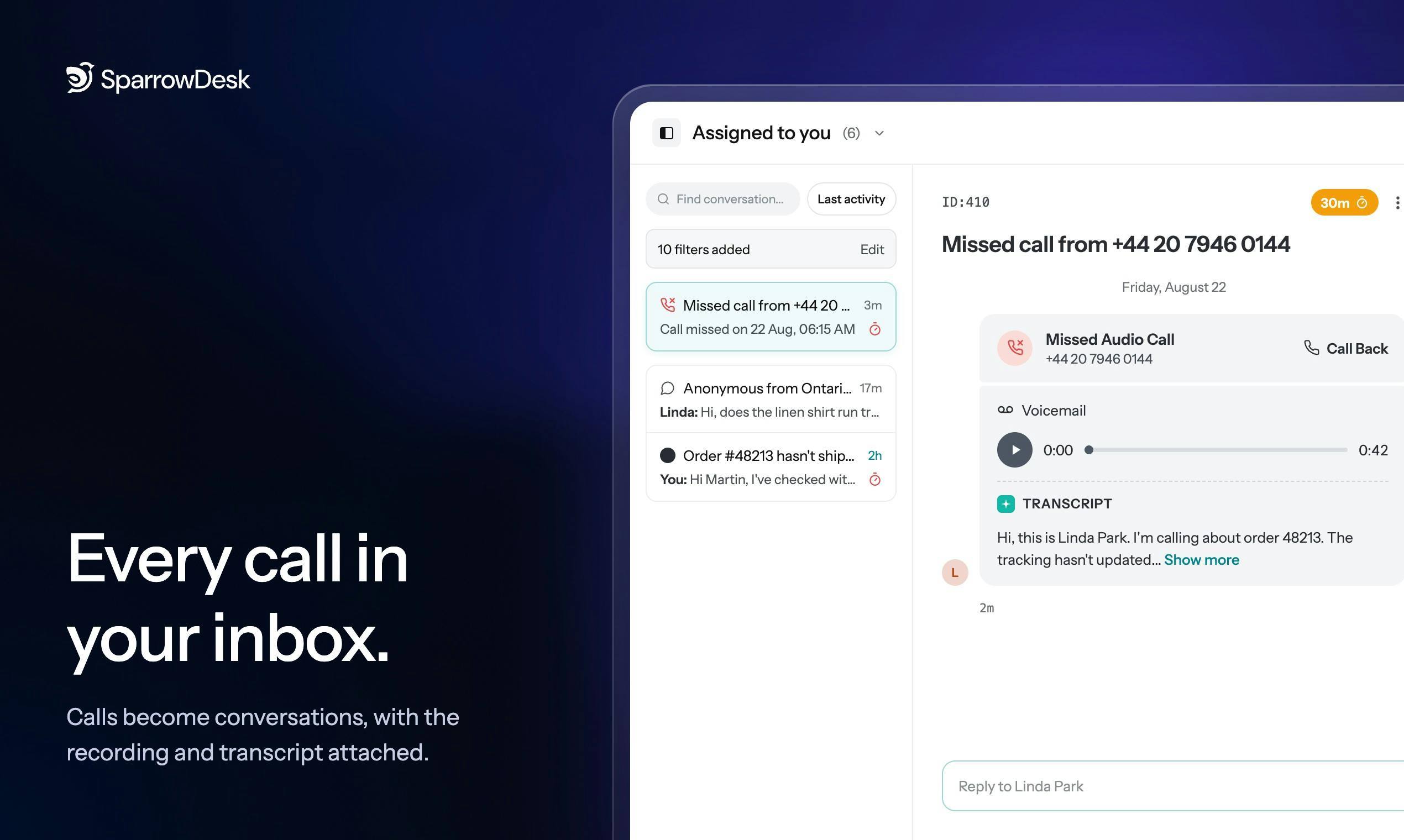
SparrowDesk Puts Phone Support Into an Omnichannel Inbox With Usage-Based Pricing
SparrowDesk launches Phone Calls on Product Hunt, bringing phone support into the same inbox as email, chat, and WhatsApp, with numbers in 51 countries, visual IVR, AI agent routing, call recording and transcription into tickets, and a prepaid Voice Wallet with usage-based pricing that avoids per-seat fees.
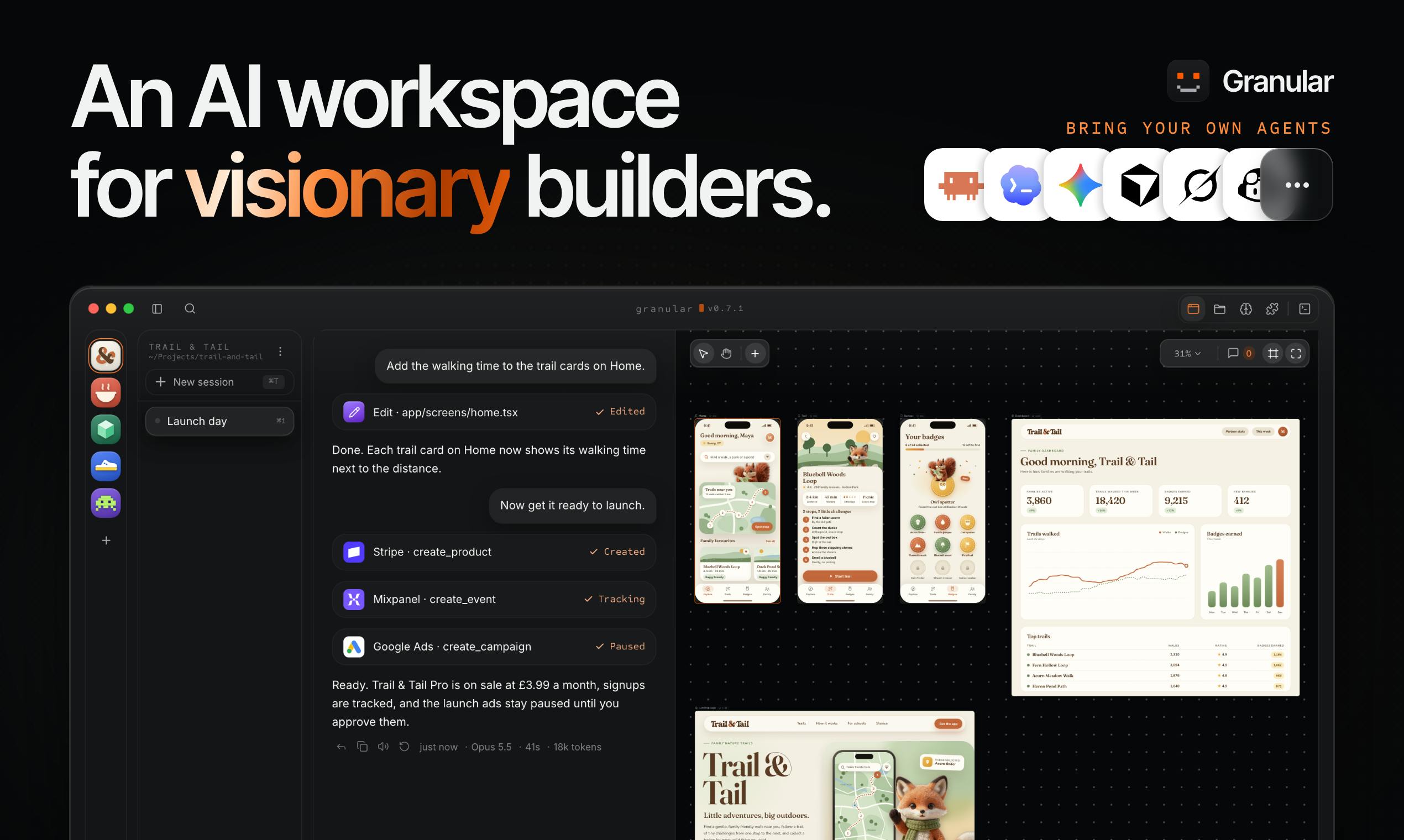
Granular.Build: Putting AI Agents Inside a Visual Workspace
Granular.Build is a visual AI workspace on Product Hunt where boss agents orchestrate specialized agents in parallel, with centralized models, files, and context.