Conversation as Design: T3 Code Makes UI Themes Fully Customizable
T3 Code demonstrates real-time generation and switching of complete interface themes via natural language conversation, pointing toward intent-driven developer tool personalization.
T3 Code showcases a new interaction model for generating and modifying code editor themes through natural language conversation. Users only need to enter instructions like "design a Hello Kitty theme," and the AI rewrites colors, fonts, and layout in real time and saves the result as a reusable theme. The demo's One Dark Neovim theme combines classic colors, JetBrains Mono Nerd Font, and pixel style, while the bright Frutiger Aero theme adds CSS bubble animations. Changes take effect immediately during use and can be fine-tuned with prompts. But the demo also exposed prompt ambiguity risks: generating a theme from scratch once mistakenly changed another app's interface. Built on HTML and CSS, it is expressive, but stability and maintainability remain to be tested.
When a Code Editor Learns to "Chat-Reskin"
Theme customization in traditional developer tools usually means digging through config files, tweaking CSS variables, or even editing source code. T3 Code offers a completely different approach: you simply describe the look you want in natural language, and the AI rewrites the interface in real time. According to a demo on a YouTube channel, users can start a new conversation and type an instruction like "design a Hello Kitty theme," and the tool generates matching colors, fonts, and layout, then saves the result as a reusable theme.
The essence of this interaction is turning UI design into a conversational code-generation process. The "One Dark Neovim" theme shown in the demo not only replicates the classic One Dark color scheme but also specifies the JetBrains Mono Nerd Font and adds pixel-art visual effects, giving it an overall feel close to retro interface languages like Omarchy or Mistral. This shows that a theme is not just a stack of colors—it can be a complete package of fonts, motion effects, and overall visual style.
Real-Time Iteration: An Interface You Can Change While Using It
Unlike traditional themes that require a restart or refresh, T3 Code's changes take effect immediately during use. After the presenter started a conversation and typed "hello," the entire user interface instantly took on the selected theme's appearance; they then continued using prompts to point out "I don't like the color here" or "this position is wrong," and the interface adjusted accordingly. This feedback loop compresses design iteration down to seconds.
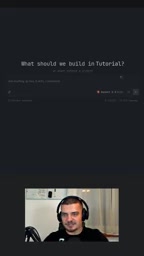
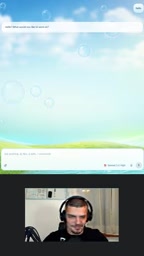
More noteworthy is its support for aggressive UI changes. In the demo, switching to a bright Frutiger Aero-style theme not only changed the color palette but also added bubble animations in the background. According to the presenter, these effects are fundamentally HTML plus CSS animations, meaning the theme system can reach relatively deep into interface rendering rather than stopping at surface-level skin replacement.
The Boundaries and Bloopers of Generating Themes from Scratch
Beyond flexibility, the demo also exposed typical problems of natural-language-driven UI. The presenter tried to generate a "completely pink, exaggerated Hello Kitty theme" from scratch, but the first prompt was not precise enough, and the AI changed the theme of a nearby to-do app instead of T3 Code's own interface. After correcting the instruction, the whole process took about 17 seconds and ultimately produced a rather exaggerated pink interface.
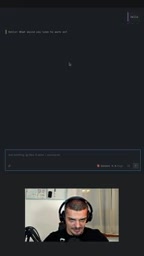
This detail is telling: prompt-driven customization has a very high ceiling, but its floor depends on how precisely you express yourself. For complex or cross-application interfaces, users still need to clearly specify the target. Fortunately, such deviations can be quickly corrected through continued conversation, at a much lower interaction cost than manually editing code.
The Visual Language of Frutiger Aero and Omarchy/Mistral
Frutiger Aero is a design aesthetic popular between 2004 and 2013, named after type designer Adrian Frutiger and the Windows Aero interface. Its typical features include glossy glass textures, gradient blue tones, bubbles and water droplets, skeuomorphic icons, and natural imagery (such as skies, grass, and water scenes). The bubble animation that appears in the bright theme's background in the demo is a signature symbol of this style. In contrast, the retro interface languages referred to by Omarchy and Mistral lean more toward terminal aesthetics and pixelated expression—Omarchy is a desktop configuration project built around Arch Linux and Hyprland that emphasizes minimalism, keyboard-driven workflows, and terminal-style consistency; Mistral in this context more likely refers to a visual orientation with a nostalgic pixel/low-poly texture rather than a well-known design system. Understanding the difference between these two styles helps assess the expressive boundaries of T3 Code's theme system in the two directions of "retro terminal" and "skeuomorphic glass."
The Technical Foundation of Customizability
Based on the information revealed in the demo, T3 Code's theme system is built on a web technology stack. HTML and CSS animations handle the visual presentation, and themes are saved and switched in the form of configuration files or something similar. This brings two direct benefits: first, expressiveness is not limited to a few preset color schemes—in theory, any visual effect expressible in CSS can be described and generated; second, themes can be reused across sessions, forming personalized interface assets.
For developers, this design partially transforms "what the interface looks like" from an engineering problem into an expression problem. You don't need to remember specific selectors or variable names—you just need to clearly describe the feeling you want. Of course, this also places higher demands on the AI's ability to understand design intent, and the mistaken-edit incident in the demo is a microcosm of this challenge.
Nerd Font and Pixel Art Style
The JetBrains Mono Nerd Font mentioned in the demo is a branch of the Nerd Fonts project. Nerd Fonts builds on regular programming fonts by patching in a large number of icon glyphs (such as Font Awesome, Devicons, Octicons, etc.), so terminals and editors can directly display visual elements like file-type icons and Git branch symbols without relying on extra icon fonts. JetBrains Mono itself is a monospaced font optimized by JetBrains for code reading, emphasizing character distinction and comfort during long reading sessions. Combining the two means the theme not only unifies typography but also keeps icons in the interface consistent with the code style—exactly the embodiment of "a theme as a complete visual solution" rather than mere color matching. Pixel art style is usually implemented through CSS's image-rendering: pixelated, low-resolution bitmaps, or box-shadow techniques, and together with Nerd Font's icon language it forms the texture foundation of retro interfaces.
Implications for Developer Tool Interaction
This T3 Code demo points to a larger trend: personalization of developer tools is moving from "configuration-driven" to "intent-driven." When themes, layouts, and even motion effects can all be generated through conversation, the boundary between tools and users becomes blurrier, and everyone can have a unique working environment.
What needs to be viewed objectively is that what has been shown so far is still a demo of isolated capabilities. The stability of theme generation, the predictability of complex interface changes, and the maintainability of generated results all still need more practical testing. But the direction is clear—letting users express preferences in the most natural way and leaving implementation details to the model may well be an important point of differentiation in the experience layer of next-generation developer tools.
One-line Summary
T3 Code demonstrates real-time generation and switching of complete interface themes through natural language conversation, pointing toward intent-driven personalization of developer tools.
Paragraph Summary
T3 Code showcases a new interaction model for generating and modifying code editor themes through natural language conversation. Users only need to enter instructions like "design a Hello Kitty theme," and the AI rewrites the interface's colors, fonts, and layout in real time, then saves the result as a reusable theme. The One Dark Neovim theme in the demo combines classic colors, JetBrains Mono Nerd Font, and pixel style, while the bright Frutiger Aero theme adds CSS bubble animations. Changes take effect immediately during use and can be further fine-tuned with prompts. But the demo also exposed the risk of prompt ambiguity: when generating a theme from scratch, it once mistakenly changed the interface of another app. Built on HTML and CSS, it is highly expressive, but stability and maintainability still need to be tested.
Related articles

AI and Mathematicians Collaborate to Prove the Riemann Hypothesis? The Controversy Behind 1.7 Billion Lines of Lean Code
AI and mathematician Levent Alpoge used 17 million lines of Lean code to prove the Riemann Hypothesis? An AnyGeometry definition sparked controversy, yet an independent audit says the logic holds. This article explains the Riemann Hypothesis, the Yes machine controversy, and the real impact on RSA encryption.

PeppermintOS Launches Void Edition: A Lightweight Experience Without SystemD or XLibre
PeppermintOS launches PepVoid based on Void Linux, featuring XFCE and XLibre with a non-SystemD architecture. This article covers installation, software center experience, preinstalled software, and technical verification for users interested in a lightweight non-SystemD distribution.

Clojure Native Apps: Letting AI Reshape Software at Runtime
Explore how Clojure enables native apps to be reprogrammed at runtime by developers or AI, drawing on Emacs' extensibility, and analyzing REPL-driven development, AI collaboration, and challenges.