Coral: An Open-Source Gateway That Lets Agents Write Their Own Tools
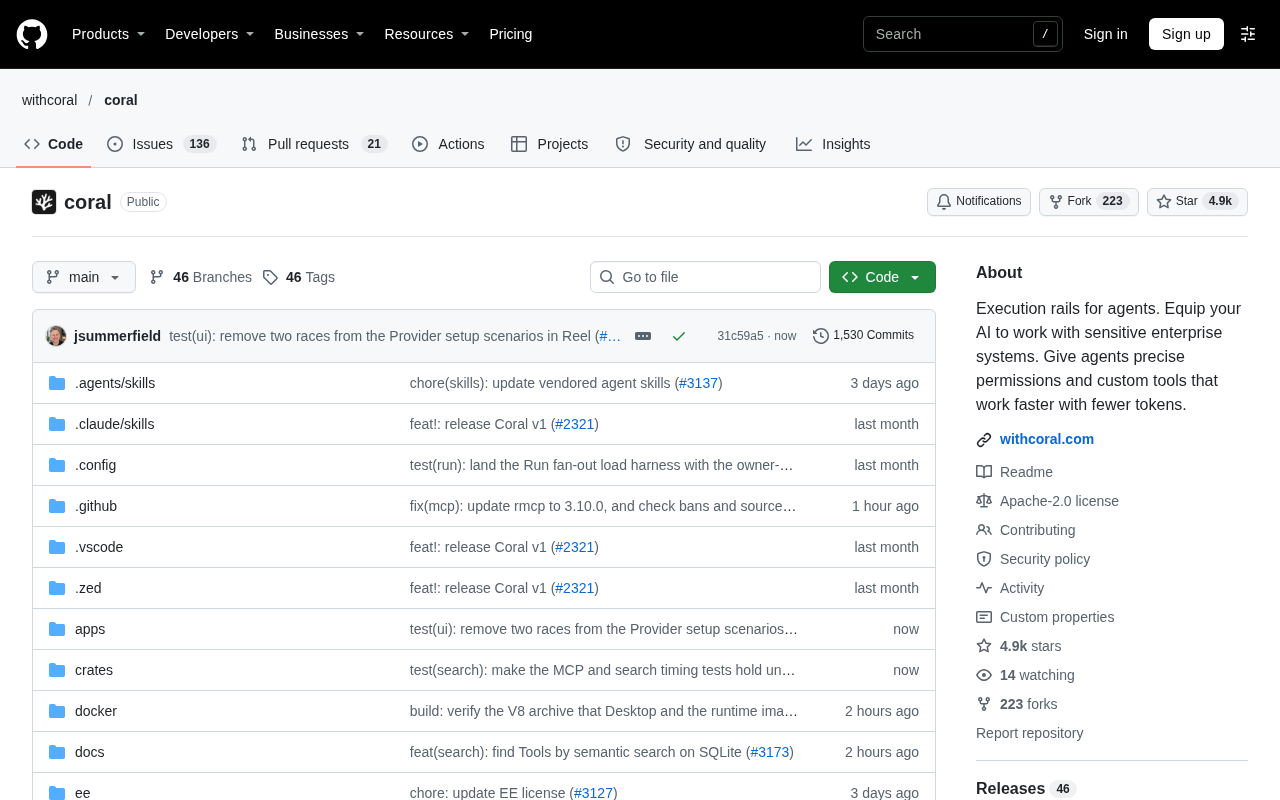
Coral proposes an open-source gateway approach that lets agents write tools at runtime with unified orchestration.
The article introduces Coral, an open-source project on Hacker News that lets agents generate tools on demand at runtime instead of relying on developers to pre-register them. Coral positions itself as a capability orchestration layer handling tool description specs, unified invocation, and in-session reuse, aiming to address long-tail task coverage gaps. The article notes the double-edged nature: dynamic tools raise correctness, security, and auditability risks, making sandboxing and quality validation critical, while maintainability and debugging become harder. With limited disclosed details, the project remains early-stage.
When Agents Learn to Build Their Own Tools
In most agent frameworks, tools are predefined: developers write functions, register them in a tool list, and the model calls them as needed. Coral, newly unveiled on Hacker News, proposes a different approach—it positions itself as an "open-source gateway where agents can write their own tools." The project received 24 upvotes and 7 comments on Show HN. The discussion isn't exactly explosive, but the question it raises deserves serious attention.
Coral's core proposition isn't complicated: rather than having developers exhaustively enumerate every capability an agent might need, let the agent generate tools on demand during runtime, with the gateway centrally managing these dynamically produced tools. This effectively shifts part of the responsibility for "tool supply" from human developers to the model itself.
The Gateway Role: More Than Just Request Forwarding
To understand Coral's design intent, it's important to distinguish it from a conventional API gateway. Traditional gateways handle infrastructure concerns like routing, authentication, and rate limiting. The gateway Coral defines operates as a capability orchestration layer between the agent and the outside world.
When an agent determines that a task lacks an existing tool, it can generate a new tool definition through Coral and use it immediately. The gateway handles tool description specifications, a unified invocation entry point, and the reusability of these dynamic tools within a session. This design attempts to solve a real pain point: preset tool sets often fail to cover long-tail tasks, and going back to modify code every time a tool is missing incurs high iteration costs.
It's worth noting that the original information discloses limited technical implementation details about Coral—including the specific format of tool generation, sandbox isolation mechanisms, and how generated tools are quality-validated—all of which remain unclear. These are precisely the critical elements that determine whether the approach can be put into practice.
Tool Calling / Function Calling is a foundational concept for understanding Coral's premise. It refers to a large language model outputting structured invocation requests (typically JSON) during inference, which an external runtime executes and returns results to the model, forming a "reasoning—invocation—observation" loop. Mainstream implementations include OpenAI's function calling, Anthropic's tool use, and standardized protocols like MCP (Model Context Protocol). The traditional approach requires tool schemas to be statically registered before a session begins, and the model can only choose from the existing list. Coral's differentiating factor lies in breaking this static constraint: tool schemas are produced by the model at runtime, then registered and orchestrated by the gateway. This also means that tool descriptions themselves become objects that need to be generated, validated, and version-managed—not just invocation parameters.
Sandboxing is an essential mechanism for dynamic code execution scenarios. Common approaches include process-level isolation, containerized execution, WebAssembly runtimes, and restricted environments based on system call filtering such as seccomp. The core goal is to confine model-generated code to minimal privileges: limiting accessible files, network, and system resources, and setting execution timeouts and memory caps. For a gateway like Coral that allows agents to write their own tools, sandboxing is not only a security boundary but also a failure isolation unit—a single defective tool should not affect the gateway itself or other sessions. The article notes that the original information does not disclose the isolation mechanism, which is precisely one of the key indicators for evaluating its usability.
The Double-Edged Sword of Self-Written Tools
Letting agents write tools has obvious appeal: greater adaptability, and no need to wait for human expansion of the tool library when facing unfamiliar tasks. But from an engineering perspective, this also introduces a new risk surface.
Dynamically generated tools mean dynamic code execution paths, whose correctness, security, and auditability are difficult to safeguard using the same measures as static tool sets. If a tool written on the fly by a model has logic flaws or unauthorized access, whether the gateway can intercept it and how—these are questions such an approach must answer. The comment section discussion is limited in scale, insufficient to judge the community's general view on this trade-off.
Another implicit issue is maintainability. When a preset tool fails, you can locate the exact code position; but for tools generated on the spot by an agent, behavior depends on the context and model state at that moment, making reproduction and debugging significantly harder. If Coral is to move toward production environments, this engineering support may be more critical than the "self-written tools" selling point itself.
Auditability of code execution requires additional design in dynamic generation scenarios. Auditing static tool sets relies on code review and version control, where every behavioral change can be traced to a specific commit. Tools generated on the fly by a model have no corresponding commit records, and can only be reconstructed through runtime logs, the prompt context at generation time, and the model version number. Feasible engineering practices include: assigning a unique identifier to each generated tool and retaining its source code and generation snapshot, recording call chains and inputs/outputs, and enforcing permission declarations at the gateway layer (e.g., tools must explicitly declare the required capability scope, which the gateway verifies before granting access). Without these mechanisms, once unauthorized access or data leakage occurs, post-hoc diagnosis becomes extremely difficult. This is also a necessary step for "self-written tools" to move from demo to production.
Open-Source Strategy and Ecological Niche
Choosing open source is a reasonable strategy for Coral. The agent tool layer currently has no de facto standard—each framework has its own conventions for tool registration and invocation—and open source helps attract early adopters to participate in defining interface specifications. For teams wanting to experiment with dynamic tool generation in their own systems, an open-source gateway also lowers the barrier to entry.
From an ecological niche perspective, Coral sits in the middle layer between agent frameworks and external services. This position could become an integrated component, or it could be absorbed by the built-in capabilities of mainstream frameworks. Its ultimate differentiation depends on how far it can go in quality control of tool generation and whether the gateway layer can provide sufficiently compelling governance capabilities.
Directions Worth Watching
The publicly available information about Coral is still fairly limited, and the discussion scale of 24 upvotes and 7 comments indicates it remains at an early stage. But the question it raises is valuable: when an agent's capability boundary needs dynamic expansion, who should be responsible for tool production and management, and in what manner?
For developers focused on agent engineering, this project is worth following in two directions—first, how the validation and isolation mechanisms for dynamic tools are designed; second, whether the gateway layer can distill reusable tool description standards. If these two points are solidly executed, the "self-written tool gateway" idea that Coral represents will have a chance to move from demo to practical use.
One-line Summary
Coral proposes an open-source gateway approach that lets agents write tools at runtime with unified orchestration and management.
Paragraph Summary
The article introduces Coral, an open-source project unveiled on Hacker News, whose core proposition is to let agents generate tools on demand during runtime rather than relying on developers to exhaustively pre-register them. Coral positions itself as a capability orchestration layer between agents and the outside world, handling tool description specifications, a unified invocation entry point, and in-session reuse of dynamic tools, attempting to solve the pain point that preset tool sets struggle to cover long-tail tasks. The article also points out the double-edged nature of this approach: dynamically generated tools bring risks to correctness, security, and auditability, making sandbox isolation and quality validation key to implementation, while maintainability and debugging reproducibility also become harder. Due to limited disclosure of original information, tool generation formats and isolation mechanisms remain unclear, and the project is still at an early stage. The open-source strategy helps compete for interface influence, but also faces competition from being absorbed by the built-in capabilities of mainstream frameworks.
Related articles
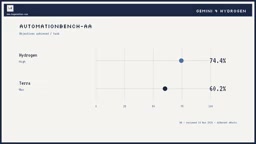
Gemini 4 Hydrogen In-Depth Review: Real Value Beyond Cost-Effectiveness
Based on Artificial Analysis selection data and hands-on feedback, this review unpacks the Gemini 4 Hydrogen value paradox: high scores don't equal high value, performance splits across automation workflows and coding tasks, pricing and Google subscription bundles are separate ledgers, and SynthID output labeling could be a dealbreaker.
Gemini 4 Hydrogen Five Extreme Tests: 96.7% Accuracy and One-Prompt Website Building
A YouTube creator runs five extreme tests on Gemini 4 Hydrogen: single-prompt game generation, 3D solar system simulation, 30-minute video timestamp localization, converting a 287-page report into an interactive dashboard, and 96.7% accuracy in hallucination resistance.

Gemini 4 Hydrogen Released: A 2.5x Faster Everyday AI Model
Google releases Gemini 4 Hydrogen, claiming 2.5x the speed of Gemini 3.8 Flash, with four-tier thinking control, a million-token context, and Orchestrator multi-model collaboration. API pricing is $1.50 per million input tokens.