Gemini 4 Hydrogen Released: A 2.5x Faster Everyday AI Model

Gemini 4 Hydrogen takes on everyday tasks with 2.5x speed, four-tier thinking control, and Orchestrator collaboration
Gemini 4 Hydrogen is the fast, everyday-productivity model in the Gemini 4 family, sharing roles with Carbon and Argon for deep reasoning. Google claims it is about 2.5x faster than Gemini 3.8 Flash at the default high thinking level, and it also achieves a 2.5x speedup on the Terminal Bench 4.1 coding benchmark. It offers four thinking levels — low, medium, high, and extra-high — letting users trade off speed against reasoning depth by task complexity, and supports a context window of up to one million tokens for large codebases and long documents. The accompanying Orchestrator has Carbon plan while Hydrogen executes; Google's own evaluation shows a success rate close to Carbon alone, with roughly 24% less quota consumption and about 19% faster completion. API pricing is $1.50 per million input tokens and $7.50 per million output tokens.
Google's Gemini 4 family has welcomed a new member — Gemini 4 Hydrogen. Unlike the flagship models built for deep reasoning, Hydrogen has just one core goal: making everyday tasks faster and cheaper. Google claims it is roughly 2.5x faster than Gemini 3.8 Flash at the default high thinking level, and it brings four-tier thinking control, a million-token context window, and an Orchestrator mechanism that lets multiple models work together.
One family, three distinct roles
The Gemini 4 family currently includes three models with different positioning: Carbon is the frontier model for complex reasoning and planning, Argon offers another option for high-intensity work, and Hydrogen is positioned as a fast, efficient everyday productivity tool. Google's intent is clear — Hydrogen is not meant to replace Carbon, but to give users a lighter option for scenarios like writing emails, checking spreadsheets, fixing code bugs, and preparing reports, where "fast matters more than deep."
This division of labor is a bit like teamwork: Carbon sets the plan, Hydrogen executes quickly. Users shouldn't need to bring in a crane just to hang a picture — that's the thinking behind the four-tier thinking level design.
Dual gains in speed and coding capability
Google's published performance data focuses on two dimensions. The first is overall task speed: at the default high thinking level, Hydrogen completes tasks about 2.5x faster than Gemini 3.8 Flash. The second is coding benchmark performance: on Terminal Bench 4.1, Hydrogen also reaches 2.5x the speed of Gemini 3.8 Flash. This benchmark tests a model's ability to complete tasks using a computer terminal, including manipulating files, running commands, and solving software problems.
These numbers show that Hydrogen isn't just an "accelerated version of the old model" — it also makes meaningful progress in completing complex tasks. Actual performance still depends on the specific task and the tools connected to it, however, and benchmark scores don't directly translate to the experience in a production environment.
Terminal Bench is a benchmark suite that evaluates how well AI models operate in real terminal environments. Tasks cover file system operations, command-line tool invocation, package installation, and troubleshooting. It requires models to advance tasks step by step through multiple rounds of command interaction rather than producing an answer in one shot, so it tests both reasoning and planning ability and the ability to correct course in real time based on command output. Benchmark results are typically presented across two dimensions: task success rate and end-to-end latency. The 2.5x speed mentioned in this article refers to the comparison of completion times on the same task set, not raw token generation throughput.
Four-tier thinking control: allocating compute on demand
Hydrogen offers four thinking levels — low, medium, high, and extra-high — letting users weigh speed against reasoning depth themselves. Writing a short email or summarizing a document usually only needs low or medium; analyzing large datasets, debugging complex software, or planning multi-step projects may warrant switching to high or extra-high.
The value of this design is avoiding the waste of "maxing out compute every time." Most everyday tasks don't require the deepest reasoning chain, and matching the thinking level to task complexity controls both latency and cost.
Million-token context: convenience and limits for large projects
Hydrogen supports a context window of up to one million tokens. For developers, this means more code files can be placed into the same task at once without repeatedly splitting them up; for enterprise users, it means reviewing long reports, comparing multiple documents, and consolidating information from multiple sources in one go.

It's important to keep a clear head: a large context window doesn't equal strong comprehension. The quality of the information itself, and the model's ability to maintain attention across long contexts, remain the key factors determining output quality.
A token is the basic unit models use to process text. In English, roughly 1 token corresponds to 0.75 words, while in Chinese it's typically about 1 to 2 characters; code tends to consume more tokens than natural language because of symbols and indentation. One million tokens is roughly equivalent to thousands of pages of text or as many as several hundred medium-sized source files. Note that the context window describes the upper limit of what can be "held at once," while a model's ability to retrieve and use information in very long inputs typically varies by position — content in the middle tends to be overlooked, which is why long contexts still need to be paired with precise retrieval and chunking strategies.
Orchestrator: teaming Carbon and Hydrogen
Launching alongside Hydrogen is the Orchestrator feature in Google Anti-Gravity. It lets different models divide the work: Carbon analyzes requirements and lays out a detailed plan, Hydrogen writes code, edits files, and runs tests; when a hard problem arises, the task can be handed back to Carbon for further reasoning and then returned to Hydrogen for execution once solved.

Google's reported evaluation data shows that the Orchestrator approach achieves a task success rate close to using Carbon alone, while cutting quota consumption by about 24% and increasing task completion speed by about 19%. These numbers come from Google's own evaluations and won't necessarily reproduce on every project, but they point in a direction: splitting work according to each model's strengths is more economical than having the strongest model handle every step.
Orchestrator is an implementation of the model orchestration pattern, in which a scheduling layer dispatches subtasks to models with different capabilities and costs depending on the task stage. Compared with having a single model handle the entire workflow, the value of orchestration lies in restricting high-cost deep reasoning to the stages that truly need it, while the rest of the execution work goes to faster, cheaper models. The key challenges of such approaches are the granularity of task splitting, information fidelity when handing off context, and fallback strategies for failures. The roughly 24% quota savings and 19% speedup seen in evaluations are precisely the result of balancing sound splitting against fallback overhead.
Coding and everyday business scenarios
Software development is a key focus for Hydrogen. It can inspect existing files, locate problems, make targeted edits, and run commands to verify that changes take effect; it can also work on multiple files and searches in parallel, saving time when exploring large codebases. Rapid prototyping is another beneficiary — developers can build an early version to validate an idea before deciding whether to invest in full development. Of course, results still need human review.
Beyond coding, Hydrogen also targets everyday knowledge and business tasks: building websites, preparing reports, analyzing documents, organizing information, and handling multi-step workflows. Marketing teams can use it to organize campaign data and generate performance reports, and business owners can use it to build customer onboarding processes.

Through supported tools and agentic workflows, Hydrogen can participate in tasks that require multiple actions chained together, not just answer questions in a chat window. When financial information, customer data, or important business decisions are involved, human review remains indispensable.
Pricing and availability
Hydrogen's API pricing is $1.50 per million input tokens and $7.50 per million output tokens, making it easy for developers to estimate application costs. It's available through the Gemini app, Google AI Studio, the Gemini API, and Google Anti-Gravity, with Anti-Gravity access available to eligible AI Pro and Ultra subscribers.
Hydrogen's true value will ultimately come down to three things: accuracy, reliability, and everyday usage cost — not the benchmark numbers at launch. Whether it becomes the default model users rely on all day will depend on how it performs in practice.
The Gemini API uses token-based billing, with input and output priced separately; output is usually significantly more expensive than input because generation requires token-by-token autoregressive computation. Based on the prices in this article, a call consuming 1 million input tokens and 100,000 output tokens costs about $1.50 + $0.75 = $2.25. In practice, higher thinking levels generate more intermediate reasoning tokens, which pushes costs up, so the four-tier thinking control doubles as a cost management tool. Google AI Studio is suited to rapid experimentation and prompt debugging, while Anti-Gravity is Google's platform offering developers agentic coding workflows.
One-line Summary
Gemini 4 Hydrogen tackles everyday tasks with 2.5x speed, four-tier thinking control, and Orchestrator collaboration
Related articles
Gemini 4 Hydrogen In-Depth Review: Real Value Beyond Cost-Effectiveness
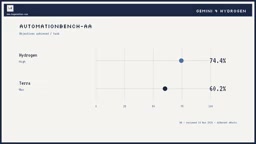
Based on Artificial Analysis selection data and hands-on feedback, this review unpacks the Gemini 4 Hydrogen value paradox: high scores don't equal high value, performance splits across automation workflows and coding tasks, pricing and Google subscription bundles are separate ledgers, and SynthID output labeling could be a dealbreaker.
Gemini 4 Hydrogen Five Extreme Tests: 96.7% Accuracy and One-Prompt Website Building
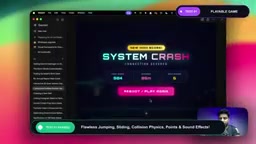
A YouTube creator runs five extreme tests on Gemini 4 Hydrogen: single-prompt game generation, 3D solar system simulation, 30-minute video timestamp localization, converting a 287-page report into an interactive dashboard, and 96.7% accuracy in hallucination resistance.

Gemini 4 Hydrogen Hands-On: Google's Fastest and Cheapest AI Model
Hands-on with Gemini 4 Hydrogen: the fastest, cheapest model in the Gemini 4 family. We break down the Carbon/Argon/Hydrogen split, API pricing traps, free-tier limits, and the cost trade-offs of four thinking levels—with a real bug-debugging demo.