Coze for Beginners: A No-Code Guide to Building AI Agents

Coze is a no-code platform that lets anyone build AI agents on top of large models — no programming needed.
Coze is a no-code AI agent building platform that packages large model capabilities into visual building blocks, enabling users without any programming background to create chatbots, content assistants, and knowledge Q&A tools. This article covers three key questions from a beginner tutorial series: what AI agents are, why Coze is worth learning, and how to set realistic expectations. It highlights that output quality depends heavily on prompt design, knowledge base quality, and the underlying model — and that "expert in 7 days" claims are mostly marketing. For AI beginners, Coze offers a low-barrier entry point, but consistent practice is what truly matters.
What Is Coze?
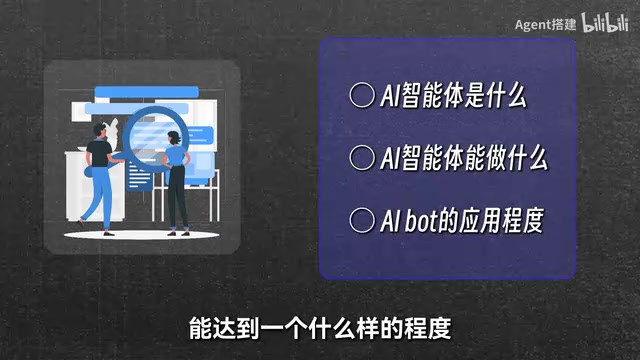
For those just stepping into the AI space, the concept of large language models like ChatGPT is no longer unfamiliar — most people have a general sense that it can chat and generate content. But push the question a little further: what exactly is an AI Agent (AI Bot)? What can it do? How far can it actually go in real-world applications? Many people find themselves in a hazy, uncertain place when it comes to these questions.
Coze is a platform built precisely to answer them. It's an AI agent-building tool designed for users with zero technical background, and its core selling point is simple: no coding required. You don't need to know Python or understand complex API calls — you can assemble the capabilities of a large model into a usable product entirely through a visual interface.

This is a defining trend in the democratization of AI tools today: pushing the barrier of entry for underlying technology as low as possible, so that everyday users can also benefit from the productivity gains large models offer.
An AI Agent is a system built on top of a large model's "reasoning ability" that additionally gives it the capacity to perceive its environment, call external tools, and execute multi-step tasks. Unlike a simple conversational model, an Agent can proactively invoke search engines, databases, code executors, and other external tools — dynamically adjusting its course of action based on intermediate results until the goal is achieved. For example: a standard ChatGPT can only "tell you how to look up a flight," while a properly configured AI Agent can automatically call a flight search API, compare prices, generate an itinerary, and send an email — all without any human intervention. Coze's core value lies in providing visual "building blocks" that let users assemble large models, plugins (tool calls), knowledge bases, and workflows into an agent capable of this kind of autonomous execution — without writing a single line of backend code.
Why Learn Coze?
Understanding AI large models is one thing; actually turning them into applications that solve real problems is another. A large model on its own is more like a powerful "brain" — it needs to be connected to specific scenarios and given a defined task workflow before it can deliver real value. AI agents are the vehicle through which that brain becomes actionable.

The value of learning Coze is that it offers the shortest path from "knowing about AI" to "being able to use AI." You can use it to build customer service bots, content creation assistants, knowledge Q&A tools, and a variety of other agents — all of which have direct applications in professional and entrepreneurial contexts. For anyone looking to enter the AI industry or layer AI skills onto an existing role, this is a worthwhile entry point.
From Beginner to Capable: What This Course Offers
This tutorial series is positioned as a hands-on teaching program. The first lesson isn't about rushing into button-clicking — it's about clearing up confusion first: explaining what Coze is, why it's worth learning, and what skills you'll walk away with.

This approach of starting with conceptual understanding is well-reasoned. Many people learning AI tools fall into the trap of "following the clicks without understanding why." Building a solid mental model of what AI agents are before diving into specific features helps learners develop their own judgment, rather than simply copying steps.
From the course design, the goal is to enable a complete beginner to independently build an AI agent and understand the application logic behind it. As for claims like "zero to expert in seven days" or "job-ready after completion" — these are largely marketing language. Real learning outcomes still depend on individual commitment and how consistently you practice.
A Realistic View of AI Agent Capabilities
Before learning any AI tool, it's important to set reasonable expectations. AI agents can genuinely handle a large volume of repetitive, process-driven tasks and provide meaningful assistance with content generation and information organization — but they are not all-powerful. The quality of their output depends on the underlying model's capabilities, the prompts and workflows you configure, and the data in the knowledge base you feed them.
For beginners, the more pragmatic mindset is to treat Coze as a tool that amplifies your existing abilities — not a magic button that solves everything. Master the fundamentals of building first, then iterate and optimize through real projects. That's the actual path to truly "getting the most out of AI."
Prompts and knowledge bases are the two core elements that determine an agent's output quality, and they deserve their own attention. A prompt is essentially a "job description" for your agent — it defines the role, response style, processing logic, and boundaries. The more precisely it's written, the more predictable and consistent the agent's behavior becomes. A knowledge base, on the other hand, is where your private documents (product manuals, FAQs, industry materials, etc.) are vectorized and stored so the agent can retrieve and reference them when answering questions — a technique commonly known as RAG (Retrieval-Augmented Generation). These two factors explain why the same underlying model can produce vastly different results in different hands: a customer service bot with carefully crafted prompts and a high-quality knowledge base will outperform a "bare model" by a wide margin in accuracy and usefulness. That's why, when learning Coze, understanding how to design prompts and structure a knowledge base often has more long-term value than simply getting familiar with the interface.
Summary
Coze is a no-code AI agent building platform that lowers the barrier for everyday users to access and apply large model capabilities. This beginner tutorial series starts with concept-building and gradually guides learners through the theory and practice of creating AI agents. For those looking to enter the world of AI applications, it offers a relatively approachable starting point. That said, it's worth maintaining a rational perspective on course marketing claims and keeping your focus on genuine skill development.
Related articles

Qwen 4 First Test Leaks: Performance Rivals Opus 5.5, DeepSeek V4 Series Surfaces
Early Qwen 4 test outputs leak, with front-end generation said to rival Opus 5.5; DeepSeek V4 Mini, Flash, and Pro names appear in a code repo; Ant Group's Ling-3.1-flash surfaces too. Here's the latest on model tiering and on-device lightweight models.

OpenCode Makes DeepSeek V4.1 Flash Free, AI Daily Roundup
AI daily roundup: OpenCode makes DeepSeek V4.1 Flash free, StepFun Step5 Preview and Ling 3.1 Flash open-sourced, Grok Voice 3.0 tops speech leaderboard, Matrix Game 4.0 open-sourced, and the EU opens its first AI Act enforcement probe into OpenAI and Anthropic.

DeepSeek V4.1 Flash 1017 Released: Reasoning and Coding Upgrades, Search and Fetch API Now Available
DeepSeek releases V4.1 Flash 1017 with major gains in reasoning, coding, and agentic tasks, plus web search and fetch APIs at 5 yuan per 1,000 requests. Tencent Hunyuan open-sources High Memory 2.0, Perplexity open-sources multimodal decision models, and MOFCOM seeks comments on AI export catalog.