Cross-App Access for AI Agents: Three Identity Vendors Converge on the Same Architecture Pattern in 8 Days

Three identity vendors independently converge on the same two-layer AI Agent access pattern in just 8 days.
Within 8 days in late August 2025, Okta, Auth0, and Descope independently launched Cross App Access capabilities for AI Agents, converging on the same two-layer access pattern: an identity/authorization layer binding Agents to human principals, and a cross-application access layer using token exchange. This convergence signals that Agent access management is becoming a de facto standard, with major implications for enterprise IAM strategy and developer permission design.
A Telling Coincidence
In late August to early September 2025, within just eight days, three heavyweight identity authentication vendors — Okta, Auth0, and Descope — independently launched Cross App Access capabilities. This rapid-fire cadence of product releases was no accident. It reveals an industry-wide consensus on the same technical challenge: as AI Agents enter enterprise systems at scale, traditional Identity and Access Management (IAM) architectures can no longer keep up.
Background on the Three Identity Giants
Okta is one of the world's largest identity management platforms, founded in 2009, serving over 17,000 enterprise customers, with a market cap that once exceeded $40 billion. Auth0, founded in 2013, focuses on providing developers with authentication and authorization APIs. It was acquired by Okta for $6.5 billion in 2021 but continues to operate as an independent brand. Descope is a newer force in the space — founded in 2022, it quickly raised $53 million in funding and focuses on no-code identity authentication solutions. While their positioning differs slightly, all three hold significant ground in the enterprise identity management market, making their synchronized moves a powerful industry bellwether.
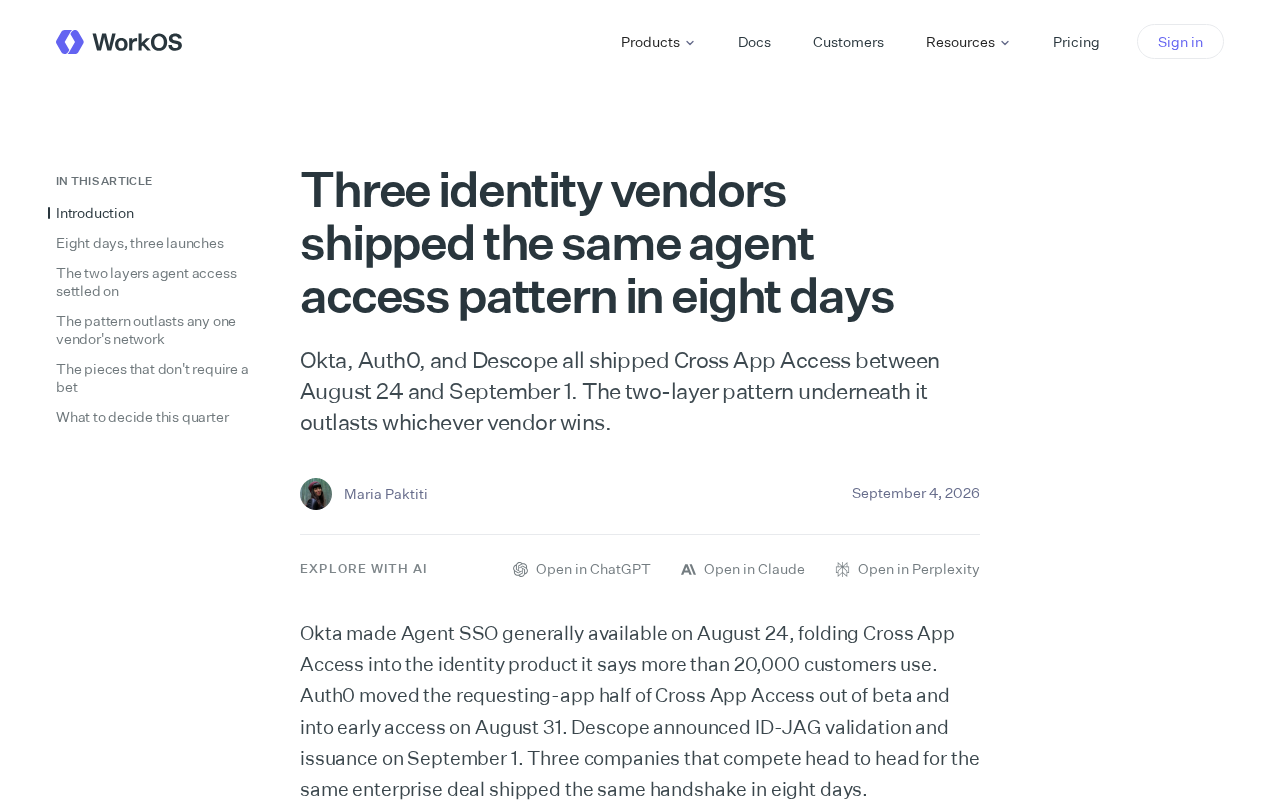
Here's a key detail: what truly matters isn't which vendor ultimately wins, but the two-layer access pattern these products share at their foundation. The staying power of this pattern will far outlast any single vendor's market position.
Why AI Agents Break the Existing Access Model
The Core Assumptions of Traditional IAM Are Failing
For the past two decades, enterprise identity management has been built on a core assumption: the entity accessing the system is a human. Users log in, receive tokens, and access applications — permissions are designed around "who is operating." The entire ecosystem of OAuth, SAML, SSO, and related standards essentially serves the two-layer relationship of "human user + application."
The Evolution of IAM Architecture
Identity and Access Management (IAM) has gone through three major stages of development. The first stage (1990s–2000s) was the directory services era, represented by LDAP and Active Directory, where user identities were centrally stored within the enterprise. The second stage (2000s–2010s) was the federated identity era, when protocols like SAML and OAuth 2.0 emerged, enabling cross-organization single sign-on (SSO). The third stage (2010s–present) is the cloud-native identity era, with the rise of IDaaS (Identity as a Service) providers like Okta and Auth0, making identity management fully cloud-based and API-driven. The emergence of AI Agents is now driving IAM into a fourth stage — the Agentic Identity era, a pivotal transition from "human-centric" to "human-machine collaborative" identity.
But AI Agents shatter this assumption. When an autonomous Agent needs to act on behalf of a user, calling multiple applications and accessing data across systems, a fundamental question arises: is the Agent a "user" or an "application"? It's neither fully human nor a traditional service account. This ambiguous identity status puts existing IAM frameworks in an impossible position.
The Cascading Challenges of Cross-App Scenarios
Consider a typical scenario: an enterprise AI assistant needs to read a user's calendar (Application A), summarize emails (Application B), and then create tasks in a project management tool (Application C) based on the results. Under the old model, this means the Agent needs to hold credentials for all three applications separately — permission boundaries become blurry, auditing becomes difficult, and if any link in the chain is compromised, the entire chain is at risk.
The Limitations of OAuth and SAML
OAuth 2.0 and SAML are the two foundational protocols of modern identity authentication. OAuth 2.0, designed in 2012, centers on "delegated authorization" — allowing third-party applications to access protected resources with user consent, as in the classic "Sign in with Google" scenario. SAML (Security Assertion Markup Language) is even older, dating to 2005, and is primarily used for cross-organization single sign-on through XML-formatted identity assertions. But both protocols share a core assumption: the accessing entity is a human user who is present at the time of authorization. AI Agents break this assumption — they need to run continuously while users are offline, making autonomous decisions across multiple applications. This model of "long-term delegation + autonomous execution" was never anticipated when OAuth and SAML were designed, which is why an entirely new access control paradigm is needed.
This is precisely the core problem all three vendors are trying to solve — how to enable AI Agents to collaborate efficiently across applications while maintaining clear permission boundaries and complete auditability.
Dissecting the Two-Layer Access Pattern
Breaking Down the Pattern Structure
The reason Cross App Access could be independently implemented by three different companies is that they all converged on the same abstract structure — the two-layer access pattern.
This pattern can be broken down into two core layers:
- Layer 1: Identity and Authorization Layer. This clearly defines which user the Agent represents and the scope within which it can act. This layer answers the question "Who is the Agent, and on whose behalf does it act?" — binding the Agent's identity to its human principal while imposing precise permission constraints.
- Layer 2: Cross-Application Access Layer. Once authorized, the Agent accesses target applications through a standardized access channel, rather than holding independent credentials for each application. This layer answers the question "How does the Agent securely act across applications?"
The elegance of this layered design lies in its balance: Layer 1 ensures security and control, Layer 2 ensures flexibility and efficiency. Together, they cover the core identity management needs of AI Agent scenarios.
Technical Implementation of the Two-Layer Access Pattern
The two-layer access pattern is typically implemented through the following mechanisms: Layer 1 uses a "Delegated Token" mechanism, encoding user identity, authorization scope, time limits, and other information in a JWT (JSON Web Token), which the Agent holds as its credential for "acting on behalf of the user." The key innovation is the introduction of fine-grained "Scoping" — unlike traditional OAuth's coarse-grained scopes, Agent tokens can be as precise as "can only read the calendar for a specific project" or "can only create no more than 5 tasks." Layer 2 is built on a "Token Exchange" mechanism, where the Agent uses the delegated token from Layer 1 to dynamically exchange for access tokens to target applications through the Identity Provider (IdP), rather than pre-storing credentials for all applications. This design ensures Agent flexibility while guaranteeing that every cross-application access passes through the IdP's audit and policy checks, effectively implementing Zero Trust principles in Agent scenarios.
Independent Convergence Is the Strongest Validation
The fact that three vendors independently converged on the same architecture within an extremely short timeframe is itself the most powerful proof of this pattern's soundness. When different teams face the same constraints, design independently, and arrive at remarkably similar conclusions, it typically means this isn't one company's clever idea — it's the optimal solution structure dictated by the problem itself.
In other words, even if Okta, Auth0, or Descope eventually dominates commercially, or if an entirely new challenger emerges, this two-layer pattern will likely persist as a de facto standard — vendors may change, but the pattern will endure.
Practical Implications for Enterprises and Developers
Agent Access Management Is Becoming Standardized
For enterprises deploying AI Agents, this cluster of releases sends a clear signal: Agent access management is shifting from proprietary in-house solutions to industry standardization. This means that when evaluating vendors, enterprises should focus more on compatibility with the underlying pattern than on being locked into any single vendor's feature checklist.
Redesigning Agent Permission Architectures
Developers and architects need to recognize that simply treating AI Agents as "a service account with superuser privileges" is both dangerous and shortsighted. Redesigning permission models around "Agents acting on behalf of users" — with clearly defined authorization scopes, full traceability, and revocability — will become a required discipline for enterprise AI infrastructure going forward.
Cross-Vendor Interoperability Is Within Reach
Because all three vendors share the same underlying pattern, the likelihood of cross-vendor interoperability protocols emerging in the future has increased significantly. This is good news for enterprises: it reduces vendor lock-in risk and lays the foundation for building a truly open AI Agent ecosystem.
Conclusion
Eight days. Three vendors. One pattern. What appears to be a coincidental product race actually outlines the clear contours of identity management in the AI Agent era. Who wins the market isn't the most important question — what truly endures is the two-layer access pattern that has been repeatedly validated through independent convergence. For every organization that is embracing or about to embrace AI Agents, understanding this underlying logic is far more valuable than chasing any single product.
Related articles
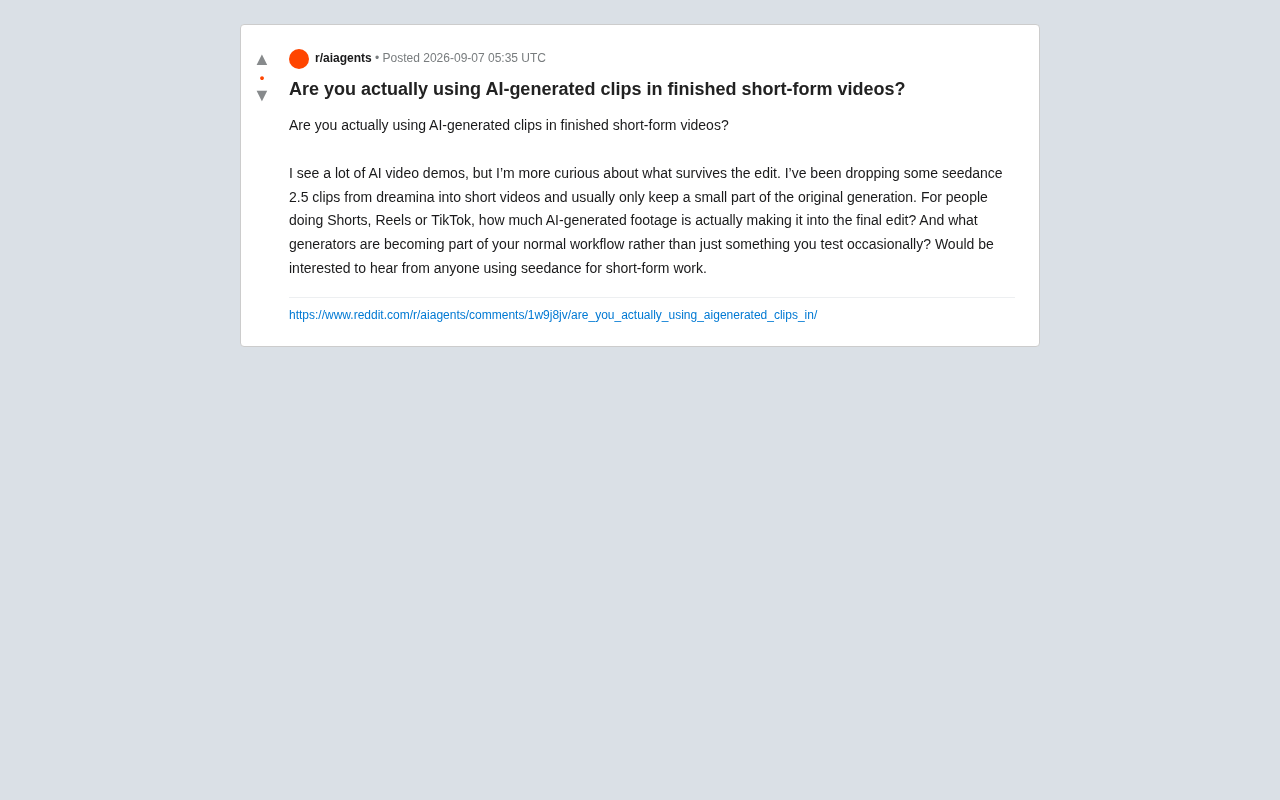
How Short-Form Video Creators Are Using AI Video Generation Tools
Exploring the real-world application of AI video generation tools in short-form video creation. From Seedance to Runway, how do creators integrate AI assets? Revealing the gap between demos and production use.

Home Data Center Setup Guide: A Complete Self-Hosted Private Cloud Implementation
Deep dive into building a home data center: hardware selection, software architecture, cost analysis, and operational challenges. From data sovereignty to technical implementation, build your private cloud infrastructure and control your digital assets.
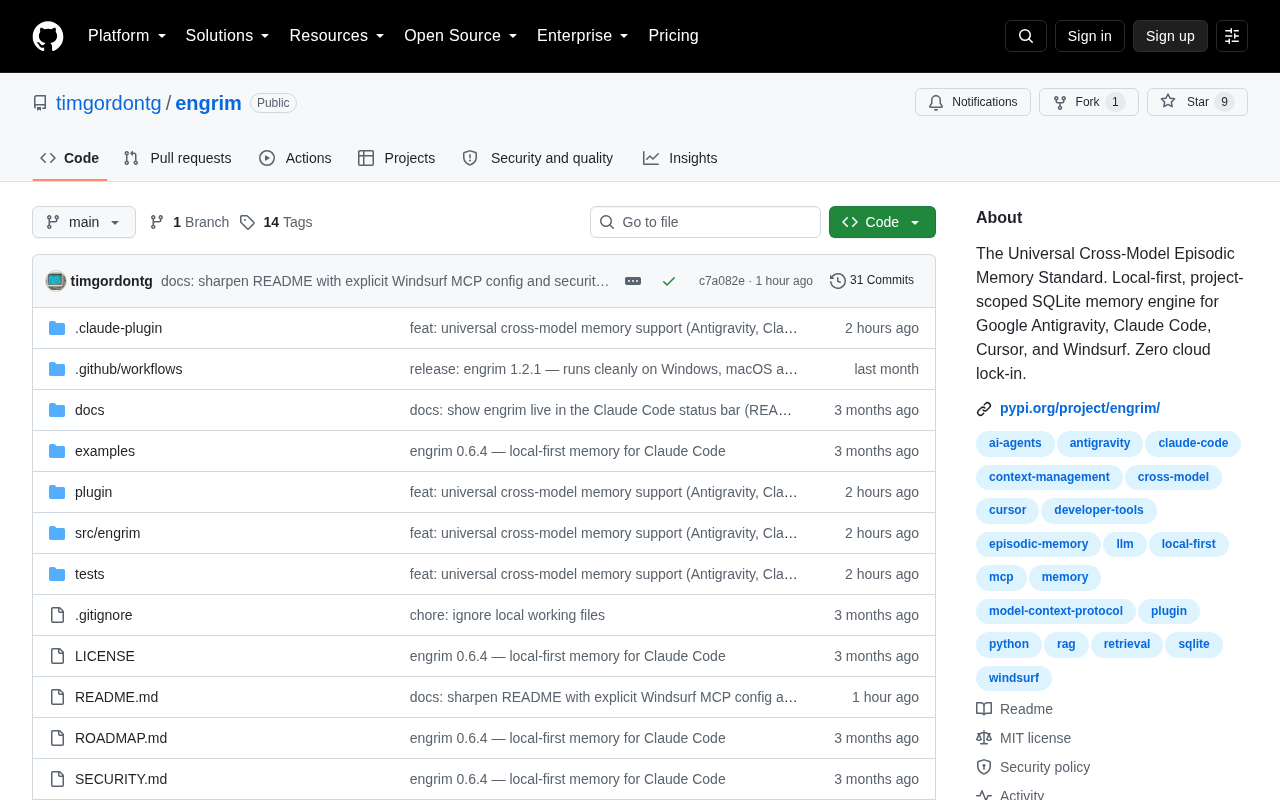
Engrim: A Local Memory Engine Solution for AI CLI Tools
Engrim is an open-source, local-first SQLite memory engine built for AI CLI tools like Claude Code and Aider, solving context loss while keeping data private.