CTO of Ransomware Assistance Firm Indicted for Wire Fraud
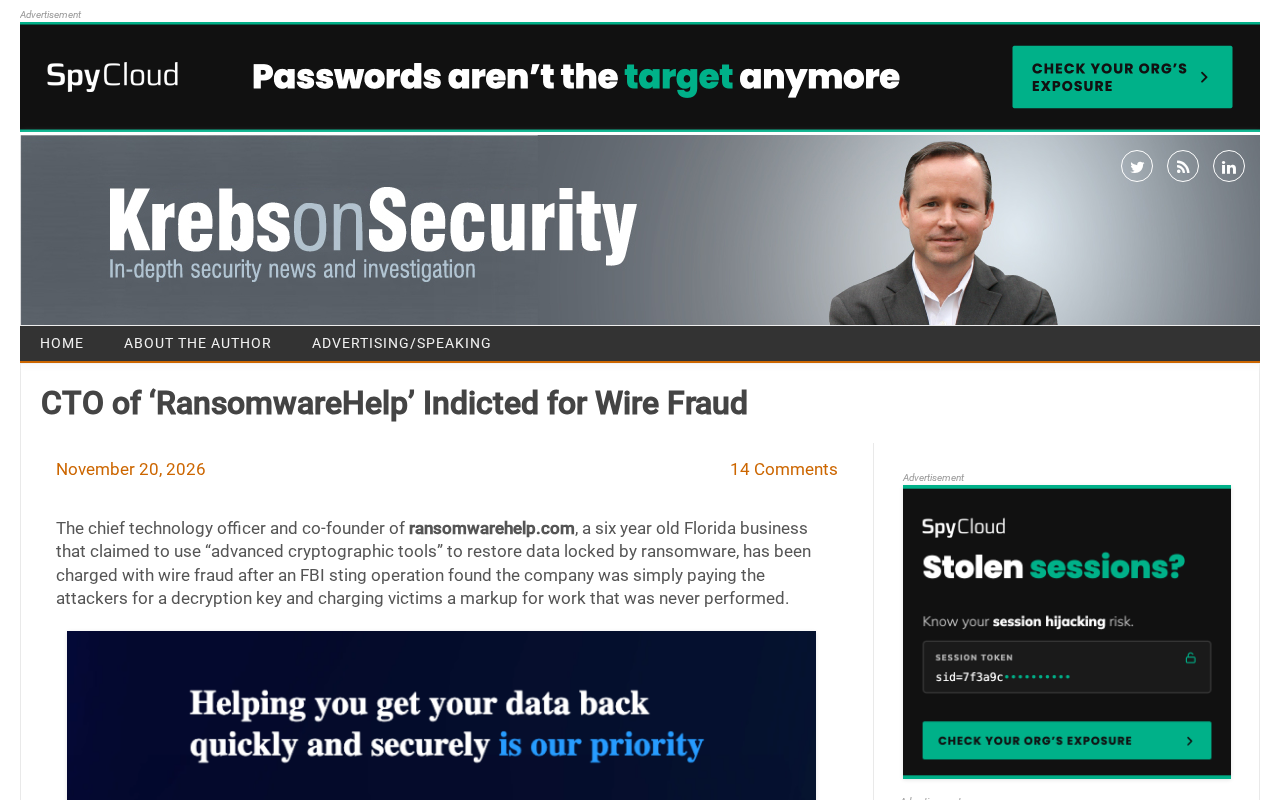
RansomwareHelp CTO indicted for wire fraud, revealing the gray zone of the ransomware rescue industry.
This article reports on the indictment of RansomwareHelp's CTO for wire fraud, a case widely discussed on Hacker News. It examines the company name's contradictions, notes the opaque ties between ransomware "rescue" services and attackers, and explains why prosecutors chose wire fraud: funds moved via traditional wires, making the evidentiary path clear without proving involvement in attacks. The case sets a legal boundary for third-party services profiting from ransomware and warns victims to choose traceable, legitimate response teams over "fast decryption" promises.
A company operating under the banner of "ransomware assistance" is now seeing its CTO face wire fraud charges. The case has drawn over two hundred upvotes and more than a hundred comments on Hacker News, bringing a long-shadowy industry into the spotlight.
A Self-Contradictory Company Name
The name "RansomwareHelp" is itself a telling sample worth pondering. It can be understood as a rescue service helping victims deal with ransomware attacks, or as "technical support" helping extortionists carry out their extortion. In the ransomware ecosystem, the two are often separated by a fine line.
According to a Krebs on Security report, the company's CTO has been indicted for wire fraud. In U.S. law, wire fraud typically refers to financial scams carried out using electronic communications, carries a wide sentencing range, and is often used to prosecute fraudulent conduct involving interstate fund transfers.
The Gray Logic of the Ransomware "Rescue" Business
Victims of ransomware attacks are often in an extremely passive position: data encrypted, operations halted, ransom demands imminent. It is precisely this panic that has spawned a class of intermediary services—claiming to help victims "negotiate" with attackers, drive down ransoms, or even bypass attackers and restore data directly.
The problem with such services is that their relationship with attackers remains opaque. Some so-called "negotiation experts" have been accused of having financial ties to ransomware gangs, or even being part of the attack chain themselves. The "service fees" victims pay may ultimately flow to the very people who encrypted their data.
Why Wire Fraud
That prosecutors chose wire fraud rather than other charges is worth understanding from the perspective of fund flows. Ransomware-related payments are almost always made in cryptocurrency, but the collection of "service fees" often still involves traditional bank transfers or wire transfers. If a company obtains client funds through false service promises and the funds move through wire transfer channels, the elements of wire fraud are met.
This charge does not require proving that the defendant directly participated in the development or distribution of ransomware—only that they committed fraud at the financial level through electronic means. For prosecutors, this is an entry path with a relatively clear evidentiary chain.
Wire fraud, under Title 18, Section 1343 of the U.S. Code, requires: fraudulent intent by the actor, use of interstate or foreign electronic communications (including wire transfers, fax, email, etc.), and the obtaining of property or funds thereby. The core of the offense lies in the combination of "means of communication" and "fund flows," not the specific content of the fraud. In terms of sentencing, the base term can reach twenty years' imprisonment, and can be further enhanced if financial institutions are involved or the amount is large. In ransomware-related cases, ransom payments are mostly made in cryptocurrency, but service fees often move through bank wires or third-party payment platforms, allowing prosecutors to bypass the complexity of cryptocurrency tracing and file wire fraud charges directly. This strategy has become increasingly common in cybercrime prosecutions in recent years, because the evidentiary threshold is relatively low and it does not require proving that the defendant directly participated in hacking.
Industry Signals and the Victim's Dilemma
The deeper significance of this case lies in the boundary it draws: profiting from ransomware incidents under the banner of "assistance" may constitute a crime if the service itself is deceptive.
For victims, this raises a real question—when operations are locked down by ransomware, whom exactly should they trust? Law enforcement agencies, legitimate cybersecurity vendors, and insurers' response teams are relatively traceable choices; third parties advertising "internal channels" or "fast decryption" often carry risks masked by panic.
The discussion heat on Hacker News (over two hundred points and more than a hundred comments) shows that the topic touches on the tech community's long-standing frustration with "parasitic services" in the ransomware ecosystem. Whether this indictment will create a real deterrent depends on how the judicial process unfolds.
Background
The ransomware ecosystem is typically divided into multiple roles: initial access brokers (IABs) breach corporate networks and sell access; ransomware-as-a-service (RaaS) operators develop and maintain encryption tools and recruit affiliates through affiliate programs; affiliates actually carry out attacks, negotiate, and collect ransoms. In addition, there are third-party service providers specializing in "negotiation" and "recovery," who claim independence from attackers but often have inextricable ties to RaaS affiliates. Some negotiators take a percentage of the ransom, which incentivizes them to facilitate payment rather than free recovery; in more extreme cases, the negotiation service itself is operated under cover by members of the attack gang, forming a closed loop of "attack—negotiate—pay." This overlap of roles makes it difficult for victims to discern the true stance of service providers and increases the difficulty for law enforcement to distinguish legitimate assistance from complicity.
One-line Summary
The CTO of RansomwareHelp has been indicted for wire fraud, exposing the gray zone of the ransomware rescue industry.
Paragraph Summary
This article reports on the indictment of RansomwareHelp's CTO for wire fraud, a case that sparked widespread discussion on Hacker News. It analyzes the self-contradictory nature of the company name, points out the opaque financial relationship between ransomware "rescue" services and attackers—with some providers even linked to ransomware gangs. Prosecutors chose wire fraud because funds moved through traditional wire transfers, providing a clear evidentiary path without needing to prove the defendant participated in ransomware attacks. The case draws a legal boundary for third-party services profiting from ransomware incidents, while reminding victims to choose traceable, legitimate response teams rather than untrustworthy third parties advertising "fast decryption" amid panic.
Related articles

Pure-Code Video Generation Tested: Which AI Model Actually Follows Instructions?
A Bilibili creator tested three AI models' pure-code video generation with unified prompts and three revisions each: Xiaonaomao has a high ceiling but lacks stability, GPT 6.2 Extra models well but only follows half the instructions, and OPAS 5.5 remains the benchmark.

GPT-6 Six-Tier Hands-On Test: Astra Ultra Dominates but Bills Double
GPT-6 six-tier test: Astra Ultra sweeps 3:0 in 3D tasks thanks to sub-agents and runs 14% faster, but hidden backend bills make its real cost 2.6x single-threaded.

GPT-6.2 Astra vs Fable 5.2: Huge Cost-Efficiency Gap Across 12 Real-World Tests
Bilibili creator tests GPT-6.2 Astra vs Fable 5.2 across 12 real tasks: Fable wins 7-5 but costs 7.2x more and takes nearly 5x longer. Token efficiency emerges as the key selection metric.