Cursor + Origin + Vercel: A Complete AI-Powered Web Development Workflow
Cursor, Origin, and Vercel unite to form a seamless AI-powered pipeline from code generation to live deployment.
A developer community update highlights a new trend in AI-era toolchain integration: use Cursor to generate code with natural language, Origin to host it, and Vercel to deploy with one click. Cursor lowers the barrier to app creation, while Vercel's native framework support and edge network make deployment effortless. This workflow is especially valuable for indie developers and rapid MVP validation, compressing the idea-to-launch cycle significantly. That said, AI-generated code still needs human review, platform lock-in carries migration risk, and the workflow suits smaller projects more than complex enterprise systems.
A Tweet That Signals a Shift in Development Paradigms
A recent update from the developer community caught attention: you can now use Cursor to create a brand-new web app, host the code on Origin, and deploy it to Vercel in a single click. That one sentence encapsulates a rapidly accelerating trend — the integration of AI-assisted development toolchains. From writing code to storing it to going live, three distinct steps have been linked into one relatively seamless workflow.
For indie developers and small teams, this kind of integration means a significantly lower barrier to entry. In the past, building a web app from scratch required juggling multiple tools: a local editor for code, a Git repository for hosting, and a cloud platform for deployment configuration. This new pipeline tries to compress all of that into as few steps as possible.
What Each Tool Brings to the Table
Cursor: An AI-Native Code Editor
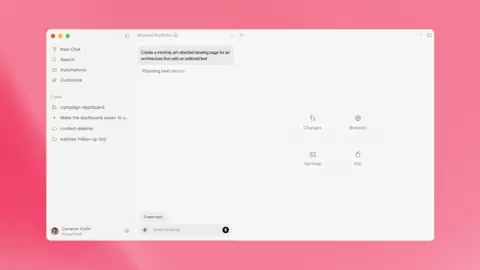
Cursor has quickly become one of the most popular AI coding tools in the developer community. Built on top of VS Code, it deeply integrates large language model capabilities, supporting natural language code generation, autocomplete, code refactoring, and conversational debugging. In this workflow, Cursor handles the "create" step — developers can rapidly scaffold a web app's initial structure with AI assistance, or simply describe what they want in plain language and let the AI generate most of the boilerplate code.
Cursor rose to prominence around 2023. Its key differentiator from tools like GitHub Copilot is its "conversational project awareness" — it doesn't just complete single lines of code; it reads the context of an entire codebase and can answer questions like "why is this logic designed this way?" or "help me refactor this module" across multiple files. Under the hood, it can connect to models like GPT-4, Claude, and others. For non-professional programmers, Cursor's biggest value is lowering the cognitive barrier of starting from a blank file — describe the feature, and the AI can generate the project skeleton, routing structure, and base components.
Origin: Code Storage and Version Control
Origin fills the code hosting and version management role in this workflow. Any complete development process requires reliable code storage and version control. It bridges the critical gap between "writing" and "deploying," ensuring code assets are properly preserved and laying the foundation for future collaboration and iteration.
Vercel: One-Click Deployment
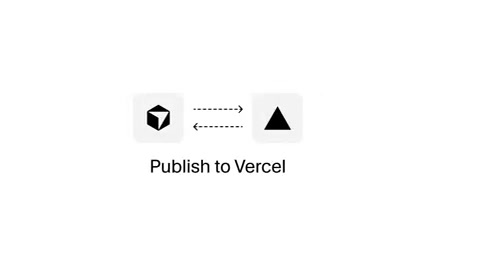
Vercel is a leading deployment platform for frontend and full-stack applications, known for its native support of modern frameworks like Next.js, edge network distribution, and convenient continuous deployment capabilities. At the end of this pipeline, Vercel takes the stored code and rapidly deploys it to production, making the application publicly accessible.
Vercel was built by the team behind Next.js, and its core strength lies in deep integration with the frontend ecosystem: pushing code automatically triggers a CI/CD build pipeline, every Pull Request gets its own preview URL, and the Edge Network distributes static assets and serverless functions to global nodes to minimize latency. For individual developers, Vercel's free tier is sufficient for small-to-medium traffic projects — a key reason it's widely adopted among indie developers. Compared to traditional cloud platforms like AWS or GCP, Vercel trades some low-level control for a dramatically simplified operations experience.
Why This Integration Matters
Toolchain integration isn't new in itself, but the addition of AI coding tools changes the equation. Previously, the "create app" step carried a meaningful learning curve for newcomers — understanding framework structure, dependency management, and project configuration. When AI editors like Cursor enter the picture, developers can express intent in something closer to natural language, while the AI handles the translation into runnable code.
This means the full loop from idea to deployed product — concept to code to live application — is being dramatically compressed. For validating a product idea or quickly building an MVP (Minimum Viable Product), this kind of workflow offers a clear efficiency advantage.
MVP (Minimum Viable Product) is a core concept in lean startup methodology — building the smallest possible product that can validate a core hypothesis. Even with mature frameworks, traditional MVP development often takes days or weeks to complete environment setup, core feature implementation, and deployment configuration. When AI-assisted toolchains compress that cycle to hours or less, the business value becomes clear: startup teams can test more product hypotheses in the same amount of time, dramatically reducing the cost of iteration. This trend is also reshaping the boundary between product managers and engineers — some prototype validation work that previously required engineering involvement is gradually shifting toward non-professional developers with basic technical literacy.
Practical Considerations Worth Keeping in Mind
While toolchain integration brings real convenience, a clear-eyed view is warranted. First, AI-generated code still requires human review — especially around security, edge case handling, and maintainability, where AI cannot yet fully replace experienced engineers. Second, deep cross-platform lock-in can introduce migration costs; flexibility versus convenience is a trade-off worth weighing when choosing a toolchain. Third, this type of workflow is best suited for small-to-medium-scale projects and rapid prototyping — complex enterprise-grade systems still require more robust architecture design and operations infrastructure.
Overall, the integration of Cursor, Origin, and Vercel represents a microcosm of how software development toolchains are converging in the AI era. As AI coding capabilities continue to improve, the scenario of "describe an app in a sentence and have it live online" is moving from concept to practical reality.
Note: This article is based on a brief community update. For specific feature details and usage instructions for this workflow, please refer to the official documentation of each platform.
Related articles

AI Agent Earns $10K in One Week: 3 Key Upgrades Explained
A blogger shares how he earned $10K in a week with an AI Agent — not by adding more skills, but through verification, approval gates, and subagents to raise trust and enable true automation.
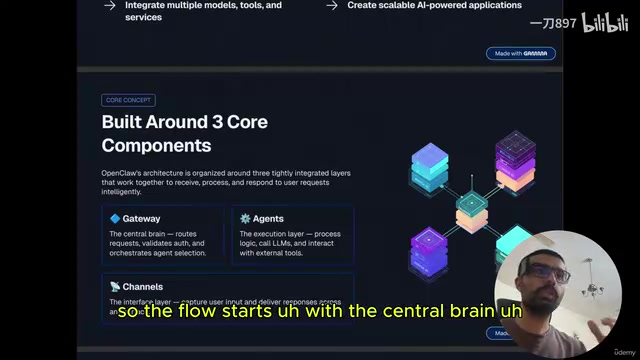
Getting Started with OpenClaw: Multi-Channel AI Agent Gateway and Automated Workflow Guide
OpenClaw is an open-source multi-channel AI agent gateway. This guide covers its three core components — gateway, agents, and channels — plus tool integration and memory mechanisms.
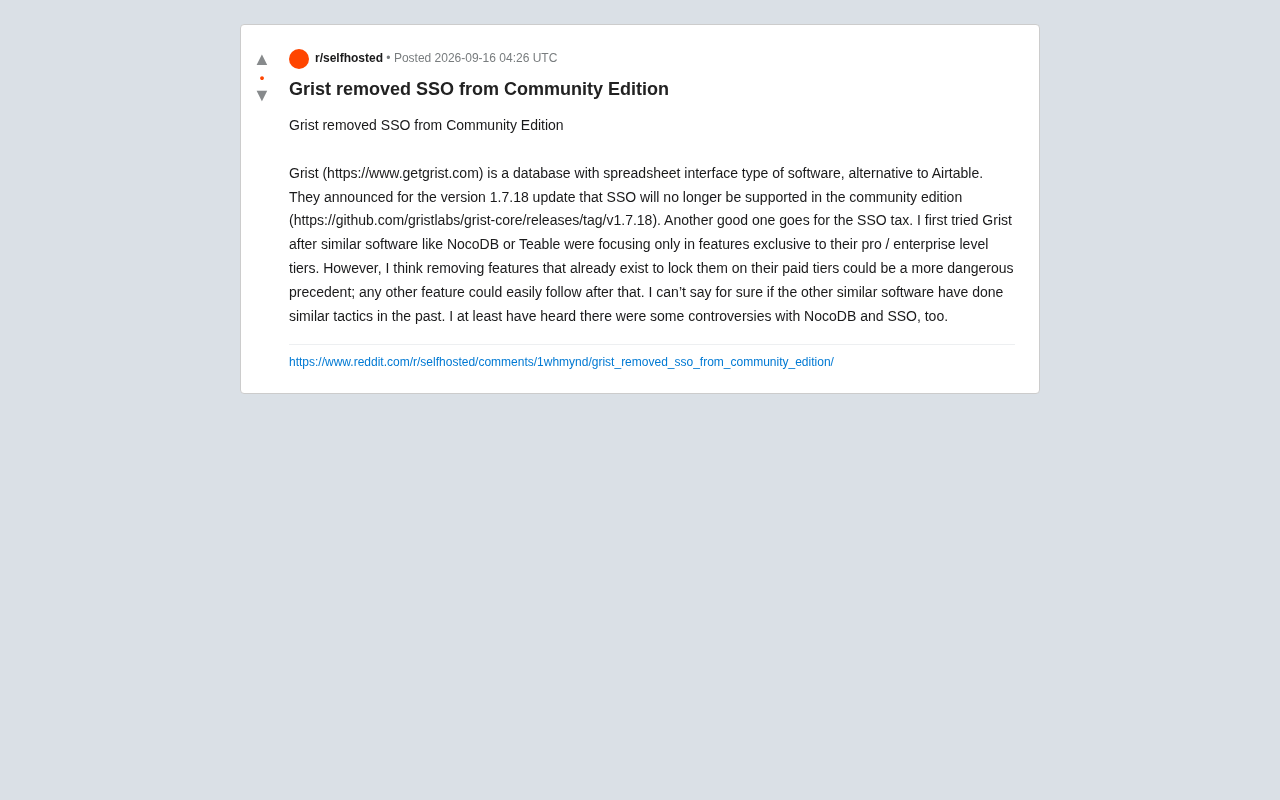
Grist Removes SSO from Community Edition: The 'SSO Tax' Debate Resurfaces
Grist v1.7.18 removed SSO from its Community Edition, locking it behind a paid tier and reigniting the 'SSO Tax' debate. We analyze the incident, open-source monetization tensions, and what it means for self-hosted users.