Cynative Open-Source AI Cloud Security Tool: Audit Cloud Infrastructure with Natural Language

Cynative is an open-source AI tool for auditing cloud infrastructure with natural language queries and read-only safety.
Cynative Security Research Agent is an open-source AI command-line tool that enables security engineers to audit cloud infrastructure across AWS, GCP, Azure, and Kubernetes using natural language. Its architecture enforces read-only access by design, not by promise, ensuring production environments cannot be modified. Unlike MCP-based tools, Cynative generates sandboxed JavaScript scripts for richer analysis with full auditability.
A New Paradigm for Cloud Security Auditing
In today's increasingly complex cloud-native architectures, enterprise attack surfaces span code repositories, cloud platforms, and runtime environments. Cloud Native Architecture—built on containers, microservices, service meshes, immutable infrastructure, and declarative APIs—has dispersed what was once a centralized security perimeter across hundreds or even thousands of microservices, container instances, and serverless functions. According to Gartner research, by 2025 over 95% of new digital workloads will be deployed on cloud-native platforms. This decentralization directly leads to exponential expansion of attack surfaces—every API endpoint, every container image, and every IAM policy could become a potential attack vector.
Traditional security auditing often requires engineers to constantly switch between GitHub, the AWS console, and Kubernetes clusters, writing scripts and piecing together queries—an inefficient process prone to oversights.
The recently launched open-source project Cynative Security Research Agent on Product Hunt aims to change this. It's an open-source AI command-line tool that allows security engineers to ask questions about their cloud infrastructure in natural language, such as "Which resources are publicly exposed but shouldn't be?" or "Can my CI pipeline escalate privileges to cloud admin?" After launch, the project received 102 upvotes and 22 comments, ranking 18th and appearing in the Open Source, Developer Tools, and Security categories.
Cynative's Full-Stack Security Context Coverage
Cynative's core value lies in connecting multiple data sources needed for security auditing. The tool supports integration with code hosting platforms like GitHub and GitLab, the three major public clouds—AWS, GCP, and Azure—as well as Kubernetes runtime environments. This means a single natural language query can perform correlation analysis across the "code—cloud—runtime" trifecta.
This cross-layer capability directly addresses a critical pain point in cloud security: truly dangerous attack paths rarely exist within a single system—they're hidden in the connections between systems. For example, a seemingly harmless CI configuration, combined with an overly permissive IAM role, could form a privilege escalation chain from a code repository straight to cloud admin.
It's important to understand IAM's (Identity and Access Management) central role in cloud security. IAM defines who can perform what actions on which resources. Taking AWS as an example, an IAM policy consists of three parts: Effect (Allow/Deny), Action (such as s3:GetObject, ec2:TerminateInstances), and Resource (target resource ARN). According to Datadog's 2023 Cloud Security Report, 37% of AWS accounts have at least one long-lived credential with administrator-level permissions. IAM roles in CI/CD pipelines are particularly sensitive because they typically possess deployment permissions—once abused, they can enable complete privilege escalation from code to production environments.
Manually investigating these issues is extremely time-consuming, but Cynative lets engineers throw these cross-domain security questions at AI for analysis with a single sentence.
Read-Only by Construction: Not a Promise, but a Physical Constraint
In the security tools space, the biggest concern is often whether the tool itself could become a new risk source. Cynative's answer is "read-only by construction"—read-only behavior is guaranteed by architectural design, not reliant on runtime discipline or prompt constraints.
The specific mechanism works like this: every call is first parsed into corresponding IAM actions before credentials are actually attached, then undergoes authorization validation against a read-only policy. In other words, even if you (or a manipulated AI) explicitly requests infrastructure modifications, it physically cannot execute write operations at the architectural level.
This point cannot be overlooked for enterprises adopting AI Agents. Many teams are wary of letting AI directly operate on production environments, fearing that hallucinations or misoperations could break production. Cynative's tagline "Ask your cloud anything without breaking prod" directly addresses this anxiety—you can safely open your entire cloud infrastructure to AI queries because it physically lacks the ability to cause damage.
The Security Value of Pre-Authorization Validation
Placing authorization validation before credential attachment is a "default deny" defense-in-depth approach. Defense in Depth originates from military defense theory, with the core concept of deploying multiple independent layers of security controls so that the failure of any single layer doesn't cause overall security to collapse. In Cynative's design, defense in depth manifests as multiple safeguards: the first layer is pre-validation against read-only IAM policies, the second layer is code isolation through sandboxed runtime, and the third layer is auditability through open-source code.
The "Default Deny" principle is the foundation of zero-trust architecture—the system grants no permissions by default, and only explicitly verified operations are allowed through. This stands in stark contrast to the traditional "default allow" model, which relies on blacklists to block known dangerous operations and is easily bypassed by novel attacks. Compared to post-hoc auditing or manual approval, Cynative's approach of intercepting write operations at the very front of the call chain solidifies the security boundary within the tool itself, reducing the possibility of misconfiguration and bypass.
Technical Differences Between Cynative and MCP Tools
Cynative specifically emphasizes its differences from MCP (Model Context Protocol) tools. MCP is an open protocol proposed by Anthropic in late 2024, designed to standardize interactions between AI models and external data sources and tools. It adopts a client-server architecture, communicating via JSON-RPC 2.0 protocol, allowing AI models to invoke various external capabilities through a unified interface. MCP's design philosophy encapsulates each external capability as a discrete "Tool," with the AI calling one tool per interaction and receiving results. MCP has been adopted by multiple AI products including Cursor and Claude Desktop, and is becoming important infrastructure in the AI Agent ecosystem.
The mainstream approach for AI Agents to invoke external capabilities currently follows this "tool calling" pattern—each conversation turn triggers one or more predefined function calls.
Cynative takes a different technical route: it writes JavaScript scripts in a sandboxed runtime, generating a complete script per conversation turn rather than making individual calls. This "script-based" approach offers several key advantages:
- Greater expressiveness: A script can include loops, conditionals, data aggregation, and other complex logic, completing security analysis tasks in one go that would otherwise require multiple tool calls.
- Reduced round-trip overhead: No need for multiple back-and-forth exchanges between AI and tools—a single script can complete an entire cloud security query workflow.
- Strong auditability: The generated script itself is a readable, inspectable artifact, making it easy for security teams to review exactly what operations the AI performed.
Of course, the script-based approach places higher demands on sandbox isolation. A sandbox is a security isolation mechanism that executes untrusted code in a restricted environment, preventing it from accessing host system resources or producing uncontrollable side effects. In the JavaScript ecosystem, common sandbox solutions include V8 Isolates (as used by Cloudflare Workers), Node.js's vm module, and WebAssembly-based isolation environments. A secure sandbox typically needs to restrict file system access, network call scope, memory usage limits, and CPU execution time. Cynative's choice of JavaScript as the scripting language likely considers V8's mature isolation capabilities and JavaScript's extensive support in the cloud SDK ecosystem—all three major cloud platforms (AWS, GCP, Azure) provide comprehensive JavaScript/TypeScript SDKs.
Cynative runs scripts in a restricted sandbox environment, combined with the aforementioned read-only authorization mechanism, forming dual security constraints.
Open-Source Transparency: The Trust Foundation for Security Tools
As an open-source project, Cynative's code transparency is itself a security advantage. Security tools especially need auditability—users should be able to inspect source code to confirm whether read-only promises hold true, how credentials are handled, and whether data exfiltration risks exist. Closed-source security Agents struggle to achieve this level of trust.
This point reflects a deep industry consensus in the security tools space. History has repeatedly shown that closed-source security products can themselves become attack vectors—the 2020 SolarWinds supply chain attack is a textbook example. The open-source model allows the community to perform independent code audits and vulnerability discovery, forming a distributed security verification mechanism. For tools handling highly sensitive information like cloud credentials, open-source transparency is not just a source of trust but a necessary condition for compliance auditing.
For security researchers and DevSecOps teams, an open-source cloud security tool that supports natural language queries, covers full-stack context, and architecturally guarantees read-only access holds considerable practical appeal. It lowers the technical barrier to cloud security auditing, enabling engineers unfamiliar with the details of each cloud provider's APIs to quickly get started with security assessments.
Cynative's Future Direction
Cynative represents a pragmatic exploration of AI Agents in vertical security domains. Rather than pursuing "omnipotent automation," it precisely positions itself in the low-risk, high-value scenario of "read-only research," trading architectural constraints for enterprise adoption trust.
This "constrained but trustworthy" design philosophy actually echoes an important trend in AI security: as AI Agent capabilities grow stronger, achieving balance between empowerment and control becomes the core challenge. Fully autonomous AI Agents are powerful but struggle to earn enterprise trust for production environment access; designs like Cynative's that explicitly limit capability boundaries are actually easier to deploy in enterprise scenarios.
Several questions worth watching going forward: How accurate is its natural language-to-IAM-action parsing? Can sandbox script execution withstand production-grade testing in terms of performance and security? And can it maintain consistent reliability under complex authorization models in multi-cloud environments—the IAM models across different cloud platforms differ significantly, with AWS's policy-based model, GCP's role-based hierarchical model, and Azure's RBAC model each having distinct characteristics, making cross-cloud unified abstraction no simple task. For teams currently evaluating AI cloud security auditing tools, this open-source project at least provides a new option worth trying.
Key Takeaways
Related articles
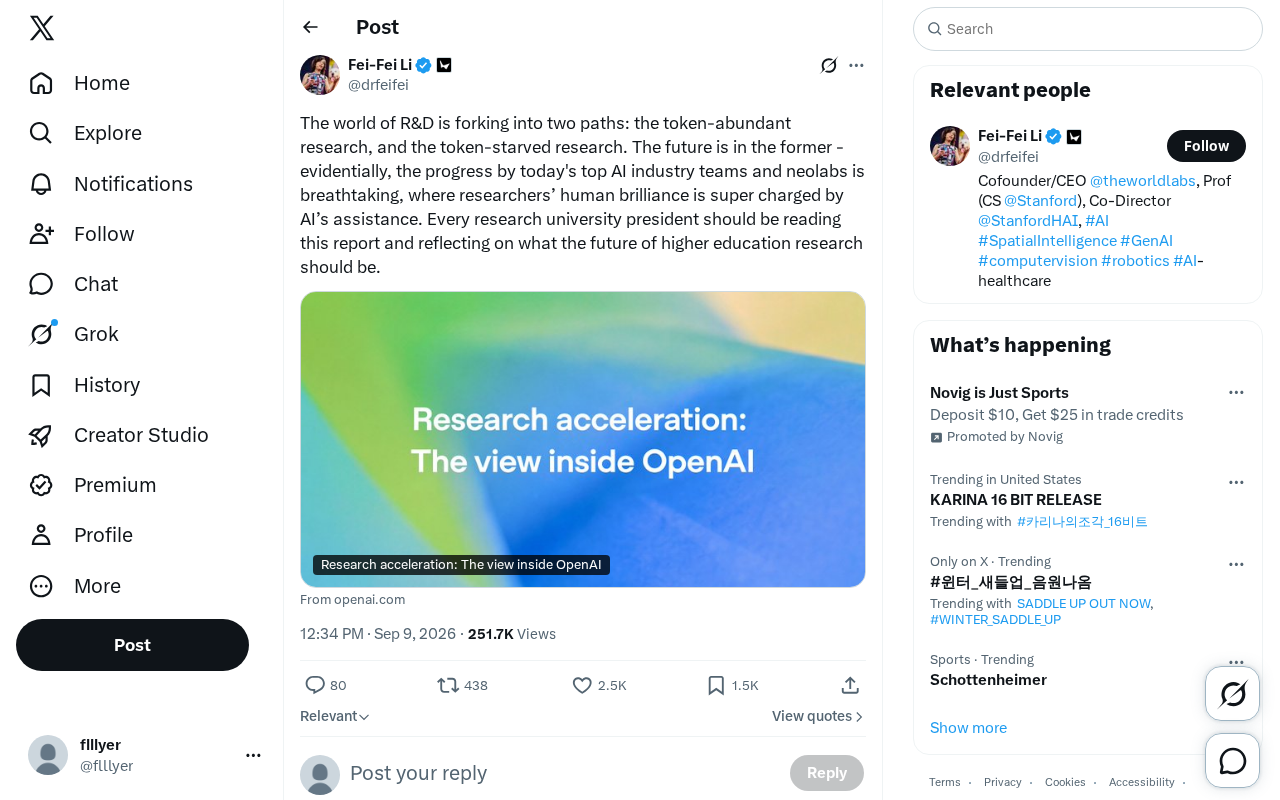
R&D Is Forking: The Coming Battle Between Token-Abundant and Token-Starved Research
R&D is splitting into token-abundant and token-starved research. Top AI labs are pulling ahead—here's what it means for universities and the future of science.
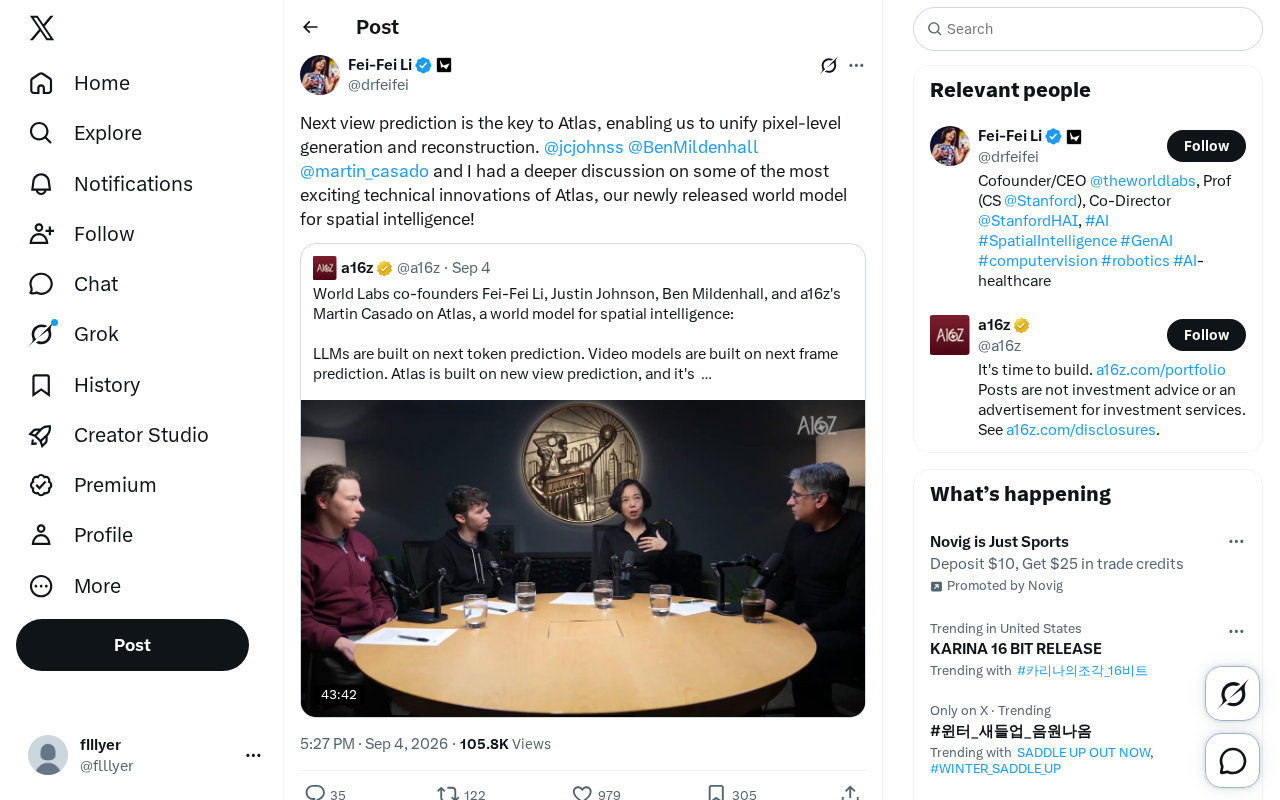
Atlas World Model Explained: How Next View Prediction Unifies Generation and Reconstruction
The Atlas world model uses Next View Prediction as its core to unify pixel-level generation and reconstruction, offering a new approach to spatial intelligence.
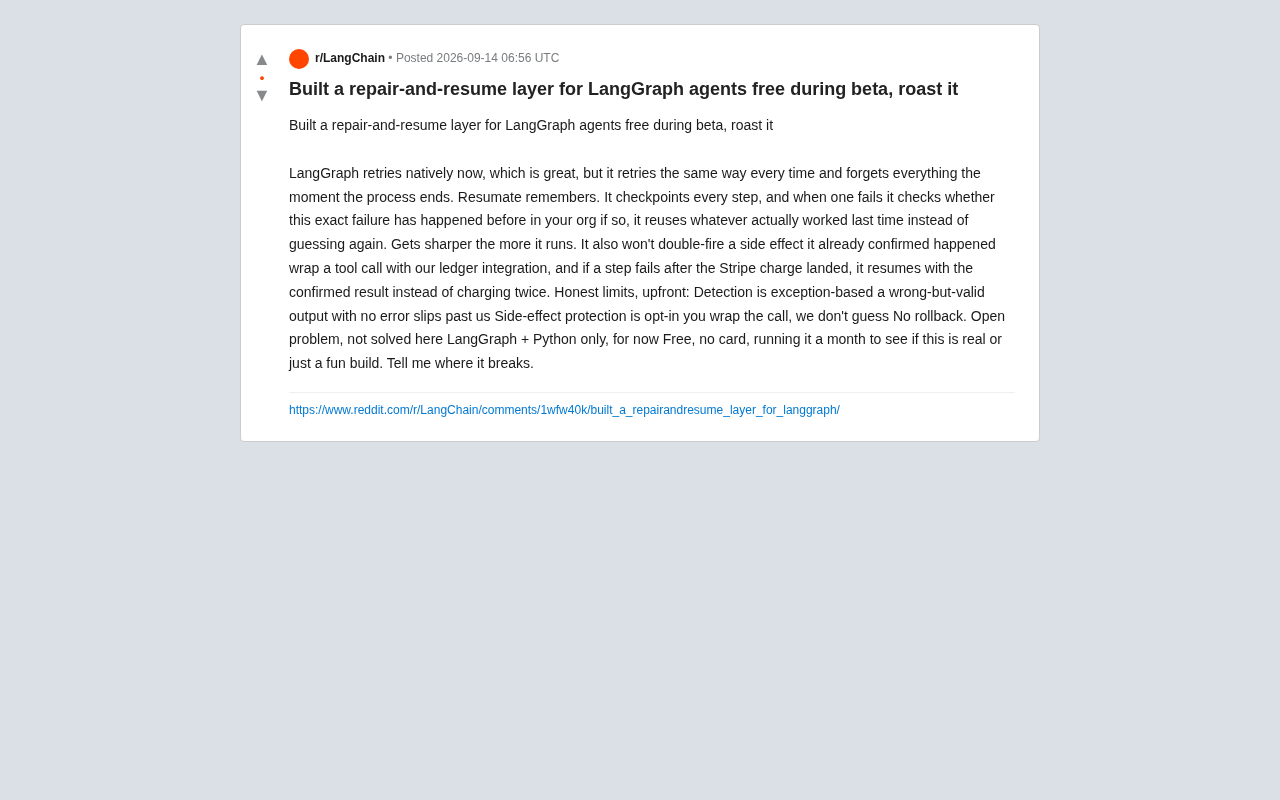
Resumate: A Deep Dive into the Repair-and-Resume Layer for LangGraph Agents
Resumate adds memory-aware checkpointing and idempotent side-effect protection to LangGraph agents, preventing issues like duplicate Stripe charges on retry.