Databricks Names a California Stadium: AI Companies Are Finding a New Brand Marketing Playbook

Databricks names a Berkeley football stadium, signaling AI companies' push into mainstream brand building.
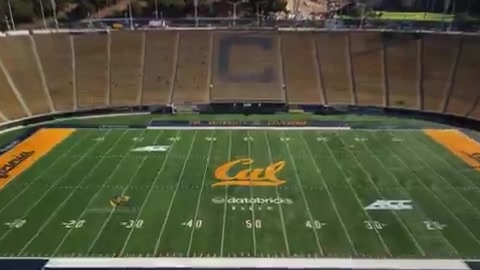
Databricks has renamed UC Berkeley's California Memorial Stadium to Databricks Field, with the debut airing nationally on ESPN during the Cal vs. Clemson game. The move marks a strategic shift for an enterprise data and AI platform company — stepping beyond traditional B2B marketing to pursue mainstream brand recognition. The analysis highlights how Berkeley's location offers both geographic advantage and talent recruitment value, while stadium naming rights deliver long-term exposure and a tie to a top academic institution at a fraction of the cost of professional sports venues. This may foreshadow a broader wave of AI companies embracing mainstream brand strategies.
Databricks Meets Stadium Naming Rights
The California Memorial Stadium at UC Berkeley has a new name — Databricks Field. The rebranded venue made its official debut on the night of the Cal vs. Clemson game, which was broadcast nationally on ESPN. For a tech company best known for its data and AI platform, planting its brand inside an American football stadium — one of the most traditional fixtures of U.S. sports culture — sends a signal worth paying attention to.
The official announcement, shared briefly on social media, reflects a broader shift in how AI tech companies are thinking about brand building. Historically, enterprise data platform companies like Databricks targeted developers, data engineers, and corporate decision-makers, focusing their marketing on tech conferences, industry summits, and B2B channels. Putting your name on a college stadium signals a new ambition: broader public recognition.
Databricks was founded in 2013 by researchers from UC Berkeley's AMPLab. Its core product is a unified data and AI platform built on Apache Spark, primarily serving large enterprises across data engineering, machine learning, and analytics. As of 2024, the company is valued at over $43 billion, making it one of the highest-valued private AI/data infrastructure companies in the world, with Fortune 500 clients spanning finance, healthcare, retail, and more. Its primary competitor is Snowflake and other cloud data warehouse vendors — a rivalry widely seen as one of the defining competitive battles in the data platform space.


Why AI Companies Are Starting to Buy Stadium Naming Rights
Stadium naming rights have traditionally been the domain of consumer brands, financial institutions, and tech giants. Databricks' choice of UC Berkeley — a top university with deep ties to Silicon Valley — isn't arbitrary. There's geographic proximity, yes, but there's also a talent recruitment angle. Berkeley is one of the country's most prolific producers of computer science and data science graduates. Naming the stadium plants a brand impression in the minds of future employees and potential partners.
Zooming out, as AI moves from research labs into the mainstream, competition among leading companies is no longer just about technology and product — it's also about mindshare. When a brand appears repeatedly on television screens in front of millions of viewers, the message is clear: this company is well-funded, here for the long haul, and worth trusting. That kind of intangible asset is especially valuable for tech companies gearing up for an IPO or a major funding round.
Background: How stadium naming rights work Naming rights are long-term brand contracts, typically signed for 10 to 30 years, with values ranging from millions to billions of dollars. Naming rights for professional venues (NFL, NBA arenas) can cost hundreds of millions, while college stadium deals usually run an order of magnitude lower — yet still deliver national media exposure. Tech company precedents include Levi's Stadium (San Francisco 49ers) and Crypto.com Arena (Los Angeles Lakers). College venue deals often come bundled with university partnership clauses covering research funding, internship recruitment, and other substantive collaborations, giving the investment dual value as both a PR play and a talent strategy.
The Business Logic Behind the Marketing Move
An enterprise software company doing mass-market sports marketing might look like a mismatch — but the math is more precise than it appears. Chief technology officers and data team leads — the people who actually make purchasing decisions — are also sports fans. Consistent brand exposure during their leisure time builds familiarity and trust subtly, shortening the long awareness-building cycle typical of B2B sales.
At the same time, naming a college stadium is significantly more cost-effective than naming a professional sports venue, yet it delivers long-term, stable brand visibility tied to a prestigious academic institution. In a white-hot talent market for AI, that kind of investment may deliver better returns than a straightforward recruiting ad campaign.
An Industry Trend Worth Watching
The debut of Databricks Field may signal the beginning of a wave of AI and data companies moving toward mainstream brand recognition. As technical capabilities increasingly become table stakes across the industry, standing out at the public level will be the next competitive frontier. Stadium naming is just one tactic — we may soon see more AI companies experiment with content sponsorships, cultural events, and lifestyle-oriented marketing.
For those tracking industry dynamics, moves like this — seemingly unrelated to technology — are actually useful windows into a company's strategic ambitions and financial confidence. A company willing to invest in long-term brand building is usually one that believes strongly in its own market trajectory.
Related articles

AI Digital Twin in Action: Using DOT to Automatically Track Bugs and User Feedback
DOTS engineers demonstrate how AI digital twin DOT collects cross-platform user feedback, categorizes issue themes, opens threads to investigate bug root causes, and submits PRs—showcasing a complete AI agent workflow for defect triage with auditable design.

Why Transistors Are No Longer Flat: The Evolution from Planar to Gate-All-Around
Transistor evolution from planar to FinFET to gate-all-around: why gates went from three-sided to four-sided wrapping to suppress short-channel effects and leakage current, extending Moore's Law.

Swarm Intelligence = a Single RL Agent? A Proof of Multi-Armed Bandit Equivalence
A paper proves that collective decision-making through local imitation in swarms is mathematically equivalent to single-agent reinforcement learning: N blind imitators act as N parallel environment samples, with an effective learning rate of 1/N. This article explains the derivation and implications of the Maynard-Cross Learning algorithm.