Why Are Latinos Nearly Half of the U.S. Border Patrol?

Latinos make up nearly half of Border Patrol and ~30% of ICE—identity proximity creates role tensions.
Based on Vox reporter Khalil Green's analysis, Latinos now hold nearly half of Border Patrol positions and about 30% at ICE, closer to policed communities than ever. Motivations range from protecting communities and pursuing rule of law to driving internal reform and communication advantages. Identity proximity creates tensions over "working for whom," and the article stresses that enforcement work does not equal MAGA support.
From "La Migra" to Community Guardians: The Identity Reconstruction of Latino Law Enforcement Officers
A counterintuitive statistic is rewriting the face of American immigration enforcement: Latinos now hold nearly half of all positions in the U.S. Border Patrol and about 30% of roles at Immigration and Customs Enforcement (ICE). According to Vox reporter Khalil Green in his series Khalil Explains, the people now on the front lines of immigration enforcement look more like the communities they police than at any point in history.
This shift didn't happen naturally. For most of the 20th century, immigration enforcement ranks were almost exclusively white, and border communities once used the derogatory term "La Migra" to refer to these agents. The turning point came over the past 50 years, as more and more Latinos joined immigration enforcement, with a particularly pronounced trend along the U.S.-Mexico border.
Three Motivations for Joining: Protection, Order, and Internal Reform
Green's interviews reveal multiple logics behind Latino agents' decision to join law enforcement, rather than a single economic driver.
Some explicitly reject the narrative of "harming one's own people" and position themselves as protectors of their communities—in their view, enforcement is about making the neighborhoods they live in safer. Others are immigrants themselves, saying they left Latin America because of the absence of rule of law there and came to America precisely because they believe it is governed by law and order. Still others admit their original motivation was the hope of driving institutional reform from within.
One frequently cited practical reason is a communication advantage: some Latino agents believe they can more easily build relationships with the Latino communities they encounter in enforcement work than others can.

Role Tensions: Working for Whom, Enforcing Against Whom
This proximity of identity brings complex professional tensions rather than simple solidarity. Green notes that many agents experience role confusion when facing specific cases—when the subjects of enforcement share their language, culture, and even immigration experience, the line between "working for whom" and "enforcing against whom" becomes blurred.

Don't Equate Career Choice with Political Allegiance
Green specifically highlights a distinction that is easily misread: working in immigration enforcement does not equal supporting Trump or the MAGA agenda. Data shows Trump won 48% of the Latino vote in 2024, but nearly two years into his second term, polling shows 69% of Latino voters disapprove of his handling of immigration. These figures demonstrate significant stratification within the Latino community regarding immigration policy—equating Latino faces in enforcement ranks directly with a particular political stance is an oversimplification.
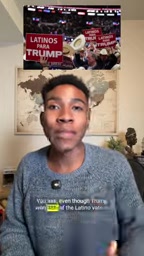
From a broader perspective, enforcement agencies' demographic composition moving closer to the communities they police may both enhance grassroots communication and intelligence-gathering capabilities, and create deeper trust fractures within those communities. The value of Green's observation lies in grounding the abstract issue of "representation" back onto specific individuals: the same face may simultaneously carry the triple identity of protector, reformer, and suspect.
(The full video is available on the Vox channel on YouTube.)
"La Migra" is a Spanish slang term for U.S. immigration enforcement agencies, derived from the abbreviation of "La Migración" (Immigration Service), widely used in Mexican and Central American immigrant communities. The term carries a distinctly derogatory and wary connotation, often appearing in word-of-mouth warnings within families, used to alert children that "immigration officers are coming." It is more than just a name—it carries border communities' historical memory of law enforcement: for most of the 20th century, there was a significant linguistic, cultural, and ethnic gap between enforcers and communities. Now that Latinos hold nearly half of Border Patrol positions, the group the term once referred to with its sense of estrangement is undergoing structural change, but the word itself still retains a wariness of enforcement power in community memory.
MAGA (Make America Great Again) is a political slogan Trump has used since 2016 and has since evolved into a political movement label encompassing immigration restriction, trade protectionism, and cultural conservatism. On immigration, the core tenets of the MAGA agenda include mass deportation, border wall construction, and restricting legal immigration channels. It is important to distinguish that Latino voters' support for Trump personally does not overlap with their endorsement of specific immigration enforcement policies. The 48% of Latino voters who supported Trump in the 2024 election reflects voting choices shaped by multiple issues such as the economy and inflation, rather than wholesale endorsement of a hardline immigration approach. The polling result showing 69% disapproval of his immigration handling precisely demonstrates a measurable stratification between voting behavior and policy preferences within the Latino community—an essential political context for understanding Latino agents' career choices.
One-line Summary
Latinos make up nearly half of the U.S. Border Patrol and about 30% of ICE—identity proximity creates role tensions in enforcement.
Paragraph Summary
Based on Vox reporter Khalil Green's analysis, the article reveals a historic shift in the composition of U.S. immigration enforcement: Latinos now hold nearly half of Border Patrol positions and about 30% at ICE, closer to the policed communities than ever before. Behind this shift are diverse motivations—protecting communities, pursuing rule of law, driving internal reform, and communication advantages. But identity proximity also brings professional tensions, as many agents grapple with "working for whom" when facing enforcement subjects who share their language and culture. The article also stresses that immigration enforcement work does not equal support for Trump or the MAGA agenda: 48% of Latino voters backed Trump but 69% disapprove of his immigration handling, indicating significant stratification within the community.
Related articles

David Fincher's New Film Accused of Being AI-Generated? The Truth Behind the Controversy
David Fincher's new film *The Further Misadventures of Cliff Booth* is accused of using AI, with a carriage shot in the trailer sparking controversy. Netflix's acquisition of Ben Affleck's AI company and Fincher's own openness to AI keep suspicions alive. This article sorts out the controversy and the views of all sides.

FCC Clears SpaceX's Space-Based AI Data Centers: A Debate Over Regulatory Boundaries
The FCC approved SpaceX's plan to deploy AI data centers in space but dismissed opponents' key concerns about scientific research impacts as beyond its regulatory authority. This article analyzes the regulatory boundary issues behind the decision, the deeper tensions of space-based AI infrastructure, and its implications for the industry.

WhatsApp Finally Launches Scheduled Messages: A Must-Have Feature for 3 Billion Users
WhatsApp rolls out scheduled messages to 3 billion users, supporting preset send times in private and group chats. Meta calls it one of the most requested features. This article analyzes use cases, WhatsApp's product cadence, and what it means for ordinary users.